


The price is the bait and the promise is the hook. For roughly US$7,000 a research lab or startup can now pre order a modular humanoid platform that claims manipulation reach, bipedal agility and a full software pipeline for data, training and deployment. That combination is rare today and it explains why Tron 2 matters right now.
Limx Dynamics launched Tron 2 as an accessible, reconfigurable robot platform on December 18, 2025. The headline numbers are blunt and deliberate. Pricing starts at about RMB 49,800, the base configuration offers dual arm manipulation with seven degrees of freedom per arm and a roughly 70 centimeter reach, and the system can reconfigure into wheeled legs or bipedal mode depending on the task. Those are not incremental improvements. They are a different approach to how laboratories and small teams can prototype real world embodied systems.
>
Why Tron 2 Matters Now
Humanoid robotics is no longer just a contest of singular demos. The field is moving toward platforms that combine perception mobility and manipulation while also offering an integrated developer experience. Tron 2 is presented as a combined hardware and software offering, what Limx calls a vision language action platform. That is shorthand for a product that promises to handle data collection annotation training inference and task scheduling as part of the delivery.
That matters because research and development bottlenecks are not always about actuator torque or sensor fidelity. They are often about the friction of end to end workflows. If a lab can buy a single box that comes ready to collect data annotate it and run experiments in standard frameworks that lowers the activation energy for experimentation. At a US$7,000 entry point the platform is positioned to pull in smaller institutions which previously could not afford dedicated manipulation platforms or full humanoid bodies.
Tron 2 Hardware And Modes
Modular Physical Design
Tron 2 is explicitly modular. Limx built the robot around a universal base that supports three primary configurations. In dual arm mode Tron 2 functions as a manipulation platform. Each arm has seven degrees of freedom and a spherical wrist to maximize dexterity across a large workspace. Reach is about 70 centimeters per arm which places it among the larger workspaces for modular platforms in this price band.
The dual arm payload is rated at 10 kilograms, enough for desktop tasks object handling and the sort of pick and place work many labs study. The spherical wrist increases orientation options for end effectors which is crucial when you are training perception to guide manipulation tasks.
Bipedal And Wheeled Leg Modes
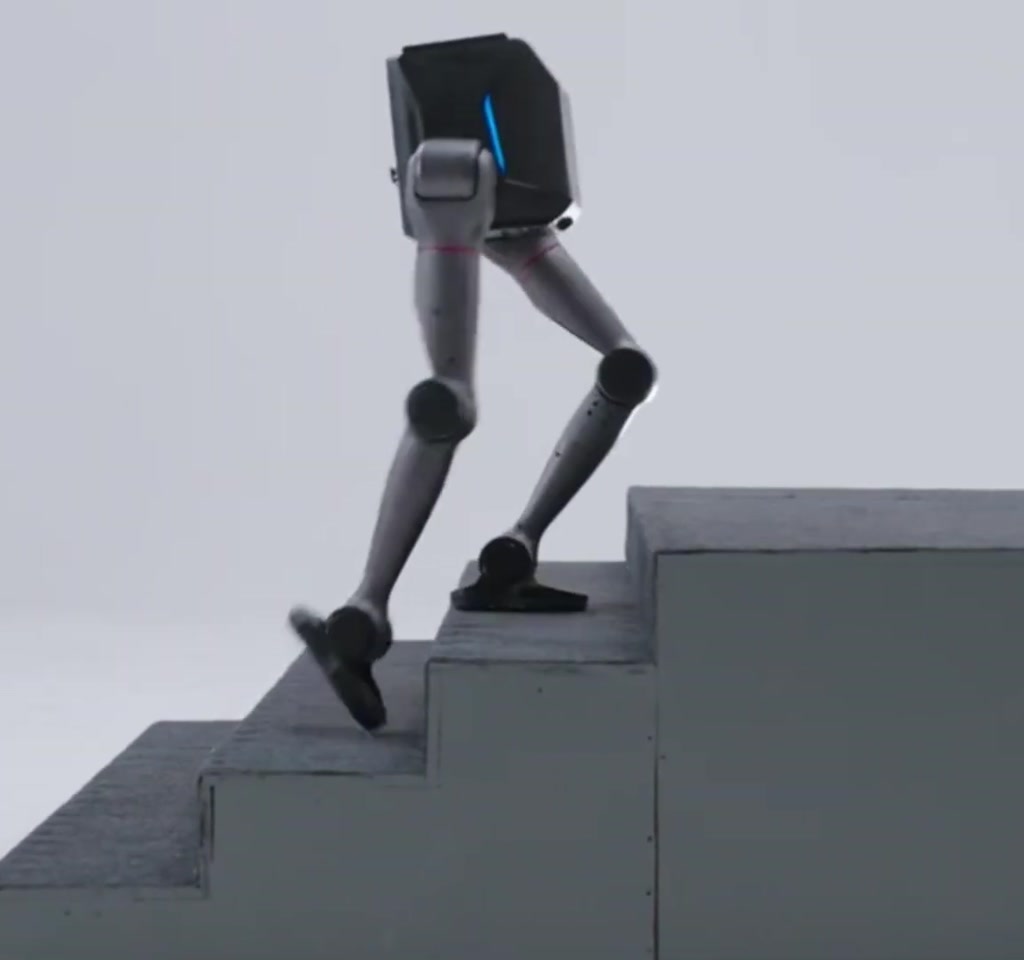
Switch to bipedal configuration and the robot can perform dynamic locomotion. Limx highlights stair climbing and handling uneven terrain as capabilities. That kind of agility is still uncommon outside of highly tuned research prototypes but Tron 2 claims enough balance and control to make bipedal experimentation practical.
The third mode is a wheeled leg hybrid that supports 30 kilogram payloads and offers all terrain mobility with adaptive control. That configuration is meant to transfer the machine from manipulation heavy lab work to mobility heavy tasks in larger indoor and outdoor settings. The rapid reconfiguration between modes is the point. Rather than buying separate systems for mobility research and manipulation research an institution can repurpose the same platform depending on the experiment.
Safety Power And Perception
Tron 2 includes several pragmatic features that indicate Limx expects the robot to operate in shared and semi supervised environments. Active safety boundaries are built into the motion system to prevent collisions during operation. The platform also includes redundant power and power disturbance handling that folds arms into safe positions if power anomalies occur.
Perception is handled by a front camera system that covers the entire arm span. That gives the robot visual coverage for tasks that need visual guidance and supports data collection for vision based manipulation. Full field perception combined with the manipulation workspace is a deliberate pairing. It reduces the gap between what a research team can see through sensors and what the arms can physically reach.
Software Platform And Research Integration
A Complete Development Flow
Limx supplies Tron 2 as an integrated vision language action platform intended to cover the full research workflow. The platform bundles hardware and software for data collection annotation training inference and task management. Preloaded algorithm tasks are included so teams can begin experimentation immediately without deep algorithm tuning.
The system supports a Python development workflow and is compatible with ROS1 and ROS2. It also supports major simulators including Nvidia Isaac Sim MuJoCo and Gazebo. That simulator parity is important because researchers want to replicate experiments in virtual environments before committing to hardware cycles. Compatible simulators lower the friction of moving between simulated training and real world deployment.
Datasets And Model Support
Limx advertises mainstream model and dataset support across a variety of physical tasks from object manipulation to environmental perception. The exact set of models and datasets included with base configurations varies but the promise is interoperability. For smaller teams the value proposition is clear. If the platform works with standard datasets and simulation environments then prior work and community resources can be leveraged instead of re implemented.
Price Versus Capability The Democratization Argument
At roughly US$7,000 Tron 2 undercuts many existing research platforms that offer similar combinations of manipulation and mobility. Price alone will not determine adoption but it is an enabling factor. Lower cost platforms bring more labs into experimental work which can accelerate iteration cycles and broaden the diversity of research questions pursued.
The modular design further amplifies this dynamic. Teams can adapt the same hardware for new tasks rather than maintain separate systems for different research agendas. That matters for budget constrained labs and startups where hardware reuse and fast reconfiguration translate directly into velocity.
Xpeng Iron And The Broader Competitive Landscape
Limx is not entering an empty field. The same period saw another notable demonstration when Xpeng Robotics published a video on December 12, 2025, showing its humanoid performing martial arts style movements. The clip created debate over authenticity but it also underscored how motion control and balance remain central benchmarks.
Xpeng unveiled its humanoid earlier in 2025 during a public technology showcase where engineers opened the unit to demonstrate internal mechanics and argue for its autonomy. The martial arts clip highlighted rapid balance shifts single leg stances and limb coordination. Those are hard control problems that require tightly integrated sensing motion planning and actuator response.
Like Limx, Xpeng is positioning its robot for commercial deployment. The company has tied robotics production to automotive scale manufacturing expertise and has projected ambitious production targets for the coming years. Those manufacturing claims point to a growing split in the industry. One set of companies is optimizing for research accessibility the other is optimizing for scale and commercial throughput.
What The Competition Means For Research
Competition compresses timelines and raises stakes. When companies aim for mass manufacturability they bring supply chain practices and quality control methods that can lower unit costs. When others focus on software and modularity research teams benefit from a wider range of platforms to choose from. The short term effect is an influx of new capabilities for labs and pilot programs but the medium term effect is a realignment of research priorities toward problems that are solvable on accessible hardware.
Practical Limits And Unfinished Work
Despite the promise there are clear limitations. Battery life remains a constraint across the sector and current humanoid systems typically operate for between two and four hours on a charge. Tron 2 does include design choices for power redundancy and safe fold procedures, but mission duration will remain a gating factor for many real world tasks.
Software development for task learning human robot interaction and safety in shared spaces requires extensive testing. Regulatory standards are still evolving. Deploying humanoids in operational environments will demand not only reliable hardware but also clear procedures for liability and safe collaboration with human workers.
Finally the promise that a single modular base can replace multiple dedicated platforms will be tested by use. Reconfiguration costs both time and complexity. How quickly a lab can switch between modes and how reliably modules perform across repeated cycles will determine whether modularity becomes a practical advantage or a theoretical one.
Where Labs And Startups Should Focus First
For teams considering Tron 2 the sensible early experiments are the low risk high information ones. Use the dual arm mode to validate perception guided manipulation pipelines. Leverage the simulator compatibility to iterate models virtually. Capture annotated datasets with the platform so that future experiments do not start from scratch.
Next, try controlled mobility tests in the wheeled leg mode to evaluate payload handling and path planning in larger spaces. Reserve bipedal experiments for controlled labs with safety infrastructure until recovery and balance routines are well proven. The platform is flexible enough that a careful roadmap will extract value without exposing teams to unnecessary operational hazards.
The Bigger Picture For Robotics Research
Tron 2 is one symptom of a larger shift. Platforms are moving from bespoke research rigs toward integrated products that assume a full stack workflow. When hardware vendors sell a combined perception manipulation and developer environment they change the calculus of experimentation. That will prompt labs to rethink how they allocate resources between hardware maintenance data collection and algorithm development.
There is also a cultural shift. If more institutions can access capable physical embodiments the range of experiments widens. That is good for discovery. It also raises the consequence of quality control and standardization. As more teams produce shared datasets and benchmarks physical reproducibility will become a topical issue. Modular platforms like Tron 2 will be central players in that conversation.
Finally there is an industrial implication. If modular humanoids can reliably handle both manipulation and mobility tasks at accessible cost points they will blur the lines between laboratory research platforms and deployable service machines. The transition from research prototype to operational tool is not automatic, but Tron 2 accelerates the path in a way that deserves attention.
Limx Dynamics has added a credible option to the market and Xpeng has tightened the performance bar through demonstrations of advanced motion control. The coming year will reveal how labs adopt these choices and which performance metrics end up mattering most.
Where this leads is worth watching. As modular platforms lower the barrier to physical experimentation the next wave of work will not be about proving that a humanoid can move or grasp. It will be about the reliability of long running deployments and how software and mechanical design scale together into practical use cases. That is the unresolved experiment Tron 2 invites the community to run.
COMMENTS