


UltraBar X arrives with a confident claim. It wants to reorganize the desktop by turning scattered tools and one-off accessories into a single modular command center that can act whether a computer is on or off.
The reason this matters now is simple. Desktops have become ecosystems of software, windows, hardware controllers, and smart home devices. The company behind UltraBar X positions the product as the missing layer that makes those elements behave like a single coherent system. What this article reveals early is that the feature set that makes UltraBar X interesting also creates the project center stage for three lasting problems most people do not fully appreciate: cost scaling, power, and the complexity of meaningful ecosystem integration.
What becomes obvious when you look closer is that UltraBar X is not a single gadget. It is an architecture. The team in Shenzhen has pushed a lot of capability into hardware modules and a custom operating system called LineOS, driven by a context engine named SceneShift. That approach buys independence and autonomy, but it also amplifies practical constraints that will determine whether the idea improves your workflow or merely adds a new kind of clutter.
Why UltraBar X Matters Right Now
There is a cultural moment here. People are increasingly comfortable mixing local control with cloud services and with hands-on tactile input. Stream style control pads proved there is demand for physical shortcuts. UltraBar X tries to go further by combining touch screens, mechanical keys, rotary controls, environmental sensors, and an onboard voice assistant into one expandable platform.
From an editorial standpoint this is not just about novelty. The promise of a responsive workspace that anticipates your needs matters because it changes where friction sits. If the device can genuinely switch audio outputs trigger scenes manage peripherals and bring smart home context into the work loop then it reduces the mental cost of multitasking. The moment this breaks down is when integration is patchy or the device is so expensive that it lives only on demo desks.
How The Modular System Works
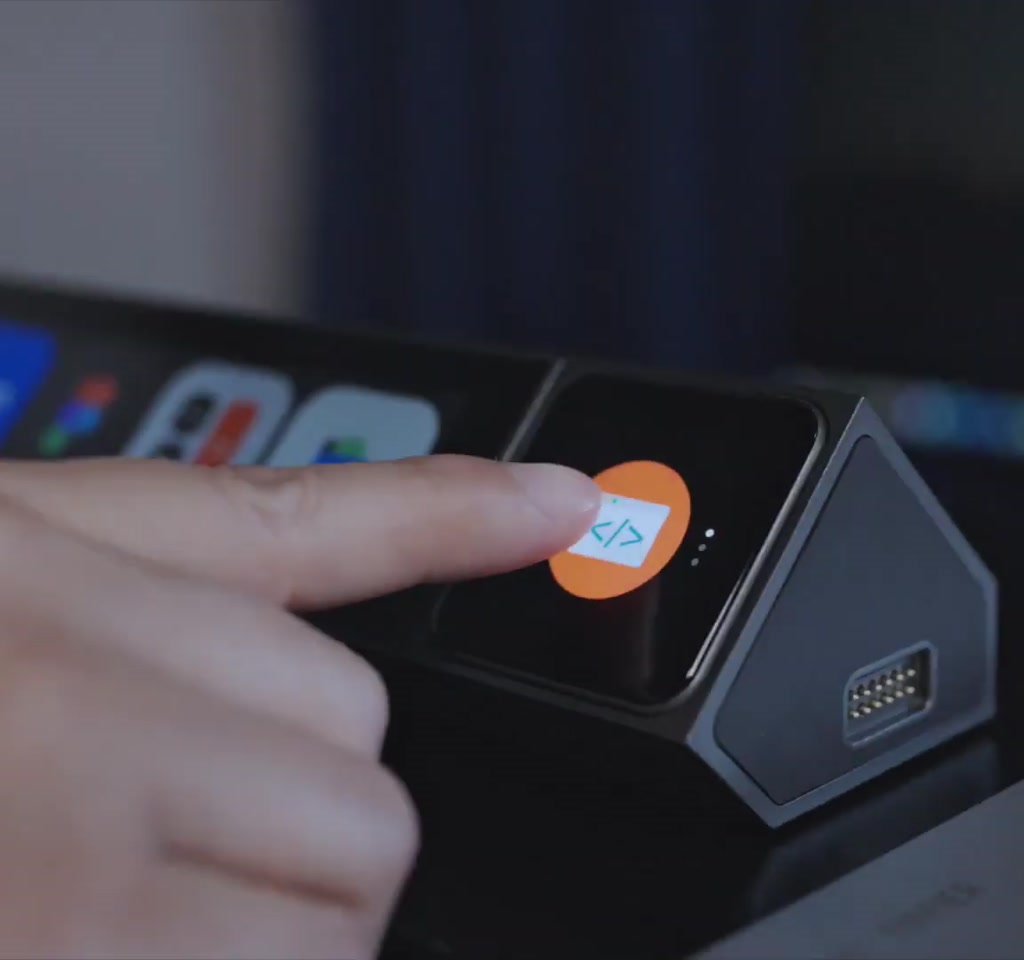
The central concept is magnetic modularity. Modules snap together using pogo pin contacts that carry both power and data. The core idea is to build it like a construction set where you can rearrange physical controls in minutes.
CoreBar And VivoCube
CoreBar functions as the spine. It is an ultra-narrow wide display bar with touch control and acts as the primary hub for status notifications, workflows, and system management. Its tilted design aims to reduce neck strain while keeping a clean visual line across the desk.
VivoCube is a portable mini controller. It has its own touchscreen mechanical switches and wireless independence so it can live on the desk or across the room. That portability creates real utility for users who switch positions or present to others. But it also introduces battery management considerations. Wireless independence is convenient, however, it means charging behavior must match usage patterns to avoid interruptions.
SenseCube DotKey And KnobKey
SenseCube brings environmental awareness to the setup. It uses sensors including light, temperature, humidity, vibration, and millimeter wave radar to detect presence and conditions. This allows SceneShift to change modes as a user approaches or to adjust lighting automatically.
DotKey is an oversized mechanical key for tactile shortcuts. KnobKey is a rotary module for fine adjustments such as volume timeline scrolling or zoom. Together these modules let people replace repetitive window switching with direct physical input that feels intentional and precise.
Software And Integration
Software is where UltraBar X tries to earn its keep. The team has built LineOS as a device operating system and SceneShift as the context-aware engine that learns usage patterns. The system is designed to operate independently of a host computer so common tasks like media control or smart home toggles remain available even if the main PC is off.
LineOS SceneShift And The Voice Assistant
LineOS exposes the interface layer for modules, the voice assistant, and integrations. SceneShift analyzes sensor input device states and user routines to trigger scenes or pre-configured workflows. A newly added voice assistant is intended to let users control desktop functions and smart home devices hands-free.
The company also promises support for USB Bluetooth Mesh IP networking and a proprietary magnetic protocol. Integrations called out in the campaign include Home Assistant, Philips Hue, and Sonos, which create useful starting points for smart home users. The platform also intends to be extensible with an SDK, and an app store model so third-party developers can add plugins, scenes, and extensions.
Constraints And Tradeoffs
The most important practical realities are cost and complexity. Packing independent compute into a peripheral increases base price significantly compared with simple controller pads. The modular approach multiplies that effect because each additional module adds hardware value and potential maintenance points.
Specific constraints to watch include two concrete limits. First shipping remains subject to taxes and duties that vary by country which effectively increases buyer cost by an uncertain amount. Shipping is scheduled for April 2026 which leaves months for potential delays. Second the system supports up to 15 modules so scaling beyond that is not planned and users who imagine filling an entire desk with modules face a hard ceiling.
Power is a second tradeoff. Autonomy requires onboard processors and radios which consume energy. Wireless modules like VivoCube need charging cycles. If a user relies heavily on wireless freedom battery management becomes a maintenance task. The team will need to balance battery life against weight and cost which in turn shapes how people actually place and use modules.
Integration is a third real cost. The device banks on deep integrations with desktop applications and smart home platforms. That means ongoing software maintenance to keep plugins working as APIs change. An open SDK helps however developer adoption is uneven which risks leaving some promised integrations under-baked.
The magnetic pogo pin system is elegant but it also creates constraints in mechanical durability and electrical reliability over many attachment cycles. This is the kind of detail that only reveals itself after thousands of real-world reconnects.
Manufacturing Status And Shipping
The UltraBar X campaign has moved into pilot production. Molds are finalized, and manufacturing is underway, while mechanical production and software teams work in parallel to refine quality and hardware software integration. That status is real progress yet it is the point where product complexity often bumps into supply chain reality.
Backers were offered a limited Christmas Mystery Box as a small extra pledge option. That box can contain accessories or modules such as SenseCube. The campaign also exceeded its initial funding target which shows demand among early adopters but that momentum does not shrink technical risk.
The project team states shipping is planned for April 2026. That timeline sets an expectation and a pressure point. Missing that date would be disappointing for backers and would also increase exposure to component cost inflation and changes in underlying platform APIs during the gap.
What To Watch Next
There are three things to monitor going forward. One modular software maturity. It is important that the SceneShift engine and the SDK prove robust enough to attract developers and to sustain useful integrations. Two real-world battery and thermal behaviors. Users will judge the product by how reliably VivoCube and wireless modules stay charged and how CoreBar handles heat under continuous use. Three manufacturing durability. Magnetic connections pogo pins and mechanical switches must survive daily use across many months.
Judging by the campaign, the team is focused on design details and long-term platform thinking. The company frames UltraBar X as both a product and a platform that could evolve over years. That is ambitious, and it demands steady software support and a clear upgrade path for hardware.
The detail most people miss is the engineering required to make autonomy feel seamless. It is one thing to let a bar control lights and another to have it safely and reliably manage a mixed ecosystem across many manufacturers. The difference between a polished experience and a brittle one will be how much time the team spends on edge cases such as device discovery dynamic network states and permissioned control flows.
UltraBar X is a design gamble. It tries to convert passive tools into an active workspace which is a useful ambition and one that could change how people work. The countervailing reality is that this requires solving cost battery integration and long-term software compatibility at scale.
What becomes clear after parsing the pilot production update is that UltraBar X will live or die by execution. The concept is coherent. The modules are thoughtfully chosen. The voice assistant and autonomous features are differentiators. The remaining question is whether the team can ship a product that keeps those promises without pumping complexity onto the desk.
Ultimately, this is a test of whether an elegant hardware philosophy can survive messy real-world constraints. Expect the next updates to reveal more about developer uptake, battery life, real-world durability, and the team’s approach to ongoing platform maintenance.
For those who want to follow the project updates directly the campaign page contains ongoing production notes and shipping details.
The coming months will tell whether UltraBar X becomes a new kind of control center or a clever prototype that needed another cycle of iteration.
COMMENTS