


The launch of LIMX COSA changes the conversation about humanoid robots from component bragging to system orchestration. LIMX Dynamics is not just showing off another biped that can balance. It positioned COSA as an embodied agentic operating system that ties cognition to whole-body control. That shift matters because running, thinking, and moving under a single roof creates new practical limits as quickly as it unlocks new abilities.
The real significance here is not that a single robot can fetch water or climb stairs. What actually determines whether this matters is how COSA manages the tradeoffs between high-level decision making, continuous sensing, and real-time motor control. Most observers focus on the demo behaviors. The part that changes how this should be understood is that operating intelligence exposes scale costs, power needs, and safety constraints that prototypes tend to hide.
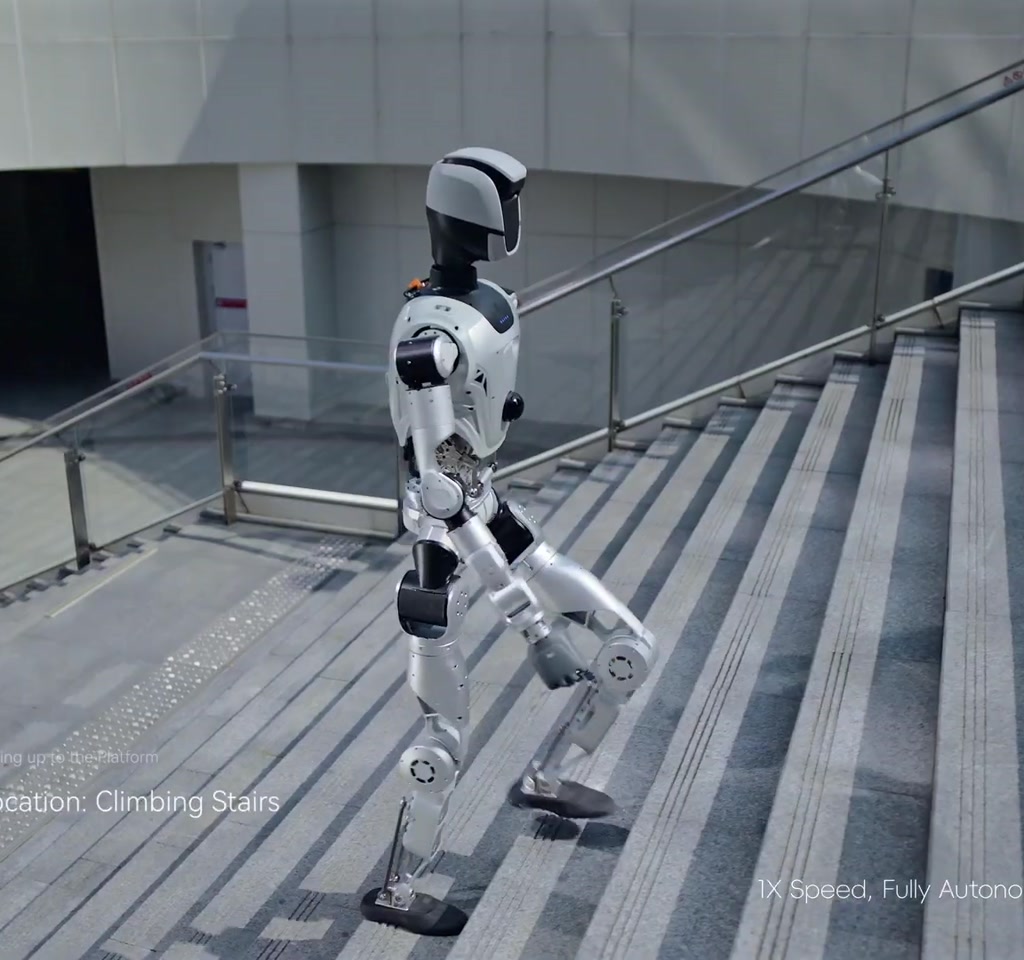
From an editorial standpoint, the launch reads like the first operating system for embodied agency. LIMX Dynamics presents COSA as a central hub that manages models of the world, discrete skills, remembered environments, and even what the company calls emotional states, while aligning vision and language with action and whole body control. The first public beneficiary is the full-size humanoid Olie, which has been demonstrated performing multi-step tasks and stair climbing in real time.
Why LIMX COSA Matters Now
The industry has spent years improving isolated capabilities. Vision perception improved, natural language understanding moved forward, balance and locomotion evolved. LIMX COSA matters because it attempts to operationalize those capabilities together. That is a different engineering problem. It requires not only that each function exists but that they can be scheduled, prioritized, and reconciled under timing and safety constraints.
What becomes obvious when you look closer at the COSA pitch is that the system is designed to arbitrate between long-horizon reasoning and split-second balance corrections. That arbitration is the core architectural decision. The moment this breaks down is when a robot plans an object pickup that conflicts with a required balance response while traversing stairs. In other words, the novelty is not clever perception. It is orchestrating perception, memory, and control in an unpredictable environment.
What Olie Can Do Today
LIMX Dynamics has positioned Olie as the company’s first humanoid intelligent agent. Driven by COSA, Olie has been shown interpreting complex instructions such as fetching two bottles of water and bringing them to a desk. It uses semantic memory of environments and objects to anticipate where items might be and then executes locomotion, like stair climbing, using live sensory feedback.
The behaviors on display are credible because they combine high-level intent with continuous sensing. For an observer, the motions look smooth, and the transitions feel deliberate. That experience suggests the system is doing more than chaining isolated routines. It appears to be maintaining a context about goals and the environment while controlling torque, balance, and limb trajectories in real time.
From Intent To Action
COSA is described as an operating system that manages skills, memory, and internal state. Practically, that means when commanded to bring water, the robot will interpret the instruction, plan a route, recall semantic info about likely bottle locations, and then execute a sequence that includes grasping and safe delivery. That entire pipeline has to manage timing across components that operate on very different cadences.
Perception And Memory
Olie reportedly uses a form of semantic memory for environments and objects. The important editorial detail is that semantic memory allows proactive behavior. The robot can anticipate where an object is likely to be without searching exhaustively. That reduces wasted motion and time during tasks, which is essential when power and wear are both real costs.
Two Hard Constraints That Define Practical Use
Introducing an operating system that combines cognition and whole-body control creates new, explicit constraints. First, cost is a gating factor. Bringing cognition into the physical robot tends to push hardware and integration costs into the tens to hundreds of thousands of dollars per unit for early deployments. That cost range means initial applications will be in specialized facilities or pilot projects rather than general consumer or low-margin service roles.
Second, power and uptime impose operational limits. Full-size humanoids that move and think concurrently draw noticeable power. That consumption becomes operationally significant over a work shift. Expect deployments to measure operating time in hours rather than continuous days unless charging or battery swap systems are integrated. Power draw also affects heat management, which in turn impacts reliability and maintenance cycles.
These are not hypothetical roadblocks. They are the economic and physical realities that will determine where COSA-based agents are useful. For example, the choice to keep heavy compute onboard reduces latency during control but increases weight and power use. Offloading heavy computations to edge servers reduces onboard requirements but introduces network latency and new failure modes. The tradeoff here is simplicity versus operational independence.
Maintenance And Reliability Considerations
Maintenance tends to surface after repeated use cycles. Actuators, sensors, and mechanical linkages wear with load and frequency. In practical figures, this often translates into scheduled servicing after hundreds to low thousands of use cycles, depending on the task intensity. Regular maintenance plans will be necessary for any real-world pilot to avoid unexpected downtime.
Safety And Latency Tradeoffs
Embedding decision-making inside a walking body creates hard safety requirements. Real-time control loops that protect balance operate in the low tens of milliseconds. Higher-level deliberation can happen over hundreds of milliseconds or seconds. The gap between these timescales is where most integration headaches arise. The system must decide what can be interrupted, what must be preempted, and how to resolve conflicts without producing unsafe motion.
In practice, that means COSA has to implement strict prioritization. Emergency balance corrections must be able to halt a planned arm motion instantly. Those preemption mechanisms are simple to describe and hard to get right at scale. Failure modes become more varied once reasoning can issue long-horizon plans while the body negotiates uneven terrain.
Where This Fits In The Industry
LIMX COSA signals a shift from improving isolated capabilities to treating the robot as an integrated operating system. That perspective aligns with a broader move in robotics toward system-level thinking and away from component-first mindsets. The industry implication is that competition will center on orchestration, safety frameworks, and integration pipelines rather than on single-function performance metrics.
There is a cultural implication as well. Operators and integrators will need new tools and workflows that resemble software operations for fleets. Deployment will not just be a hardware purchase. It will be an operational program that includes service contracts, safety certification, power provisioning, and environmental mapping. That elevates adoption friction because organizations must commit to infrastructure and processes at scale.
From a strategic angle, the team behind LIMX Dynamics appears to be prioritizing general-purpose utility over tightly scoped task robots. That is a deliberate bet. General-purpose humanoids are harder to monetize early, but if integration costs and reliability improve, they could unlock flexible labor in settings where fixed automation struggles.
Integration Costs Versus Flexibility
The tradeoff here is predictable. Narrow robots can be cheaper to validate and maintain. A COSA-powered humanoid brings flexibility but also integration overhead. Organizations will have to decide whether a flexible agent that can perform many tasks justifies the higher initial and ongoing investment compared to cheaper single-purpose machines.
What Comes Next And Why To Watch
The immediate milestone to watch is not another polished demo. It is a scale indicator. How many units will LIMX Dynamics support in pilot programs? What service plans and power solutions will be offered? How will the company instrument safety and maintenance data across deployments? Those answers will reveal whether COSA is an engineering showcase or an operational platform.
One concrete metric to track is uptime under real workload. Early industrial pilots should report operating hours per charge and mean time between service events. Another metric is the latency profile between decision modules and motor controllers. That data will expose the practical limits of on-board computation versus edge-assisted processing.
What becomes clear when you examine the whole approach is that success will be less about a single breakthrough and more about cumulative improvements in reliability, cost, and infrastructure. That is a slower, less glamorous path than a headline-grabbing demo, but it is the only path that will lead to meaningful deployment.
COSA is not a robot brain, it is an operating system for embodied agency. That distinction matters because it reframes the conversation from novelty behaviors to the economics and safety of running thinking machines in shared physical spaces.
For those following developments in motion and control, LIMX COSA is a milestone worth studying. It is a practical experiment in whether an operating system approach can reconcile the competing demands of cognition, sensing, and continuous motion. The next year will clarify whether COSA remains a single company innovation or becomes a reference architecture that other firms adapt as they move from demos to pilots.
Related topics that help make sense of this shift include motion planning and fleet-level operations, which touch the same tradeoffs between latency, safety, and cost, and which could appear in other coverage on Bit Rebels.
The company has taken a provocative step. Now the industry must answer whether the business and operational fundamentals line up with the technical promise.
Looking forward, the critical questions are not whether robots can do tasks, but where and under what economic and safety envelopes they will be allowed to do them.
COMMENTS