


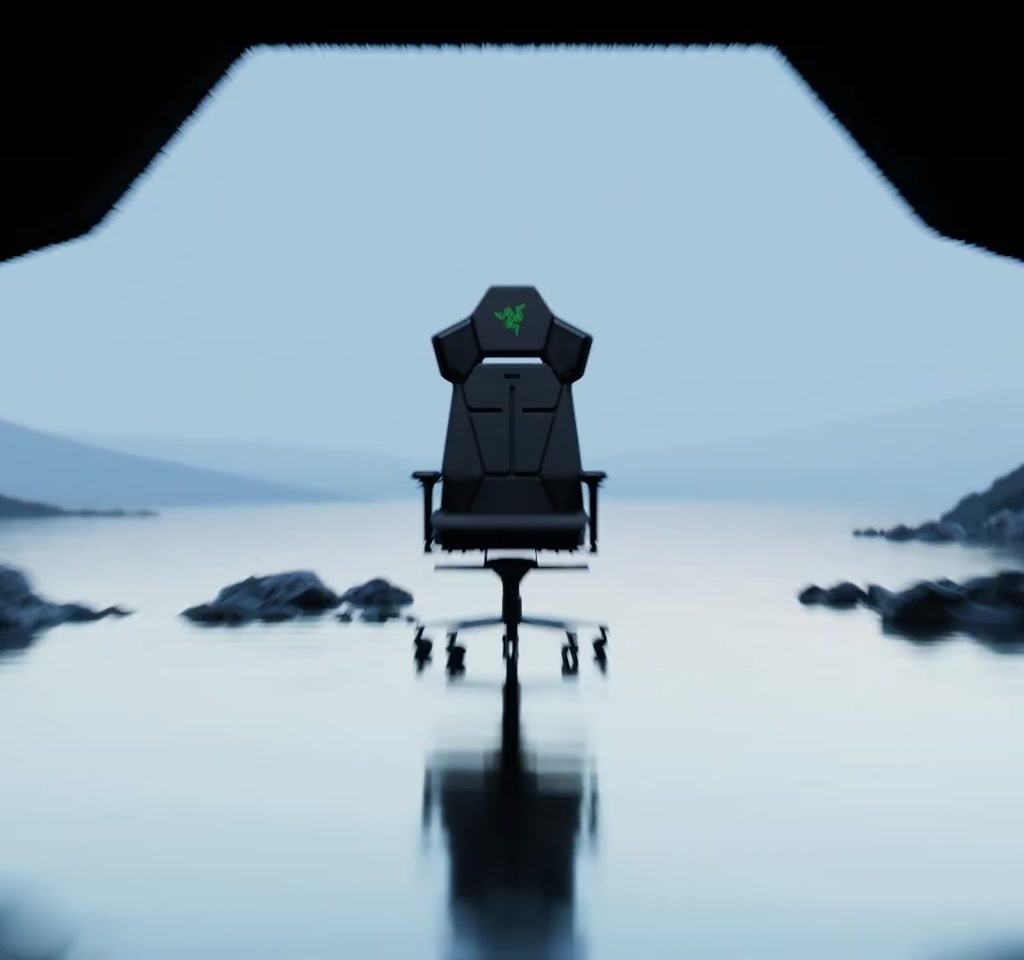
Razer’s Project Madison arrived at CES 2026 as an unmistakable statement, not a shopping option. It is a concept gaming chair that Razer presented as a vision for what happens when lighting, spatial audio, and directional haptics are treated as a single system instead of a tacked-on accessory set.
The real significance here is not that the chair can glow with 16.8 million colors or that it includes THX style spatial audio. What actually determines whether this matters is how much the integration lowers friction for players and developers, and whether the chair’s latency, connectivity, and cost keep it from being useful in real play. Most coverage focuses on novelty. The part that changes how this should be understood is that true integration forces tradeoffs across power, software, and ergonomics that will decide if a concept stays a concept.
Hands-on impressions from the press at CES described the haptics as noticeably more nuanced than a conventional controller rumble, and the audio as convincing when the system was used as a standalone speaker setup. Those impressions are useful, but they do not close the gap between demo theater and daily use. This article looks past the headline features to explain what Razer actually published, where limits will show up first, and what to expect if Madison becomes a product you can buy.
What Project Madison Actually Is
Razer positions Project Madison as a next-generation immersive gaming chair concept built around three pillars. Those pillars are reactive Chroma RGB lighting, THX style spatial audio, and Razer Sensa HD haptics with six integrated actuators. Razer frames the goal as true integration, meaning the chair itself acts like part of the game world rather than being a platform for add-on accessories.
The company describes scenarios such as the chair pulsing red as health drops, producing positional audio that places sound around the player, and delivering directional vibrations that match recoil or explosion direction. Razer also says Madison would be controlled through Razer Synapse and support both telemetry-driven, game-mapped haptics and an Audio to Haptics fallback mode that converts sound into tactile signals when game telemetry is unavailable.
How The Three Pillars Work
Lighting, Or How The Room Joins The Game
Chroma integration is the most straightforward idea in the concept. Razer states support for 16.8 million colors and dynamic effects, and frames this as game-reactive lighting across hundreds of supported titles. Practically, that means lighting behavior will mirror other Chroma gear, synchronizing either through native game integrations or Synapse profiles to match events on screen.
What matters beyond showmanship is integration friction. Lighting is easy to ship and cheap to scale into manufacturing. It is rarely the limiting factor in whether a product launches, but it is often the least valuable factor in day-to-day immersion because its impact depends on room layout and player sensitivity to ambient cues.
Audio, Or Making The Chair Speak
Razer calls Madison a scalable audio ecosystem, not merely a headrest speaker. The published speaker spec lists two 1.7-inch full-range drivers plus two 2.5-inch passive radiators, a 24-bit 48 kHz sampling frequency, and a frequency response of 75 Hz to 20,000 Hz. The chair is presented as capable of functioning as a primary speaker setup on its own, or pairing with front speakers to form 5.1 or 7.1 configurations, depending on the user setup.
Those specs suggest an emphasis on clear mid-range and presence rather than deep sub bass. That will matter for explosions and rumble, which rely on lower frequencies. The spatial audio promise is compelling, but it depends on the rest of the system and the listening environment. Paired external speakers will always outperform a chair alone for low-frequency energy and absolute positional precision.
Haptics, Or Where Madison Tries To Be Different
Haptics are the center of Razer’s pitch. The company says Madison includes six motor actuators driven by Razer Sensa HD Haptics to provide multi-zone, directional sensation. In demos, racing feedback felt especially convincing because acceleration and road texture map well to torso vibration. Shooter effects were described as more sporadic and localized, which aligns with the reality that some game events are short-lived and do not translate cleanly into continuous tactile signals.
The distinction between game-mapped telemetry and audio-derived haptics is crucial. Telemetry can point a motor at a specific area of the body with millisecond timing. Audio to Haptics can approximate intensity but will be less precise about direction and event semantics.
Ergonomics And Physical Details
Razer did not treat Madison purely as a tech mockup. The concept page includes a conventional ergonomic spec sheet, which makes the idea feel closer to a viable product than a sketch.
Key published physical details include an integrated lumbar arch, dual-density cold-cured foam cushion, 4D armrests, up to 152-degree recline, and a frog multi-tilt mechanism. The frame is steel, upholstery is fabric, and the base is a five-star powder-coated aluminum alloy with 6 cm PU wheels and a class 4 gas lift.
Recommended user height is 160 to 200 cm and maximum load is 136 kg, which Razer lists as 299 lbs. The chair dimensions are published: backrest 84 cm high by 58 cm wide, seat base 47 cm deep by 56 cm wide including sides, overall footprint 70 cm by 70 cm with height adjustable from 129 to 139 cm. Razer lists weight as 29.5 kg.
Real Constraints And Tradeoffs
Every integrated product, like Madison, creates tradeoffs. Two constraints in particular will govern whether this is practical beyond the demo floor. The first is cost. The second is connectivity and software support.
Cost, stated plainly, is likely to be in the hundreds to low thousands of dollars rather than the tens. Integrating speakers, six haptic actuators, lighting, and a robust frame adds materials and assembly complexity. If Razer intends Madison to ship globally with certified audio components, there will be regulatory testing and manufacturing costs that push a retail price above typical mid-range gaming chairs.
Power consumption becomes the limiting factor long before scale when you combine lighting, multiple drivers, and high-fidelity haptics. Expect noticeable power draw during long sessions. That tends to present as heat in the electronics and the need for a dedicated power supply or a higher capacity adapter rather than running solely from a typical USB power source. Over a full day of use, this will matter for energy, for how the chair integrates with a desktop setup, and for where the wiring sits in a living room environment.
Compatibility is the other clear constraint. Telemetry-driven haptics require game support and Synapse integration. Without native telemetry, the fallback Audio to Haptics mode will be less precise. That means the experience will vary widely across the library of games, and for many titles, users will get a passable approximation rather than a purpose-built tactile choreography.
Manufacturing and maintenance are additional tradeoffs. A 29.5 kg integrated unit adds shipping cost and assembly friction. Repairability is likely to be more complex than with modular accessories because audio, lighting, and haptics are embedded into the frame. That raises a question about long-term serviceability and warranty support that usually surfaces only after a product ships and is tested across multiple failure modes.
What Comes Through From Hands-On Impressions
What becomes obvious when you look closer at CES coverage is a pattern. Demoed systems can be tuned to impress in short sessions. The haptics that map to continuous sensations like engine rumble translate well. Short sharp events are harder to reproduce in a way that feels natural and not jarring.
The detail most people miss is the software dependency. Madison is not just hardware. Razer frames it as controlled through Synapse and reliant on telemetry and game integrations. That means the chair’s value grows only as the software ecosystem grows, which can be slow and inconsistent. The chair might be brilliant in a handful of well-supported games and ordinary elsewhere.
Quoteable takeaway The moment this breaks down is not in the motors or the speakers. It is in the gaps between a detected game event and a coordinated, timed sensory response that feels meaningful rather than gimmicky.
Why This Matters For The Future Of Immersion
Razer is articulating a clear thesis about the future of immersion. The company is betting that turning the chair into a multisensory hub lowers friction and will push players to expect more than visual and headphone-based immersion. That thesis matters because integration changes the product landscape, shifting value from single-purpose peripherals into platform-level experiences.
From an editorial standpoint, the important consequence is how ecosystems form. Lighting is easy to adopt. Haptics and spatial audio require developer buy in and standardized telemetry. If Razer can convince major studios or middleware vendors to support Sensa telemetry, it may create leverage for a new product category. If it cannot, Madison will be an interesting showcase and little else.
Razer has not published price, release timing, or final connectivity and firmware details. Until those appear, the safest read is that Project Madison is Razer showing what integration looks like and gauging reaction. Some CES concepts become products. Others remain signposts.
What is certain is that Madison lays out a practical blueprint and exposes where the hard work lives. Power, software, repairability, and per title support are concrete constraints that decide whether integration is revolutionary or merely theatrical.
Expect more announcements if Razer moves Madison from concept to production, and watch telemetry and developer support closely. The game here will not be who can make the loudest demo. The game will be who can make the chair feel less optional and more necessary without breaking price or connectivity expectations.
COMMENTS