


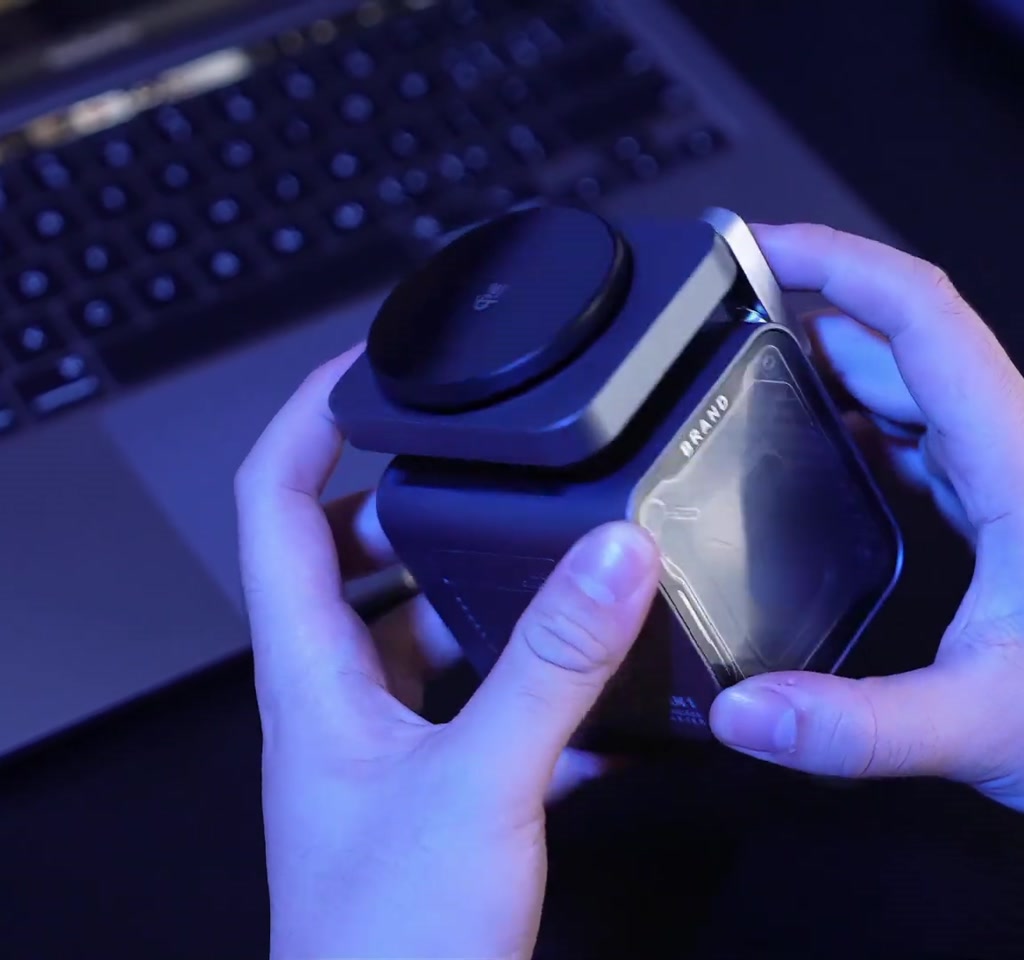
ChargeUnie G2 arrives as the tidy answer to a tangle of cables and bedside clutter. It folds flat, aligns an iPhone with MagSafe, cradles an Apple Watch, and accepts earbuds, while showing status on a small LCD. That visible feedback and compact form change how people interact with daily charging routines.
At the same time the product concentrates power, heat, and mechanical alignment into a single object. That concentration produces clear engineering tradeoffs in power distribution, thermal management, and ecosystem scope that are worth understanding before you buy.
What ChargeUnie G2 Actually Does
Direct Answer: ChargeUnie G2 is a foldable MagSafe-aligned charging hub that supports an iPhone, Apple Watch, and earbud pad in one footprint. It provides a single USB-C power input, an LCD for status and clock mode, and touch controls to switch modes without a companion app.
The company positions the G2 as a compact 3-in-1 charging solution for Apple-centric users. The hinge folds the unit for travel, while unfolded angles keep devices aligned for wireless power transfer and visible interaction on a desk or nightstand.
How The Charging Process Works
Direct Answer: The G2 accepts power through one USB-C input and dynamically allocates output across its three zones. The device lists up to 25 watts for compatible smartphones as a peak figure; real-world distribution changes when two or more devices draw power simultaneously.
Power Distribution Mechanics
The internal firmware manages how total available wattage is shared. With a single upstream input the phone receives preferential output when it is the primary load. Under simultaneous use the phone s share will typically fall into the mid-teens or lower double digits depending on the other devices draw.
Thermal Management And Throttling
Heat and power are coupled. When all three zones are active the unit must shed heat to stay within safety limits. Expect noticeable thermal behavior over charging sessions measured in hours and automatic throttling to reduce power until temperatures are controlled.
The Design Tradeoffs You Will Live With
Direct Answer: The main tradeoffs are longer times to full when multiple devices are docked, higher case temperatures during extended sessions, and sensitivity to device placement. Convenience comes at the cost of a single point of failure and variable per-device charging rates.
Constraint one is power distribution. The single USB-C input means the G2 cannot deliver sustained full peak power to every device at once. Constraint two is thermal limits. Sustained heavy loads will raise case temperatures and trigger throttling. Constraint three is alignment sensitivity. Non-MagSafe or poorly aligned Qi devices often charge more slowly or inconsistently.
Real World Charging Times
Because the campaign lists 25 watts as a peak rather than a guaranteed constant, expect phone charge times to vary with concurrent device loads. The practical effect is that a single hub can lengthen the time to full for at least one device when multiple devices are docked.
Why The LCD And Touch Controls Matter
The LCD and capacitive touch reduce microfriction. Readable progress and explicit power readouts stop users from repeatedly removing devices to check charging status. That behavioral change can make slower charging tolerable if the interaction becomes more reliable and predictable.
Durability And Certification Impact
Adding a display and touch interface increases hardware complexity. More components require further durability testing and electromagnetic compatibility validation during certification, which can affect manufacturing timelines.
Usability Scenarios: Desk Versus Travel
Usability At Your Desk
On a desk the G2 is a visible charging object. Devices sit upright or cupped, are easy to interact with, and the clock mode justifies leaving the hub plugged in on a nightstand.
Usability On The Road
For travel the foldable form makes the G2 an efficient replacement for multiple chargers. The single input simplifies airport setups but introduces a single point of failure: if the hub or its adapter fails you lose all charging ability rather than one cable.
Compatibility And Ecosystem Lock-In
Direct Answer: The G2 is optimized for Apple customers with MagSafe alignment as a core design feature. It supports secondary Qi compatibility, but non-MagSafe phones and loosely aligned devices will often charge more slowly or less consistently.
The emphasis on magnetic alignment and Apple accessory ergonomics creates limits for universality. Users with non-MagSafe phones should expect variable efficiency and sometimes reduced charging performance compared to native MagSafe experiences.
ChargeUnie G2 Vs Single Chargers
This comparison frames the practical decision factors you will face: charging speed, portability, reliability, cost, and repairability.
Charging Speed Compared To Individual Chargers
Individual chargers deliver predictable per-device peak power when sized for each device. A combined hub like the G2 offers convenience but will often prioritize or reduce per-device output under simultaneous loads.
Portability And Packability
The G2 reduces cable clutter and packs smaller than multiple adapters, but it concentrates risk. Pack a single multiport hub and you save space; lose it or have it fail and you lose all charging at once.
Reliability And Redundancy
Multiple single-purpose chargers provide redundancy. A defective cable or adapter affects one device, not all. A single hub centralizes function and can be a single point of failure during travel or in heavy daily use.
Manufacturing, Risks, And Kickstarter Considerations
The campaign positions the G2 as an iterative improvement. Building on prior versions reduces unknowns but does not remove standard production risks. Typical Kickstarter caveats apply: timelines can shift, certifications may add delays, and final specs can change through tooling and validation.
Two concrete production constraints are certification time and accessory inclusion. Safety and wireless compliance testing often takes weeks to months depending on test lab availability. Including a power adapter in pledge tiers raises shipping weight and cost, which can affect delivery timing and final retail pricing.
Where This Product Fits In A Bigger Trend
Consumers are trading single-function chargers for consolidated hubs that double as desktop objects. That pattern favors devices that offer clear feedback and reliable alignment, because people accept modest speed tradeoffs for reduced friction and simpler daily interactions.
Final Take
ChargeUnie G2 is an attractive, practical refinement rather than a category redefiner. The LCD and touch controls change the interaction model, making charging feel like a deliberate, visible task rather than a background nuisance. The open questions remain power division under real-world loads, thermal behavior during extended use, and how certification and production will shape the final product.
Ultimately the decision is personal: accept a compact hub that can slow a charge and centralize failure, or choose separate chargers that preserve peak performance and redundancy.
Who This Is For And Who This Is Not For
Who This Is For: Apple-focused users who value tidy desks, visible charging feedback, and travel convenience. People who prioritize user experience and alignment over absolute peak charging speed will find the G2 appealing.
Who This Is Not For: Users who need guaranteed per-device peak charging under simultaneous loads, travelers who require redundancy, or owners of non-MagSafe phones who demand consistent Qi performance regardless of placement.
Frequently Asked Questions (FAQ)
What Is ChargeUnie G2?
ChargeUnie G2 is a foldable, MagSafe-aligned charging hub designed to charge an iPhone, Apple Watch, and earbuds in a single footprint while offering an LCD status display and touch controls.
How Much Power Can The Charger Deliver?
The campaign lists up to 25 watts for compatible smartphones as a peak figure. Real-world per-device output varies when multiple devices draw power, because the hub uses one USB-C input and manages distribution internally.
Will It Charge Non MagSafe Phones Reliably?
Secondary Qi compatibility is noted, but non-MagSafe phones or loosely aligned devices may charge more slowly or inconsistently due to alignment sensitivity and magnetic attachment differences.
Does The Unit Get Hot During Use?
Yes. When multiple zones run concurrently the unit will produce heat and may throttle to stay within safety limits. Expect thermal behaviors over extended sessions rather than short top-up charges.
Is The G2 Better Than Using Three Separate Chargers?
It depends. The G2 wins on convenience, reduced cable clutter, and visible feedback. Separate chargers win on redundancy and predictable peak performance. The right choice depends on whether you value consolidation or per-device reliability.
What Are The Manufacturing And Delivery Risks?
As with many crowdfunded electronics, certifications, test lab availability, and tooling can change timelines and specs. Inclusion of power adapters in certain tiers affects shipping weight and cost, which can impact delivery schedules.
Can The Charger Be Repaired Or Replaced Easily?
Specific repairability details and warranty terms are not disclosed in the campaign text. If repairability is important, look for official statements from the maker or wait for retail release documentation.
Is ChargeUnie G2 Worth Buying Now?
That depends on your priorities. If compactness, visible feedback, and Apple-focused alignment matter more than guaranteed simultaneous peak charging speeds, it is worth considering. If you need guaranteed per-device peak charging or redundancy, wait or consider separate chargers.
COMMENTS