


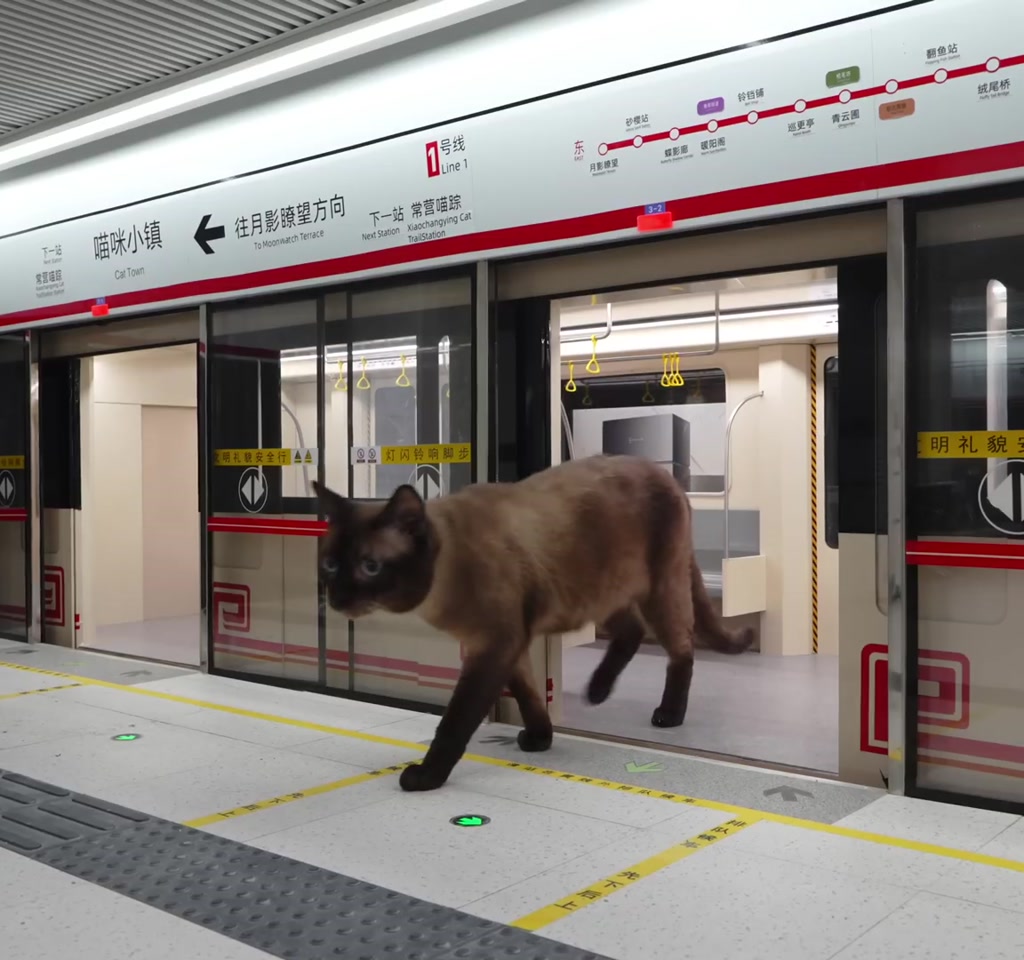
When Xing opened the gates of Cat Town Station, the project started as a cute bit of toy architecture and turned into a concentrated lesson in engineering tradeoffs. The build exposed how timing precision, mechanical reliability, and repeat maintenance scale differently when you compress a transit system into a tabletop installation.
The Cat Town Subway was completed over four months and demanded choices that balance cost, robustness, and safety. The result matters because the constraints change which problems are trivial and which become dominant as a system shrinks.
Why The Cat Town Subway Matters
Direct Answer: The Cat Town Subway matters because miniaturizing transit reveals different priorities in timing, safety, and maintenance. Small systems force designers to favor redundant sensing and simple control logic over precision custom parts, making tradeoffs visible much sooner than in full-size projects.
Xing built the station after viewers requested a subway following a previous cat house project. The opening with Mr. Nice and his cat family was the payoff, but the engineering path is the real story: which constraints rose to the top and how the maker solved them within a modest budget.
What Is The Miniature Subway Concept
Direct Answer: A miniature subway is a scaled-down transit system that mimics the mechanics and choreography of full-size stations and trains while operating within tight space and power limits. It uses simplified control routines, off-the-shelf sensors, and compact mechanical systems adapted to the user – in this case, cats.
In practice this kind of project recreates platform doors, train doors, and passenger flow at a scale where friction, battery voltage sag, and component tolerance have outsized effects compared to human systems.
How Door Synchronization Works In A Mini System
Direct Answer: Door synchronization in the build relied on sensor feedback rather than blind timing. Xing used position sensors and a simple control routine so that platform doors wait for explicit signals from train doors, reducing the chance a paw or tail gets trapped when margins are measured in fractions of a second.
Timing And Sensors
Synchronizing two independent door systems required a reliable timing window and explicit feedback. Rather than relying on fixed delays, the design favors redundant position sensors and short control cycles so operations proceed only after clear open or closed signals are received.
Safety And Redundancy
Safety was treated as an active requirement. Platform doors were interlocked with train doors to prevent accidental entrapment. The tradeoff is clear: more interlocks increase cost and maintenance, while fewer interlocks reduce safety margins. Xing balanced this with off-the-shelf sensors and motors to keep the build affordable.
Designing A Working Escalator For Cats
Direct Answer: The escalator design focused on behavior and mechanics: slow, predictable motion, shallow treads, and low noise. Xing used a belt-driven mechanism with larger tread surface and low top speed so cats would accept the device, trading throughput for predictable, calm operation.
Mechanics And Materials
Instead of chain-driven full-size escalator mechanics, a compact belt drive with broad, shallow treads provided predictable motion in a small package. That design reduces startling movements and accommodates feline preferences for steady surfaces and quiet operation.
Weight And Power Considerations
Small escalator motors do not draw the same absolute power as full-size units, but startup current can be significant. Small DC motors commonly draw from tens of watts up to a few hundred watts during start, which matters for battery capacity and heat. Xing limited continuous draw so batteries and wiring stayed within safe temperatures.
Costs, Time, And The Hidden Work Of Cleanup
Direct Answer: Xing spent four months on the project. Costs typically range from the low hundreds to a few thousand dollars depending on parts and custom work. Most labor and expense concentrates in iteration, testing, and cleanup, and maintenance appears after repeated cycles of use.
The publicly stated timeline is four months. Cost framing in the build points to a maker budget that can stay in the low hundreds for basic components, but custom machining or precision electronics push costs into higher ranges. Cleanup and iteration are where time and attention concentrate.
Maintenance And Wear
Mechanical parts such as small gears and belts reveal wear after repeated cycles. In practice, maintenance tends to surface after a few thousand openings and closings, so builders should design for easy access and predictable replacement schedules rather than permanent precision.
Cat Town Subway Vs Full Size Metro
Direct Answer: Compared to a full-size metro, a miniature system trades centralized, expensive redundancy for simple, local sensing and replaceable parts. Full-size transit uses heavy-duty components and deep safety margins; the mini approach must be cheaper, lighter, and easier to maintain while still protecting users.
Control Architecture Comparison
Full-size metros use centralized control, redundant sensors, and significant safety margins. The miniature approach uses distributed sensors, simple control logic, and design-for-replaceability to achieve acceptable reliability within tight budgets and space constraints.
Cost And Maintenance Comparison
Heavy, custom components increase upfront reliability but also raise cost and maintenance complexity. Miniature builds accept more frequent, planned maintenance and modular component replacement to stay affordable and practical for a maker context.
Practical Lessons For Makers And Designers
- Design for expected use cycles, not a single demonstration. Expect thousands of actuations and plan for easy part replacement.
- Prioritize feedback over fixed timing. Real-world friction and voltage sag break blind timing sequences more often than not.
- Favor off-the-shelf sensors and modular motors where possible to keep costs and repair time manageable.
- Test early with real users or animals to validate behavioral assumptions about motion and noise tolerance.
Who This Is For And Who This Is Not For
Who This Is For:
- Makers and hobbyists who want a constrained engineering challenge focusing on sensors, control, and mechanics.
- Designers who need rapid, inexpensive prototypes to reveal hidden tradeoffs in timing and power.
Who This Is Not For:
- Anyone seeking scalable, production transit solutions without plans for frequent maintenance and component replacement.
- Projects that require long-term, hands-off operation without a maintenance plan.
The Opening Moment And What It Revealed
On opening day, Mr. Nice and his cat family became the first passengers, turning technical work into a brief theater of coordinated doors and tentative escalator use. The moment underscored the central lesson: shrinking a system highlights timing, power, and repeatability problems quickly, and the cute surface depends on underlying resilience.
Small projects teach big lessons, and the Cat Town Subway helped crystallize how compact systems change design priorities for anyone working with tight space, tight power, or tight budgets.
FAQ
What Is The Cat Town Subway?
The Cat Town Subway is a four-month maker project that recreates a small-scale transit station for cats, including synchronized doors and an escalator. It was built by Xing to explore the engineering tradeoffs of timing, safety, and maintenance in a compact system.
How Long Did The Project Take?
The build took four months from start to opening, with much of the time spent on iteration, testing, and cleanup rather than a single burst of assembly.
How Much Did The Build Cost?
Costs for projects like this typically range from the low hundreds up to a few thousand dollars depending on sensors, motors, and any custom machining. The build favored off-the-shelf components to keep costs down.
Is The System Safe For Cats?
Safety was treated as an active requirement. Platform doors were interlocked with train doors and the escalator was designed for slow, predictable motion. However, any mechanical system requires supervision and planned maintenance to remain safe.
What Kind Of Sensors And Motors Were Used?
The project used off-the-shelf position sensors and small DC motors. The control approach emphasized sensor feedback and short control cycles rather than fixed timing to compensate for friction and voltage sag.
How Often Will Parts Need Replacement?
Wear on small gears and belts typically appears after repeated cycles. In practice, maintenance tends to surface after a few thousand openings and closings, so parts should be designed for easy access and replacement.
Can This Design Be Scaled Up?
Scaling up changes priorities: full-size transit relies on heavier-duty components, centralized control, and deeper safety margins. The mini design highlights tradeoffs but is not a drop-in replacement for full-size systems.
Where Can I See The Build And The Opening?
Xing documents the process and the opening on his video channel, where the assembly, testing, and the opening day with the cat family are shown in detail.
COMMENTS