


Breathing is background infrastructure for life, not a feature on a dashboard. That background matters because the way people breathe across the day is one of the fastest levers on the nervous system, and the team behind Alveos One is betting that listening directly to breath will change how wearables actually help people manage stress, sleep, and recovery.
The first practical insight to take away is this. Most modern wearables treat respiration as a derived metric, inferred from heart rate variation or movement, which makes it a lagging indicator. Alveos One aims to be a leading indicator by placing an acoustic sensor next to the chest and interpreting the breath itself. The real significance here is not simply that breath is measured but that direct respiratory sensing lets feedback land earlier in the nervous response cycle.
That claim matters because timing changes outcomes. A subtle vibration that arrives while a person is shifting into a sympathetic state can steer breathing back toward calmer rhythms before stress cascades into poor sleep or fatigue. The company says the device will ship with an onboard coach that offers short guided breathing exercises when the system detects sympathetic activation. The product is slated for a Kickstarter launch in January 2026 and reservations are open for early supporters.
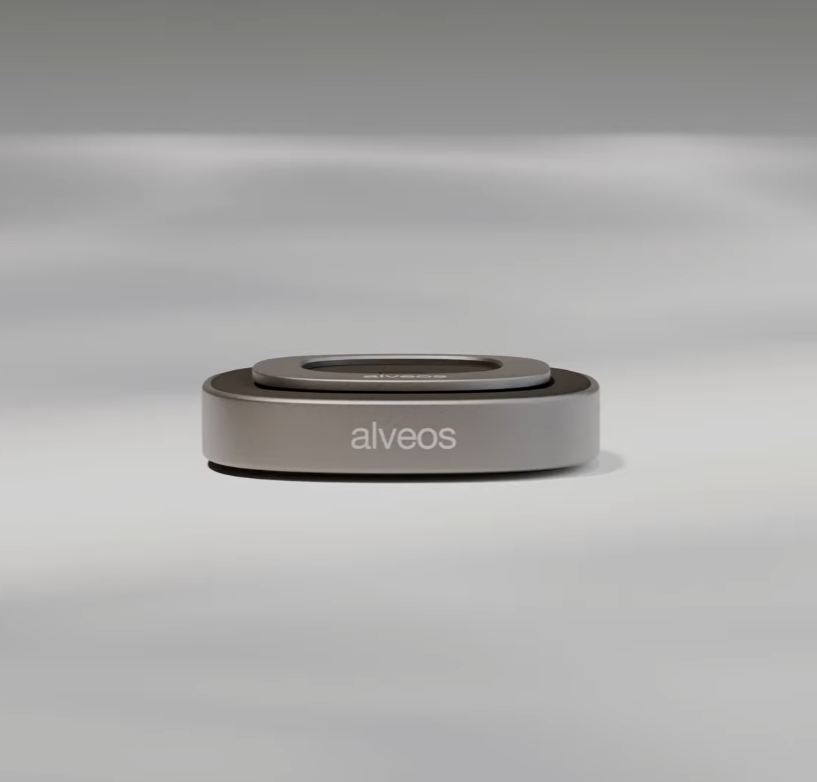
What most people misunderstand is that this is not a wristband redux. Alveos One is a chest clip built to hear inhalations and exhalations, to estimate oral versus nasal breathing, and to provide tactile nudges that are synchronous with respiration. That design choice creates a new set of tradeoffs and opportunities. The sections below unpack how it works, where it helps most, and the constraints that will determine whether it succeeds for any given user.
How Alveos One Listens To Breathing
At its core, Alveos One uses an acoustic-first sensing stack mounted on a compact clip placed on the upper chest. Acoustic and vibration sensors capture airflow-related sounds and micro movements, which are converted into waveforms for timing, intensity, and rhythm analysis. This direct approach prioritises respiratory signals over proxy metrics.
The acoustic capture is paired with an initial calibration phase so the device can build a personalised baseline across rest and light activity before classifying states. That baseline is the reference used to detect deviations and trigger haptic cues.
What Alveos One Measures And Why It Matters
Alveos One focuses on direct respiratory metrics because breathing responds faster than many downstream physiological markers. Measured outputs include respiratory rate, inhale-exhale timing, breath interval variability, rhythm stability, and a composite nervous system balance score intended for the companion app and on-device feedback.
These metrics make interventions actionable. When breath shifts toward mouth breathing or becomes irregular, those changes can be detected in seconds, enabling micro interventions that aim to prevent prolonged sympathetic activation rather than merely reporting it later.
The Feedback Loop And Coaching
The product closes the behavior-change circle with two mechanisms: brief haptic nudges delivered on the clip when breathing drifts, and short guided sessions synchronised to the detected respiratory rhythm in the app. The emphasis is on micro interventions that fit everyday moments rather than long formal breathing sessions.
Timing is the critical variable. Short cues timed to the onset of sympathetic shifts are intended to steer breathing back to calmer rhythms quickly, making on-the-spot regulation feasible during a work break or before sleep.
Constraints And Tradeoffs
The direct measurement strategy creates a pair of practical tensions that shape the experience: power and signal sensitivity. Prioritising on-device feature extraction protects privacy and responsiveness but increases energy use, while acoustic sensing performance depends on consistent placement and clothing choices.
Battery Life And Processing
On-device signal processing reduces the need to stream raw audio to a phone, improving privacy and latency. The tradeoff is energy consumption. The team describes the device as offering multi-day operation, and editorially it is reasonable to expect that runtime will vary with sensing cadence and haptic frequency, forcing a balance between responsiveness and charging cadence.
Accuracy, Placement, And Clothing
Acoustic sensing works best with consistent placement and light clothing. Thick layers, loose garments, and vigorous motion degrade signal fidelity. The clip or magnetic mount must be stable for accurate baselines, and motion-heavy activities will require stronger noise-removal models, making low to moderate motion the highest quality use case.
Privacy, Data Flow, And The Onboard Coach
Privacy is treated as a core design constraint. The stated architecture emphasises on-device feature extraction so raw breath audio is not routinely transmitted to cloud servers. Instead, derived metrics and compressed features are what synchronise with the companion app.
That choice reduces exposure of sensitive audio data but increases on-device compute, which loops back to battery tradeoffs. From a user adoption perspective, this architecture may matter as much as accuracy for people concerned about audio recording near the chest.
Alveos One Versus Wrist Trackers
Positioning respiration as a primary signal sets Alveos One apart from wrist-based fitness trackers that infer breathing from heart rate variability and movement. For stress regulation and immediate respiratory interventions, a chest-level acoustic sensor can provide earlier cues and finer-grained breath features than wrist proxies.
Signal Proximity Vs Convenience
Chest placement trades convenience for signal proximity. Wrist trackers win on continuous wearability and broader activity tracking, while a chest clip sacrifices some convenience to capture the mechanics of breathing directly.
Use Case Differences
For people focused on long-term activity, sleep staging, or step counting, wrist devices remain better generalists. For those who want fast, breath-timed interventions to manage stress or improve breathing patterns, a dedicated respiratory monitor like Alveos One aims to be more targeted.
Where This Fits In The Wearable Landscape
Alveos One is a niche but strategic play: it layers a respiratory stream on top of existing wearable ecosystems rather than replacing them. The device targets outcomes that respond quickly to intervention, such as stress downregulation, sleep preparation, and in-the-moment focus, where timing and breath fidelity matter most.
Combined with wrist or ring trackers, a chest clip could add a distinct layer of insight. The product will succeed only if its tradeoffs around battery, placement, and usability are acceptable to a critical mass of users.
What Determines Whether It Works
Success comes down to three operational levers: baseline calibration speed and reliability, sensible haptic trigger tuning, and ergonomics of attachment. The team outlines an initial calibration across rest and activity, which suggests short sessions over several days are needed to set accurate thresholds.
Those levers are tunable. Sampling cadence can be adjusted to extend battery, placement guidance can be refined in the app, and feedback thresholds can be iterated based on early user data. The Kickstarter launch will reveal which adjustments matter most at scale.
Who This Is For And Who This Is Not For
Who This Is For: People who want fast, breath-based cues to manage stress, improve nightly wind-down, or practice short breathing exercises without looking at a screen. Also useful for existing wearable users who want a specialised respiratory layer to complement activity and sleep tracking.
Who This Is Not For: Users who need all-day convenience without periodic charging, people who wear heavy layered clothing that would block chest-level acoustic sensing, and those who prioritise broad activity metrics like GPS run tracking over specialised respiratory signals.
Closing Thought
Alveos One crystallises a longer-term shift in wearables from inferring states to sensing the most proximate signals that matter. That shift introduces constraints on power and placement, but if those constraints are managed, timed micro interventions could turn brief nudges into measurable improvements in stress and sleep for many people.
The Kickstarter campaign opening in January 2026 will be the first large test of whether chest-level breath sensing and on-device coaching can scale from a focused curiosity into a mainstream habit-shaping tool.
FAQ – Frequently Asked Questions
What Is Alveos One?
Alveos One is a chest-clip respiratory wearable that uses acoustic and vibration sensors to measure breathing, provide on-device haptic nudges, and synchronise derived respiratory metrics with a companion app.
How Does Alveos One Measure Breathing?
It captures airflow-related sounds and micro movements with acoustic and vibration sensors mounted on a clip, converts those signals into waveforms, and analyses timing, intensity, and rhythm to extract respiratory features.
When Will Alveos One Be Available?
The company plans a Kickstarter launch in January 2026, which is the first opportunity for reservations and early pricing.
How Long Does The Battery Last?
The team describes multi-day operation, but runtime will depend on sensing cadence and haptic frequency. Expect variability that requires periodic charging rather than indefinite continuous use.
Is My Breath Audio Sent To The Cloud?
According to the stated architecture, raw audio is not routinely transmitted. The device performs on-device feature extraction and only derived metrics or compressed features synchronise with the app.
Can Alveos One Replace A Wrist Fitness Tracker?
It is designed to complement rather than replace wrist trackers. Alveos One prioritises direct respiratory sensing for stress, sleep prep, and breathing training, while wrist devices remain better generalists for activity and long-term wearability.
How Accurate Is The Device During Exercise?
Acoustic breath signals are strongest in low to moderate motion. During high-impact exercise, respiratory signals mix with motion noise and accuracy will depend on the effectiveness of noise-removal models and personalised baselines.
Who Should Avoid It?
People who need all-day, no-charge convenience, those who commonly wear heavy layered clothing over the chest, or users prioritising broad activity metrics may want to consider alternatives or supplementary devices.
COMMENTS