


In today’s competitive business landscape, companies are increasingly recognizing that their most valuable assets are not their products, patents, or properties, but their people. As this understanding deepens, forward-thinking organizations are investing considerable resources into creating work environments that optimize human potential.
The physical workspace has emerged as a critical factor that significantly influences employee morale, engagement, productivity, and overall well-being. Far from being merely a backdrop against which work happens, the physical environment actively shapes how employees feel, think, and perform on a daily basis.
Research consistently demonstrates that thoughtfully designed workspaces can boost productivity by up to 20%, reduce absenteeism, improve retention rates, and foster greater collaboration and innovation. Conversely, poor workplace environments contribute to stress, dissatisfaction, decreased efficiency, and even physical ailments.
As companies battle for top talent and strive to gain competitive advantages, understanding the profound relationship between physical space and human performance has become a strategic imperative rather than a peripheral concern.
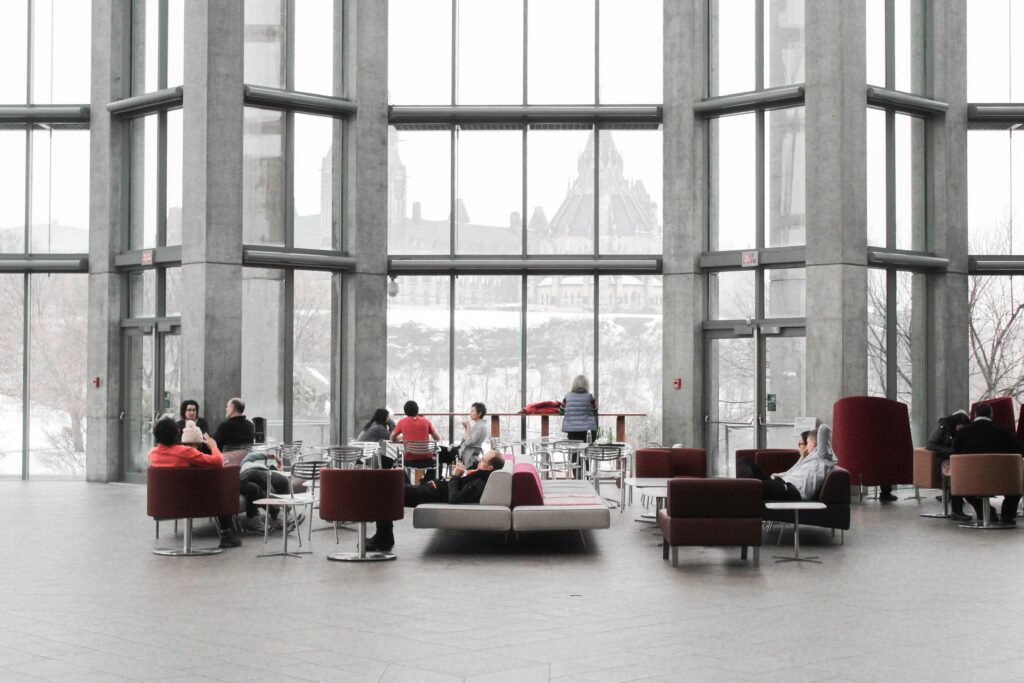
IMAGE: PEXELS
The Science Of Light: Natural Illumination And Human Performance
Among all environmental factors, lighting may have the most profound and far-reaching effects on employee well-being and performance. Humans evolved under natural daylight, and our bodies’ circadian rhythms remain intimately connected to light patterns.
Poor lighting doesn’t just strain eyes; it disrupts these fundamental biological processes that regulate alertness, mood, and cognitive function throughout the day.
Natural light has emerged as one of the most desired workplace features, with studies showing that employees with access to daylight experience up to 40% better productivity and report significantly higher job satisfaction.
Skylight Concepts, a leader in commercial daylighting solutions, has revolutionized the approach many companies take to office illumination. Their innovative designs bring natural light deep into building interiors that traditional windows cannot reach, creating more equitable access to daylight benefits across workspaces.
Their research demonstrates that properly implemented skylights can reduce energy costs while simultaneously boosting employee alertness, reducing eye strain, and improving overall mood—a rare win-win for both operational efficiency and human wellness.
Even when natural light solutions like those offered by Skylight Concepts aren’t feasible, investing in quality artificial lighting that mimics the color temperature variations of natural daylight can yield significant benefits.
Lighting systems that adjust throughout the day to complement circadian rhythms can help maintain energy levels and focus, particularly during afternoon hours when productivity typically dips.
The Psychological Impact Of Space
The psychology of space is a powerful yet often overlooked dimension of workplace design. Our surroundings communicate subtle messages about organizational values, expectations, and the importance placed on employee comfort and well-being.
Spaces that feel cramped, impersonal, or neglected can trigger stress responses and signal to employees that they are merely interchangeable parts in a machine. Conversely, environments that are thoughtfully designed with human needs in mind communicate respect and consideration, fostering positive emotional responses and stronger organizational attachment.
The concept of “psychological safety” extends beyond team dynamics to include physical surroundings. When employees feel physically comfortable and secure in their environment, they are more likely to engage fully, take appropriate risks, and contribute their best work.
Simple elements like proper ergonomics, temperature control, and acoustic management help minimize physical discomfort that can distract from focused work and creative thinking. When basic comfort needs are met, higher cognitive functions can flourish.
Spatial Layout And Social Dynamics
The physical arrangement of space profoundly influences how people interact, collaborate, and focus. The pendulum has swung between open-plan offices that prioritize collaboration and private spaces that enable concentration, with the understanding now emerging that most productive environments offer a thoughtful balance of both.
Different tasks require different environments, and the most effective workplaces provide variety and choice.
Activity-based working models recognize this reality by creating distinct zones for different work modes—quiet areas for deep focus, collaborative spaces for team interactions, social hubs for informal exchanges, and private rooms for confidential conversations or uninterrupted work.
This approach acknowledges that employees perform various types of tasks throughout their day, each benefiting from appropriate environmental support.
The most successful workplace designs also consider proximity patterns and how they affect information flow and relationship building. Strategic adjacencies between complementary teams can spark spontaneous collaborations and innovations that might never emerge in more siloed environments.
Meanwhile, thoughtful barriers between groups with potentially conflicting needs (like sales teams on calls versus developers needing quiet concentration) can minimize friction and frustration.
Biophilic Design: Bringing Nature Indoors
Humans have an innate affinity for natural elements, a concept known as biophilia. Workplaces that incorporate natural materials, plants, water features, and views of nature tap into this fundamental connection, reducing stress and restoring cognitive resources.
Research shows that even simple additions like indoor plants can improve air quality while reducing stress and enhancing creativity by up to 15%.
Beyond aesthetics, biophilic design addresses practical workplace concerns. Plants help improve indoor air quality, natural materials like wood create more comfortable acoustic environments, and nature-inspired color palettes have been shown to reduce eye strain and promote calm.
Views of nature—even through windows or via representational art—can provide mental restoration during challenging tasks, helping employees maintain focus and problem-solving capacity throughout the workday.
Personalization And Control: The Power Of Agency
One of the most consistent findings in workplace research is that employees who have some degree of control over their environment report significantly higher satisfaction and performance.
This control might take the form of adjustable furniture, the ability to modify temperature or lighting in their immediate area, or simply the freedom to personalize their workspace with meaningful items.
The psychological benefit of environmental control stems from our fundamental need for autonomy. When employees can shape aspects of their surroundings to suit their preferences and work styles, they experience a greater sense of ownership and belonging. This translates directly into increased engagement and investment in their work.
Companies that balance cohesive design with opportunities for personalization often see the best outcomes in terms of both aesthetic coherence and employee satisfaction.
The Bottom Line: Environmental Investment As Business Strategy
Forward-thinking organizations recognize that investing in physical environments is not merely an expense but a strategic business decision with measurable returns. The costs associated with creating optimal workspaces are consistently outweighed by gains in productivity, reduced absenteeism, lower turnover rates, and stronger talent attraction.
Furthermore, thoughtfully designed environments communicate company values to clients, partners, and potential recruits, reinforcing brand identity and organizational culture.
The post-pandemic workplace has highlighted just how important physical environments are to employee experience. As many companies adopt hybrid models, the office environment takes on new significance as a destination for collaboration, connection, and culture-building.
The quality of this environment sends powerful messages about how much the organization values its people and the work they do together.
In conclusion, the physical workspace is far more than a container for work—it is an active participant in how work happens and how employees feel about their contributions.
By thoughtfully designing environments that support human needs for comfort, connection, variety, and meaning, organizations create the conditions for their people to thrive. In an economy increasingly driven by knowledge work and innovation, investing in optimal physical environments may be the most important business decision a company can make.
COMMENTS