


Ask any Filipino family who the best Pusoy Dos player is, and prepare for chaos. Every household has that one self-proclaimed champion—the uncle who “always wins,” or the cousin who insists that everyone else has been playing it wrong for years.
If you dare ask how to play Pusoy Dos, you’ll get more debates than answers. But that’s the beauty of it. “How to play Pusoy Dos” isn’t just about cards or luck—it’s a living reflection of Filipino culture, negotiation, and strategy disguised as laughter and snacks.
Each family treats the game as both a battlefield and a bonding ritual, where tactics blend with tradition. Below, we decode the unwritten rules that define the Filipino art of Pusoy Dos. Not the technicalities—the real rules that separate the amateurs from the tacticians.
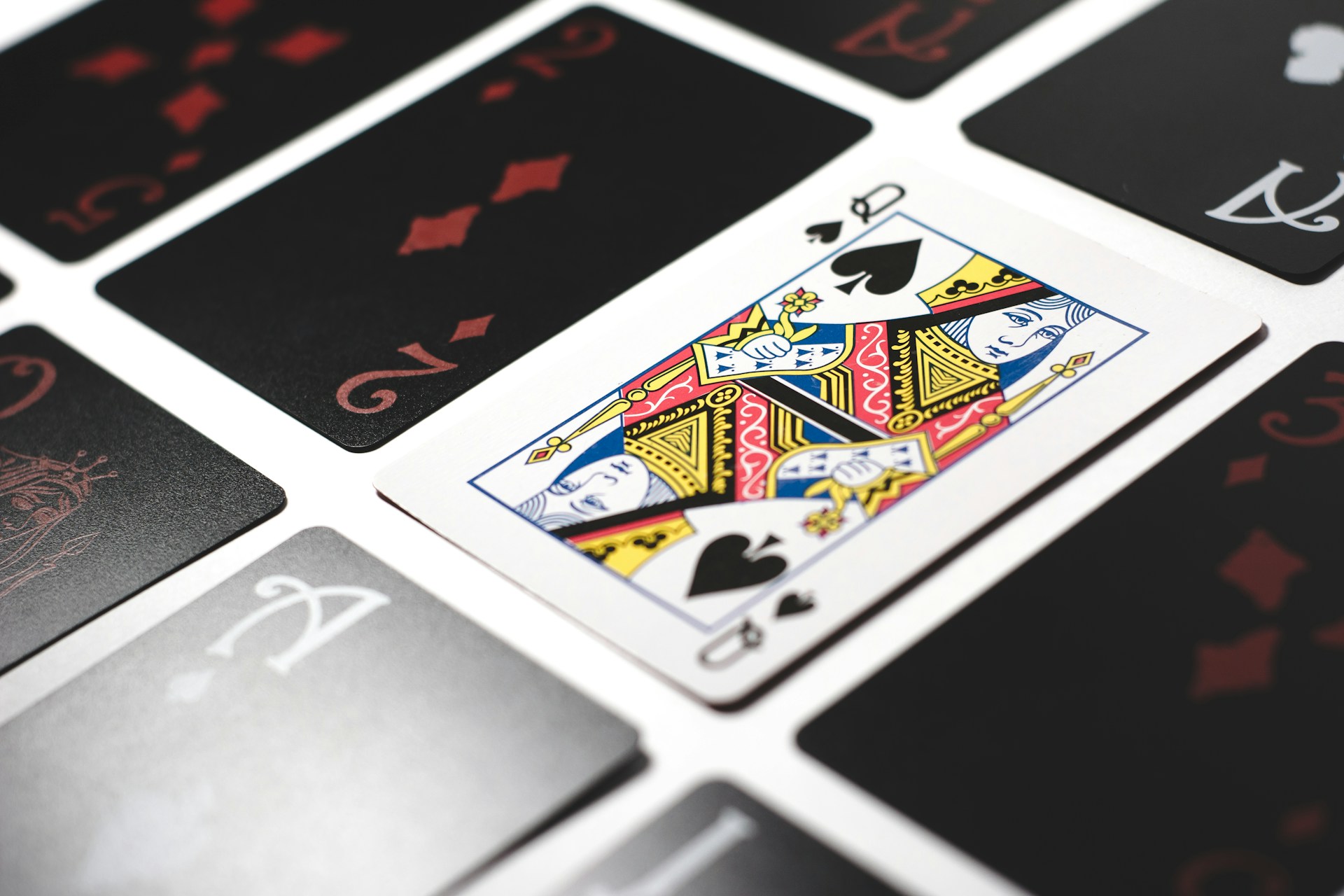
IMAGE: UNSPLASH
Rule #1: House Rules Are The Only Rules
In Filipino households, there’s no single truth about how to play Pusoy Dos—only “our version.” One family swears that the two of spades reigns supreme, while another declares that 10s can overrule anything on Sundays. Logic collapses. Democracy dies. Yet somehow, the chaos works.
That’s because Pusoy Dos isn’t meant to be standardized. It thrives on localized lawmaking—micro-governments of laughter and stubbornness.
To play strategically is to adapt. You don’t memorize rules; you read the room. Winning requires emotional intelligence, quick negotiation, and knowing when to surrender an argument to keep the peace.
In short: learning the rules is secondary. Mastering the politics is survival.
Rule #2: Pusoy Dos Is A Rite Of Initiation
No Filipino learns Pusoy Dos gently. You get thrown in, tested, and humiliated—all in good fun. The older cousins roll their eyes, titos groan dramatically, and someone inevitably shouts, “Ayan! Mali na naman!”
You don’t study Pusoy Dos; you endure it. Every correction, every mistake, and every sarcastic remark sharpens your instincts. It’s tactical conditioning—by the end of your first few games, you’re not just a player. You’re a survivor.
What begins as confusion becomes competence. And by the time you finally master how to play Pusoy Dos, you’ve also learned the subtler strategies of Filipino family dynamics—patience, humility, and timing your comebacks with precision.
Rule #3: The Eldest Always Wins – Even When They Don’t
Filipino family hierarchy doesn’t end at the dinner table—it extends to the card table. The eldest player is always right, regardless of logic or card ranking. Should Lola declare that the 3 of hearts beats the 3 of spades “because it’s prettier,” everyone falls in line.
Arguing isn’t just futile—it’s disrespectful. Strategic players know when to fold, not just in cards but in conversation. Deference is a skill, and diplomacy often wins you more goodwill than a flush ever could.
This unspoken rule reveals the game’s deeper layer: Pusoy Dos isn’t only about strategy—it’s a mirror of Filipino respect culture, where harmony matters more than technical victory.
Rule #4: Trash Talk Keeps The Game Alive
You can’t have a quiet Pusoy Dos session. Every round becomes a dramatic production of commentary, accusations, and laughter.
Someone brags, another retorts, and before long, you’re in a full-blown family roast session disguised as a card game.
But the strategic player recognizes trash talk for what it is—a psychological weapon. The teasing, the laughter, the “swerte lang ‘yan!”—they all unsettle opponents. Emotional disruption is half the battle.
Yet beneath the mockery lies affection. Trash talk is how Filipinos express love and rivalry at the same time.
In the Filipino playbook, strategy is emotional fluency—knowing when to joke, when to jab, and when to let the table laugh at your defeat.
Rule #5: Snacks Are The Secret Fuel Of Strategy
No “how to play Pusoy Dos” guide would be complete without addressing the true heart of the game: food. From pancit to chichirya, snacks are non-negotiable. The card table doubles as a buffet, and every hand is punctuated with bites and sips.
Strategically, this creates alliances. The cousin who brings turon earns protection from ridicule. The tita who forgets the merienda supply risks being “barado” for life. Snacks stabilize tempers, lubricate negotiations, and keep the game running for hours.
The smartest players know that in Pusoy Dos, generosity feeds more than hunger—it feeds favor.
Rule #6: Accusations Are A Family Sport
If no one accuses anyone of cheating, you’re not really playing Pusoy Dos. There’s always a cousin who miraculously wins five rounds, or a sibling who “accidentally” glances at your cards. And of course, the family’s resident tito who mysteriously deals himself the best hands.
But here’s the twist: no one truly gets mad. The suspicion is ritual, part of the game’s theatrical charm. Every accusation renews the competitive spirit and guarantees another rematch. The drama is as essential as the cards themselves.
In this way, even dishonesty becomes part of the entertainment economy. Filipinos don’t just play to win—they play to retell the story of that suspicious victory at every future gathering.
Rule #7: You Don’t Graduate From Pusoy Dos – You Inherit It
Eventually, veterans become mentors. Parents teach kids, siblings pass down quirks, and soon enough, the same arguments echo through the generations. “That’s not how to play Pusoy Dos!” becomes a family heirloom of a sentence.
Each new generation adds its own twist—new house rules, new snacks, new forms of friendly deceit. And that continuity is what makes the game immortal.
The strategy isn’t just in the cards but in keeping tradition alive, transforming play into a legacy.
The smartest move any player can make? Teaching someone younger to love the game enough to keep arguing about it for decades.
Rule #8: The Game Isn’t About Winning
Every strategist eventually learns that the real reward isn’t the victory—it’s the connection.
What makes “how to play Pusoy Dos” timeless isn’t the pursuit of dominance, but the shared laughter, the long sighs over a losing hand, the quiet unity of people too noisy to admit they love being together.
In an age where families gather less and screens dominate attention, the sound of cards shuffling is its own rebellion. It’s analog joy in a digital era. The game demands presence, not Wi-Fi, and gives something in return—human noise, unfiltered and alive.
Why “How to Play Pusoy Dos” Still Matters
Pusoy Dos endures because it perfectly captures Filipino resilience—adaptable, humorous, and strategic. Every hand teaches flexibility. Every argument trains diplomacy. Every laugh reaffirms community.
It’s more than just a card game; it’s an annual audit of relationships. It’s where alliances form, egos are tamed, and familial affection is expressed in mock rage.
So when someone new asks “how to play Pusoy Dos,” don’t waste time with diagrams or rankings. Hand them a deck. Pour the drinks. Let them experience the confusion and camaraderie that generations before them have survived.
The Real Rule Of Pusoy Dos
Forget the mechanics. The true rule is this: play with family, lose with grace, and never leave the table too early. The cards will fade, but the laughter—that deafening, joyous, heartwarming chaos—will echo long after the last hand.
That’s how to play Pusoy Dos—Filipino style. Strategic, sentimental, and gloriously unpredictable.
Disclaimer: The above references an opinion of the author and is for information purposes only. Never gamble for more than you can afford to lose. Gambling can lead to a serious addiction. Gamble responsibly.

COMMENTS