


As a Moroccan entertainment reporter living in Los Angeles who has interviewed many Jewish celebrities—from Rabbi Yoshiyahu Yosef Pinto to Gal Gadot—I’ve learned that cinema here is more than a pastime.
It’s a conversation, a mirror, and often, a bridge across cultures. On July 1, that spirit was on full display as I joined a packed house for the Los Angeles Jewish Film Festival’s closing night, celebrating the LA premiere of The Zweiflers and honoring legendary actor Mike Burstyn for his lifetime achievements—and his birthday.
Fresh off its Best Series win at Canneseries, the German-Yiddish dramedy drew an eager crowd, reminding us of cinema’s power to unite, challenge, and heal, especially in complex times.
“It is essential that our communities stand together during challenging times,” said Hilary Helstein, the festival’s director, as she welcomed the audience, praising The Zweiflers as a perfect example of cinema’s potential to build bridges, particularly amid rising global antisemitism.

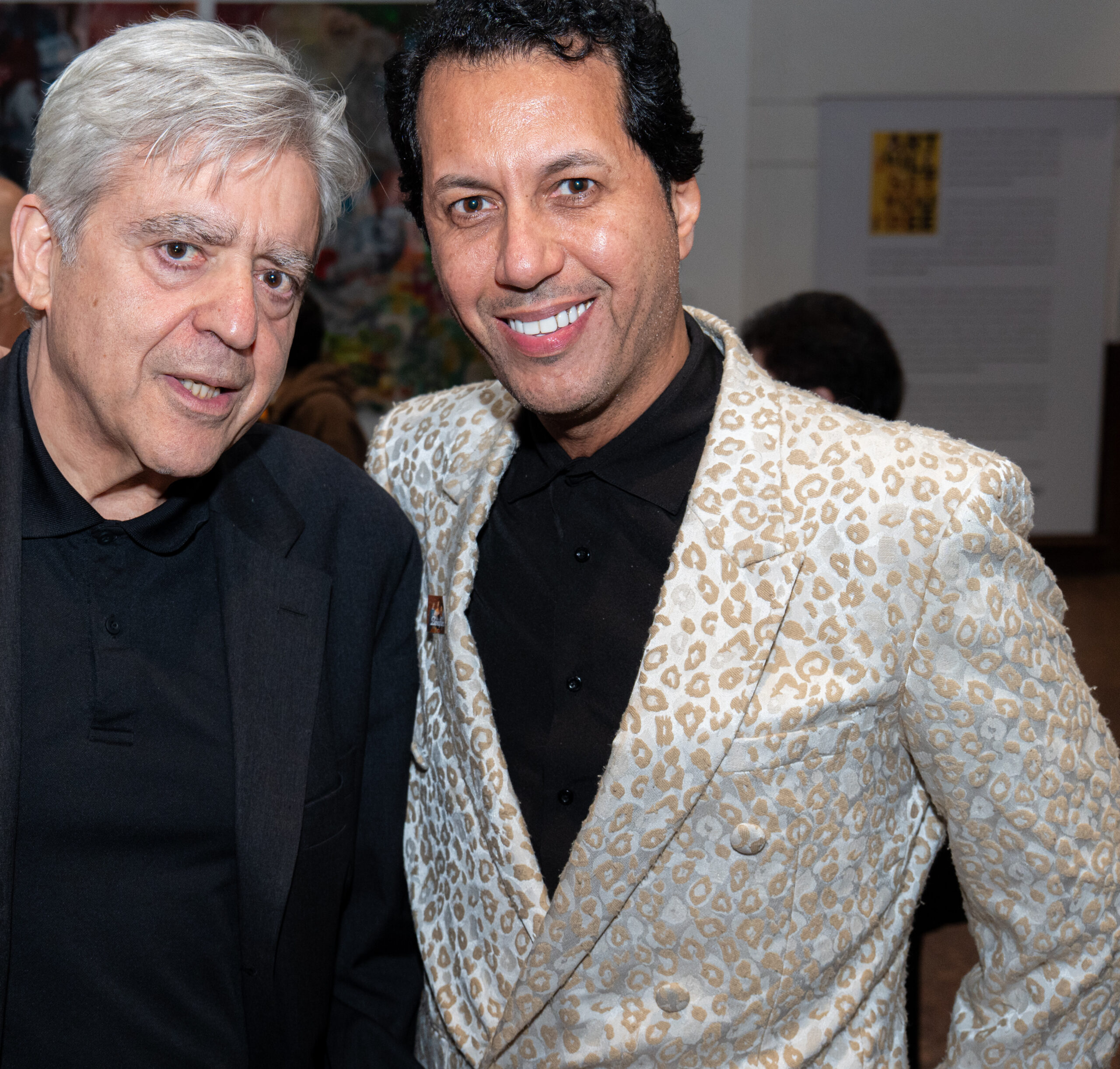
ENTERTAINMENT REPORTER SIMO BENBACHIR WITH THE ZWEIFLERS DIRECTOR ANJA MARQUARDT AND LEGENDARY ACTOR MIKE BURSTYN. – IMAGE: TODD FELDERSTEIN, COURTESY OF LAJFF
Set in post-war Frankfurt and Berlin, The Zweiflers follows Symcha, a Holocaust survivor and family patriarch, as he decides to sell his delicatessen empire, unraveling layers of family secrets and generational trauma along the way. With humor and tenderness, the series explores identity, resilience, and the tension between preserving tradition and adapting to survive.
“This isn’t just a Holocaust story,” Mike Burstyn shared during a lively Q&A moderated by David Suissa, publisher of the Jewish Journal. “It’s about family, identity, and survival in the here and now.”
Mike Burstyn, who grew up in a Yiddish theater family and performed worldwide, admitted that portraying a Holocaust survivor who chose to rebuild in Germany challenged his own assumptions. “I used to wonder how survivors could return and live in Germany,” he said. “But working on this series taught me I could not judge them. We cannot judge them.”
On stage, David Suissa noted how Mike Burstyn seemed to transform with each language he performed in, shifting fluidly between English, Hebrew, Yiddish, and German. Mike Burstyn agreed, describing actors as vessels for stories, carrying them across cultures with authenticity.
Joining them was director Anja Marquardt, known for her nuanced storytelling, who spoke about growing up in Berlin and visiting Auschwitz as a teenager—experiences that shaped her understanding of Germany’s history and her responsibility as a storyteller. “When this project came to me, it felt deeply personal,” Anja Marquardt said. “It’s about family and identity, and it’s not sanitized. It’s real.”
The Zweiflers has already struck a chord internationally, winning Best Series, Best Music, and the High School Jury Award at Canneseries. Young jurors there explained their choice simply: “We saw ourselves and our families in this series.” Mike Burstyn aptly described the show as “like a German Succession with a touch of Shtisel,” highlighting how it remains culturally specific while resonating universally.
Mike Burstyn shared that German networks fast-tracked the series’ release following October 7 to encourage dialogue amid rising antisemitism. “I hope platforms like Netflix see it for what it is—a great story, not just a favor to a Jewish audience,” he said. Anja Marquardt also spoke of surreal moments during filming in Frankfurt, where post-October 7 tensions contrasted with everyday acts of solidarity.
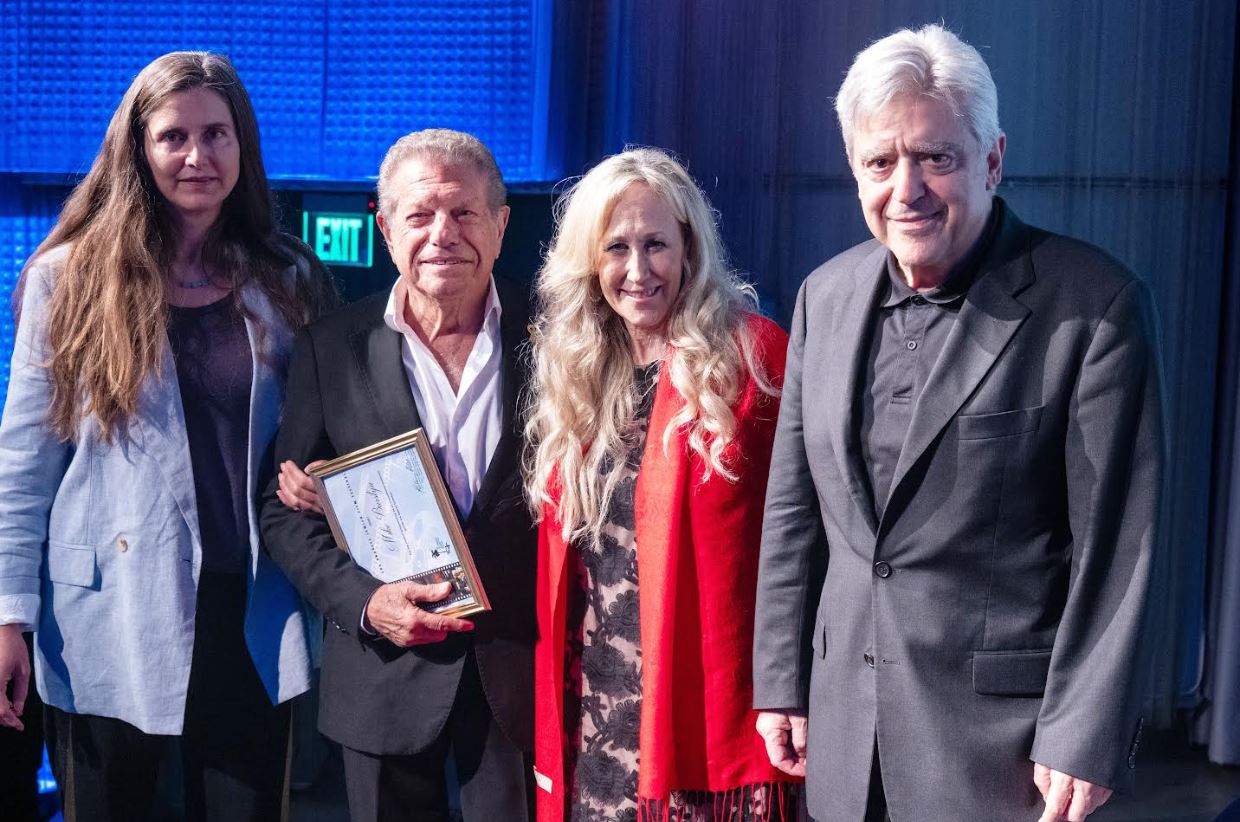
THE ZWEIFLERS DIRECTOR ANJA MARQUARDT AND LEGENDARY ACTOR MIKE BURSTYN WITH LOS ANGELES JEWISH FILM FESTIVAL DIRECTOR HILARY HELSTEIN AND JEWISH JOURNAL PUBLISHER DAVID SUISSA. – IMAGE: TODD FELDERSTEIN, COURTESY OF LAJFF
She recounted how Muslim security guards protected the crew during night shoots, illustrating how storytelling can bring people together despite politics. “There’s something beautiful about people just existing and helping each other while telling these stories,” she reflected.
After the Q&A, the evening turned even warmer as the audience spontaneously sang “Happy Birthday” to Mike Burstyn, celebrating his big day with laughter and cake in the lobby of the Museum of Tolerance.
It was there, amid the swirl of well-wishers and birthday joy, that I had a lovely chat in French with David Suissa. Like me, he grew up in Casablanca, and we bonded over the layers of identity and language that shape who we are, particularly in moments when cultures meet under the soft glow of cinema lights.
For those unfamiliar, the Los Angeles Jewish Film Festival (LAJFF) has spent 20 years preserving Jewish heritage, cultivating Jewish values, and enriching Jewish life for diverse audiences across the city. Global films, year-round screenings, and conversations like these continue to foster dialogue, understanding, and community connection.
Closing its 20th edition with The Zweiflers felt fitting, leaving us reflecting on the resilience of family, the power of storytelling, and the bridges we build—one conversation, one film, one shared laugh or tear at a time.
As a Moroccan in Los Angeles, it was a reminder that stories, no matter where they originate, have the power to resonate across continents and histories. They remind us that our identities can be celebrated, examined, and embraced without fear—even in complicated times.
COMMENTS