


The moment a beloved animated character steps off the screen and into the real world the rules change. Scale, gravity and hardware constraints force every artistic choice into the cold logic of engineering. That collision is what makes the Olaf Robot such an interesting case because the project does not merely replicate motion it preserves personality.
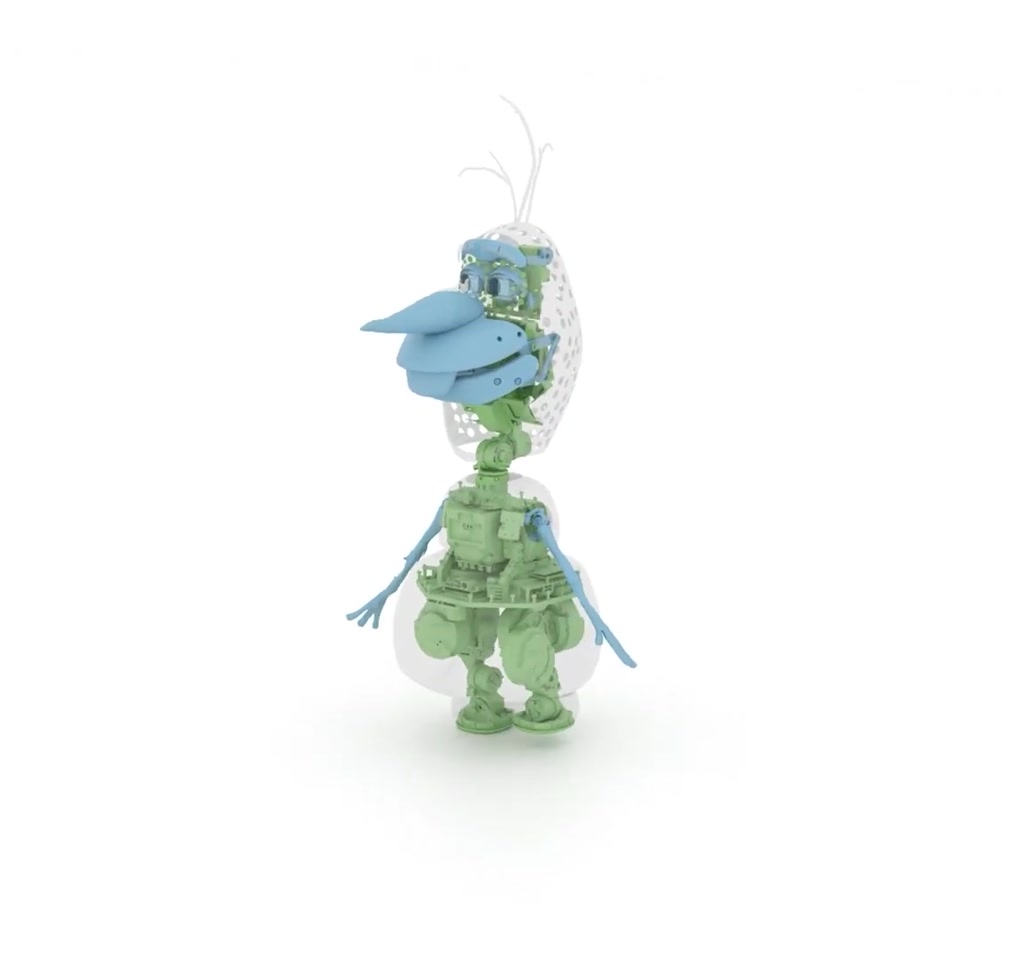
Olaf Robot is true to movie scale and hides all mechanical and electrical components behind shells and a costume so the audience sees a single presence rather than a machine wearing a costume. The team solved a chain of design problems from magnetic costume parts that break away on impact to reinforcement learning policies that keep actuators cool while preserving the snowman gait.
Designing For Illusion And Safety
The goal was not to build a walking robot and then dress it as Olaf. The design starts from the character silhouette and works inward. Limbs nose buttons eyebrows and hair are magnetically attached so they stay in place during normal operation but break away when the robot falls. That choice protects hardware and enables in character gags without complex mechanical fuses.
Cosmetic shells conceal the motors and wiring so the audience perception remains cinematic. Even small details such as how the snowballs around the feet deform influence the perceived motion. The effect relies on a careful mix of material selection and unconventional kinematics.
Mechanical Solutions For Unusual Proportions
Legs And Snowballs
Olaf Robot faces a classic trade off. The head is large and heavy while the lower body has to look like a compact snowball. There is no room for conventional hip and knee actuators at the joints if the costume is to remain believable. The solution is a novel asymmetric six degree of freedom leg design that lets the hip and knee move within the confined interior space while the outer snowball preserves the silhouette.
The outer snowballs are made from flexible polyurethane foam so they hold their round shape yet allow enough deflection for large leg excursions. That elasticity makes dramatic recovery steps possible without ripping the costume. It also creates the visual illusion that the feet are moving freely along and around the body.
Arms Eyes And Mouth
Space constraints drive more indirect solutions. The shoulders have two degrees of freedom each but there is not enough room for shoulder actuators at the joint. Instead the motors sit inside the torso and drive the arms through a spherical five bar linkage. That keeps the external form clean while delivering expressiveness.
The mouth uses a single actuator to drive both upper and lower jaws. The lower jaw moves directly and the upper jaw couples through a four bar linkage so the mouth can match animation cues with minimal hardware. The eyes are independently driven for yaw while pitch and eyelid closure operate through remote four bar linkages. These mechanisms keep the face light and responsive without cluttering the visible character.
Learning To Move While Staying In Character
The control strategy centers on reinforcement learning trained in simulation. Rather than hard coding trajectories the robot learns policies that follow an artist specified reference motion while remaining robust to noise and disturbances. The reference motions are parameterized by control inputs like walking velocity and robot pose and those parameters are randomized during training so the policy generalizes.
At runtime Olaf Robot is puppeteered. A remote interface and an animation engine process teleoperation commands to trigger animations audio and interactive joystick control. The animation engine produces high level inputs that the trained policies interpret to produce physically realistic motion that still matches the animator intent.
Thermal Aware Control And Impact Reduction
Driving a large head with small actuators creates a thermal risk. The team augmented simulation with a thermal model and fed actuator temperatures into the policies. They designed a novel reward term that penalizes actions leading to overheating. As temperatures approach the eighty degrees C limit the policy gradually reduces torque and adjusts posture to prevent further thermal buildup.
Another problem was the harsh sound of impacts when the original animated walk cycle was replicated exactly. The engineers introduced an impact reduction reward which encourages smoother contact impulses and significantly lowers audible impact. The net effect is a walk that reads as authentic but does not sound like a robot slamming itself down.
What Makes The Gait Feel Like Olaf
Olaf has a characteristic heel toe walk that matters to perception. The team trained separate walking policies with and without heel toe reference. The version trained without heel toe references produced a noticeably robotic gait while the heel toe policy matched the character gait more closely. That experiment underscores a simple truth in character robotics. Small stylistic cues matter more than you might expect.
The system balances fidelity and robustness. The policies track reference clips and predefined animations while handling disturbances and costume related compliance. Magnetized facial and accessory parts allow playful interactions that retain character even when components break away.
Engineering Trade Offs And Practical Lessons
The project is instructive because it layers engineering constraints under artistic requirements. Using offboard actuators buried in the torso reduces visible complexity but complicates linkages. Foam shells provide visual continuity yet introduce compliance that interacts with control. Thermal management must be part of the control objective not an afterthought.
Those trade offs yield a list of practical takeaways that other character robotics efforts can use as a starting point
- Hide the hardware but plan for its thermal and mechanical limits
- Use materials that preserve shape yet allow necessary deflection
- Parameterize animation references so learning can generalize across poses and speeds
- Include perceptual cues like heel toe motion in training data
How The System Responds Live
During operation the puppeteer can nudge speed or pose and the policy produces physically feasible actions that remain faithful to the animation. When the neck begins to heat the control shifts posture to preserve both safety and character. When a fall happens the magnetized accessories detach and the costume keeps the illusion intact.
Sound And Physicality
Reducing impact noise changed how audiences perceive authenticity. The team discovered that smoothing contact impulses had outsized effects on whether the robot felt alive or mechanical. That insight ties acoustic design to locomotion control in ways most robot projects treat separately.
There is also a cultural detail to consider. Audiences bring a memory of the animated performance and will judge the physical version against it. Engineering choices that protect hardware or improve safety must be evaluated against how they affect perceived personality.
Olaf Robot demonstrates that a character can be mechanically constrained yet emotionally convincing. The puppet like interface combined with learned policies creates a two person show where human direction and learned physical intelligence share center stage.
Seeing a character you know stumble find balance and continue acting with the same comedic timing forces a reconsideration of what we expect from robots that perform. The next frontier is less about raw capability and more about integrating perception materiality and control so characters keep their essence when physics gets involved.
COMMENTS