


Design isn’t about filling a room; it’s about giving it a pulse. You can buy all the accent lighting, wall art, and decorative vases in the world, but until you have one piece that commands attention, the space doesn’t feel grounded.
That anchor is almost always a table.
Not just any table — a well-made, real-wood table that feels substantial enough to live around. The kind that turns a house into a place you actually want to sit down in. And when it comes to that kind of presence, oak dining tables are in a category of their own.
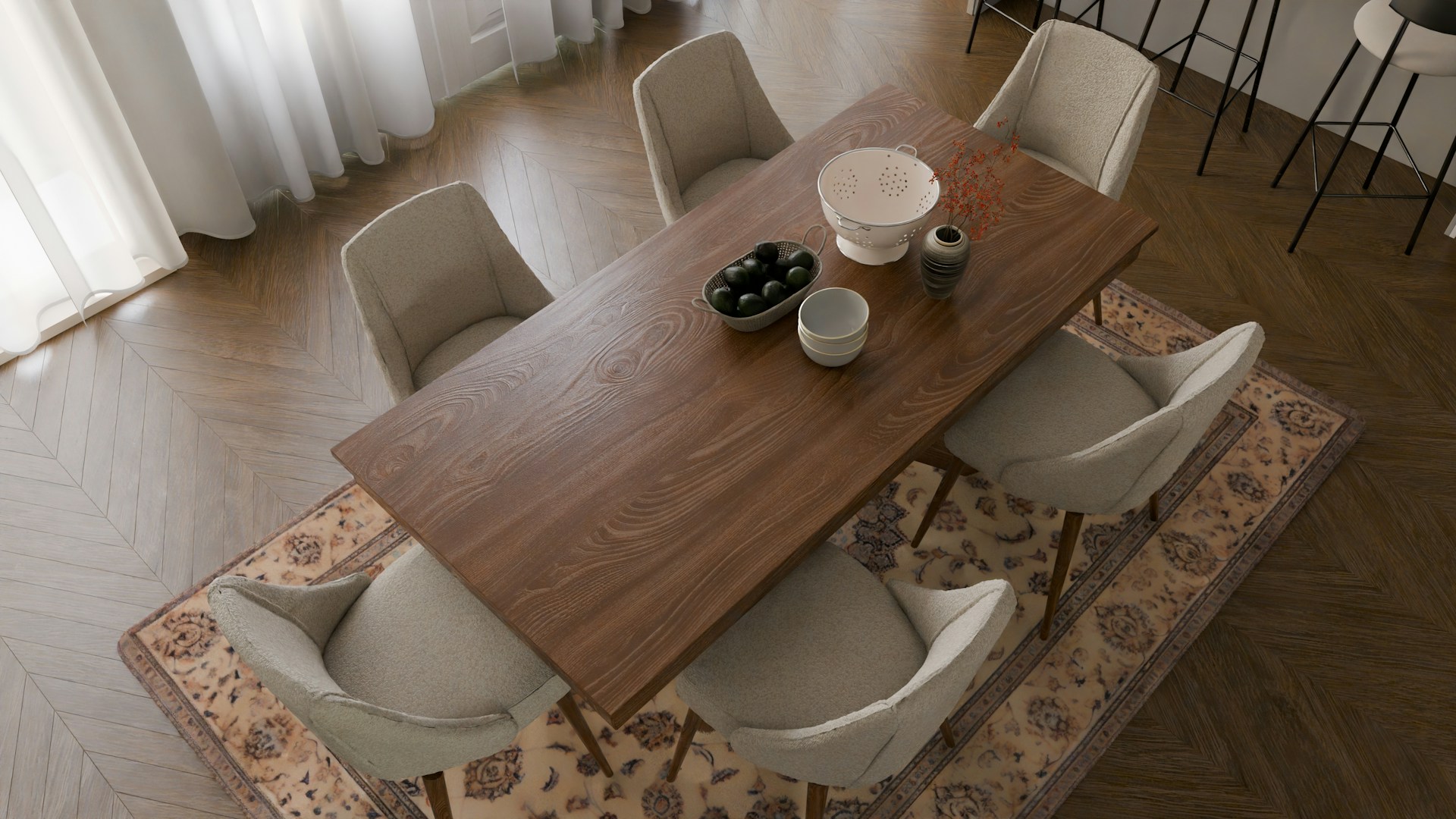
IMAGE: UNSPLASH
The Power Of A Single Centerpiece
Interior designers will tell you that every great space needs a focal point. Most people assume that means art or lighting, but more often, it’s the furniture. The right table draws the eye without shouting for attention. It carries weight — visually and literally.
An oak dining table does this effortlessly. It doesn’t try too hard. It doesn’t need to. Its natural grain, texture, and solid frame bring instant warmth and structure to a room. Even in a minimalist space, it reads as intentional, not empty.
It’s not decoration — it’s foundation.
Beyond Function: Why Tables Matter So Much
A table is where everything happens. Coffee in the morning, laptops in the afternoon, takeout containers on Friday nights. It’s a silent participant in your routine.
Good design respects that. It acknowledges that furniture isn’t just seen; it’s used. Oak tables endure because they’re built for the long game. They can handle the scratches, the spills, the years of movement. They wear in, not out.
There’s an honesty to that. A piece that doesn’t demand perfection but rewards care.
Material Matters
You can tell when something is real. The weight, the texture, the way it reacts to light — those small, sensory details make a difference.
Oak carries a tactile integrity you don’t get from veneer or MDF. It’s solid, dense, and forgiving. It has character built into its grain. No two pieces are ever identical.
That’s what makes it timeless. Trends come and go, but oak never feels dated. Whether your space leans mid-century, industrial, or modern farmhouse, it finds its place naturally. It’s the design equivalent of a good leather jacket — simple, confident, versatile.
How Oak Redefines Space
Here’s where things get interesting: a good table doesn’t just fill space, it changes how the space feels.
- Scale: A solid oak table visually anchors an open concept layout. It creates boundaries without walls.
- Texture: Natural wood breaks up the sleek, often sterile feel of modern interiors. It adds dimension and warmth.
- Continuity: The grain of oak draws the eye, giving movement to stillness. It creates a natural flow between elements in the room.
It’s subtle, but once it’s there, you notice. The space suddenly feels cohesive, not cluttered.
The Psychology Of Quality
There’s a quiet shift that happens when you start buying things that last. You stop redecorating to keep up, and start curating. You become more selective, more intentional.
Oak furniture, particularly a dining table, taps into that mindset. It’s a statement of permanence — that you’re not designing for now, you’re designing for the next decade.
It’s not about luxury, it’s about longevity. Real materials, built well, with purpose.
From Casual Dining To Creative Hub
One of the best things about an oak dining table is its versatility. It’s rarely just a dining table. It becomes a desk, a workspace, a gathering point.
In modern homes where space is flexible, furniture has to multitask. The beauty of oak is that it transitions seamlessly from work mode to dinner mode without losing its sense of design.
You can scatter notebooks, serve dinner, or host friends — it handles all of it with quiet authority.
Craftsmanship That Shows
When something is made properly, you can tell. The edges align. The joints are clean. The surface feels balanced.
Mass-produced furniture might look fine from a distance, but up close, it falls apart — sometimes literally. Oak tables, on the other hand, reward inspection. The craftsmanship is visible. The structure feels deliberate.
That’s why brands that focus on genuine woodworking continue to stand out. They’re not chasing the next color trend; they’re refining the art of how a table should feel when you sit down at it.
Aesthetic Longevity
The design world moves fast. One minute it’s coastal grandma chic, the next it’s brutalist minimalism. But oak doesn’t have to keep up. It’s neutral in the best way — adaptable, grounded, and easy to style around.
Add steel legs, and it’s modern. Pair it with linen chairs, and it’s classic. Layer it with concrete and glass, and it feels architectural.
The point isn’t to make oak something else; it’s that oak allows everything else to shine.
The Investment Mindset
Here’s the truth: the cheapest option always costs you the most in the long run.
A well-made oak dining table can last decades. You can refinish it, restain it, or leave it to develop a patina that tells its own story. You’re not spending, you’re investing — in quality, in craftsmanship, in fewer replacements over time.
That’s the shift from buying to building — not just a home, but a standard.
The Energy Of Real Materials
Even with all the talk about minimalism and modern living, people crave authenticity. Real materials have presence. They make spaces feel human.
You can sense the difference between a synthetic tabletop and oak — one feels cold and temporary, the other feels lived-in and alive. The grain tells a story. The surface changes subtly with time. That kind of design isn’t decoration; it’s experience.
Bringing It All Together
A single table can absolutely redefine your space — not through flash, but through substance. It’s not about the centerpiece vase or the color of your chairs. It’s about how the foundation feels. A solid oak dining table doesn’t need attention; it earns it.
It’s not there to match your room. It’s there to make the room.
COMMENTS