


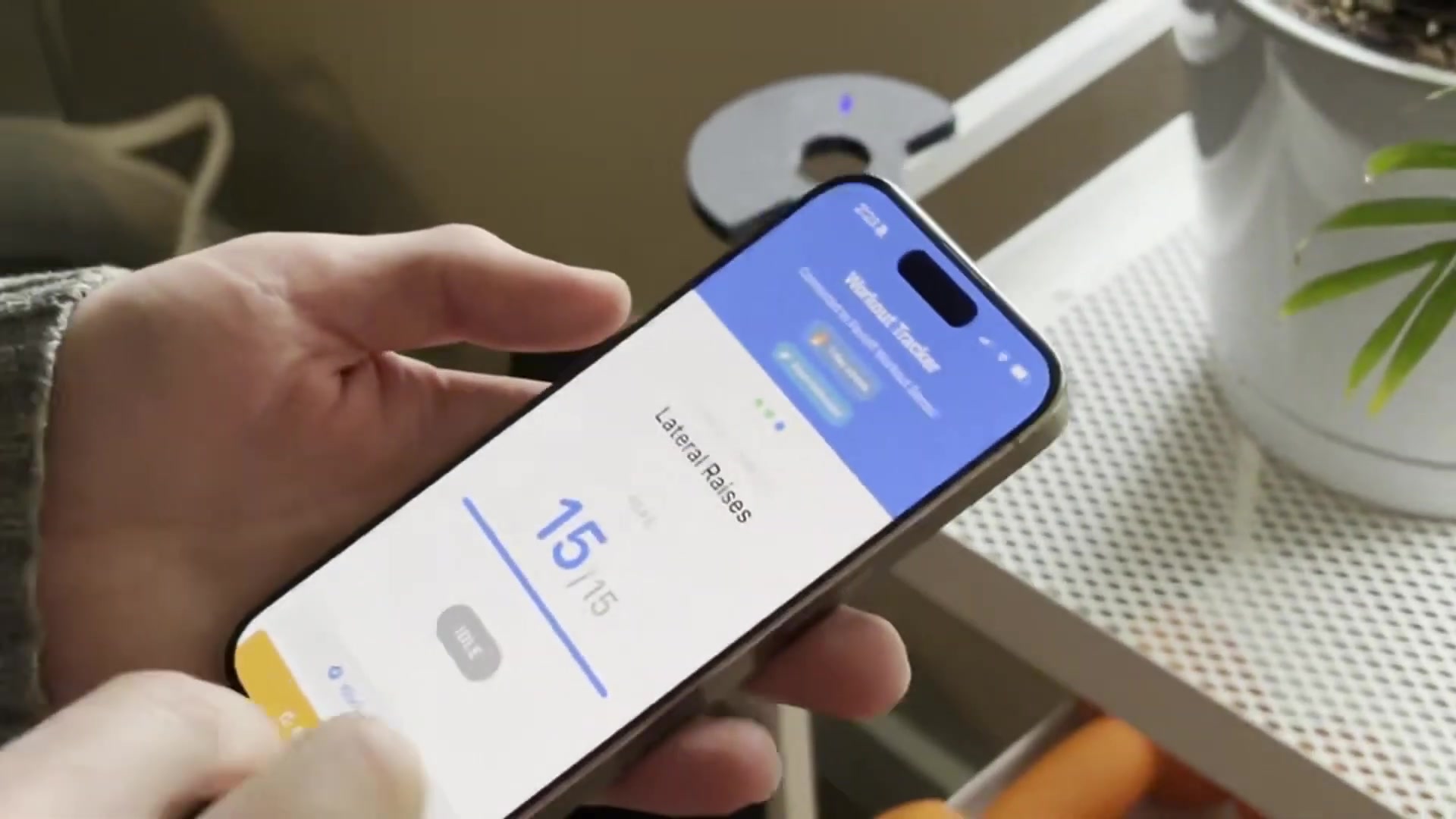
The clip on the campaign page is intentionally raw: a creator films the phone screen with a handheld camera to show the device waking when picked up and social apps staying disabled until the motion tracker records activity. That unpolished demo communicates the product idea faster than a glossy spec sheet ever could.
Pavl-off locks your social apps until you move. The concept is simple and black-and-white: attached motion equals earned access. That behavioral contract, not sensor novelty, is the product’s primary leverage and the point every buyer should evaluate.
What Is Pavl-off And How It Locks Social Apps
Direct Answer: Pavl-off pairs a clip-on Bluetooth motion sensor with a companion app that blocks chosen social apps until the tracker records sufficient movement. Users set which apps are restricted and an exercise target. The system enforces a simple contract: move first, regain access later.
The demo shows a small inertial tracker paired to a phone. The app lists blocked apps, displays a movement progress indicator, and unlocks access as motion accumulates. Configurable targets and app lists are the basic variables that define the daily experience.
How Pavl-off Works In Practice
Direct Answer: The device wakes on motion, broadcasts via Bluetooth, and the app tallies movement. As movement accumulates toward the preset target, the app unlocks the selected social apps. Pairing, sensor sensitivity, and the app’s classification of motion determine whether walking, cycling, or other activity counts toward unlocking.
Hardware Signal And App Pairing
In the demo the tracker behaves like a simple accelerometer-based device: it wakes on motion and sends signals over Bluetooth. That prevents the simplest cheat of telling the phone an exercise occurred without any external physical input. The demo does not show motion classification rules or sensitivity thresholds.
User Flow And Unlock Mechanics
The customer flow is deliberate and short: pick the apps to restrict, choose or set an exercise target, attach or clip the device, and move. The app then displays progress and unlocks when the predefined movement target is met. The experience is framed as earning access rather than restricting it.
Why Pavl-off Is More About Behavior Economics Than Fitness
Direct Answer: Pavl-off is a commitment device: it makes the undesired reward contingent on a desired action. It is not primarily a fitness tracker for performance metrics. Its value comes from enforced friction and credibility; if enforcement fails or is easily bypassed, the behavioral effect collapses.
This product borrows a basic behavioral trick: convert an abstract future benefit into an immediate exchange. The important variable is enforcement credibility. If users can easily override the lock, the device loses its point; if the friction is tolerable and consistent, it can change a habit.
Real Constraints That Decide If Pavl-off Works
Direct Answer: Two practical constraints determine practical effectiveness: operating system enforcement limits and the physical limits of a Bluetooth motion tracker. OS controls like Screen Time or Digital Wellbeing set how strict app blocking can be. Bluetooth range, battery life, and motion classification set detection reliability and real-world accuracy.
Operating System Enforcement Limits And Bypass Risk
To block apps the phone-side needs authority. On iOS this typically routes through Screen Time; on Android it commonly uses Digital Wellbeing or device admin features. Those are user-configurable and in many cases can be changed or bypassed, which reduces the product’s absolute enforcement strength.
Bluetooth Reliability, Battery Life, And Detection Accuracy
Bluetooth motion trackers commonly operate in a 5 to 10 meter effective range and show wide battery life variance depending on sampling cadence and transmission frequency. Motion detection tuned for walking may miss cycling or slow resistance work. Expect detection edge cases to appear in early use.
Quantified Context For The Tradeoffs
Similar consumer motion trackers often cost from low tens to low hundreds of dollars to produce at scale. Setup tends to take from a few minutes to tens of minutes depending on permissions. If the app requires continuous background access to motion sampling or usage data, that raises data exposure compared with short-term local storage.
Pavl-off Vs Screen Time And Digital Wellbeing
This comparison focuses on enforcement, flexibility, and bypass risk rather than marketing claims. Pavl-off adds a physical input that ties movement to app access; built-in OS features are software-only and can be quicker to change but may integrate more deeply with system controls.
Pavl-off Compared To Screen Time
Pavl-off adds an external sensor and a behavior contract; Screen Time is native to iOS and can be managed through system settings. Screen Time may be more resilient to app-level limitations but lacks the external commitment device that enforces movement first.
Pavl-off Compared To Digital Wellbeing
Digital Wellbeing on Android offers app timers and focus modes. Pavl-off can be seen as a layer on top: it enforces a physical action before app timers reset. The tradeoff is extra hardware complexity versus the potential for stronger behavioral leverage.
Privacy, Trust, And Crowdfunding Realities
The campaign shows the product in action but does not substitute for concrete privacy and delivery details. Buyers should expect questions about data storage, retention windows, cloud requirements, and the explicit API path used to restrict apps. Those choices affect both privacy and trust.
Manufacturing And Fulfillment Risks
Crowdfunded hardware carries typical timing and fulfillment risks. Prototype behavior can differ from mass production, and backers should expect calibration, firmware updates, and app tweaks post-launch. Confirm whether the team has prior hardware shipping experience and a clear refund policy.
What To Watch For On The Campaign Page
Before backing, look for sensor specs (accelerometer type), battery life estimates under realistic sampling, Bluetooth version, pairing procedure, supported phone OS versions, the exact method used to restrict apps, data retention details, and a manufacturing and delivery timeline with contingency plans.
Who This Is For And Who Should Walk Away
Who This Is For: People who acknowledge their own scrolling weakness and want an external, immediate constraint. It suits users who are willing to accept friction in exchange for control and who will not routinely change system settings to bypass enforcement.
Who This Is Not For: Buyers seeking fine-grained training data, coaching, or reliable detection across diverse activities like swimming. Also avoid this if you habitually uninstall apps or grant yourself administrative permissions that would negate the lock.
Final Takeaway
Pavl-off locks your social apps until you move. Its promise is straightforward and compelling if enforcement is credible. The product’s success depends less on clever hardware and more on how reliably the OS integration and motion detection hold up in daily life.
FAQ
What Is Pavl-off?
Pavl-off is a clip-on Bluetooth motion tracker paired with a companion app that blocks chosen social apps until the tracker records enough movement to meet a user-defined exercise target.
How Does Pavl-off Unlock Apps?
The tracker wakes on motion, broadcasts to the phone over Bluetooth, and the app tallies movement toward a preset goal. When the movement target is reached, the app unlocks the selected social apps.
Is Pavl-off A Fitness Tracker?
No. It is a commitment device focused on behavior change rather than precise fitness metrics. It measures enough movement to gate access, not to provide detailed training analytics.
Can Pavl-off Be Bypassed?
Possibly. App blocking depends on OS-level controls such as Screen Time or Digital Wellbeing, which users can sometimes reconfigure. The product is only as strict as those system permissions and user discipline allow.
What Are The Battery And Range Expectations?
Bluetooth trackers typically have effective ranges around 5 to 10 meters and battery life that varies with sampling cadence. The campaign mentions wide variance from short to multi-day life spans; exact numbers should be confirmed on the product page.
Does Pavl-off Store Motion Data In The Cloud?
The campaign does not fully disclose storage details in the demo. Buyers should check the campaign for whether motion data is stored locally, held in the cloud, retention periods, and any account requirements before backing.
Should I Back The Crowdfunding Campaign?
Back it if you want a simple, enforceable habit device and accept early hardware risk. Skip it if you need robust multi-activity detection, absolute enforcement guaranteed by enterprise controls, or if you lack tolerance for post-launch firmware changes.
How Do I Evaluate The Campaign Demo?
Watch for clear specs: sensor type, battery life under real sampling, supported phone OS versions, the app-blocking method, privacy policy, refund policy, and team shipping experience. Those details separate a persuasive demo from a dependable product.
COMMENTS