


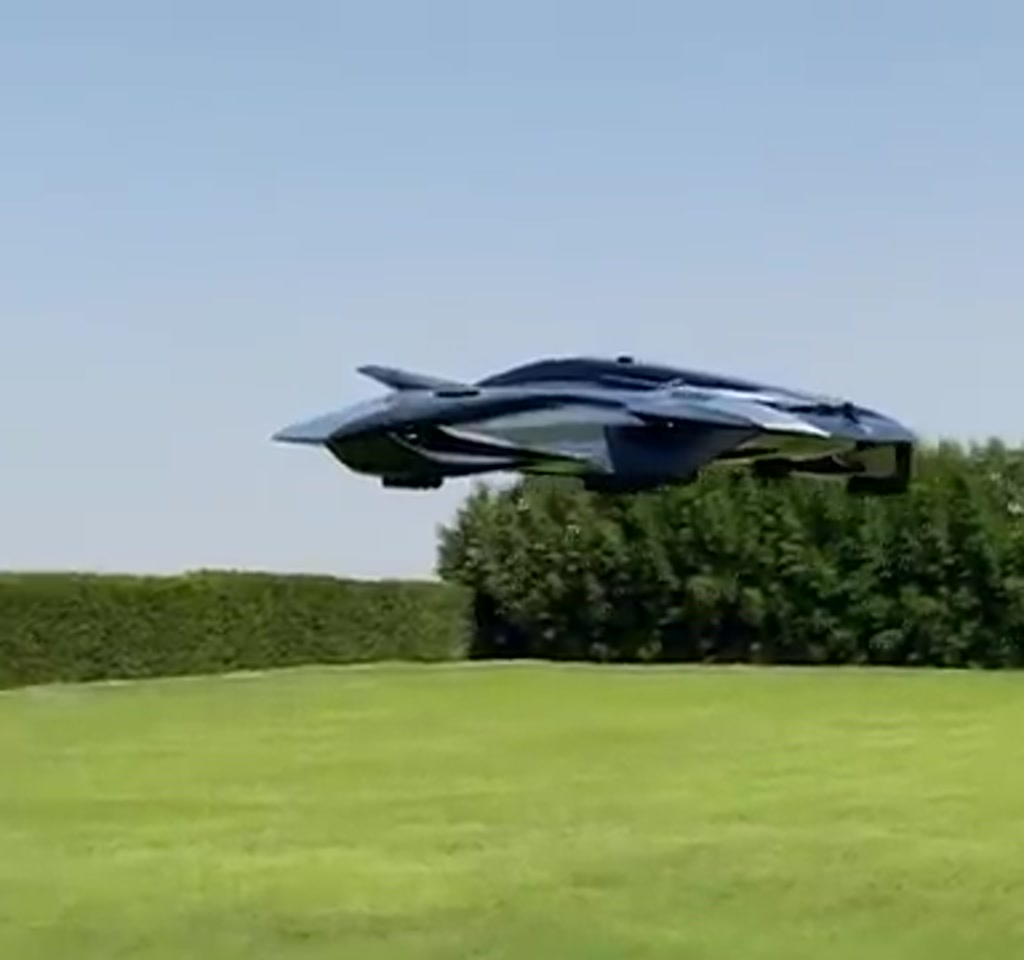
The Bellwether Volar arrives in the conversation about urban air mobility like a design brief come to life. It is not a helicopter with nicer paint. It is a lifting body with ducted fans tucked into a smooth fuselage, an aircraft that looks as much like a hypercar as it does like something out of conventional aviation. That styling is not mere spectacle. It points to a different argument about what a city-friendly flight could be.
The real significance here is not top speed or a dramatic takeoff video. What actually determines whether the Volar matters is systems integration. Battery endurance, a network of vertiports, noise limits, regulatory alignment and public acceptance must come together for a vehicle like this to change daily travel. The aircraft is a necessary component; the ecosystem is the decisive one.
Most coverage treats eVTOLs as standalone machines that will simply replace cars. That is a misunderstanding. The Volar shows where the work really is: hiding the rotors tells you something about safety and aesthetics, but it does not magically solve range, charging logistics, or the need for accessible landing infrastructure. These constraints are the filters that will sort which designs scale and which remain prototypes.
What becomes obvious when you look closer is a tight set of tradeoffs. The Volar’s ducted fans reduce exposed blade risk and aim for a smaller acoustic footprint. Those are advantages for rooftop operations.
But those advantages come at the expense of complexity in thermal management, battery load, and maintenance regimes. The design reframes the problem, and therefore it reframes the questions planners, regulators and operators must answer.
What Is The Bellwether Volar
The Volar is an eVTOL concept from Bellwether Industries that uses a lifting body with four enclosed ducted electric fans. It is expressly optimized for short hops inside and around dense cities, prioritizing compact landing footprint, perceived safety, and acoustic reduction over maximum range or high passenger counts.
Design That Reframes Urban Flight
The Volar’s designers prioritized city compatibility. Instead of large exposed rotors on arms or tilting wing mechanisms, Bellwether Industries has placed four ducted electric fans inside a lifting body. The aircraft’s silhouette reads as compact and purposeful. That choice is about more than looks. It changes the physics of how the aircraft interacts with its environment and the operational envelope city regulators will care about.
Enclosing rotors in ducts alters safety vectors. An exposed propeller requires buffer zones, operational exclusion areas and substantial public education. An enclosed fan reduces one visible source of hazard and helps in convincing stakeholders that rooftop operations are manageable. That is a practical design choice with social consequences. It is easier to argue for rooftop pads when blades are not visible and when the noise signature has been engineered downward.
From an editorial standpoint, the Volar is interesting because it privileges the urban problem over the aerodynamic purity problem. Many eVTOL concepts begin with traditional aircraft goals and then try to reconcile them with cities. Bellwether appears to have inverted that process. The aircraft is expressly optimized for short hops in dense environments where landing footprint and acoustic impact matter more than long-range endurance.
How The Hidden Propulsion Works
Ducted fans are not new, but packaging them inside a lifting body for an eVTOL blends several engineering disciplines. The fans provide vertical lift for takeoff and landing and then contribute to forward thrust during transition and cruise. By placing the fans inside the fuselage, the Volar reduces the risk of foreign object damage and accidental contact with people on the ground.
Mechanical And Thermal Tradeoffs
Enclosing rotating machinery means engineers must solve cooling and airflow routing inside a constrained volume. Fans generate heat, and batteries do as well. The tradeoff here is thermal complexity versus public safety and noise control.
The ducts help with safety and acoustic damping, but they force a denser packaging of heat-producing components in the airframe, which in turn places higher demands on cooling systems and material choices.
Those tradeoffs are measurable. Cooling systems and ducting add weight, and weight reduces useful range or payload. In practice, the Volar’s designers will have to balance battery capacity, structural mass and active cooling mass so that the aircraft retains the claimed 90 minutes of flight time while accommodating passengers and safety systems.
Redundancy And Control
The propulsion architecture uses four ducted fans each driven by its own electric motor. That setup allows redundancy in vertical lift phases. If one motor fails, the flight control system can redistribute power and adjust thrust vectors to maintain controlled flight, within limits. Redundancy here is a critical safety argument, but it is not a cure-all. Failures during transition between vertical and forward flight remain a sensitive design moment and a hard certification hurdle.
Benefits And Value Proposition
The Volar’s main advantages are lower perceived risk for rooftop operations, a reduced acoustic footprint compared to exposed rotors, and a compact form factor that places landing and visibility concerns at the center of design. Those benefits translate into fewer local obstacles for siting and a clearer public narrative if regulators and communities are persuaded.
Flight Capabilities And Realistic Use Cases
The Volar cruises at roughly 135 miles per hour or about 217 kilometers per hour, which makes short hops across congested urban corridors its natural use case. At cruise speeds, a 20-mile trip can be a sub-15-minute flight, but true service value depends on door-to-door time, including vertiport access and turnarounds.
Bellwether projects roughly 90 minutes of flight time on a single charge. That endurance supports several short flights or a round trip with reserves, but fleet utilization depends on recharge cadence and infrastructure. The company provides an approximate conservative range figure of 50 miles in development materials, aligning the Volar with intra-city and short suburban service rather than long intercity trips.
The aircraft is expected to operate at altitudes up to about 3,000 feet above ground level. That keeps it below commercial traffic lanes and within the anticipated corridors for urban air mobility, while also increasing the importance of obstacle awareness and local noise exposure considerations.
Certification, Infrastructure, And Market Timing
Certification through authorities such as EASA and the UK Civil Aviation Authority is a multi-year, iterative process. The Volar must demonstrate compliance across structural integrity, system redundancy, software assurance, electromagnetic compatibility and noise. Each of these areas creates a potential schedule risk and a source of cost growth.
Bellwether indicates a possible commercial availability window in the late 2020s. That timing is conditional. It assumes that prototypes scale into production designs, that certification tests proceed without repeated design changes, and that cities and regulators create pathways for vertiport and rooftop operations. Any of those steps can push timelines outward by multiple years.
Infrastructure is not a marginal issue. Vertiports require space, fast charging or battery swap capabilities, safety and firefighting adaptations, and integration into ground transport networks.
The Volar’s promise of rooftop operations helps with proximity to destinations but increases infrastructure costs because city rooftops are often awkward in geometry and may require structural reinforcement.
Constraints, Tradeoffs, And The Numbers
Battery energy density is the single largest technology constraint. With today’s rechargeable lithium battery chemistry, aircraft endurance is measured in tens of minutes to a few hours depending on payload and safety reserves.
The Volar’s 90-minute figure is credible as a design target, but it becomes a limiting factor when fleet economics and operational cadence are considered.
Energy Density And Operational Cadence
If an aircraft can fly for 90 minutes and then requires several hours of recharge to return to full capacity, daily revenue flights per aircraft will be limited. Service models, therefore, hinge on rapid charging, spare battery inventories, or swap systems, each adding capital and operational expense and pushing early production costs toward the high end of aerospace pricing.
Infrastructure Density And Accessibility
For aerial mobility to meaningfully compete with ground travel, vertiports must be close to origins and destinations. Dense urban service typically requires stations every few miles, while suburban coverage can be sparser. If vertiports are too far apart, first mile and last mile friction erodes the time savings that justify higher fares.
These two constraints interact. Longer range relaxes vertiport density needs but increases battery weight. Smaller, quieter, lighter designs make rooftop deployment more plausible but limit range. That tradeoff will define which fleet architectures are practical and which remain niche.
Volar Vs Exposed Rotor eVTOLs
The choice between ducted-fan lifting bodies and exposed rotor designs is a core industry decision that balances safety optics, noise, maintenance, and range. The Volar leans toward urban friendliness; exposed rotor designs often push for longer range or greater payload at the cost of public acceptance in dense settings.
Safety And Noise
Enclosed ducts reduce visible blade hazards and can lower perceived noise, which helps with rooftop acceptance. Exposed rotors may require larger exclusion zones and more public education but can be simpler to cool and maintain in some architectures.
Range And Infrastructure
Exposed rotor eVTOLs that prioritize range can reduce vertiport density needs but will still face noise and siting concerns. The Volar accepts shorter effective range to favor closer landing sites, aiming to trade range for better integration with urban rooftops.
Operational Complexity
Ducted fans add thermal and mechanical packaging complexity that affects maintenance and weight. Exposed rotor systems can be more straightforward in airflow but may impose harder limits on where they can land in a city. Each architecture forces different operational and regulatory tradeoffs.
What This Means For Cities
The Volar’s design choices point to one possible future: a fleet of compact, relatively quiet aircraft operating from distributed vertiports, serving short corridors where ground travel is congested. That future is not inevitable. It will require cities to accept aviation in new parts of their footprint and to commit to investment in vertiport infrastructure and integrated traffic management.
Public acceptance will hinge on perceived safety and nuisance. The Volar’s concealed fans change the optics of safety in a way regulators and residents are likely to find more acceptable than exposed rotors.
Acoustic reduction is another critical variable. Even modest reductions in perceived noise can broaden the number of acceptable landing sites.
From an editorial perspective, the interesting question is not whether the Volar is technically clever. It is. The question is whether that cleverness aligns with the incentives of cities, regulators, and the paying public. If vertiports cluster only around wealthy neighborhoods or airports, social utility will be limited. If regulators require burdensome retrofits or restrictive noise limits, commercial viability will be harder to achieve.
Where The Volar Fits In The Broader eVTOL Wave
Bellwether is one of many companies iterating on the urban air mobility idea. What distinguishes the Volar is its explicit focus on city integration. Where other designs emphasize range or high passenger counts, Bellwether has optimized for compactness, safety optics and lower acoustic signature. That is a strategic choice that trades some range and payload for operational compatibility with rooftops and tight urban pads.
That strategy may open different market segments. The Volar could be attractive for point-to-point services within dense city regions, corporate shuttles, and niche premium services where time savings justify higher fares. It also creates an easier pathway for pilot training if redundancy and control systems reduce operational complexity.
Looking Ahead
Bellwether Industries has demonstrated a half-scale prototype and conducted hover tests, showing that the lifting body and enclosed propulsion approach can work in principle. What remains is the hard work of scaling, testing, certifying and integrating into city fabric. That is not a single engineering challenge but a collection of engineering, regulatory and social tasks that must be solved together.
The Volar is a reminder that hardware choices echo loudly in policy rooms and neighborhood meetings. Concealed fans make rooftop operations more plausible. Reduced perceived noise helps with public acceptance. Battery endurance and charging cadence determine fleet economics. Those are quantifiable, interdependent constraints that will decide whether the Volar is a novelty or a new transit layer.
Who This Is For And Who This Is Not For
The Volar Is Best Suited For Urban Operators And Developers Targeting Short Corridor Travel: Operators focused on intra-city corridors, developers planning rooftop vertiports, and premium shuttle services that can monetize reduced travel time will find the Volar’s compact, quieter design attractive.
The Volar Is Not A Fit For Long Intercity Routes Or Low Capex Rollouts: If you need long-range intercity service or an aircraft that minimizes new infrastructure investment, the Volar’s design tradeoffs and vertiport requirements make other architectures or incremental ground improvements more practical.
FAQ – Frequently Asked Questions
What Is The Bellwether Volar?
The Volar is an eVTOL concept using a lifting body and four enclosed ducted electric fans, designed for short urban hops with a focus on rooftop operations, perceived safety and lower noise.
How Do The Hidden Ducted Fans Work?
The ducted fans provide vertical lift and contribute to forward thrust in transition and cruise. Enclosing them reduces exposed blade risk and can damp acoustic signature, but it increases thermal and packaging complexity.
What Is The Cruise Speed Of The Volar?
The transcript sets the Volar’s cruise speed at roughly 135 miles per hour, about 217 kilometers per hour.
What Is The Range Or Endurance Of The Volar?
Bellwether projects about 90 minutes of flight time as a design target. Development materials reference a conservative practical range near 50 miles, while theoretical maximums vary with reserves and payload.
Can The Volar Operate From Rooftops?
The design is explicitly optimized for rooftop operations. Concealed fans and lower perceived noise are intended to make rooftop siting more acceptable, but rooftop structural reinforcement and regulatory permissions remain critical hurdles.
When Will The Volar Be Certified And Available?
Certification is a multi-year process with authorities such as EASA and the UK Civil Aviation Authority. Bellwether indicates a possible commercial window in the late 2020s, but that is conditional and subject to testing, design changes and regulatory progress.
How Many Flights Can One Aircraft Do Per Day?
The exact daily flight count is uncertain and depends on recharge time, charging infrastructure, battery swap strategies and operational reserves. Limited endurance or long recharge periods will reduce daily revenue flights per aircraft.
Does The Volar Replace Ground Transport?
Not by itself. The Volar is designed to reduce travel time on specific congested corridors, but overall value depends on vertiport proximity, integration with ground transit and fare levels. It is likely to complement, not instantly replace, existing ground options.
COMMENTS