


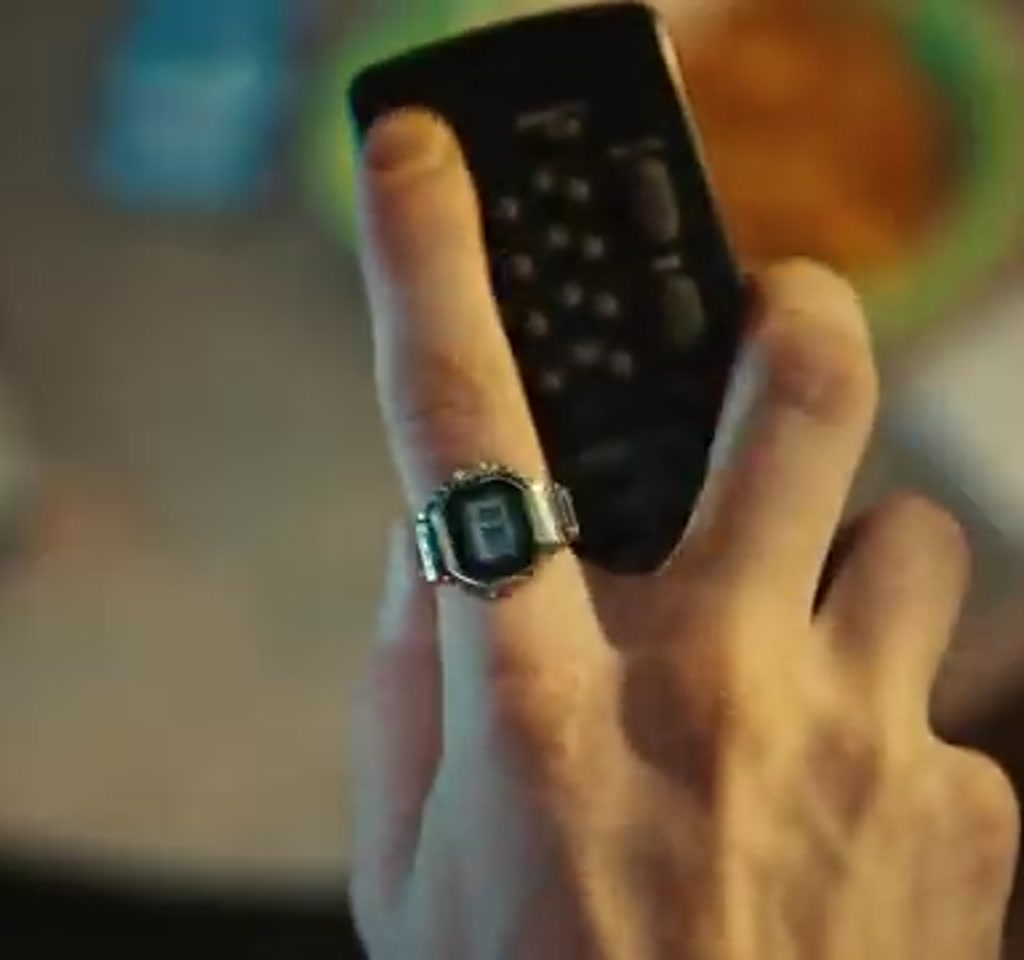
Casio has done something both brazen and quietly logical. The company packaged a working digital module into a stainless steel ring and called it a watch. The result, known as the CRW0011ER or simply the Casio ring watch, is simultaneously charming, bewildering, and undeniably clever.
The real significance here is not that Casio made time wearable on a finger. What actually determines whether this matters is that the company miniaturized a full digital module, kept it legible at odd angles, and delivered it in a metal package that echoes the brand’s G-Shock heritage. This is a design statement that happens to tell time.
That statement arrived with real-world consequences. The release created unexpectedly intense demand, the company had to pivot to a raffle, and many enthusiasts queued up without success.
A lucky winner loaned a unit for close inspection, which is how most people outside the raffle are seeing one today. The episode matters because it frames the ring as both product and cultural event.
What follows is an attempt to understand the Casio ring watch on its own terms: its lineage, how it was made, what it can and cannot do, who it appears to be for, and the tradeoffs that define its usefulness. The point is not to celebrate or dismiss. It is to make sense of why this little object has generated such strong responses.
A Little History Tells A Big Story
The ring watch does not spring from nowhere. It sits inside a narrative Casio often retells: in 1946 the company started with a product called the Ring Pipe, and the profits from early novelties funded an evolution into calculators, musical instruments, typewriters, and ultimately watches, including the G-Shock family. That founding myth gives the CRW0011ER a tidy symbolic logic, a looped origin story where a ring inspired a company and a ring returns the favor.
This lineage explains the design vocabulary. The CRW0011ER borrows the brickwork motif and square, utilitarian aesthetic associated with the B5000 family and the original G-Shock. It is a deliberate wink to designers and collectors who read Casio as more than mass market appliance: it is industrial craft, history, and brand storytelling made tangible.
What The Casio Ring Watch Is
The Casio ring watch is a stainless steel ring embedding a downsized digital module, intended as both an ornamental object and a functioning timepiece. It prioritizes readable segmentation, compact control logic, and brand reference points from G-Shock design over extended utility, creating a hybrid between jewellery and micro-electronics.
Engineered Miniature: How The Ring Was Made
Material And Manufacturing Choices
At first glance the ring looks like a tiny stainless steel watch head welded into a ring. In reality it is formed from two stainless steel parts, a case back and a separate ring body.
Casio used a metal powder injection moulding process to create the shapes and the brushed top and bottom surfaces. That technique lets a manufacturer achieve complex shapes at scale while keeping per-unit cost and weight manageable.
The metal approach matters for perception. Compared with plastic or treated resin, stainless steel makes the ring read like jewellery and machine at once. It is deliberately tactile and less disposable than a plastic novelty. That choice influences cost, production complexity, and the way collectors think about the object.
The Miniaturized Module
A central technical feat is the downsizing of Casio’s digital module by roughly a factor of ten, according to the makers. The company replaced a coin cell used in many full-size Casio watches with a smaller button battery to fit the ring form factor. The tradeoff here is explicit: you get a compact functional module, and you accept a shorter battery life and a reduced set of mechanical accommodations inside the case.
Battery And Module Tradeoffs
Casio quotes a battery life in the region of two years for the CRW0011ER. That number frames expectations in concrete terms. Compared with many full-size digital watches that often run for several years on a single cell under light use, the ring is a higher-maintenance object by design.
The simplicity of the module is a feature that enables the size and price point, but it erects a clear boundary for long-term ownership.
How The Casio Ring Watch Works In Practice
Functionally the ring is more capable than it looks. Despite its tiny real estate the module provides time with running seconds, a stopwatch, a dual time or GMT mode, date, day of the week, an alarm that signals via a flash, and an ice-white backlight.
The control scheme follows the familiar Casio logic: a mode button, a start/stop button that doubles as reset when held, and simple mode cycling.
The ring does not beep and it does not vibrate. The alarm is visual, a pulse or flash, which is understandable for something worn on a finger but is also a clear functional tradeoff for users who rely on audible alerts. The backlight is described in terms comparable to premium G-Shock models, but it remains a small, localized light source appropriate to the scale.
Legibility And Human Factors
Legibility is surprisingly good. The display reads clearly at different angles and distances, which is not trivial when you shrink a segment LCD down to ring size.
Casio prioritized human perception in the design: contrast, segment size, and bezel treatment were tuned so the tiny numerals remain intelligible without magnification.
Limits, Tradeoffs, And Quantified Constraints
Every novel object is a set of compromises. Here are the most concrete ones to bear in mind.
- Price Vs Novelty The ring retails around 100 pounds. That price places it above impulse novelties but below many mid-tier wristwatches. The constraint then is not absolute cost but the price band in which collectors weigh purchase decisions. For some, 100 pounds for a highly engineered statement piece is sensible. For others it is a steep premium for a device that rarely replaces a wristwatch.
- Battery Life The internal battery life is approximately two years. That is a quantified maintenance interval. Owners should expect periodic battery replacement within a timeline closer to years rather than decades. For people who prefer long service intervals in wearable electronics, the ring shifts maintenance into a more frequent cadence.
- Water Resistance Casio marks the ring as water resistant in the sense of splash proof. It is not suitable for swimming or diving. If the design intent is jewelry for daily wear, splash resistance will satisfy most casual uses. If the intent is sport or heavy outdoor use, the ring crosses a utility threshold it cannot meet.
- Fit And Sizing The stainless steel ring is not mechanically adjustable. Casio supplies two spacers that fit into the inside of the ring to reduce the internal circumference. That solves part of the fit problem for some fingers, but not all. As a constraint this is significant because wearable comfort is binary: a ring either fits or it does not. Buyers must accept a sizing gamble unless they secure the correct size through a direct purchase.
- Production And Availability The initial launch overwhelmed Casio’s systems, forcing a raffle to allocate units after the website crashed. That scarcity is both a production constraint and a marketing amplifier. Limited supply pushed desirability higher, but it also left many interested buyers disappointed, and it signals that future access may remain constrained.
These constraints are not failures. They are conditions that define what the ring is and where it functions best. The device trades routine usefulness for sculptural brevity and brand storytelling. That tradeoff raises the open question of whether scarcity and novelty will sustain interest beyond the initial cultural moment.
Casio Ring Watch Vs Traditional Wristwatch
Seen against a traditional Casio wristwatch, the ring prioritizes narrative and compact engineering over ergonomic utility and long battery life. A wristwatch typically offers longer battery life, audible alarms, and a mechanical fit that is easy to size. The ring instead asks owners to accept limitations for the sake of form and reference.
Ring Versus Alternatives
Compared to novelty ring watches or fashion tech, the CRW0011ER leans toward engineered restraint: stainless steel construction, a genuine Casio digital module, and tuned legibility. Against high-end mechanical rings or smart rings, it lacks tactile complications or sensors, but it retains a clarity of intent that many alternatives do not.
Who The Ring Is For And Why
The ring does not replace a wristwatch for most practical purposes. The reviewer who inspected a loaned unit was blunt about that: timekeeping, stopwatch use, dual time, and alarm functions are all things they would not typically pursue on a ring. Those judgments are useful because they mark the ring as an object with more cultural than utilitarian weight.
So who is the intended audience? The promotional messaging and a lot of the conversation around the ring point to a younger demographic, people who treat wearables as fashion statements and social signifiers. That matches the product’s aesthetic. It dresses up a classic Casio face in a tiny metal shell and offers a tactile wink toward the brand’s origins.
Social Signals And Style
The ring reads differently in different social contexts. A casual observer may see it as novelty or a quirky accessory. A watch collector sees a lineage and a technical achievement. A designer sees material choices and manufacturing technique. Those divergent readings are part of the ring’s power. It performs as accessory, artefact, and engineering sample simultaneously.
Practical Use Cases
Practical scenarios where the ring makes sense are narrow but real. Wear it at a social event as an attention piece, keep it in a watch box as a conversation starter, or add it to a collection where scarcity and reference value matter. It is less compelling as a primary timekeeper or sports accessory. The device excels in contexts where novelty and narrative matter more than functionality.
Who This Is Not For
This ring is not for people who need long battery life, robust water resistance, adjustable sizing, or audible alarms. If you depend on a wearable for sports, diving, or continuous notifications, a wristwatch or a specialized smart ring will be a better fit. The CRW0011ER intentionally narrows its usefulness.
An Editorial Takeaway
Casio’s ring watch is a highly engineered gimmick. That label is not a dismissal. The ring is deliberately a cultural object that trades some functional territory for identity and craft. The creators minimized the module, accepted a shorter battery life, capped water resistance at splash proof, and limited mechanical sizing adjustments, all to achieve an unusual form factor in stainless steel for about 100 pounds.
From an editorial standpoint the decision to make a ring rather than a scaled-down wristwatch or a pendant is a statement about what the brand wanted to provoke: curiosity, conversation, and a reconnection to an origin story. The early release chaos, the raffle, and the polarized reactions only punctuated that intent. Scarcity amplified the narrative, whether that was planned or accidental.
The ring will land differently depending on what someone values. For those who prize long-term useful wearables it will feel like an expensive novelty. For designers, collectors, and fans of Casio’s history it is a tidy object lesson in what happens when engineering and storytelling collide at a small scale.
One paragraph stands on its own: Casio shrunk a functional digital module, preserved legibility and brand DNA, and wrapped it in stainless steel, creating a wearable that is as much commentary as it is timekeeper.
What happens next is the part to watch. Will Casio treat this as a one-off cultural play, or will the ring be the start of a series that explores size, material, and function in new ways? The answer will say a lot about how mainstream brands experiment with the boundary between utility and adornment. That open question matters because it will determine whether scarcity remains a marketing amplifier or becomes a structural constraint for future designs.
For now the CRW0011ER sits in a narrow but meaningful category: not quite jewellery, not quite tool, but a small machine that asks owners to value story and craft as much as ticks and alarms.
Note The unit discussed was provided on loan by a raffle winner named Thomas King, who won the right to purchase one during the initial release. The launch experienced site outages and a raffle allocation, which shaped the early reception and availability of the product.
Looking forward, the ring raises useful questions about the relationship between scarcity, design practice, and wearable function. Those questions will determine whether the CRW0011ER becomes a collectible footnote or a model for future playful, engineered wearables.
FAQ
What Is The Casio Ring Watch?
The Casio ring watch, model CRW0011ER, is a stainless steel ring containing a downsized digital module that displays time, running seconds, a stopwatch, dual time, date, day, and a visual alarm with backlight.
How Long Does The Casio Ring Watch Battery Last?
Casio quotes a battery life of around two years for the CRW0011ER. That is shorter than many full-size Casio digital watches that often run for several years on a single cell.
Is The Casio Ring Watch Water Resistant?
The ring is described as water-resistant to splash only. It is not intended for swimming or diving and should not be treated as a sport dive accessory.
Can You Resize The Casio Ring Watch?
The ring is not mechanically adjustable. Casio supplies two internal spacers to reduce circumference for some fits, but buyers should consider sizing a potential constraint before purchase.
Does The Casio Ring Watch Replace A Wristwatch?
For most users the ring will not replace a wristwatch. It trades everyday utility for novelty, narrative, and collectible value. It is most compelling as an accessory or a design object rather than a primary timekeeper.
Why Did Casio Use Stainless Steel For The Ring?
Stainless steel gives the ring a jewellery quality and a sense of permanence compared with plastic or resin. The material choice ties the object to Casio’s industrial aesthetic and increases perceived value.
How Was The Casio Ring Watch Sold Initially?
The initial launch overwhelmed Casio’s systems, and the company used a raffle to allocate units after site outages. That approach contributed to scarcity and polarized early reception.
Will Casio Make More Ring Watches?
There is no definitive public information about future ring releases. The initial release and its reception leave the question open; whether Casio treats the CRW0011ER as a one-off or a prototype for a series remains to be seen.
COMMENTS