


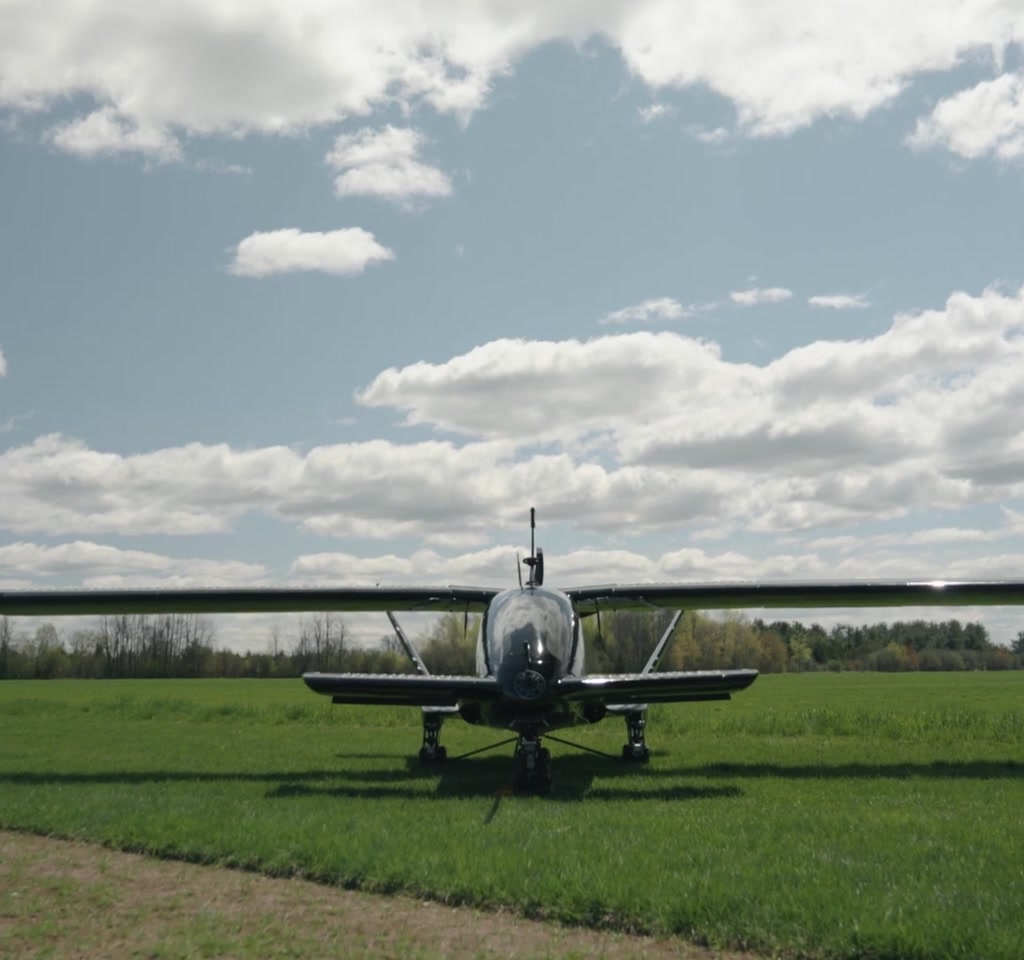
The Cavorite X7 is not pitched as another short-hop air taxi. Horizon Aircraft positions it as a hybrid electric vertical takeoff and landing aircraft built for regional missions where range, speed, and the ability to land without a runway matter.
The real significance here is not that the Cavorite X7 hovers. What changes the game is its claim to combine distributed electric lift with a conventional turbine to support missions measured in hundreds of kilometers rather than tens. That is an operational shift with immediate consequences for operators and regulators.
What becomes obvious when you look closer is that the idea is elegant on paper and hard in practice. From an editorial standpoint, the architecture trades the battery constraint for a more complex integration problem that touches thermal limits, failure tolerance, and certification timelines.
Why The Cavorite X7 Matters Right Now
Horizon markets the Cavorite X7 as a bridge between helicopters and regional airplanes. It promises vertical access like a helicopter, plus cruise speeds and range closer to conventional turboprops. That combination targets point-to-point missions between smaller cities, remote logistics, and time-critical operations where avoiding ground transfers saves minutes or hours.
Most all electric eVTOL concepts accept limited range and need charging infrastructure. The Cavorite X7 instead uses a gas plus electric energy system to push range out to distances that are operationally useful beyond urban air taxi hops. If it reaches published targets, it would occupy a distinct niche in real-world air mobility.
How The HOVR Wing Works
The aircraft’s defining hardware is the HOVR Wing, a fan-in-wing architecture. Rather than large exposed rotors or rotating tilt mechanisms, Horizon embeds multiple ducted lift fans inside wing structures. Sliding panels open to let air flow through the fans for vertical lift and close to restore a low-drag wing in forward flight.
This matters because concealing lift hardware reduces aerodynamic penalties in cruise. It also changes failure assumptions by distributing lift across many smaller fans rather than relying on a few large rotors.
Lift Distribution And Redundancy
Horizon states the system uses 14 ducted lift fans distributed across the transforming wing. The company has highlighted fault tolerance by noting a prototype hovered while around thirty percent of fans were disabled. That kind of redundancy reframes hover safety from single point failure to graceful degradation.
Graceful degradation is not free. Placing fans inside wings requires sliding panels, complex doors, and power electronics that must tolerate ingestion, heating, and mechanical wear. The architecture exchanges some mechanical complexity for less external rotor hardware.
Practical Implications Of Distributed Fans
Distributed fans reduce the severity of a single fan failure. They also multiply potential failure modes. Controllers must manage many motors, sensors, and actuators, and do so in fractions of a second during hover and transition. The control logic and fault management are therefore more complex than for a conventional rotorcraft.
What The Test Claims Mean
Hovering with thirty percent of fans disabled is a credible engineering demonstration, but it is a specific scenario. The aircraft must also tolerate failures during gusts, crosswinds, or while carrying maximum payload for vertical takeoff. Those conditions are what certification authorities will focus on.
Hybrid Propulsion And Energy Tradeoffs
Horizon’s published materials and reporting describe a hybrid approach. FlightGlobal reported a Pratt and Whitney Canada PT6 configured with a pusher propeller to give forward thrust and generate electricity for lift motors. The turbine supplies energy density that batteries alone struggle to match for regional missions.
The primary tradeoff here is complexity for range. Batteries store energy at low energy density compared to liquid fuel. By adding a turbine generator, the aircraft aims for ranges around eight hundred kilometers with reserve fuel at mid load and a ferry range up to about one thousand four hundred fifty kilometers, as reported by Horizon. Those numbers position the aircraft beyond the practical reach of many battery-only eVTOL concepts, which often achieve ranges measured in tens to low hundreds of kilometers.
Tradeoffs And Constraints
The Cavorite X7’s design choices create clear constraints operators must accept. Two stand out and are decisive.
Power And Thermal Limits
Hover requires very high peak power over short durations. Batteries alone make that expensive and heavy for long range. The hybrid system shifts energy density back to fuel, but then the system must coordinate a turbine, generator, batteries, and high-power motor controllers. Thermal management becomes a limiting factor, because sustained hover or repeated vertical operations drive heat into the motors and power electronics. In practical terms, the aircraft will need cooling capacity that matters over operational cycles, often measured in minutes of hover per sortie and many sorties per day.
Certification And Operational Complexity
Certification is a second major constraint. The company lists IFR capability and an intent to fly in known icing conditions. Those are ambitious goals. Meeting instrument and icing approvals requires testing across many environmental conditions and system failure scenarios. That process often stretches into years rather than months, and it concentrates cost and schedule risk.
Maintenance is another implied tradeoff. More distributed components mean more inspection points. Operators should expect maintenance to scale into the hundreds rather than the tens when compared to simpler civil aircraft types. That affects direct operating costs and dispatch reliability for commercial fleets.
Performance Targets And Payload Tradeoffs
Horizon publishes specific performance targets that illustrate how design choices map to capability. Maximum gross weight is listed around two thousand five hundred kilograms. Useful payload varies with takeoff mode. For vertical takeoff operations, Horizon lists about six hundred eighty kilograms of useful payload. For conventional takeoff, the number rises to about eight hundred fifteen kilograms. That gap reflects the extra power margin vertical lift demands.
These figures make the tradeoff concrete. If an operator needs maximum payload, using a short runway or rolling takeoff improves useful load by roughly twenty percent. If vertical access is mandatory, payload is constrained by hover power and safety margins.
Development Status And Timelines
Horizon has moved through demonstrators and milestones. In May 2025, the company announced a large scale prototype achieved a full wing transition from vertical to forward flight. Reporting in June 2025 said the firm had begun building the first full-scale prototype and aimed for a piloted full-scale demonstrator by mid 2027. FlightGlobal reported in January 2026 that Horizon was targeting completion of the first full-scale prototype, with ground testing expected in early 2027, and that the team was addressing power electronics, batteries, and fly-by-wire development as key challenges.
Those dates show ambition, and they also illustrate the calendar risk. Prototypes validate concepts, but validating reliability, control laws, and environmental performance is the long tail.
Where The Cavorite X7 Fits In The Market
What the Cavorite X7 offers is a pragmatic wedge. It does not try to be a pure urban air taxi or a conventional regional airliner. Its market intent is missions that need vertical or near vertical access, together with true cruise speed and range. That includes emergency response, remote logistics, and some commercial passenger routes where time saved by direct point-to-point travel has measurable economic impact.
From an editorial perspective, the most important commercial question is whether operators will accept the complexity and maintenance costs in exchange for runway independence and extended range. That acceptance is not obvious and will depend on demonstrated reliability and operating economics in real-world cycles.
What Comes Next
The near-term milestone to watch is full-scale prototype flight and the maturity of the fly-by-wire control system. The control system must seamlessly blend lift fan thrust, aerodynamic surfaces, and pusher propulsion through hover, transition, and cruise while managing faulted components. That integration is where many designs either succeed or reveal limits.
One paragraph worth quoting outside context is this. If the Cavorite X7 can deliver on its targets, it will change what operators consider feasible for regional vertical access, but the moment this approach breaks down is when thermal, control, or certification costs push it back into the realm of niche special missions.
Horizon has chosen a path that places energy density and redundancy at the center of the architecture. The result is a promising but demanding engineering program that will be judged on reliability, economics, and whether the hybrid proposition scales into regular commercial service.
There is no guaranteed outcome. The program’s success depends on proving fault-tolerant flight control across challenging environments, keeping maintenance burdens acceptable, and navigating a certification process that takes meaningful time. What the industry should watch for are demonstrated sortie rates, mean time between failures, and realistic direct operating cost data once flight testing moves beyond prototypes.
Looking forward, the Cavorite X7 is a clear statement: to make VTOL useful beyond city hops, you must either accept the range constraints of batteries or rebuild the propulsion system to include fuel. Horizon chose the latter. Whether that choice rewrites regional aviation economics or becomes a technically clever detour will become clearer as prototypes fly and data accumulates.
COMMENTS