


This was not supposed to be a slow, incremental engineering win. It was supposed to be the hard, uncomfortable step when a private fusion team moved from safe, abundant deuterium into radioactive tritium territory and learned whether years of iterative hardware and physics work actually held up at extreme conditions.
The surprise is not that the machine produced measurable fusion. The surprise is how cleanly the experiment validated the core idea: Polaris, Helion’s seventh-generation prototype, heated deuterium and tritium fuel well past 100 million degrees Celsius and into the neighborhood of 150 million degrees on its first D-T shot, the team reports. The physics trends they had seen on earlier machines continued to hold at this new scale.
The real significance here is not an isolated headline number. What actually determines whether this matters is that the Field-Reversed Configuration physics scaled predictably when pushed into tritium operation, and that operational safety systems, diagnostics, and procedures were ready the day the radioactive fuel went into the vacuum chamber.
That combination is what shifts the conversation from laboratory curiosity to deliberate engineering roadmaps for demonstrators and, eventually, grid-connected power plants.
What most people misunderstand about milestones like this is the difference between proving a physics effect and proving an industrial pathway. Helion’s report resolves a key piece of that equation: the plasma behavior and stability they expected showed up immediately, which reduces a major unknown in the path from prototype to demonstrator.
What Happened At Polaris
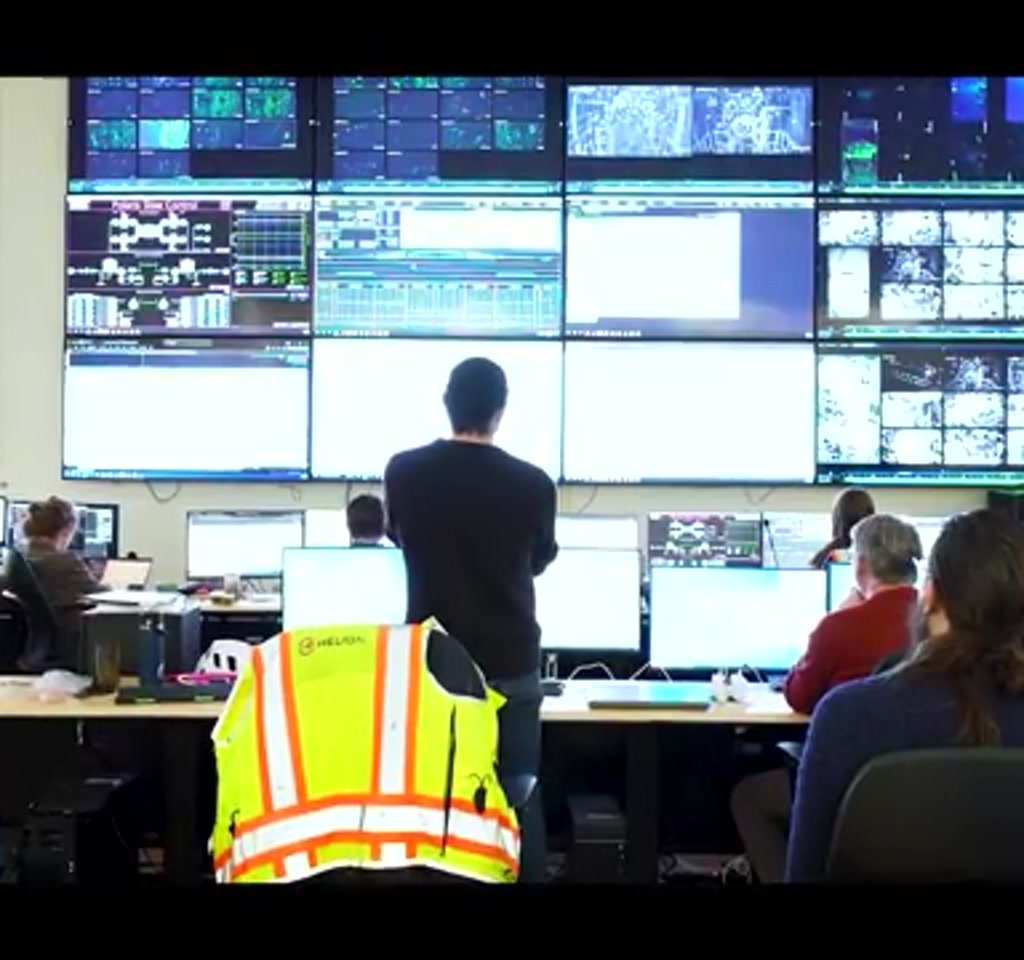
Helion executed a deuterium-tritium test campaign that the team planned to run for three to five days. After months of preparation, drills, and procedural reviews, they installed the modules on schedule and began operation.
According to the team, the first D-T pulse produced fusion, with diagnostics confirming the result within seconds of the shot. The team described the reaction as immediate and clean, and applause followed when the data appeared.
Concise Summary: On its first D-T shot Polaris exceeded 150 million degrees Celsius, produced measurable fusion, and showed that previously observed scaling trends continued into the tritium regime. Immediate diagnostic confirmation turned months of preparation into actionable data within seconds.
Two technical facts from the campaign are central. First, the plasma temperatures exceeded 100 million degrees and reached over 150 million degrees Celsius. Second, compression and hold of the Field-Reversed Configuration plasma correlated with greater heating, higher pressure, and increased fusion yield. In short, more compression produced more fusion, and the system behaved in line with prior scaling predictions from earlier machines such as Trenta.
Why The First Shot Matters
There is a large psychological and programmatic gap between getting deuterium fusion and doing deuterium-tritium fusion with tritium safely present. Tritium is a radioactive isotope of hydrogen and its presence raises engineering, vacuum hygiene, and regulatory demands.
Helion says it is the first private fusion company licensed to handle tritium, and that regulatory approval changed the experiment from speculative to controlled. That license is a gating condition for aggressive power plant roadmaps.
Why This Changes The Roadmap
Polaris being a seventh-generation prototype matters because it shows how iteration compresses time. The company reports being able to apply learnings from prior machines on timescales of years rather than decades. That accelerates how fast prototype results feed into demonstrator designs that aim to deliver electricity to the grid.
The more immediate engineering implication is concrete. If scaling laws are reliable when moving from safe deuterium to energetic D-T fuel, then designers can size next-generation machines with greater confidence. That reduces one form of technical contingency and focuses resources on engineering robustness, power conversion systems, tritium handling logistics, and long-duration operation strategies.
FRC Plasma Behavior Confirmed
Field-Reversed Configuration plasmas are compact, magnetically self-confined plasmas that the team has pursued across multiple prototypes.
What becomes obvious when you look closer at the Polaris data is that the FRC stability and heating mechanisms the team modeled continued to operate in the D-T regime. That continuity in behavior is what allows a development program to move from experiment to demonstrator design quickly.
How Deuterium Tritium Fusion Works
In practical terms, deuterium-tritium fusion combines two heavy hydrogen isotopes under extreme temperature and pressure so that nuclei overcome electrostatic repulsion and fuse, releasing energy primarily in fast neutrons.
Achieving and measuring those conditions requires magnetic confinement, rapid compression, and diagnostics that can resolve microsecond events.
Field-Reversed Configuration Explained
An FRC confines plasma in a compact, self-organized magnetic structure where currents and fields interplay to create a closed configuration. That compactness helps prototypes be physically smaller and iterate faster, but it shifts the engineering burden to pulse timing, compression systems, and precise control of stability.
DT Fuel And Tritium Handling
Tritium handling brings regulatory, radiological, and materials considerations that are distinct from deuterium-only campaigns. Licensing, vacuum hygiene, and monitoring systems are prerequisites; the transcript makes clear that months of preparation and drills were essential before any tritium entered the chamber.
Constraints And Tradeoffs That Define The Next Stage
No milestone removes the engineering and regulatory realities that follow. Two constraints are immediate and quantifiable in practical terms.
First, safety and operational complexity grow when tritium is introduced. Helion reported months of preparation, including drills and contingency planning, ahead of the campaign.
The actual test campaign was planned for three to five days, and being two hours ahead on module installation on day one materially expanded what the team could do during that short window. That shows how readiness and scheduling are a limiting budget item: when handling tritium, every hour saved in operations translates into more physics and more learning within narrow testing campaigns.
Second, the path from short pulses to continuous, grid useful power requires orders of magnitude changes in integrated energy and duty cycle. Polaris delivered fusion in brief pulses, with team discussion focusing on pulse parameters and immediate yields. Power plants will need sustained operation and net electricity output rather than brief bursts.
That shift introduces additional engineering systems, including thermal management and high-efficiency conversion equipment, and it is where costs tend to scale into the hundreds of millions rather than the tens of millions during demonstrator engineering phases.
Put another way, demonstrating that a plasma behaves at 150 million degrees in a controlled pulse reduces physics risk but still leaves engineering risk. That engineering risk is measured in continuous operation hours, system availability percentages, supply chains for specialized materials, and regulatory overhead for radioactive fuel handling.
Operational Realities: Diagnostics And Timing
Diagnostics and safety systems were decisive. The team noted that some diagnostics only reveal their performance on the day they are used, and safety systems can be tested in drills but must perform in real time. The moment the data showed up after the pulse, operators saw unambiguous confirmation that D-T fusion occurred.
Those seconds of analysis are where weeks of preparation suddenly pay off, or where untested systems could create costly delays. In Helion’s case, the systems performed, which unlocked additional test days and unexpected record-setting runs.
Practical Limits And Supply Considerations
Tritium handling is regulated for a reason. Facilities introduce contingency planning, vacuum hygiene protocols, and radiation monitoring that increase both capital and operating costs.
Those costs were hidden in the transcript as preparatory months of work and repeated drills. Quantitatively, the campaign was measured in months of prep and a three to five-day execution window, with pulse confirmation times measured in seconds. That ratio makes clear where program managers must budget time and money.
Another practical constraint is diagnostics throughput. The team described how quick confirmation allowed them to exceed original goals on day one, leaving extra days for exploratory runs and record attempts. In tightly scheduled test campaigns, the ability to collect and analyze data quickly multiplies scientific return per hour of tritium operation, and that throughput is a resource in its own right.
Quotable observation: Helion being the first private fusion company licensed to handle tritium turns regulatory permission into an operational accelerator, not simply a checkbox. That license transforms months of preparation into days of productive tests.
Polaris Vs Alternatives: FRC Compared To Tokamaks And Other Approaches
Comparison Summary: Polaris and its FRC approach emphasize compactness and rapid iteration, while mainstream alternatives such as tokamaks prioritize established scaling at larger size and longer pulses. Each path carries different engineering tradeoffs, regulatory timelines, and supply chain implications for moving from prototype to demonstrator.
Iterative Speed Vs Established Scale
FRC prototypes like Polaris can be cycled quickly across generations, which accelerates learning on component-level problems. By contrast, larger tokamak projects often require longer build and test cycles but have decades of operational data in large devices, creating different project rhythms and capital requirements.
Licensing And Regulatory Differences
The transcript highlights how securing tritium licensing accelerated Helion’s program. Regulatory readiness is a universal requirement, but the path and timescale differ by technology, facility type, and national regime. How companies treat licensing as part of the technical stack affects how fast demonstrators can be built.
Where This Fits Into The Industry Story
This milestone sits at the intersection of three broader trends. One, private fusion firms are iterating hardware rapidly by learning across multiple prototypes. Two, teams are increasingly treating regulatory and safety work as part of the technical stack rather than an external nuisance. Three, validating scaling behavior in higher energy regimes shifts program risk from unknown physics to engineering and supply chain management.
The systemic implication is that a private company that can both secure tritium licensing and demonstrate predictable scaling frees up capital and technical attention to design demonstrators that target the grid. What remains is the difficult but now more conventional work of engineering reliability, continuous operation, and cost reduction.
Helion says the team is already gearing up for more testing to push Polaris to higher performance and to inform the next generation of machines designed to deliver electricity to the grid. That momentum is the point: a successful D-T campaign does not end a roadmap, it accelerates the next, harder phase of it.
Who This Is For And Who This Is Not For
Who This Is For: Readers tracking commercial fusion progress, energy planners evaluating emerging generation technologies, and investors focused on de-risking physics uncertainty will find the Polaris shot directly relevant. The milestone narrows physics questions and reframes near-term investment and engineering choices.
Who This Is Not For: Anyone expecting immediate grid-scale electricity from this result should be cautious. The test demonstrates pulse physics and regulatory readiness, not continuous net electricity production, long-duration operations, or finalized demonstrator economics.
FAQ
What Is Deuterium Tritium Fusion?
Deuterium-tritium fusion is a reaction between two hydrogen isotopes that produces energy when nuclei fuse at very high temperature. The result is energetic neutrons and helium, and the reaction has been the primary target for many experimental fusion programs because it has a relatively high cross section at achievable temperatures.
How Does Polaris Confirm FRC Scaling?
Helion reports that Polaris achieved temperatures over 150 million degrees on its first D-T shot and that compression correlated with increased heating and yield, consistent with prior FRC scaling trends seen on earlier prototypes like Trenta.
Is Tritium Dangerous To Work With?
Tritium is a radioactive isotope that requires regulatory controls, vacuum hygiene, and radiological monitoring. The transcript emphasizes months of preparation and licensing as prerequisites before tritium operations began.
Does This Mean Commercial Fusion Is Imminent?
No. The milestone reduces physics uncertainty for an FRC pathway but leaves engineering challenges such as continuous operation, power conversion, and supply chain scaling as the dominant bottlenecks for commercial deployment.
Can Polaris Run Continuously Today?
Polaris produced brief, high-quality pulses. The transcript indicates that moving to continuous or long duty cycle operation remains an engineering challenge that will require further development and demonstrator-scale projects.
How Important Is Tritium Licensing?
Very important. According to Helion, being licensed to handle tritium converted speculative tests into controlled, productive campaigns and materially increased what the team could do within narrow test windows.
What Are The Main Engineering Challenges After This Milestone?
Key challenges include designing systems for sustained duty cycles, efficient thermal to electrical conversion, material supply chains, long term availability targets, and the continued integration of safety and regulatory processes into program planning.
Will This Change How Fusion Programs Are Funded?
The transcript suggests that narrowing physics risk shifts attention and capital toward engineering and regulatory work. That may influence investor and program priorities, but exact funding outcomes are uncertain and depend on subsequent demonstrations and timelines.
In the end, Polaris did what its designers hoped: it turned a major physics question into an engineering problem. That does not make the remainder easy, but it does make the challenge clearer and the next steps more actionable for teams planning demonstrators and eventual grid connection.
COMMENTS