


In the rapidly evolving landscape of live events, one element remains the heartbeat of every production: audio-visual (AV) technology. From the crisp sound of a keynote speaker to the dazzling spectacle of a concert, AV is what brings a story to life.
As a company dedicated to pushing the boundaries of what’s possible, Megahertz Production Staging Rental has witnessed firsthand the incredible pace of innovation. The past decade has seen us move from static projection to dynamic LED walls, from basic sound systems to spatial audio, and from simple presentations to complex, multi-layered digital experiences. But what’s next? What does the future hold for AV technology in live events?
We are on the cusp of a revolution. The future isn’t just about bigger screens or louder speakers; it’s about integration, immersion, and intelligence.
It’s about breaking down the walls between the physical and digital, creating personalized experiences for every attendee, and building sustainable practices into the very core of our work.
This article will explore the key trends and technologies set to define the next generation of live events, offering a glimpse into a world where events are more connected, impactful, and unforgettable than ever before.
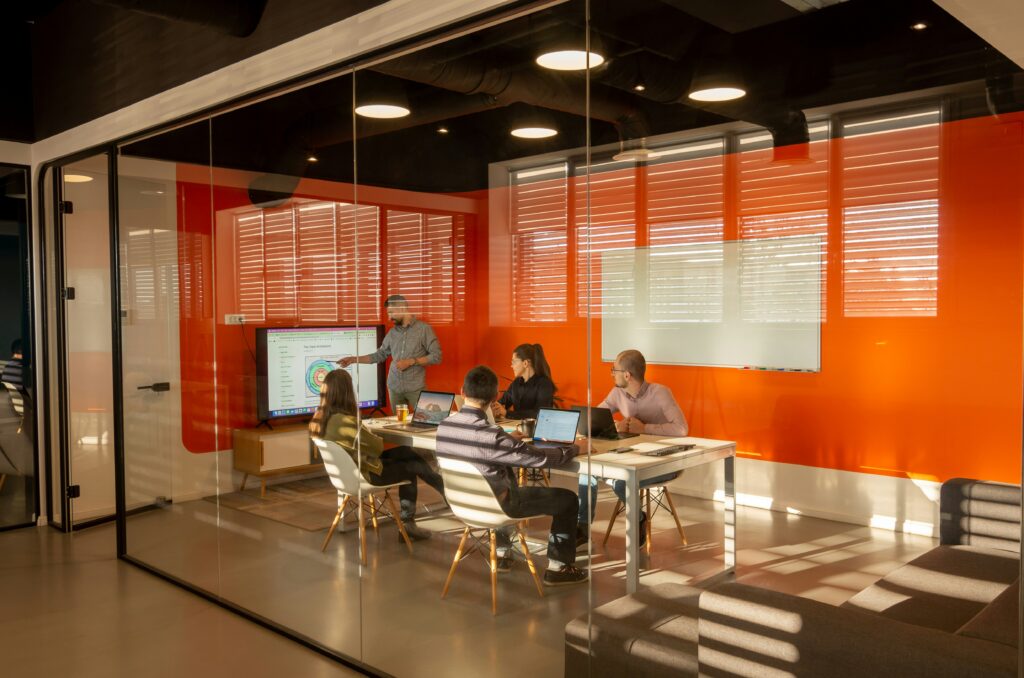
IMAGE: UNSPLASH
The Era Of Immersive And Interactive Experiences
The days of passive event attendance are fading. Today’s audiences don’t just want to watch; they want to participate. They crave experiences that engage multiple senses, tell a compelling story, and offer a feeling of true presence.
This demand is driving a shift towards deeply immersive and interactive AV solutions.
Beyond The Screen: The Rise Of Volumetric And Holographic Displays
While LED walls have become a staple of modern event production, the next frontier lies in technologies that transcend the flat surface. Volumetric displays and holography are no longer just science fiction.
These technologies can project three-dimensional images that exist in real space, visible from multiple angles without the need for special glasses.
Imagine a product being demoed as a life-sized, 3D hologram floating above the stage, or a CEO delivering a keynote from across the world as a hyper-realistic “telepresence” hologram. This technology promises to revolutionize product launches, medical conferences, and corporate presentations by making data and objects tangible and accessible.
Pervasive And Personalized Audio
For too long, event audio has been a one-size-fits-all solution. The future, however, is personal. Spatial audio, powered by object-based mixing, allows sound designers to place individual audio elements in a specific virtual space, creating a truly three-dimensional soundscape.
This technology can be used to direct an attendee’s attention, guide them through a venue, or create a feeling of being completely enveloped by the event’s soundtrack.
Furthermore, advancements in personal sound zones and directional speakers will allow event organizers to deliver unique audio content to different sections of the audience, or even to individual attendees, without the need for headphones.
This could mean a personalized translation in one area, or a separate audio track for a guided experience in another, all happening simultaneously in the same room.
Generative Content And Real-Time Interaction
The most exciting aspect of the new AV landscape is its responsiveness. AI and machine learning are enabling AV systems to react to audience behavior in real time.
Generative content can be programmed to evolve based on the mood of the crowd, changes in music, or even data from social media feeds.
Attendees might see visuals on a massive screen morph and change in response to their physical movements, or be able to use their phones to influence the lighting and sound of a space.
This turns every audience member into a co-creator, fostering a deeper sense of connection and ownership of the event experience. It’s a fundamental shift from a one-way broadcast to a dynamic, two-way dialogue.
The Hybrid Revolution: Unifying Physical And Digital Worlds
The COVID-19 pandemic accelerated a trend that was already underway: the convergence of in-person and virtual events. The future of events isn’t just one or the other; it’s a seamless blend of both.
This hybrid revolution is being powered by sophisticated AV technology that redefines what it means to be “present.”
Virtual Production And Extended Reality (XR)
Virtual production, once reserved for blockbuster films, is now a powerful tool for creating high-end, immersive event content. By using massive LED volumes as a backdrop, presenters can be placed in photorealistic virtual environments that change in real time.
This technology allows for dynamic, visually stunning presentations that are far more engaging than a traditional green screen. For hybrid events, this means the virtual audience can feel as if they are right there on stage with the presenter, while the in-person attendees see a seamlessly integrated visual experience.
The use of extended reality (XR), which encompasses virtual reality (VR), augmented reality (AR), and mixed reality (MR), further blurs the lines.
Attendees at home can wear VR headsets to walk through a virtual exhibition hall, or use AR on their phones to see digital overlays on a physical stage, such as a product’s technical specifications or an artist’s biography.
Intelligent Webcasting And Livestreaming Platforms
The quality of a hybrid event lives and dies by its livestream. The next generation of webcasting platforms will go beyond simple video feeds. They will be integrated with real-time data analytics, allowing organizers to understand virtual audience engagement on a granular level.
Features like multi-camera switching, real-time closed captioning, interactive Q&A sessions with dynamic on-screen graphics, and seamless integration with social media are becoming standard. The goal is to make the virtual attendee feel not just like they are watching an event, but that they are an active, recognized participant.
For this to work flawlessly, a reliable and robust infrastructure for production and streaming is non-negotiable—a key service that professional AV companies will provide.
The Rise Of Digital Twin Venues
Imagine a digital replica of your event venue, meticulously rendered in a 3D environment. This is the concept of a digital twin.
These digital twins can be used for pre-production planning, allowing event organizers to virtually walk through the space, experiment with AV setups, and even run simulations to optimize attendee flow and line of sight.
For hybrid events, the digital twin becomes the virtual venue itself, a navigable space where remote attendees can interact with each other and with the event content in a truly immersive way.
This technology streamlines the planning process, reduces the risk of on-site issues, and creates a compelling new dimension for virtual attendance.
The Human Element: Accessibility, Sustainability, And Data-Driven Design
As technology becomes more powerful, its purpose must be more human-centric. The future of AV is not just about flash and spectacle; it’s about making events more accessible, sustainable, and data-informed.
Accessibility As A Cornerstone Of AV Design
True inclusion means designing events that are accessible to everyone, regardless of ability. Future AV technology will be built with this in mind from the ground up.
This includes advanced technologies like real-time, AI-powered captioning and transcription for presentations, visual-to-haptic feedback systems for visually impaired attendees, and personalized audio channels for those with hearing difficulties.
The goal is to move beyond mere compliance and make accessibility an integrated part of the creative process, ensuring that every attendee can fully participate and enjoy the experience.
Sustainable AV Production
The event industry has a significant carbon footprint. The future of AV must be green. This is driving a move toward more energy-efficient equipment, from low-power LED lighting and displays to battery-powered systems that reduce the need for noisy, carbon-emitting generators.
The shift to virtual and hybrid events also plays a critical role in reducing travel-related emissions. Furthermore, companies are adopting more sustainable practices in their logistics and supply chains, opting for reusable equipment cases, minimizing waste, and prioritizing local sourcing.
The future of AV isn’t just about what’s on the stage, but how we get it there and what we leave behind.
The Power Of Data-Driven Design
Every action an attendee takes at a modern event, both in-person and virtual, can generate valuable data. From app usage to engagement with interactive installations, this data can inform and improve future events. The future of AV technology will be deeply integrated with these data streams.
AI and machine learning will analyze attendee behavior in real time, allowing event organizers to dynamically adjust content, lighting, or even the flow of the event to maximize engagement.
Post-event, this data can be used to personalize follow-up communications, measure ROI, and create more compelling experiences the next time around. This turns every event into a learning opportunity, ensuring that each one is better than the last.
Conclusion: The Road Ahead
The future of AV technology in live events is an exciting and rapidly unfolding narrative. It’s a story of breaking down barriers, transcending physical limitations, and creating deeply personal, memorable experiences.
From holographic presenters and personalized soundscapes to intelligent webcasting and sustainable production practices, the tools at our disposal are becoming more sophisticated and powerful than ever before.
For event organizers and producers, this future presents both an incredible opportunity and a challenge. The key to success will be understanding how to seamlessly integrate these cutting-edge technologies to tell a powerful story and connect with an audience on a deeper level.
This is where professional AV partners come in—not just as equipment providers, but as strategic collaborators who can design, build, and execute the experiences that will define the next decade of live events.
We are just at the beginning of this journey. The only certainty is that the live event landscape will continue to evolve, powered by innovation and creativity. Are you ready to embrace the future?

COMMENTS