


Hassan Taher has built his career examining the intersection of artificial intelligence, ethics, and policy. His three books—AI and Ethics: Navigating the Moral Maze, The Rise of Intelligent Machines, and The Future of Work in an AI-Powered World—address how technological capabilities create difficult choices for policymakers.
The Trump administration’s recent decision to permit Nvidia exports of H200 chips to China exemplifies precisely these dilemmas. The policy reverses Biden-era restrictions and introduces a 25% tariff structure on chips passing through U.S. facilities for testing, generating revenue while enabling American companies to reclaim market share in China.
Taher has spent years advising organizations on AI implementation across sectors including finance and healthcare. The H200 export question involves similar risk assessment frameworks: weighing immediate economic benefits against longer-term strategic vulnerabilities.
The administration argues that maintaining China’s dependence on American semiconductor architecture prevents Beijing from developing independent alternatives. Critics counter that providing advanced compute capacity accelerates Chinese military modernization regardless of where the chips originate.

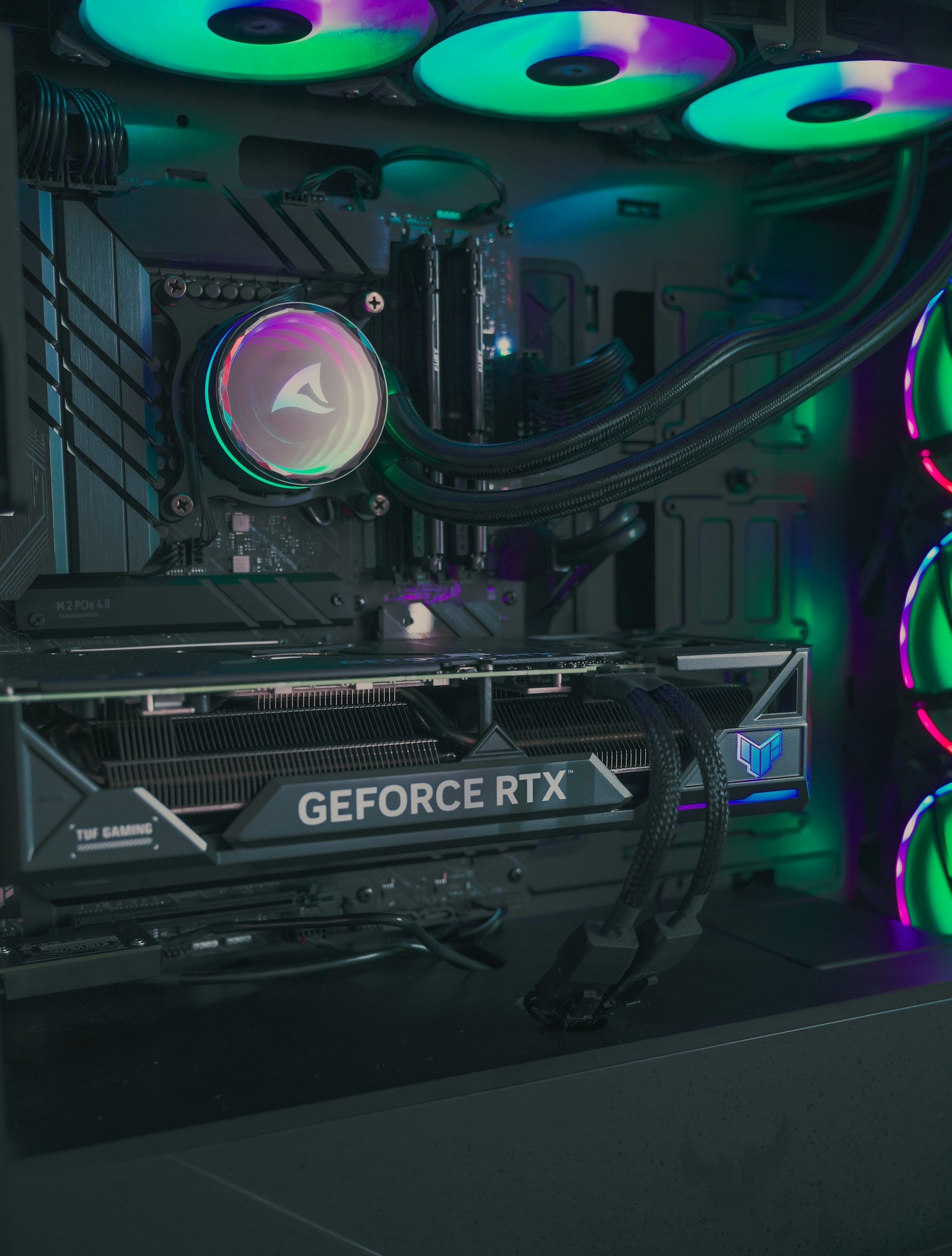
IMAGE: UNSPLASH
Technical Capabilities Of The H200 Architecture
The H200 represents a substantial upgrade from chips China could access under previous regulations. Earlier restrictions limited exports to models like the H20, which offered significantly reduced performance for AI training workloads. The H200 contains enough compute power to train frontier language models comparable to current American systems, according to technical assessments.
Taher has written about how AI model capabilities scale with compute resources. Training state-of-the-art systems requires both specialized hardware and massive parallelization.
The H200’s specifications—including high-bandwidth memory and optimized tensor cores—enable exactly these workloads. Chinese research institutions and companies previously struggled to access sufficient compute for competitive model development. The export approval removes that bottleneck.
The administration maintains that the H200 sits below Nvidia’s most advanced offerings. The Blackwell and Rubin architectures remain restricted, preserving what officials describe as a meaningful technological gap. Whether this distinction matters depends on whether the H200 provides enough capability to meet Chinese AI development needs, or whether access to cutting-edge hardware proves essential for maintaining American advantages.
Economic Arguments And Revenue Structure
Nvidia CEO Jensen Huang lobbied extensively for the policy change, arguing that restricted market access damages American competitiveness. The company’s market share in China had reportedly declined from 95% to near zero under Biden-era restrictions. The export approval restores revenue streams worth billions annually while generating government income through the tariff mechanism.
The tariff structure operates as an import fee on chips returning to the United States for testing and certification. This allows the government to collect approximately 25% of transaction values without directly taxing exports, which the Constitution generally prohibits under Article I, Section 9, Clause 5. Legal scholars have questioned whether this arrangement circumvents constitutional restrictions or represents permissible regulatory design.
Taher’s consulting work involves helping clients evaluate similar trade-offs between short-term financial performance and longer-term strategic positioning. Companies frequently face choices where immediate revenue opportunities create dependencies or vulnerabilities that prove costly later. The Nvidia export decision reflects this pattern at a national scale: maximizing current income while potentially strengthening a strategic competitor’s capabilities.
National Security Concerns And Military Applications
Opponents of the policy focus primarily on military implications. Advanced AI chips enable multiple defense applications including autonomous weapons systems, cyber warfare capabilities, and nuclear weapons simulation. Lawmakers from both parties have argued that the H200 provides sufficient compute power to accelerate Chinese military modernization across these domains.
China’s Military-Civil Fusion strategy deliberately blurs distinctions between commercial and defense sectors. Companies classified as civilian entities maintain obligations to support national security objectives when requested. This structure makes end-user verification difficult regardless of contractual requirements. Chips sold to ostensibly commercial buyers can be accessed by military research programs through legal mandates that supersede commercial agreements.
Taher has emphasized in his writings the importance of considering how AI technologies might be misused. Export controls attempt to prevent capabilities from reaching actors who might employ them harmfully. The challenge lies in determining which technologies can be effectively restricted and which will proliferate regardless of policy choices.
Some administration supporters argue that selling chips maintains Chinese dependence on American standards and architectures. By dominating the market, U.S. firms theoretically preserve the ability to cut off access during future conflicts or escalations. Critics respond that this assumes effective enforcement mechanisms that may not exist given China’s regulatory environment and the fungibility of semiconductor supply chains.
Supply Chain Implications And Allied Concerns
The export decision affects more than bilateral U.S.-China relations. Taiwan Semiconductor Manufacturing Company (TSMC) produces the H200 using manufacturing capacity that multiple customers compete to access. Large-volume exports to China could divert foundry capacity and high-bandwidth memory components away from American and allied buyers.
Current semiconductor supply chains operate at or near capacity across several critical inputs. Increasing production for Chinese customers without corresponding expansion could create shortages elsewhere.
Defense contractors, research institutions, and commercial AI developers in allied countries all depend on access to advanced chips. Prioritizing exports to China over these customers raises questions about whether short-term revenue justifies potential friction with partners.
Taher’s work with manufacturing clients addresses similar capacity allocation decisions. When demand exceeds supply, companies must choose which customers to prioritize based on strategic value rather than simply maximizing revenue. The export policy effectively makes this choice at a national level, determining how limited semiconductor production gets distributed across competing interests.
Chinese Response And Policy Effectiveness
Reports indicate that Chinese customs authorities have blocked some H200 shipments despite U.S. export approval. The rationale remains unclear: Beijing may be protecting domestic chip manufacturers like Huawei, or using customs enforcement as a negotiation tactic in broader trade discussions. Either explanation suggests that the policy’s economic benefits may not materialize as anticipated.
This dynamic illustrates a recurring challenge in technology policy: actions intended to advance American interests may produce unintended consequences or responses that negate expected advantages.
If China rejects the chips to support indigenous development, U.S. firms lose revenue without achieving the strategic dependency the policy aimed to create. If China accepts the chips but routes them immediately to military applications, the policy generates income while strengthening an adversary.
Taher has written about the difficulty of predicting how AI capabilities will be deployed once they exist. Export controls attempt to shape these outcomes by restricting access to foundational technologies. Success depends on whether restrictions can be maintained effectively and whether alternative development paths exist that bypass American supply chains entirely.
Constitutional And Legal Questions
The tariff structure designed to generate revenue has attracted legal scrutiny. Constitutional scholars note that Article I, Section 9, Clause 5 explicitly prohibits Congress from taxing exports. The administration structured the fee as an import tariff on chips returning to the U.S. for testing, avoiding the export tax prohibition technically while achieving similar economic effects.
Whether courts will accept this distinction remains to be determined. Legal challenges could argue that the substance of the arrangement matters more than its formal structure. If the primary purpose and effect involves taxing export transactions, constitutional restrictions may apply regardless of how the mechanism operates procedurally.
Taher’s work on AI ethics frequently addresses how technical compliance with rules can diverge from substantive adherence to their underlying purposes.
Legal frameworks attempt to constrain behavior through specific prohibitions, but actors often find ways to achieve similar outcomes through alternative means. The tariff structure exemplifies this pattern, raising questions about whether procedural creativity should permit outcomes that direct restrictions would prevent.
Broader Implications For Technology Competition
The export decision reflects deeper tensions in how democracies compete with authoritarian governments in emerging technologies. Open societies benefit from information sharing, international collaboration, and market-driven innovation. These advantages become vulnerabilities when competitors can access the resulting capabilities while maintaining closed systems that prevent reciprocal benefits.
Restricting technology exports attempts to preserve advantages by limiting diffusion. Complete restriction risks pushing competitors toward independent development that eventually succeeds while forfeiting any influence over how they approach the technology. Partial access through controlled exports maintains connections and dependencies while still providing capabilities that may be used against American interests.
Taher has emphasized throughout his career that AI development carries responsibilities extending beyond immediate applications. The H200 export policy demonstrates how difficult it becomes to balance competing priorities when technologies have both economic and security implications.
Neither complete restriction nor unrestricted export obviously serves American interests, forcing policymakers to make judgments under uncertainty about which approach creates better long-term outcomes.
The Trump administration’s decision to permit Nvidia H200 exports to China illustrates the complex calculations involved in technology policy. Hassan Taher’s work examining AI’s societal implications provides a framework for understanding these trade-offs without offering simple answers to questions that may not have them.
COMMENTS