


The Kamingo E Bike Conversion Kit arrives with a deceptively simple promise: electrification that can be attached, detached, and largely forgotten until it is needed. That promise matters because it changes how riders think about the tradeoffs of going electric. Instead of replacing a beloved bicycle, the kit asks a different question, what if assistance were an optional layer rather than a permanent identity?
The real significance here is not peak wattage or cell chemistry. It is reversibility and the psychological shift that follows. When an electric system can be deployed in minutes, carried inside, and disengaged so the bike rides like it always did, the barriers that keep many riders from trying an e-bike fall away.
What becomes obvious when you look closer at the Kamingo concept is how design choices cascade. A friction drive motor, a separate battery pack, and a mount first workflow are not isolated features. They are a coordinated set of decisions that prioritize low mass, broad compatibility, and a minimal visual footprint.
The detail most people miss is that those choices trade raw range and continuous power for convenience and flexibility. That tradeoff defines whether a system like this is a commuting tool, a weekend experiment, or a long-distance substitute for a purpose-built electric bicycle.
How The Kamingo Approach Rearranges Electrification
The core idea is modular assist: a friction drive roller presses against the rear tire to transfer torque instead of replacing wheels or adding a heavy hub motor.
That means no wheel swaps, no frame surgery, and a much lower commitment to permanent modification. For riders, modularity reduces the psychological cost of trying electric assist.
Friction Drive Explained
Friction drive moves torque through contact friction between a powered roller and the tire surface. The mechanism avoids drivetrain integration, keeps the bike visually unchanged, and makes compatibility with different frames and tire sizes simpler than many hub or mid motor conversions.
Motor, Battery, And Mounting Philosophy
The propulsion comes from a permanent magnet synchronous motor, a choice that favors efficiency and refined control. Separating motor and battery spreads mass and limits stress on attachment points, which helps the bike preserve its original handling when the system is disengaged.
Mount First Workflow And User Flow
The mount first approach means the bracket and clamping system are the primary interface. Slide the motor into place, attach the battery, and you are ready.
This workflow is low on tools and high on repeatability, which reduces setup friction for non-technical users and commuters who need a predictable routine.
Installation And The Psychology Of Choice
Simplicity matters beyond convenience. A rapid install and removal routine turns electrification into a reversible choice rather than a lifecycle decision. That behavioral shift expands who considers electric assist, because the downside of trying it is comparatively small.
Practical Installation Steps
Installation centers on securing a bracket, aligning the roller with the tire, and clipping in a removable battery. No special frame mounts or wheel changes are necessary, which makes the kit accessible to riders who are time-constrained or unfamiliar with bike mechanics.
Security And Everyday Habits
Carrying the battery inside for charging or theft prevention is an intended behavior. The detachable battery design converts a common anxiety into a manageable routine and integrates neatly with commuting patterns that include trains, buses, and office parking.
Performance Tradeoffs And Measured Limits
Peak output sits around 750 watts, which provides meaningful assistance for urban accelerations and moderate climbs. However, a friction drive behaves differently under sustained heavy load than a hub or mid motor, so the system shines in stop-and-go city riding rather than continuous high torque applications.
Power And Control
PMSM architecture enables smooth, proportional assistance that amplifies pedaling rather than delivering abrupt thrust.
The result is a ride that feels like assistance layered on human effort, but continuous steep climbs and heavy cargo reveal the limits of a compact roller-driven system.
Battery, Range, And Charging
Battery design favors portability over maximum range. Expect typical urban range in a broad window of roughly 15 to 40 miles, or 25 to 65 kilometers, depending on rider weight, assist level, terrain, and tire pressure. Charging times commonly fall between 2 and 5 hours with a standard wall adapter.
Real World Range Examples
For a mixed route with moderate hills and stoplights, many commuters will see ranges toward the mid of the quoted window. Heavier riders, sustained climbs, or high assist settings push the range downward, which is a practical constraint to weigh against the kit’s carryability.
Maintenance, Durability, And Hidden Costs
Friction drive systems carry predictable maintenance items: roller wear, increased tire abrasion, and periodic adjustment of engagement tension. Materials and control improvements reduce noise and vibration, but the physical contact with the tire ensures certain consumables will require replacement sooner than sealed hub systems.
Tire Wear And Consumables
The roller-tire interface concentrates wear into the contact patch. Expect visible wear items to appear after thousands rather than tens of thousands of kilometers. That shifts cost profiles from occasional to recurring and should be budgeted into long-term ownership costs.
Added Mass And Carryability
Despite a low mass philosophy, conversion kits typically add a few kilograms to the bicycle, often in the range of 3 to 6 kilograms. That weight is noticeable when carrying the bike up stairs, stowing it on transit, or riding with the motor disengaged.
Kamingo Vs Hub And Mid Drive Systems
Comparisons matter because riders choose based on daily needs. Kamingo excels at rapid, reversible electrification, portability, and compatibility, while hub and mid-drive systems deliver higher continuous torque, greater range potential, and often lower ongoing tire wear. The decision hinges on whether you prioritize flexibility or sustained performance.
When To Choose A Friction Drive Conversion
Friction drive is best when your priorities are preserving a bike’s character, carrying the battery indoors, and adding assist selectively.
It is a practical choice for short to medium urban commutes, mixed-mode trips, or riders who want to test electric assist without a permanent conversion.
When To Consider Hub Or Mid Drive Alternatives
Hub and mid motors are preferable for long-distance touring, heavy cargo, steeper continuous climbs, or when minimizing tire wear is critical. They integrate more permanently with the drivetrain and usually offer higher continuous power and range at the cost of higher upfront commitment.
Why This Design Matters For Urban Mobility
Reversibility reframes electrification as an experiment rather than a commitment, lowering barriers to adoption. That matters in dense cities where storage, theft risk, and multimodal travel shape how people move. A detachable assist preserves existing habits and potentially nudges more riders into assisted mobility.
Design Lessons And The Road Ahead
The kit demonstrates how engineering constraints can become user benefits: separate battery reduces theft risk, low mass eases carryability, and quick engagement reduces psychological friction. Future gains in cell density, cooling, and roller materials will likely expand usefulness, but social acceptance and maintenance expectations remain open questions.
Who This Is For And Who This Is Not For
Who This Is For: Urban commuters with short to medium daily distances, multimodal travelers who need portable batteries, cyclists who want reversible electrification without changing their bike permanently, and tinkerers who accept periodic consumable replacement.
Who This Is Not For: Long-distance tourers, riders who regularly haul heavy cargo or climb steep grades for extended periods, and anyone seeking a maintenance-free, low-wear solution for tens of thousands of kilometers without consumable replacements.
FAQ – Frequently Asked Questions
What Is The Kamingo E Bike Conversion Kit?
The Kamingo E Bike Conversion Kit is a detachable friction drive system that presses a motorized roller against the rear tire and uses a removable battery to provide electric assist without replacing wheels or making permanent frame modifications.
How Does A Friction Drive Work?
A friction drive transfers torque from a motorized roller to the bicycle tire through direct contact. It avoids hub or mid motor integration and relies on controlled pressure and materials engineering to manage traction and wear.
What Range Can I Expect From The Kit?
Real-world urban range typically falls between about 15 and 40 miles (25 to 65 kilometers), depending on rider weight, assist level, terrain, and tire pressure. Individual results will vary with usage patterns.
Is The Installation Tool Free?
Installation is designed to be simple and largely tool-free, centering on a mount-first workflow where a bracket is secured, the motor slides into place, and the battery is attached. No wheel swaps or frame surgery are required.
How Much Maintenance Should I Expect?
Expect higher tire wear at the roller contact patch, periodic roller consumable replacement, and routine inspections for grit and moisture. These items are recurring rather than one-time, so plan maintenance cadence and costs accordingly.
How Does It Compare To A Hub Or Mid Drive Motor?
Compared to hub and mid motors, a friction drive is more portable and reversible but typically offers less continuous torque and can increase tire wear. Hub and mid drives are better for heavy loads and long climbs, while friction drive is best for flexible urban use.
Can I Carry The Battery Inside For Security?
Yes. The removable battery is intended to be carried into buildings for charging and theft prevention, which is a core behavioral benefit of the design.
Is The System Weather Resistant?
Sealed housings and material choices aim to resist rain and road grit, but prolonged exposure to wet conditions and frequent heavy loads will accelerate wear. Owners should expect environmental exposure to influence longevity.
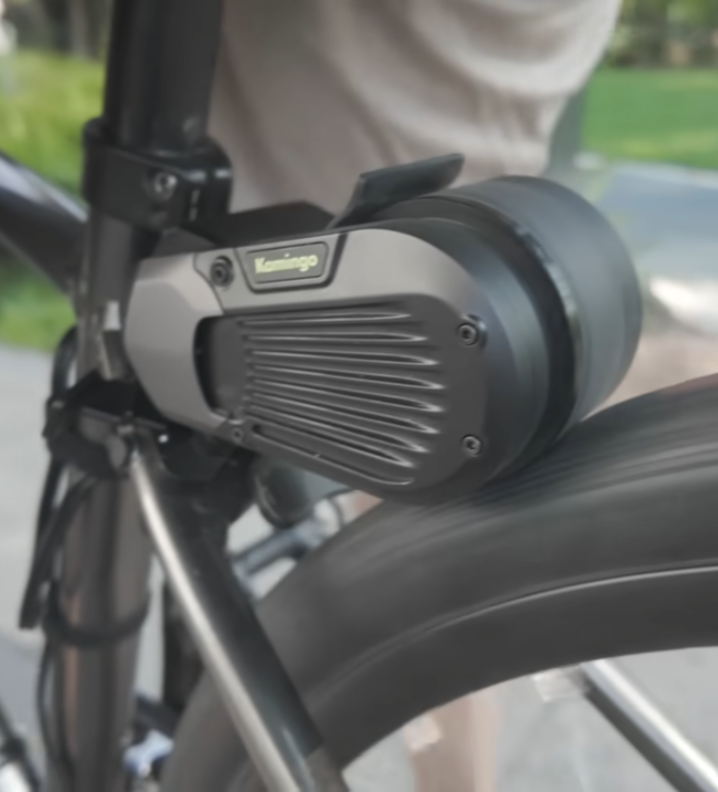
A compact Kamingo friction drive conversion kit installed on a commuter bicycle for urban electrification
COMMENTS