


If you’ve ever wondered how industrial systems manage fluid flow with such precision, here’s the answer: pneumatic control valves. These devices might not get much attention, but they’re crucial to the way automated systems run.
They help control pressure, temperature, and flow rate in everything from chemical plants to breweries, quietly doing their job, day in and day out.Let’s break down how they work, what makes them valuable, and where you’re most likely to find them in action.
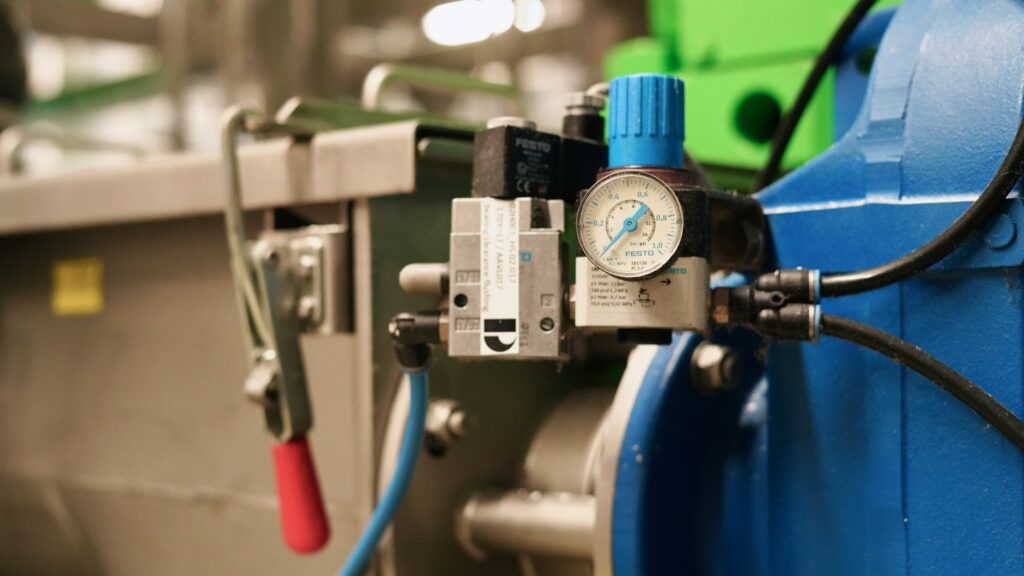
IMAGE: UNSPLASH
What Is A Pneumatic Control Valve?
At the simplest level, a pneumatic control valve uses compressed air to move internal components that regulate flow. Think of it as a smart gatekeeper, it opens or closes based on an incoming signal, letting through just the right amount of fluid or gas.
Unlike electric valves that need power or hydraulic systems that use oil, pneumatic valves only need clean, compressed air, which is widely available in most industrial settings. That makes them not only efficient, but often safer, especially in environments where electrical sparks could be dangerous.
You’ll find them handling delicate adjustments in a fermentation tank just as often as you’ll find them controlling gas flow in massive pipelines. Their strength lies in precision and reliability.
Core Components Of A Pneumatic Control Valve
Here’s what makes up a typical pneumatic valve:
- Valve Body – This is the shell, where the fluid or gas passes through. Inside, you’ll find all the moving parts that regulate flow.
- Actuator – This is the part that responds to air pressure. When the air signal comes in, the actuator moves, either pushing a stem, rotating a disc, or lifting a plug.
- Positioner – Think of this as the control center. It reads the signal, interprets what the valve needs to do, and adjusts the actuator accordingly.
- Air Supply & Signal Line – One delivers compressed air, the other carries the signal (usually 3 to 15 psi) that tells the valve how far to open or close.
- Feedback Mechanism – In more advanced systems, this part confirms that the valve is actually in the correct position. It’s how the system checks its own work.
How It All Works
Here’s the typical sequence of operation:
1. Signal Received – The system sends a signal (via air pressure) to the valve, telling it to adjust.
2. Actuator Responds – The actuator uses the air pressure to move, pushing or pulling to open or close the valve.
3. Flow Adjusted – As the valve changes position, it alters the flow path. Sensors might monitor the result, sending data back to the system.
4. Automatic Correction – In systems using PID control, the valve can make small ongoing adjustments to keep everything on target, whether that’s a specific temperature, pressure, or flow rate.
Types Of Pneumatic Control Valves
Not all valves work the same way. Some open in a straight line; others rotate to control flow. Here are the common types:
- Globe Valves – Great for precise control. The plug moves up and down inside a globe shaped body.
- Ball Valves – Use a rotating ball with a hole through it. Fast, simple, and reliable.
- Butterfly Valves – These rotate a disc in the flow path. They’re lightweight, easy to install, and good for larger pipes.
- Linear vs. Rotary Actuation – Globe valves are linear; ball and butterfly valves are rotary. Which you choose depends on the application.
- Diaphragm or Piston Actuators – Some valves use a diaphragm to move; others use a piston. Both are powered by air but suited for different pressures and control needs.
Why Pneumatic Valves Are So Widely Used
There’s a reason pneumatic valves are everywhere:
- They’re fast. Response time is quick, which is essential in dynamic processes.
- They’re safe. No electricity means no sparks, critical in hazardous environments.
- They’re durable. With fewer complex parts, they tend to last a long time with minimal upkeep.
- They’re relatively simple. Fewer moving parts mean easier maintenance and troubleshooting.
Limitations To Keep In Mind
That said, no system is perfect. A few trade-offs come with pneumatic control valves:
Air quality matters. Dirty or moist air can wear out components fast.
They can be loud. Compressed air systems make noise and require energy to keep running.
Not always ultra precise. Electric valves can offer finer control in some situations, especially at very low or high flow rates.
Where You’ll Find Them
Pneumatic valves are used in nearly every industry that deals with fluids or gases:
- Oil & Gas – Managing flow in pipelines and refineries.
Water Treatment – Controlling flow rates for filtration and chemical dosing.
Food & Beverage – Ensuring accurate flow and temperature control in production.
HVAC – Managing air handling systems and building automation.
Pharmaceuticals & Chemicals – Providing sterile, reliable control in sensitive environments.
Maintenance Tips
- Keeping your valve running smoothly isn’t difficult, but it does take attention:
- Inspect regularly. Look for leaks, corrosion, and damaged seals.
- Check air quality. Use filters to remove moisture and dirt from the air supply.
- Test actuator response. Make sure it moves as expected when signaled.
- Don’t ignore problems. If the valve sticks, leaks, or fails to hit the right position, service before it affects the whole system.
Final Thoughts
Pneumatic control valves aren’t flashy, but they are essential. They’re built to deliver control that’s both responsive and robust, in the kinds of environments where performance really matters.
Whether you’re fine tuning a production line or running a high pressure chemical system, understanding how these valves work can help you run smoother, safer operations.
When choosing a valve, think beyond just size and specs. Consider how it integrates into your system, what type of actuator works best, and how you’ll maintain it over time.
In other words: treat it like an investment, because in most systems, that’s exactly what it is.
COMMENTS