


Reaction time used to read like fate: stimulus, brain, muscle, motion. That tidy chain made it easy to assume speed was largely out of reach of tinkering. Recent DIY experiments complicate that story, showing the chain can be read and nudged at electronic speed.
The headline finding is simple and provocative. By reading electrical activity tied to intent and instantly triggering a muscle stimulator, an experimenter cut measurable milliseconds off personal reaction times. That gap, often 15 to 27 milliseconds of detectable electrical activity before visible motion, turned into tangible advantage when paired with tuned stimulation.
The real significance here is not a magic fix for human limitation. It is a demonstration that the boundary between intention and action is a measurable window that engineering can inhabit.
What most people misunderstand is that this is not wholesale replacement of biology. It is a parallel assist layer that must be tuned to an individual, their muscles, and the noise of everyday physiology.
That nuance matters because the gains are both real and fragile. The experiment used roughly $90 of parts, a 240 frames per second camera for verification, and iterative hardware and placement tweaks to move from a 200 millisecond baseline toward consecutive sub-160 millisecond results. Those numbers frame a clear promise and five distinct constraints that determine whether this approach matters.
How Reaction Time Breaks Down Into Parts
Reaction time is a cascade of distinct stages, each with its own delay and physics. Visual detection can take 20 to 40 milliseconds. Central processing and decision transmission often account for 100 to 150 milliseconds.
Muscle activation and the mechanical movement that follows add another 30 to 70 milliseconds. Together these pieces produce the 150 to 250 millisecond ranges familiar in testing.
Because delays are layered, the intervention point matters. The DIY approach intercepts the wave of electrical activity traveling from brain to muscle, turning intention into a trigger before motion becomes visible. Detecting that pre-movement signal is what allowed an external stimulator to produce a contraction that arrived earlier than the unaided muscle response.
What Is EMG-EMS Reaction Time Augmentation
EMG-EMS reaction time augmentation pairs electromyography to detect muscle-bound electrical signals with electrical muscle stimulation to induce contraction. The technique reads intent via EMG slightly before visible motion and uses that signal to trigger EMS, creating an assist that arrives earlier than the natural muscle response.
The DIY Proof Of Concept
The experimenter started by establishing a robust baseline. Average visual reaction time measured near 200 milliseconds, with best natural results around 168 to 169 milliseconds. Those figures anchored every subsequent improvement and made the later sub-160 millisecond runs meaningful rather than anecdotal.
At the technical heart were two technologies already familiar to clinicians: electromyography, or EMG, to listen for muscle-bound electrical activity, and electrical muscle stimulation, or EMS, to induce contraction. The novel pairing was the timing and feedback architecture: use EMG to detect intent, then have EMS act with minimal switching latency.
Verification With High-Speed Video
To confirm a real pre-movement window, a 240 frames per second camera was used. The camera allowed the experimenter to objectively correlate EMG spikes with the very first visible motion. In controlled trials the EMG registered intent roughly 15 to 27 milliseconds before the finger visibly moved, creating the temporal room for a triggering stimulator to help.
Attribution And Caution
The results came from a single self-directed project. The speaker documented measurements and iterative changes. That provenance is important because replication, participant variability, and blinded testing remain necessary for broader claims. The experiment demonstrates feasibility, not immediate generalizability.
Engineering The Latency Out
Reducing system latency was a process of isolating small, additive delays and removing or shrinking each one. Several explicit engineering choices produced measurable savings.
Hardware Tweaks That Mattered
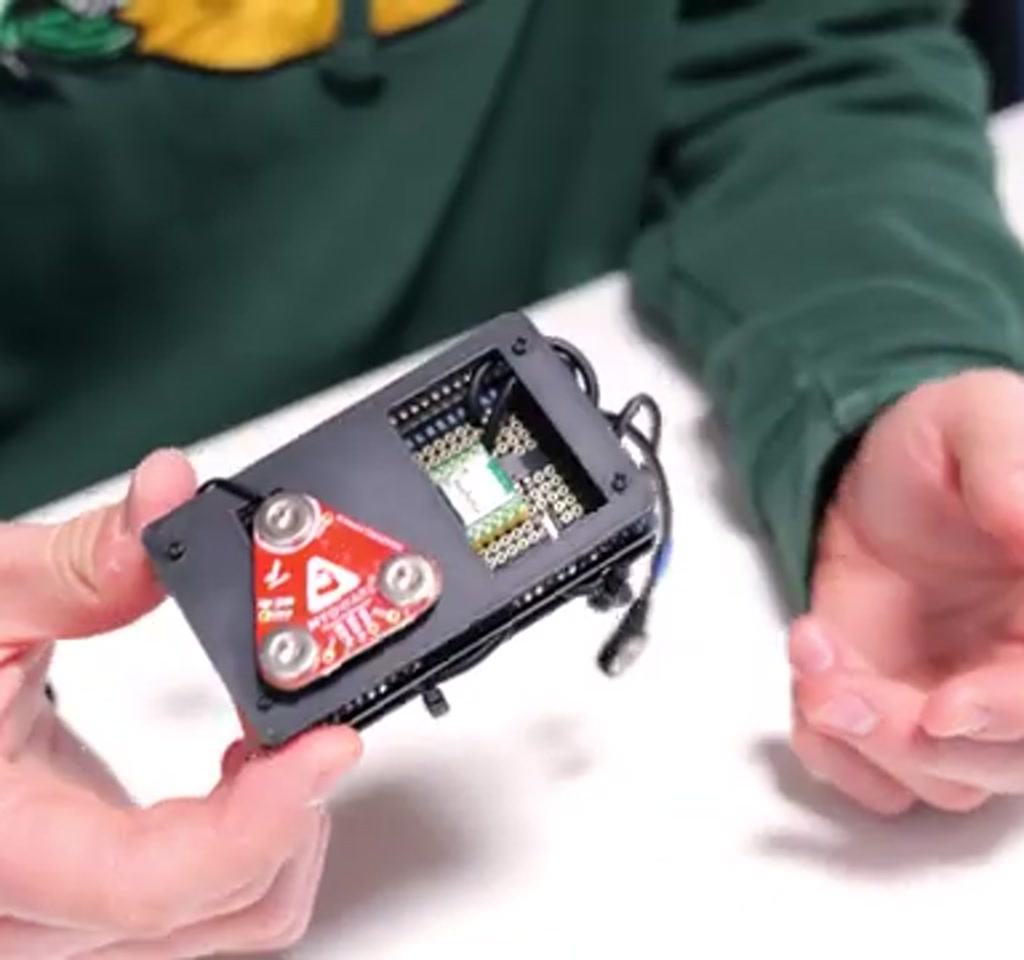
Microcontroller choice affected cycle time, so a faster board replaced the original ESP32. Sensor output mode mattered: reading the raw RECT pin saved approximately 5 milliseconds compared with the smoothed ENV output.
Relay choice was another measurable variable; swapping a mechanical relay that added roughly 3 to 5 milliseconds for a Photomos solid-state relay reduced switching delay and tamed voltage spikes.
Signal Work And Placement
Signal quality depended heavily on sensor placement and electrode type. The correct forearm muscle for index finger flexion had to be precisely located, which required reading anatomical documentation and methodical trial and error. Electrical noise, skin contact quality, and electrode pads wear all moved signal-to-noise ratios in ways that changed trigger reliability.
Latency Measurement And Verification
Measuring each incremental improvement required controlled trials and a timing reference. The 240 fps camera served as the ground truth for visible motion, and the EMG traces provided deterministic timing for triggers. Those paired measurements validated that small hardware and signal changes produced real, reproducible savings.
Practical Constraints And Tradeoffs
The experiment reveals clear tradeoffs that define usefulness and risk. These constraints determine when this technique is realistic and when it becomes fragile.
Cost And Complexity
The parts list was inexpensive by lab standards, near $90 for sensors, microcontroller, and stimulation hardware. That price makes exploration accessible, but meaningful improvement required time, measurement gear such as a 240 fps camera, and iterative calibration. Expect overall effort measured in days to weeks rather than minutes.
Signal Variability And Placement Sensitivity
Performance hinged on exact sensor positioning and individual anatomy. Gains measured in tens of milliseconds depended on locating the right muscle and maintaining contact quality. In practice, this means the approach typically works within a narrow placement window and requires recalibration after significant movement or over multiple sessions.
Pain, Safety, And Comfort
EMS produced uncomfortable sensations. The experimenter reported pain and voltage spikes unless high-quality electrode pads and careful current settings were used.
That discomfort constrains practical use, especially for applications needing sustained or repetitive activation. Safety guidance and medical consultation become nontrivial once stimulation leaves a strictly experimental context.
Feedback Loop Risk
When EMG and EMS targeted the same muscle, the stimulator’s output created an artifact that the EMG detected, producing a self-sustaining loop of stimulation. The simple engineering mitigation was separation: use the left hand as the EMG source and stimulate the right hand. That workaround highlights a deeper limit: coupling sensors and actuators too tightly risks runaway cycles unless intentionally decoupled.
Marginal Gains Versus Practical Benefit
The measured advantage shifted reaction times by roughly 8 milliseconds initially and ultimately produced consecutive results at 150 and 158 milliseconds. Those improvements are decisive in elite contexts where tens of milliseconds matter, but for general use the subjective costs of discomfort and the re-fit time may outweigh benefits.
EMG Vs EMS: Comparison And Decision Factors
EMG and EMS serve different roles: EMG is a sensor that reads electrical activity associated with intent, while EMS is an actuator that applies current to produce contraction. Decisions between sensing, stimulating, or pairing both depend on required latency, safety, comfort, and the likelihood of sensor-actuator coupling producing artifacts.
When To Prefer Sensing Alone
Sensing alone is appropriate when noninvasive monitoring and minimal interference with natural motion are priorities. EMG without stimulation can inform prediction algorithms, fatigue monitoring, and biofeedback without introducing the comfort and safety concerns of active stimulation.
When Stimulation Makes Sense
Stimulation becomes relevant when the goal is to actively shift timing or force. EMS can produce contractions earlier than unaided muscles if triggered from a reliable pre-movement signal, but that active role introduces comfort tradeoffs and regulatory questions.
Ethics, Classification, And Competitive Boundaries
Beyond engineering, the experiment forces tough questions. Does externally accelerated muscle contraction count as an advantage that should be regulated in sport or gaming?
Where does assisted action stop being voluntary? The experimenter was explicit that the stimulator did not replace intention but amplified it, yet that amplification still shifts performance boundaries in ways that competition rule makers will have to consider.
Regulatory frameworks for medical EMS differ from those for elective enhancement. Use in rehabilitative contexts is well established, while consumer-grade stimulation for performance sits in a regulatory gray area. That gap creates both experimentation space and ethical ambiguity.
Where This Fits In The Larger Arc Of Augmentation
Small latency improvements are rarely glamorous. They are incremental, quiet, and additive. Yet history shows repeated small improvements can compound into new norms.
Prosthetics controlled by neural activity and early brain computer interfaces traveled similar arcs from lab curiosity to controlled clinical use, and then into consumer curiosity. Reaction time augmentation sits within the same continuum.
What becomes obvious when you look closer is that this approach reframes the body as an information system to be instrumented and tuned. Muscles and nerves become sensors and actuators in a hybrid loop where software and electronics participate directly in timing.
That framing opens design space, but also requires discipline: calibration regimes, safety protocols, and clear definitions of acceptable use.
From an editorial standpoint, the detail that stands out is how much the final performance depended on eliminating millisecond-scale friction across multiple points. Small optimizations added up. A 5 millisecond saving on a signal path combined with 15 to 27 millisecond early detection to produce results that were plainly measurable and repeatable by the speaker.
Looking forward, the practical question is not whether these techniques can shave time. It is where and under what rules they will be allowed to operate. As sensors become less noisy and stimulation becomes more comfortable and controllable, what now looks experimental could migrate into specialized competitive assistance, rehabilitation regimes, or elective consumer products.
That migration will require technical rigor, safety guardrails, and a clearer public conversation about what assistance means when it acts at the scale of intention rather than visible movement.
The experiment provided an instructive proof of concept: the window between thought and action is accessible, measurable, and in some cases actionable. The broader journey toward tighter bioelectronic cooperation will proceed in thousands of such small steps, each one asking whether shaving a few milliseconds is a victory, a constraint, or an ethical tension to be resolved.
Who This Is For And Who This Is Not For
Who This Is For: Explorers, researchers, and clinicians interested in timing, rehabilitation, or competitive marginal gains. The approach suits people comfortable with iterative hardware work, anatomical calibration, and safety-conscious experimentation. It also fits contexts where small latency improvements can have outsized value.
Who This Is Not For: Casual users seeking quick wins, people sensitive to electrical stimulation, and anyone unable to invest time in calibration or safety precautions. It is not a drop-in performance enhancer for broad public use, given placement sensitivity, discomfort, and open regulatory questions.
FAQ
What Is EMG-EMS Reaction Time Augmentation?
It is the pairing of electromyography, which detects pre-movement electrical activity, with electrical muscle stimulation, which triggers contraction. The DIY project used EMG to detect intent 15 to 27 milliseconds before visible motion and triggered EMS to produce earlier contraction.
How Much Reaction Time Can This Approach Save?
In the documented experiment, initial savings were roughly 8 milliseconds, with consecutive runs producing 150 and 158 millisecond results from a roughly 200 millisecond baseline. The EMG detection window measured about 15 to 27 milliseconds before visible motion.
Is This Safe To Try At Home?
The experimenter reported discomfort and voltage spikes unless careful electrode choice and current settings were used. Safety concerns and regulatory distinctions between clinical EMS and consumer experimentation mean medical guidance is recommended before extensive use.
Can This Be Used In Competitive Sport Or Gaming?
The technique raises regulatory and ethical questions. The experimenter emphasized amplification of intent rather than replacement, but whether that constitutes a regulated advantage depends on sport or game rules and evolving policies.
How Much Does The Setup Cost?
The parts list alone was roughly $90, but meaningful verification and optimization required additional gear such as a 240 fps camera and time spent on calibration. Total effort and cost therefore tend to be higher than the headline hardware price.
Does This Replace Voluntary Control?
No. The documented project amplified preexisting intent detected by EMG rather than supplanting volition. It acts as an assist layer that must be tuned to an individual’s signals and thresholds.
Can EMG-EMS Be Used For Rehabilitation?
EMG and EMS have established rehabilitative uses. The experiment shows a related concept applied for latency reduction, but clinical applications require different validation, safety protocols, and oversight.
Will This Work The Same For Everyone?
Uncertainty remains. The single-project results demonstrate feasibility, not generalizability. Individual anatomy, electrode placement, and signal variability mean outcomes will differ, and replication is necessary for broader claims.
COMMENTS