


The moment a robot vacuum can climb stairs reliably, the rules of the smart home change. Roborock Saros did not arrive as another incremental update. It arrived with foldable legs, and that single detail forces a reframe of what automated home cleaning can actually do.
The real significance here is not that a vacuum looks cuter when it hops. What actually determines whether this matters is whether the mechanical complexity, the AI that guides those legs, and the underlying battery performance can deliver usable, repeatable multi-floor cleaning in real homes. Seen at CES, the Saros rover proves the concept. The tougher question is adoption under real-world constraints.
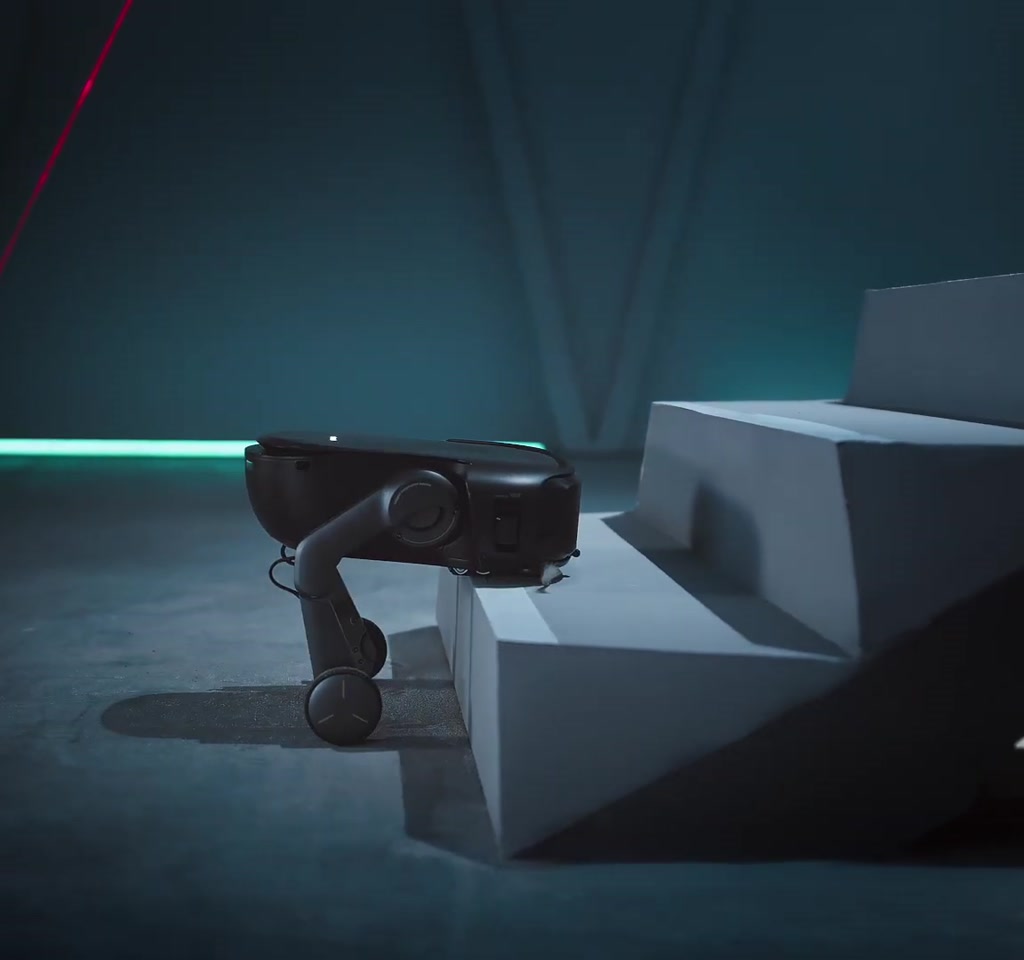
We saw the Saros in action. It climbed and descended stairs, traversed ramps in forward and backward motion, and executed a small hop to clear thresholds. Each leg moves independently, and the company says the system uses onboard AI to recognize stairs, obstacles, and different approaches. That combination is what lets this robot not only climb but attempt to clean stairs as it goes.
Why Legs Matter More Than You Think
Roborock is not the first to flirt with multi-floor cleaning. Earlier prototypes shown at trade shows relied on external rovers or separate carriers to move a vacuum between levels. Those designs sidestepped a core problem by splitting the system into pieces. The Saros puts legs on the vacuum itself, which is an entirely different engineering choice.
Putting the mobility directly on the cleaning unit removes the need for a secondary vehicle and keeps the cleaning system self-contained. That is significant because it means the robot can make decisions in the context of cleaning: when to climb, when to pause, and how to orient itself on a stair tread while still sweeping or mopping.
How The Legs Work And What They Can Do
From what Roborock demonstrated, these are foldable appendages that can be raised or lowered for climbing and for getting over thresholds and obstacles. The legs can be controlled independently, which allows the robot to shift weight and pivot mid-stair to align itself with a tread. The hop is not just theatrical. It helps the robot clear small thresholds and negotiate inconsistent surfaces quickly.
On flat floors, the legs fold flush, returning the unit to an ordinary vacuum footprint. On the stairs, the legs extend, and the Saros carefully lifts and plants them as it moves. That motion lets it scrape along each step and reposition without relying on a separate vehicle to carry it up or down.
The Role Of AI In Legged Mobility
The company describes onboard AI processing that recognizes stairs and obstacles. That is crucial because legged locomotion is only as good as the perception that drives it. A camera-based system or depth-sensing array needs to identify tread depth, riser height, and whether a given surface is traversable. The processing must be fast and conservative enough to avoid catastrophic falls.
What becomes obvious when you look closer is that perception and control are the limiting factors more than mechanics. The hardware can be engineered to grip, lift, and balance. Teaching software to generalize across different stair geometries, textiles, wetness, and clutter is the long-term problem.
Where This Fits In The Smart Home
Roborock positions the Saros as the next step for homes that are not single-level. Most robot vacuums are constrained to a single floor or to spaces separated by thresholds. If Saros delivers reliable stair navigation, it changes customer expectations. Buyers who tolerated manual stair cleaning because automation could not cross levels may finally consider fully autonomous maintenance.
From an editorial perspective, the detail most people miss is how behavior changes once stairs are no longer blockers. Scheduling, mapping, and multi-floor housekeeping become more integrated. The robot can plan cleaning cycles that prioritize upstairs traffic patterns during low occupancy hours and then return to charge before a heavier multi-floor session.
Constraints And Tradeoffs You Should Expect
No matter how charming the hop looks, there are at least two concrete tradeoffs to accept up front. First, mechanical complexity means more things that can fail. Second, moving legs consumes more energy than rolling wheels, which has direct implications for runtime and charging cadence.
Mechanical Complexity And Maintenance
Adding legs means adding joints, actuators, and actuating electronics. Those parts are exposed to dust, moisture, and grit from stairs and thresholds, which accelerates wear. Maintenance is where many systems quietly fail. Expect maintenance needs to surface after repeated use cycles rather than immediately. A reasonable expectation is that service intervals will appear after hundreds to a few thousand climb cycles, depending on usage patterns and home dust levels.
Battery And Runtime Impact
Legged locomotion is more energetically expensive than wheel-based motion. That is simple physics. Conservative estimates suggest that when a robot alternates between stair climbing and normal floor cleaning, effective runtime could drop noticeably, commonly by a factor of two or more, compared with a no-stair mixed cleaning session. That means a device that runs for two to three hours on flat floors might only sustain an hour or less under heavy stair usage.
Price And Market Positioning
Roborock has positioned premium products with powerful suction and mop features in the past. Given the added complexity here, price will be a gating factor. Costs tend to scale into the hundreds rather than the tens when new mechanical subsystems are added. A sensible market expectation is a price in the high end of the company portfolio, potentially reaching into the several hundreds to low thousands range when it ships.
Staircase Geometry And Real World Limits
Not all stairs are created equal. Narrow staircases, spiral stairs, and stairs with inconsistent tread and riser dimensions will be the toughest tests. The Saros we saw is relatively wide, and that raises a practical constraint. If a staircase approaches the robot footprint, the robot will need to pivot and reposition in ways that reduce cleaning efficiency or make traversal impossible.
Another limitation is curved stairs. The robot handled wider straight stairs in the demo, but navigating tight curves while keeping cleaning brushes in contact will require more advanced motion planning and possibly a redesign of brush placement. In plain language, it should work well on many typical modern staircases but likely struggle on older, narrower or unusually configured stairs.
What We Saw At CES And Why It Matters
At the show, the Saros traversed stairs in both directions, cleaned along treads, and performed controlled hops to clear thresholds. It is tangible. This is not a concept sketch. The robot moved under its own power and demonstrated coordinated leg control guided by onboard vision and processing.
That demonstration matters because it converts abstract capability into observed behavior. Seeing a robot climb stairs in front of you, and showing independent leg control, removes the biggest skepticism point, which is whether a full cleaning cycle can be achieved without an external carrier.
The company behind it appears to have prioritized autonomy and practical integration rather than theatrical novelty. Roborock has previously shown a vacuum variant with an arm that could pick up small obstacles, and the Saros reflects a continued strategy of solving functional gaps in home cleaning rather than simply adding flair.
Questions We Still Need Answered
There are practical questions that only extended real-world testing can resolve. How does the robot manage battery scheduling across floors? How robust is the AI when confronted with carpeted stairs, wet stairs, or stairs cluttered with toys? How durable are the leg actuators when exposed to sand and pet hair for months?
We want to test it in our own homes to see if it truly navigates fluidly and cleans effectively on curved and narrow stairs. The demo was convincing on standard stairs, but the diversity of real home stairs is broad. The company will have to demonstrate resilience across that range to earn mass adoption.
Why This Is More Than A Cute Gadget
Adding legs is not an exercise in making consumer robots cuter. It is a deliberate engineering choice to remove a structural limit in the category. The consequence is not only that a single robot might maintain multiple floors. It is possible that home care patterns could change, reducing the friction of multi-floor cleaning and shifting expectations for continuous automated maintenance.
That shift creates secondary ripple effects. Battery capacity, docking station placement, mapping strategies, and even repair ecosystems will need to evolve. If legged vacuums reach mainstream homes, there will be a need for service networks that understand and repair articulated cleaning robots rather than wheel-only designs.
That is an industry-level change, and it is already visible in the priorities Roborock has chosen for this device.
We do not yet have pricing or a release date. The product is tangible and shown in action, which is a meaningful step forward. The next steps will be durability tests, real-world battery profiles, and long-term reliability data.
One concise takeaway that stands on its own is this. Roborock Saros proves that stair climbing is possible without a separate carrier, but whether it becomes practical for most homes depends on battery economics and how many different stair geometries the onboard AI can handle reliably.
For now, the category has been cleared of a long-standing barrier. The rest is engineering and acceptance.
As more units are tested and reviewed, the real-world constraints will become clearer. For everything else from CES, stay tuned to coverage that follows the product from demo to doorstep. The question is no longer if a vacuum can climb. The question is whether it can do it often enough, cheaply enough, and without excessive maintenance that owners prefer it over manual cleaning. That is where the next chapter begins.
Roborock Saros was demonstrated at CES and captured attention because it addresses a persistent limitation for robot vacuums. We want to test one in our homes and report back on whether the promise translates into practical daily use.
The forward-looking implication is clear. Once reliable legged mobility is production-ready, homes will expect robots to move between floors as naturally as humans do, and the architecture of automated cleaning will have to catch up to that expectation.
COMMENTS