


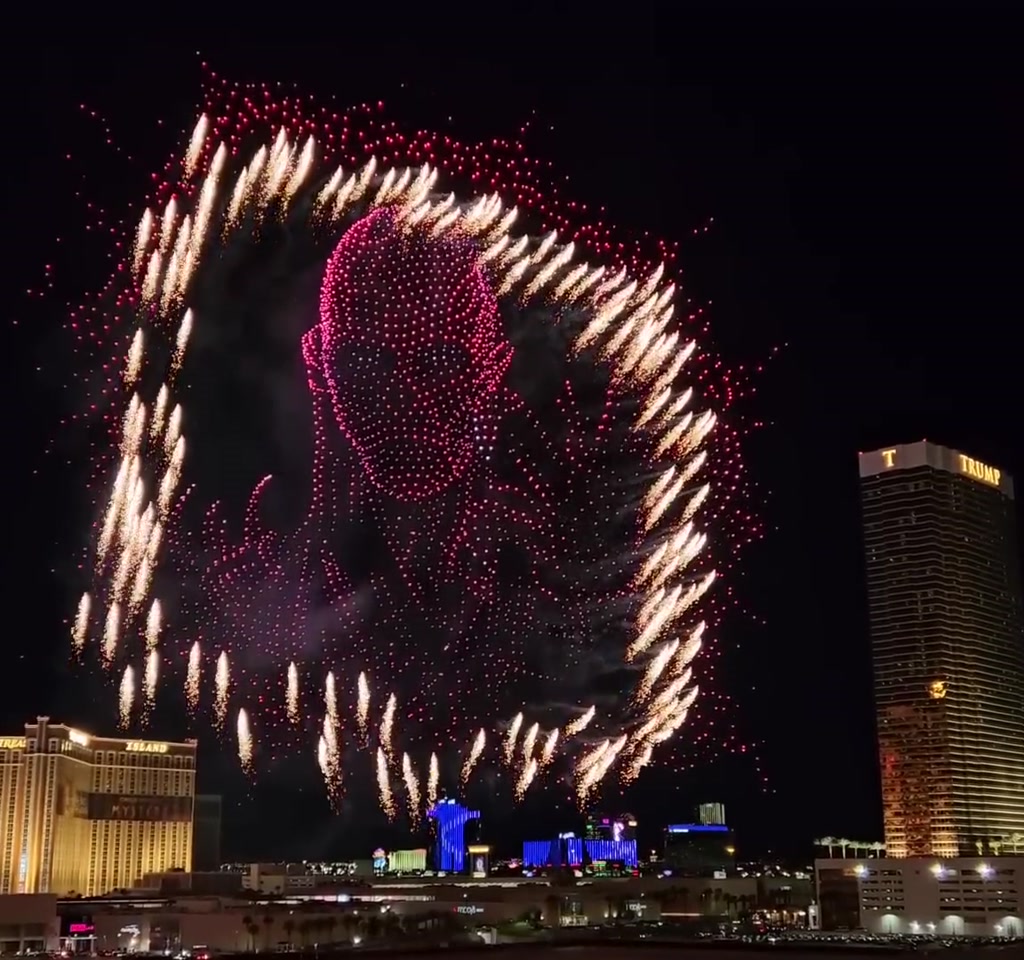
The Stranger Things Drone Show did what great spectacles are meant to do, it made the impossible feel effortless. Thousands of points of light assembled into characters and scenes above the Las Vegas Strip, and for a few minutes, the city watched a sky that behaved like a programmable stage.
The real significance here is not the visual trickery. What matters is how tightly engineered the entire event had to be, because a handful of small physical limits determine whether thousands of drones choreograph or collapse. This article reveals the operational fragility behind the glamour: the narrow battery windows, the unforgiving wind thresholds, and the dense human choreography that keeps the sky from becoming chaos.
Most readers remember the images. Fewer appreciate the engineering that made them possible. The following account pulls back the curtain on the logistical architecture that turned code into characters, and explains the tradeoffs that made this show possible but perilous.
From Animation File To Flying Points Of Light
At its heart, a drone light show is an animation rendered in three-dimensional space. Designers create motion and form inside a virtual sky grid. Every frame defines exact coordinates for each drone and the color and intensity of its LED at that instant.
That animation is then converted into individual flight timelines so every drone has a second-by-second script of where to be and what to show. For a 5,000 drone performance, the conversion is not a simple export, it is a large-scale scheduling problem paired with safety constraints and power budgeting.
Launchpads, Ground Grids, And The Physical Footprint
Thousands of drones require dense ground infrastructure. Launch pads are arranged in mapped grids, each pad tied to a drone identifier to avoid placement errors. In shows of this size the staging area can cover several football fields, which affects crew logistics, power distribution, and recovery zones.
What becomes obvious when you look closer is that the ground is as important as the sky. The arrangement of pads, charging racks, and recovery zones constrains how quickly drones can be prepared, how many can be launched in a wave, and how fast a malfunctioning unit can be retrieved.
The Hard Limits That Decide Success Or Cancellation
The moment this type of operation breaks down is almost always when limits collide. Two practical constraints consistently dominate planning and execution.
Battery Life And Power Logistics
Show aircraft typically fly for about 15 to 25 minutes, depending on payload and wind. That is the single biggest clock that designers must obey. Animations are sliced into segments so no drone is asked to fly outside its safe battery margin.
On-site, batteries are charged using high-capacity racks fed by mobile generators or dedicated electrical feeds. That setup means charging throughput becomes a hard cap. If a battery swap or reconditioning step takes many minutes per drone and there are thousands of units, the turnaround time moves from minutes into hours at scale. In practice, the operation is bounded by charging capacity and the number of spare batteries, which often places costs into the hundreds of thousands of dollars rather than the tens of thousands.
Weather And Aerodynamic Fragility
Wind speed is a decisive constraint. Even moderate gusts can distort formations or force altitude changes. Shows are frequently delayed or canceled when wind thresholds are exceeded because formation integrity and safety cannot be guaranteed.
Temperature also matters because it alters battery efficiency. In colder conditions, flight duration can slip toward the lower end of the 15 to 25 minute range. That means planners build in buffer margins and shorter sequences, which reduces visual ambition. In short, creative goals often yield to the weather report.
Rehearsals, Redundancy, And The Human Machine
Large shows do not rely on a single full-scale dress rehearsal. The rehearsal process is staged. Initial runs with reduced drone counts validate choreography. Full-scale runs confirm safety margins. Final rehearsals are scheduled at night to avoid airspace conflicts.
Events of this scale require teams that commonly range from 50 to 100 people. Roles include flight engineers, safety officers, visual designers, battery technicians, launch supervisors, and airspace coordinators. Every role follows checklists and timelines. Maintenance tends to surface after repeated use cycles, not on day one, which means the crew workload tracks with the number of shows rather than the number of drones alone.
Data Redundancy And Live Monitoring
Flight instructions are stored on each drone and within a central control system. That redundancy prevents a single interference event from derailing choreography. In live operation, drones stream telemetry back to operators, including position, battery status, and signal health.
When a drone deviates or reports low power, it is removed from the formation and guided to a predefined recovery zone. The swarm software compensates for losses so the visual narrative remains intact even when individual units fail.
Post Show Reality Checks
After landing, teams inspect drones for structural stress, motor wear, and battery degradation. Engineers review data logs to find anomalies. This maintenance cycle is where many large-scale operations quietly fail if they underestimate the frequency of part replacements.
To put scale into context, routine wear means components tend to need attention after repeated flight cycles. The number of maintenance cycles per drone pushes operations from a single event cost model into an ongoing logistics model that requires storage, spare parts, and skilled technicians.
Why Regulators And Neighbors Matter As Much As Engineers
Federal aviation authorities require coordination for large-scale drone shows. Temporary flight restrictions clear the airspace and set altitude and horizontal boundaries. Those boundaries can limit visual ideas and force designers to compress scenes into tighter vertical or horizontal bands.
Most people misunderstand how much regulatory friction shapes the creative result. A visually simple idea can be impractical if it requires crossing restricted airspace or interfering with approach paths to nearby airports. Airspace coordination, therefore, becomes a constraint as binding as battery chemistry or wind speed.
The Tradeoffs Behind Replacing Fireworks
Drone shows replace fireworks for many reasons. They are reusable, programmable, and cleaner in terms of smoke and debris. That said, they bring a different set of tradeoffs that matter.
- Creative flexibility often costs more when scaled. Creating a single new show can require weeks of design work plus multiple rehearsals and substantial ground logistics.
- Operational costs are front-loaded in crew, spare batteries, and charging infrastructure. For large shows, those costs tend to scale into the hundreds of thousands of dollars.
From an editorial standpoint, the promise of drones is real but conditional. They remove some problems while introducing others. The result is a shift in where budgets and risks sit, from explosive pyrotechnic risks to engineering, power, and regulatory complexity.
What This Means For Live Events Going Forward
Technically, the Las Vegas show was a demonstration of scale, but the larger story is about ecosystem evolution. To make these spectacles routine, the industry must solve both supply and demand problems. That means cheaper charging infrastructure, more robust batteries that extend flight time well beyond the current 15 to 25 minute window, and streamlined regulatory frameworks that allow predictable scheduling rather than last-minute cancellations.
Practically speaking, adoption friction remains. Planners must budget for larger crews, rehearsal windows that are measured in day,s not hours, and replacement parts that wear out after repeated cycles. Until those constraints loosen, the use case for drone spectacles will concentrate on headline events rather than weekly activations.
One paragraph that stands on its own: The spectacle is fragile because it depends on a chain of physical realities that are only as strong as their weakest link, and for shows at this scale, that weak link is usually power or weather.
The Las Vegas deployment was an engineering success and a cultural moment. It also served as a practical lesson: the sky can be programmed, but it is not forgiving. Creators, regulators, and event producers will need to treat aerial shows as logistics projects first and creative projects second if they want repeatability at scale.
Looking ahead, the next stage will be about making those logistical constraints smaller and more predictable. The industry will push for longer flight times, faster charging, and clearer rules of the sky, and that is where the real battle for mass adoption will be won or lost.
The closing thought is simple: the aerial canvas is now open to storytellers, but until the supply chain of batteries, parts, and permitting is normalized, these events will remain rare and expensive rather than routine and cheap.
COMMENTS