


Fleet operations generate staggering volumes of sensor data every day – yet most of it goes unanalysed. The organisations cracking the code are proving that industrial AI works best where conditions are least controlled.
The data science community has a habit of romanticising clean datasets. Academic benchmarks, curated Kaggle competitions, and controlled manufacturing environments dominate the conversation around applied machine learning. But the most demanding – and arguably most rewarding – frontier for real-world AI deployment is rolling down the highway at 110 kilometres per hour, hauling 36,000 kilograms of freight through a rainstorm.
The American commercial trucking industry accounts for 72.6 percent of all domestic freight tonnage and generates annual revenues approaching $940 billion. What makes this sector remarkable from a data science perspective is not just its scale but the sheer density and complexity of the information it produces.
A single Class 8 heavy-duty truck equipped with modern onboard systems outputs approximately 25 gigabytes of data every day – engine diagnostics, GPS coordinates, tire pressure telemetry, exhaust system performance, and dozens of additional sensor streams. For a fleet of 500 vehicles, that translates to 12.5 terabytes of raw data generated daily, a figure that rivals the output of many smart factories operating with far more sophisticated digital infrastructure.
The paradox is that while the data exists in abundance, most of it has historically been discarded or stored without meaningful analysis. That is starting to change – and the implications extend well beyond the trucking industry itself.

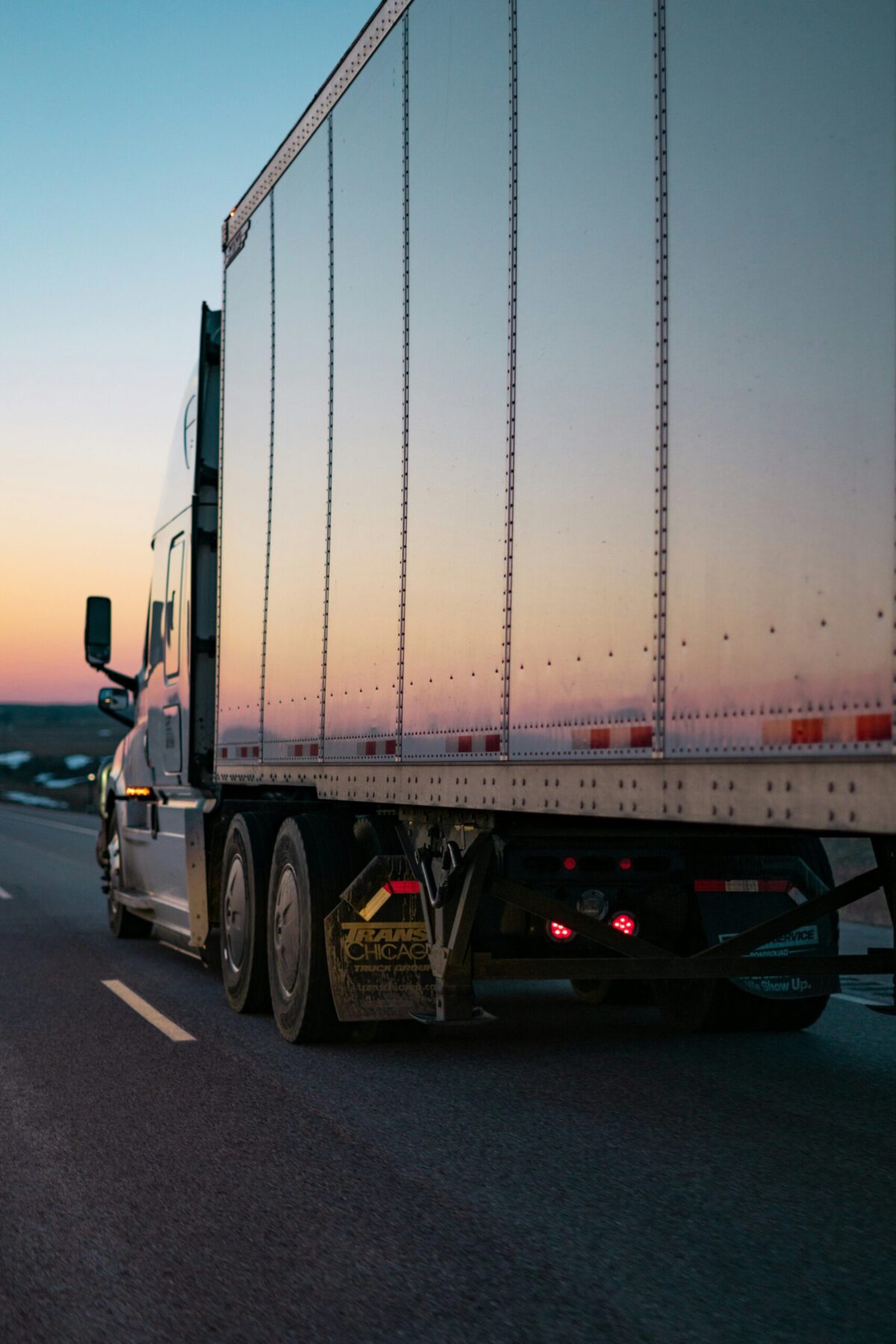
IMAGE: UNSPLASH
Inside The Three-Layer Data Stack Powering Modern Fleets
Understanding why fleet analytics is such a compelling problem requires understanding the underlying data architecture. Commercial fleet operations run on a layered system that mirrors enterprise IoT deployments but operates under far harsher conditions.
The first layer is the vehicle itself. Edge computing devices installed in each truck pull continuous readings from the engine control module via the J1939 diagnostic protocol.
These readings include engine RPM, coolant and oil temperatures, turbocharger boost pressure, battery health, diesel particulate filter loading, and exhaust gas recirculation status. Accelerometers capture chassis vibration patterns, and GPS receivers log position data at intervals as tight as every 30 seconds.
The second layer is the transmission network. Data moves from vehicles to centralised systems over 4G and 5G cellular connections, which introduces its own challenges – signal dropout in rural corridors, bandwidth throttling, and the need for onboard buffering during connectivity gaps.
The third layer is where things get interesting. Cloud-based fleet telematics software platforms aggregate these incoming streams, normalise the data across different vehicle makes and model years, and present it through dashboards that convert raw sensor output into operational intelligence. The sophistication of this integration layer is what separates organisations getting value from their data and those simply collecting it.
Why Standard Analytics Fails On The Road
Industrial machine learning typically assumes some degree of environmental control. A manufacturing line operates within known temperature ranges, consistent power supply, and predictable load cycles. Commercial trucking offers none of these conveniences.
A truck may begin its day in a desert valley at 48 degrees Celsius and end it at a mountain pass elevation above 2,500 metres in near-freezing conditions. It may run empty one direction and fully loaded the other. It may traverse smooth interstate asphalt and then crawl through a gravel construction zone. Each of these variables directly affects engine behaviour, component wear rates, and the meaning of every sensor reading being captured.
This is why simple threshold monitoring – the kind of rule-based alerting that works adequately in a climate-controlled plant – produces unacceptable false positive rates in fleet environments. An engine coolant reading of 105 degrees Celsius is perfectly normal under heavy load on a steep grade in summer heat. That same reading on a flat highway in cold weather signals a cooling system malfunction. The data point is identical; only the context changes the diagnosis.
Building models that account for this contextual complexity is precisely what makes fleet analytics such a rich machine learning challenge and why brute-force approaches consistently underperform nuanced, context-aware implementations.
Predictive Models That Earn Their Keep
The highest-value application of AI in commercial fleet operations is predicting mechanical failures before they strand a truck on the roadside. The best implementations in production today combine multiple model architectures working in concert.
Supervised classifiers – typically gradient boosting or random forest models – handle prediction of known failure modes where historical labelled data exists. These models learn that a specific combination of declining oil pressure, rising crankcase temperature, and increased vibration frequency at a particular engine family and mileage range precedes bearing failure with high reliability.
For patterns that do not match any known failure signature, unsupervised anomaly detection algorithms monitor for statistical outliers across correlated sensor channels. Long short-term memory networks process sequential sensor data to identify gradual performance degradation – the kind of slow drift that a technician monitoring a single dashboard metric would never notice but that becomes unmistakable when analysed across weeks of multivariate time-series data.
The most capable predictive maintenance AI for heavy-duty failure prevention platforms in production today report the ability to flag developing component failures with greater than 90 percent accuracy, often providing two to three weeks of advance warning. That lead time transforms maintenance from a reactive cost centre into a planned, optimised operation.
Following The Money: Breakdown Costs And The Predictive Payoff
What makes the business case for fleet AI unusually straightforward is the transparency of the cost structure. The American Transportation Research Institute has documented average fleet operating costs at $2.27 per mile, which means a single truck running 120,000 miles per year represents approximately $272,400 in total operating expense. Maintenance and repair consume roughly $0.20 of every mile driven, adding up to $24,000 per truck annually.
But the real financial damage comes from the unplanned events. A single roadside breakdown triggers a cascade of costs: emergency tow charges that commonly range from $500 to $2,000, mobile repair premiums that run 30 to 50 percent above shop rates, driver detention pay, contractual late-delivery penalties, and the knock-on disruption to every other load that truck was scheduled to haul.
All told, a single unplanned breakdown typically costs between $750 and $2,000 per incident – and that excludes the revenue the truck would have earned had it stayed in service.
Run the arithmetic on a 200-truck fleet averaging 1.5 unplanned breakdowns per truck each year at $1,500 per event. That is $450,000 annually in preventable expense. A predictive analytics programme that reduces unplanned failures by 40 percent returns $180,000 per year in direct savings – before accounting for the secondary benefits of longer component life, leaner parts inventory, and higher vehicle uptime percentages.
For an industry operating on margins measured in cents per mile, those numbers command attention.
The Hard Problems Waiting For Data Scientists
Fleet analytics is not a solved problem, and the remaining challenges represent genuine opportunities for data practitioners seeking impactful work.
Data quality remains the fundamental obstacle. Vehicle sensors endure constant vibration, temperature extremes, and electromagnetic interference. Telemetry streams suffer intermittent gaps when trucks pass through cellular dead zones. Time synchronisation across distributed edge devices introduces subtle alignment errors that can corrupt time-series analysis if not properly managed.
Labelled training data is scarce in a way that surprises people accustomed to working with curated datasets. Unlike a manufacturing process where you can intentionally induce failure modes to generate training examples, truck components fail unpredictably under uncontrolled conditions.
Constructing reliable labelled datasets demands years of historical maintenance records precisely cross-referenced with timestamped sensor logs – a data engineering challenge that many fleet operators are only now beginning to address systematically.
Perhaps most importantly, the domain demands a human-in-the-loop approach. The most effective deployments do not attempt to automate maintenance decisions. They surface probabilistic assessments to experienced diesel technicians who combine algorithmic output with their own diagnostic judgement.
This hybrid model, where machine intelligence identifies potential issues and human expertise validates and prioritises them, consistently delivers better outcomes than either approach in isolation.
A Proving Ground With Implications Far Beyond Trucking
The problems being solved in commercial fleet operations – distributed sensor networks, high-volume time-series processing, real-time analytics under variable environmental conditions, and decision support that augments rather than replaces human expertise – are not unique to trucking.
They are the defining challenges of industrial IoT at scale, and the solutions emerging from fleet analytics are directly applicable to mining, maritime logistics, rail, construction, and large-scale agriculture.
The fleet management technology market is expected to grow to $52.5 billion by 2030, driven by demand for predictive intelligence and operational automation.
For data scientists looking for domains where analytical skills translate directly into measurable business impact, fleet operations offers a rare combination: abundant real-time data, clear and quantifiable return on investment, and a massive industry that has only begun to exploit the information it already generates.
The data is already flowing. The question is who will build the systems smart enough to listen.
COMMENTS