


Industrial fluid systems are no longer static networks of rigid pipe. Modern plants operate in environments where vibration, thermal cycling, aggressive media, and space constraints all converge. In sectors such as chemical processing, pharmaceuticals, semiconductor manufacturing, and advanced manufacturing, the reliability of a system often depends on how well it absorbs movement and stress rather than how rigidly it resists them.
Engineering standards reflect this systemic view. The ASME B31.3 Process Piping code outlines how material selection, fabrication, inspection, and testing must be considered as a unified discipline rather than isolated decisions. The emphasis is clear: piping systems are engineered ecosystems.
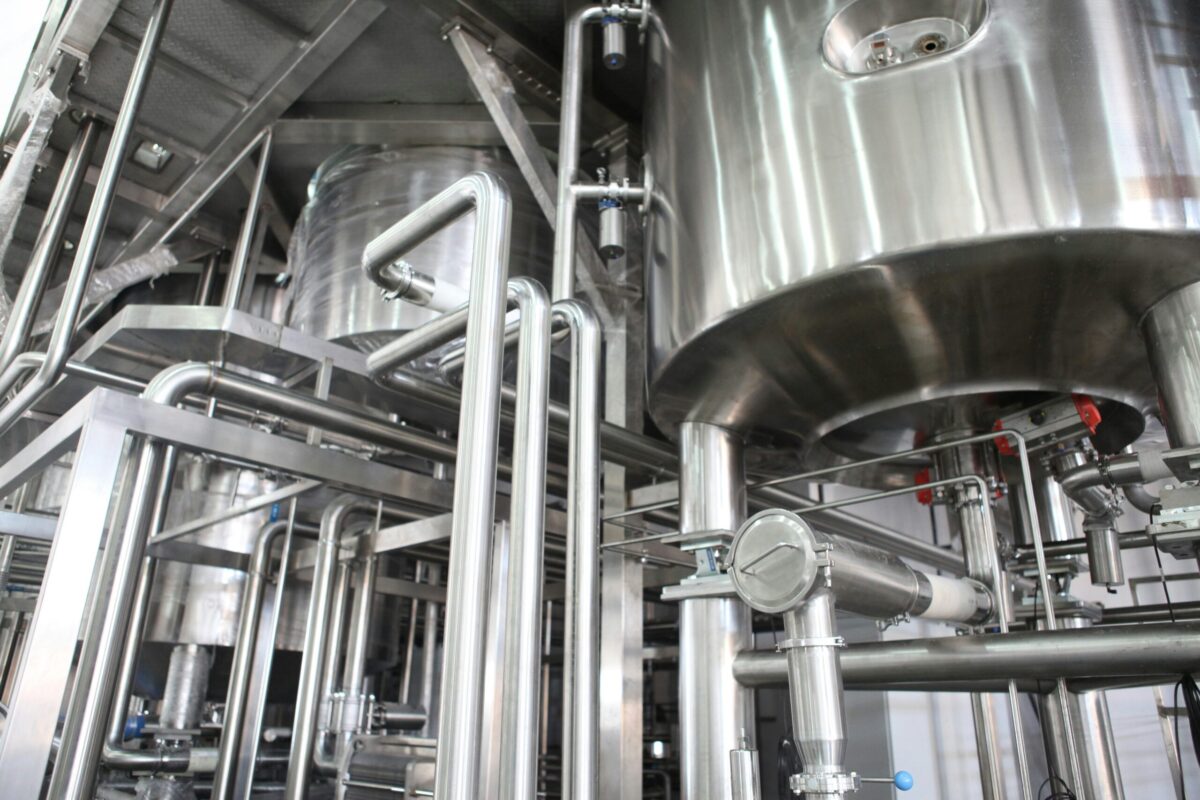
IMAGE: UNSPLASH
Why Flexibility Is A Functional Requirement
Flexibility in a fluid line is not a convenience feature, it’s a mechanical safeguard. Pumps generate vibration. Compressors introduce pulsation. Temperature swings create expansion and contraction. When rigid connections transmit these forces directly to equipment nozzles or joints, long-term fatigue can occur. Strategically integrating flexible sections reduces stress transfer and allows movement to be absorbed where it is safest to do so.
The Fluid Sealing Association discusses the importance of proper sealing and connection technologies in ensuring reliability and safety across industrial systems. While often associated with sealing devices, the same philosophy applies to hose assemblies and flexible connectors: performance must be predictable under real-world stressors.
Material Selection Under Chemical And Thermal Stress
In high-performance industrial systems, chemical compatibility and temperature stability are non-negotiable. Media may include corrosive acids, solvents, ultrapure chemicals, or steam. Selecting a material without documented performance data introduces avoidable risk.
ASTM D4894 provides specification and testing requirements for PTFE resins used in molding and extrusion, serving as a foundational technical reference for fluoropolymer-based components. Similarly, regulatory context matters. For applications connected to food or sensitive processing environments, U.S. regulations such as 21 CFR 177.1550 define conditions for perfluorocarbon resins.
Beyond chemistry, lifecycle stability must be evaluated. A polymer may resist a fluid at room temperature but degrade under cyclic heat and pressure. True material selection considers worst-case scenarios, including cleaning agents and process upsets.
Managing Risk In High-Consequence Environments
Fluid systems that handle hazardous chemicals fall within broader risk management frameworks. OSHA’s Process Safety Management standard highlights the importance of mechanical integrity and preventive maintenance for systems containing highly hazardous chemicals.
In this context, flexible connectors and hose assemblies are not minor accessories. They are part of the mechanical integrity program. Installation practices, inspection intervals, and documentation become just as critical as the initial specification.
The Role Of Corrugated Fluoropolymer Solutions
When movement, chemical resistance, and temperature range must coexist, fluoropolymer-based solutions are often evaluated. Corrugated constructions, in particular, provide increased flexibility compared to smooth-bore alternatives, allowing systems to accommodate vibration and limited dynamic motion.
However, corrugation is a mechanical design choice, not a universal solution. Engineers must still evaluate bend radius, torsional stress during installation, pressure cycling, and reinforcement structure. Used correctly, ptfe corrugated hose can help decouple vibration and reduce stress concentration at rigid joints.
In this context, the resource serves as a product-level complement to broader engineering considerations rather than a substitute for them.
Installation Discipline And Lifecycle Performance
Even the best-designed flexible assembly can fail if improperly installed. Over-bending, twisting during tightening, inadequate support, and external abrasion are common contributors to premature failure.
Best practice includes:
• Respecting minimum bend radius,• Preventing torsion during installation,• Protecting against mechanical damage,• Aligning inspection frequency with stress exposure.
Documentation and traceability are especially important in regulated industries. A replacement assembly should replicate the original engineered specification, not rely on approximation.
Engineering Flexibility As A Strategic Choice
Ultimately, modern fluid system design is about balancing rigidity and movement. Overly rigid systems transfer stress. Overly flexible systems may lack control. The goal is engineered flexibility, supported by standards, verified materials data, and disciplined installation.
When flexibility is treated as an intentional design parameter rather than an afterthought, systems become more resilient, safer, and more predictable across their operational lifecycle.
In harsh industrial environments, reliability is rarely accidental. It is designed into every connection.
COMMENTS