


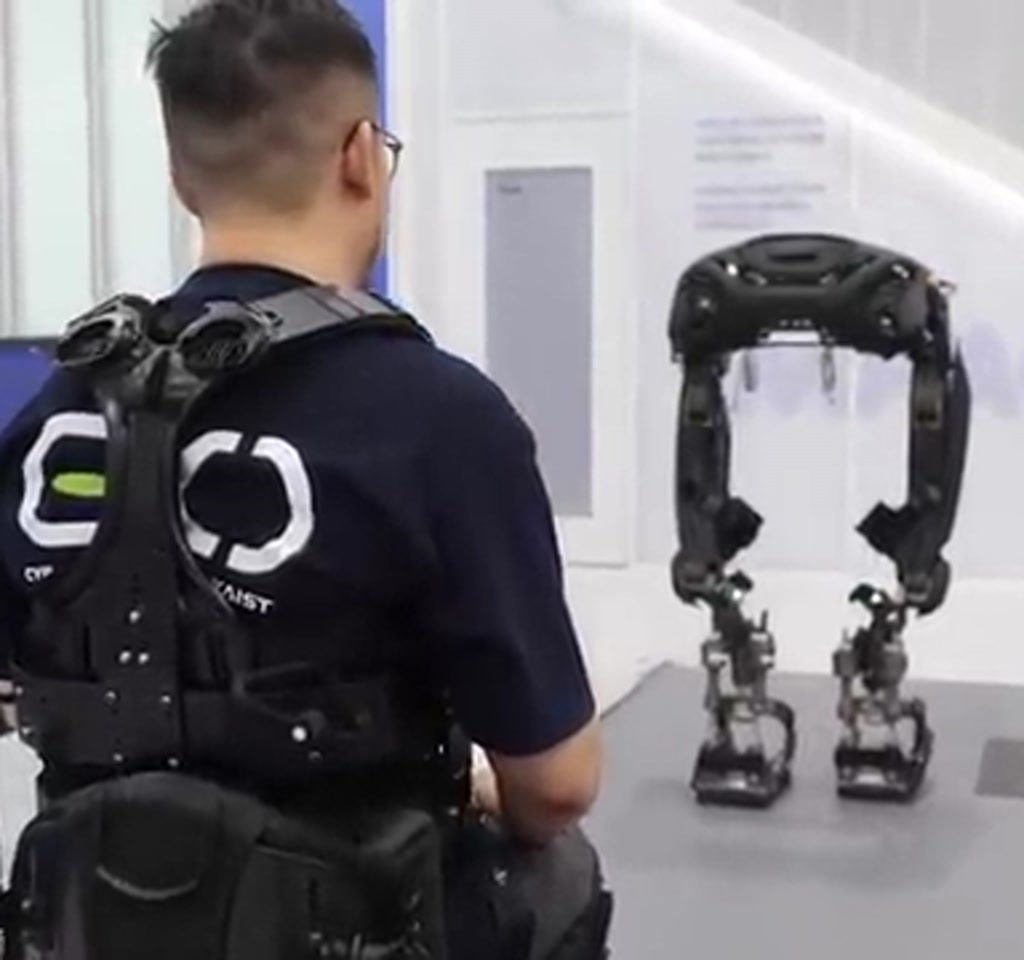
WalkON Suit F1 does something most exoskeleton demos do not try: it walks to a seated person, aligns itself with the wheelchair, and allows that person to step into the device without transferring out of their chair. That autonomous front docking sequence flips the usual choreography of exoskeleton use and reframes the mobility problem from powered gait to the complete sequence of getting in, moving, and getting out safely.
The real significance here is not simply that WalkON Suit F1 can move a paralyzed set of legs. The real significance is that it treats donning, balance, environment sensing, and stairs as part of a single integrated system.
When those steps are solved together, the promise of greater independence becomes measurable in repetitions and routine, not just a highlight reel.
What most people misunderstand about exoskeleton progress is the assumption that walking mechanics are the hardest piece. The part that changes how this should be understood is the last meter: aligning a multi-kilogram robotic frame to a person in a wheelchair, securing the interface, and then keeping that person upright while they negotiate thresholds, turns, and stairs. WalkON Suit F1 makes that last meter the center of its design.
That emphasis shows up in two visible outcomes. First, the suit won the Cybathlon 2024 Exoskeleton Race in Kloten, Switzerland, October 25 to October 27, 2024, a competition built around realistic daily tasks. Second, the engineering choices behind the suit illustrate the tradeoffs that will determine whether a research platform becomes everyday assistive technology.
What WalkON Suit F1 Actually Does
In short, WalkON Suit F1 is a powered lower body exoskeleton built to help people with complete lower limb paralysis stand, walk, turn, and climb stairs while minimizing the need to transfer out of a wheelchair. Public descriptions emphasize a rigid lower frame, coordinated joint actuation, and environment sensing to manage real-world obstacles.
At its core, WalkON Suit F1 is a powered lower-body exoskeleton intended for people with complete lower limb paralysis. It is a rigid frame that anchors at the feet, legs, pelvis, and torso and then uses coordinated joint actuation to perform sit-to-stand transitions, walking, turning, and stair negotiation. Public reports describe 12 electric motors distributed across the lower body joints, delivering the torques needed for demanding tasks like stair ascent.
How The Control System Works
The suit fuses high-frequency sensor data to coordinate motion and balance. Roughly 1,000 sensor signals per second combine foot pressure, joint position, and upper body sensing so the system can detect user intent, adjust step timing, and maintain balance as the pilot uses crutches to shift weight.
But the practical story of the device is inseparable from its sensing and control. The suit processes roughly 1,000 sensor signals per second, combining foot pressure information, joint position feedback, and upper body sensing to detect user intent and maintain balance. Vision sensors pointing forward give the system environment awareness so that stairs and edges can be detected and handled proactively rather than reactively.
How Docking Works
Docking is treated as a core function rather than an afterthought. The device approaches a seated user, aligns to the wheelchair, and permits the user to slide feet into foot modules before the upper frame closes around the pelvis and torso. That workflow reduces lifting and repetitive strain for both users and caregivers.
Where WalkON Suit F1 stands out is its autonomous approach and front docking. Instead of requiring an assistant to strap the device on or repeated transfers from wheelchair to floor, the system positions itself in front of a seated user. The pilot slides feet into the foot modules, and the upper frame closes around the pelvis and torso. That workflow reduces the mechanical load on the wrists and the repeated lifting that many users and caregivers report as a hidden burden.
Competition Performance And Repeatability
Cybathlon prizes repeatable performance in realistic tasks. WalkON Suit F1’s gold at Cybathlon 2024 indicates more than a single fast run; it indicates the system can perform consistent transitions, manage environmental changes, and recover from minor disturbances under time pressure.
Cybathlon 2024 focuses on realistic, timed tasks rather than pure speed. Pilots must navigate turns, surface changes, and stair-related obstacles that mimic everyday environments. KAIST reported that WalkON Suit F1 took gold, a repeat of the lab’s success at Cybathlon 2020. Winning here signals more than robust gait generation; it signals that the system can do consistently repeatable transitions and environment-aware choices under time pressure.
Engineering Tradeoffs That Define Usefulness
Every exoskeleton lives inside a tension between mass, power, and autonomy. WalkON Suit F1 deliberately favors structural rigidity and sensing capability to enable docking, balance, and stair negotiation, and those choices create clear use-case boundaries for daily life.
Mass And Structural Choices
Public reports describe the suit as weighing roughly 50 kilograms and using aluminum and titanium. Heavier structure increases stiffness and safety under load but shifts the center of mass and raises the demands on interfaces and actuators, which in turn affects comfort and donning complexity.
First constraint, mass. Public reporting describes the suit as weighing roughly 50 kilograms, built from aluminum and titanium. That mass is not an accident. The structure must transmit large vertical loads during sit-to-stand and stair climbing without buckling or producing dangerous misalignments. Heavier structure buys strength and stiffness, but it also shifts the center of gravity and increases the mechanical burden on any interface with the user.
Power, Batteries, And Thermal Limits
Sit to stand and stair ascent need short bursts of high torque. Designers must balance battery capacity, peak power delivery, and heat management, which typically leads to limited continuous operation times versus lightweight configurations optimized for short sessions.
Second constraint, power and thermal limits. Sit-to-stand transitions and stair ascent require short bursts of high torque. Batteries must deliver these peaks while keeping heat and motor current within safe operating envelopes. Without public battery specifications, a useful way to reason about this is relative scale.
Peak power events typically force designers to prioritize either higher battery capacity and weight or shorter duty cycles between charges. In practice, sustained walking sessions for powered exoskeletons often fall within tens of minutes to a few hours between charges rather than providing all-day continuous use.
Human Factors And Crutch Dependence
The current workflow assumes a trained pilot who uses crutches to help balance and initiate steps. That design lowers the immediate need for ultra-robust self-balancing but limits hands-free independence and narrows the candidate user population.
Third constraint, human factors. WalkON Suit F1 assumes a trained pilot with good upper body control and the use of crutches. That choice expands safe maneuverability but it also limits generalizability. Freeing the hands would require a step change in self-balancing and robustness to perturbations, and that is a different engineering program than the one demonstrated in competition.
Certification, Serviceability, And Scale
Transitioning from lab prototype to clinical device means long durability tests, regulatory clearance, and an aftersales network. Those requirements add cost, time, and logistical hurdles that shape price and availability for end users.
Fourth constraint, certification and serviceability. The suit is currently a research and competition platform. Moving to everyday clinical use requires durability testing, clinical trials, safety certification, and an aftersales service network for repairs and maintenance. Those requirements create time and cost barriers that shape how quickly and at what price point such a device could reach end users.
WalkON Suit F1 Vs Other Exoskeleton Approaches
The meaningful contrast is not brand names but design priorities. WalkON Suit F1 prioritizes autonomous docking, integrated sensing, and stair capability. Many alternative systems emphasize lighter weight, longer continuous walking, or minimal crutch dependence. The tradeoff is predictable: prioritizing one axis usually increases cost or reduces performance on another.
Comparison Factors:
- Docking Workflow: WalkON Suit F1 centers autonomous front docking as a core feature.
- Weight Versus Stiffness: Heavier structures favor high torque tasks like stairs at the expense of comfort and battery demand.
- Crutch Dependence: Some systems aim for hands-free balance, which requires more complex sensing and actuation.
- Real World Use: Systems differ in whether they try to replace wheelchairs for continuous mobility or complement them for specific tasks.
Where WalkON Suit F1 Extends The Mobility Story
WalkON Suit F1 reframes mobility independence in three specific ways.
First, by reducing transfers, it reduces a frequent source of caregiver injury and user strain. KAIST has highlighted that repeated transfers place heavy loads on wrists and shoulders, and reducing those repetitions can materially affect long-term health for both users and caregivers.
Second, the integration of vision and high-frequency sensor processing gives the suit a form of anticipatory behavior. Detecting stairs or threshold changes before a foot leaves the ground is a decisive safety improvement compared with systems that rely only on preprogrammed gait cycles.
Third, the front docking workflow changes the social choreography of mobility. A suit that walks to a wheelchair and aligns itself reduces the need to schedule a helper just to don the device. That change affects daily routines, spontaneous outings, and the psychological barrier to using an assistive device regularly.
Practical Limits That Matter In Real Use
Even with those advances, there are clear limits to how the system will be used day to day. A wheelchair remains indispensable for long distances, uneven terrain, and situations where speed and continuous mobility matter more than standing or navigating indoor obstacles. WalkON Suit F1 looks like a complementary tool for specific tasks rather than a universal replacement.
Two Constraints That Will Decide Adoption
Cost and production scale will determine who can access the technology, and balance robustness without crutches will determine how widely it can be used. Both are measurable and both create distinct paths for the technology’s future.
First is the cost and production scale. Converting a lab prototype into a widely available device most often drives costs into the tens of thousands of dollars range for advanced medical robotics. That price bracket is a barrier for many potential users and requires payers, insurers, or national health systems to determine value relative to existing care options.
Second is the robustness of balance without crutch dependence. The tradeoff appears clearly: current safety and stability come from coupling the user, crutches, and exoskeleton.
Removing crutches is attractive but it shifts the design burden into highly complex real-time stabilization, sensor redundancy, and significantly higher actuator capability. That change would also increase weight and energy demand, so the decision to aim for crutchless operation is also a decision to accept other tradeoffs.
Both of these constraints connect to quantifiable milestones: independent donning time under a few minutes, consistent stair negotiation success rates above 95 percent in controlled conditions, and battery endurance that covers typical daily use sessions rather than just short demonstrations. Those are measurable goals that will reveal whether the platform can transition from competition winner to everyday assistive technology.
Who This Is For And Who This Is Not For
Who This Is For: WalkON Suit F1 currently suits trained pilots with complete lower limb paralysis who have good upper body control, access to caregiver support for initial setup, and a need for short-duration standing, controlled transfers, or stair negotiation in indoor environments.
Who This Is Not For: It is not yet a substitute for continuous mobility across long distances or rough terrain, nor is it a hands-free solution for users without reliable upper body control. Cost, service access, and certification status also limit immediate suitability for many potential users.
Editorial Perspective And Broader Implications
WalkON Suit F1 is notable because it prioritizes the social and logistical parts of mobility. By treating routine, setup, and failure recovery as part of the product, KAIST reframes success away from single metrics and toward repeated, practical use.
From an editorial standpoint, WalkON Suit F1 is interesting because it chooses the more social and logistical parts of mobility to prioritize. Many research efforts focus on making a single step more natural or reducing actuator noise. KAIST chose to tackle the entire flow of use starting with how the device gets onto the user. That choice reframes success in terms of repeated usability rather than single-trial performance.
One paragraph worth quoting: WalkON Suit F1 does not pretend to replace a wheelchair. Instead, it repositions the wheelchair from a monolithic solution into a partner in mobility. That partnership is the design insight that elevates the project beyond a technology demo.
Looking ahead, technical paths to watch include reduced mass, battery and thermal systems that support repeated high torque cycles, improved perception for cluttered indoor spaces, and incremental reductions in crutch dependence. Operational milestones will be daily-life metrics rather than awards.
FAQ About WalkON Suit F1 And Docking Exoskeletons
What Is WalkON Suit F1?
WalkON Suit F1 is a powered lower-body exoskeleton developed to assist people with complete lower limb paralysis. It emphasizes autonomous front docking to wheelchairs, coordinated joint actuation, and integrated sensing for balance and stair negotiation.
How Does Docking Work With The WalkON Suit F1?
The system positions itself in front of a seated user, aligns to the wheelchair, and permits the user to slide their feet into foot modules before the upper frame secures the pelvis and torso. Docking reduces the need for transfers and heavy lifting.
Does WalkON Suit F1 Replace A Wheelchair?
No. The design treats the wheelchair as a partner for long distances and rough terrain. The suit complements wheelchairs by enabling standing, transfers, and specific obstacle negotiation rather than providing continuous mobility for all conditions.
How Long Does The Suit Operate Between Charges?
Public reporting does not publish battery specifications. The article explains that high torque tasks usually force a tradeoff between battery weight and endurance, and current powered exoskeletons typically support tens of minutes to a few hours of active use depending on duty cycle.
How Much Does WalkON Suit F1 Weigh?
Public reports describe the suit as weighing roughly 50 kilograms and built from aluminum and titanium. That mass supports stiffness and high torque tasks but affects comfort and donning.
Is WalkON Suit F1 Hands Free?
Not in the current design. The system assumes a trained pilot who uses crutches for balance. Moving to hands-free operation would require substantial advances in real-time stabilization, sensing redundancy, and actuator power.
Where Can I Find More Technical Details?
KAIST’s event coverage and technical descriptions from Cybathlon 2024 are the clearest public sources referenced here. The article avoids speculating beyond those public reports where information is not available.
COMMENTS