


If you take a look around your local coffee shop or co-working space today, you might notice something strange. Amidst the sea of sleek titanium laptops and augmented reality glasses, there’s a growing number of people pulling out devices that look like they belong in a museum exhibit from 2004. We’re talking about flip phones. We’re talking about chunky MP3 players. We’re talking about film cameras that require you to wait a week to see your photos.
For the last two decades, the trajectory of technology has been a straight line towards “more.” More connection, more pixels, more speed, and more data. But as we head into 2026, a significant counter-culture movement is bubbling up. The “Bit Rebels” of today aren’t the ones queuing for the latest iPhone; they’re the ones scouring eBay for a Nokia 3310.
This isn’t just hipster irony. It’s a desperate, functional rebellion against the “Attention Economy.” It’s the “Dumb Tech” revolution, and it might just save our collective sanity.
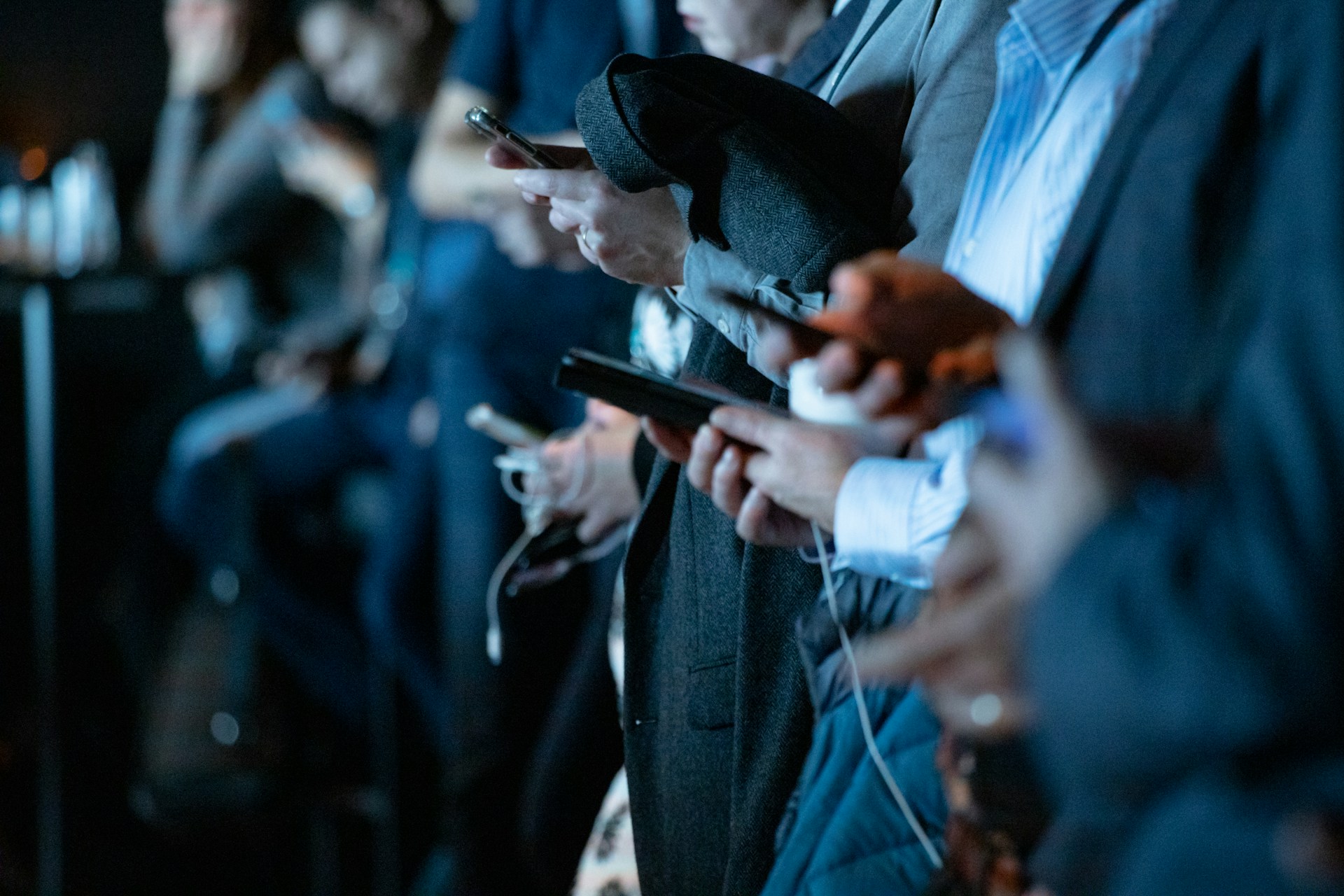
IMAGE: UNSPLASH
The Fatigue Of The “Everything App”
To understand why people are downgrading, we have to look at what they’re escaping. The modern smartphone is no longer just a communication tool; it’s a portal to infinite noise. We have reached a point of “notification saturation” where our devices are constantly demanding a reaction from us.
The average user unlocks their phone 150 times a day. That’s 150 interruptions to your train of thought. Tech giants have spent billions optimising their algorithms to keep you scrolling, but users are finally waking up to the fact that the product being sold isn’t the app—it’s their attention span.
This fatigue has birthed a market for “single-purpose devices.” The Light Phone 4 and the Punkt MP03 have become status symbols in Silicon Valley, not because of what they can do, but because of what they can’t do. They make calls. They send texts. And that’s it. No email, no Instagram, no doom-scrolling.
The Psychology Of The Scroll
Why is it so hard to put the smartphone down? The answer lies in basic behavioural psychology, specifically something called “variable ratio reinforcement.”
It’s the exact same psychological mechanism that keeps people glued to a slot machine in a casino. When you pull the lever (or in this case, drag your thumb down to refresh your feed), you don’t know what you’re going to get. It might be a boring ad, it might be a photo of your friend’s lunch, or it might be a viral video that gives you a massive hit of dopamine.
Casino operators took their cues from smartphones and app on this front, and casino comparison sites like sistersite.co.uk report that there’s no sign of the trend stopping. You pull and refresh to spin the reels on gambling sites just like you do to get the latest notifications on your phone, and the effect on your brain is similar.
That uncertainty is addictive. If you knew every refresh would be boring, you’d stop. If you knew every refresh would be amazing, you’d eventually get bored. But the mix—the “maybe this time it will be good” feeling—is what keeps you trapped in the loop.
Dumb tech breaks that loop. A Nokia brick phone doesn’t offer variable rewards. It’s a tool, not a Skinner box. When you put it in your pocket, it stays there. It doesn’t vibrate with a “phantom notification” to lure you back in. For many creatives and entrepreneurs, reclaiming that mental bandwidth is worth more than any app store subscription.
The Return Of Physical Media
This desire for “tangibility” is bleeding into entertainment, too. We’ve all seen the vinyl revival, but as we approach 2026, we’re seeing the return of even more surprising formats. CD sales are up for the first time in twenty years. Even DVDs are seeing a resurgence among film buffs who are tired of streaming services deleting content without warning. There is a sense of ownership with physical media that streaming simply cannot replicate. When you pay for Spotify or Netflix, you’re renting access to a library that can change at any moment. When you own a record, it’s yours.
Moreover, the “friction” of physical media is actually a feature, not a bug. Putting on a record requires intention. You have to take it out of the sleeve, place the needle, and flip it halfway through. You are forced to listen to the album as a cohesive work of art, rather than skipping through a playlist while doing the washing up. It demands your attention, and in return, it gives you a deeper connection to the art.
Privacy As A Luxury Product
There’s also a darker driver behind the dumb tech trend: surveillance capitalism. We are becoming increasingly aware of just how much data our smart devices are harvesting. Your smart TV watches you; your smart fridge knows your diet; your smartwatch knows your heart rate.
“Low tech” is the ultimate privacy shield. An old-school film camera doesn’t geotag your location. A cassette player doesn’t upload your listening habits to the cloud to be sold to advertisers.
We are moving towards a world where privacy is a luxury good. The wealthy and the tech-savvy are the ones opting out of the smart ecosystem, creating “Faraday Cage” homes where the Wi-Fi shuts off at 8 PM and the devices are left at the door. It’s a reversal of the early 2000s, where having the latest gadget was a sign of status. Now, the ultimate status symbol is the ability to disconnect.
How To Join The Rebellion (Without Moving To A Cave)
You don’t need to throw your smartphone in a river to benefit from this trend. The key is “conscious friction.” You want to make the bad habits harder and the good habits easier.
Here are three ways to inject a bit of “dumb tech” philosophy into your life in 2026:
- Get an Alarm Clock: Stop using your phone as an alarm. It guarantees that the first thing you do in the morning is check your notifications. Buy a cheap digital clock and charge your phone in the kitchen.
- The “Weekend Phone”: Keep your smartphone for work days, but buy a cheap burner phone with a pay-as-you-go SIM for the weekend. Give that number only to your closest family and friends. You’ll be amazed at how much longer the weekend feels when you aren’t checking work emails.
- Print Your Photos: We take thousands of photos that rot in our camera rolls. Once a month, print your ten favourites. Put them in an album. Make them real.
The Future Is Hybrid
Is the smartphone going away? Of course not. It’s too useful. But the honeymoon period is over. We are entering a new phase of maturity where we stop viewing new technology as inherently “better” and start asking what it actually adds to our lives. Technology is a wonderful servant, but a terrible master. In 2026, it’s time to remind our devices who is actually in charge.
COMMENTS