


Future Motion is best known for one product that turned balance into a feeling rather than a function. Twelve years after that bet, the company has taken the same creative impulse and pointed it at something more obvious, and somehow more rebellious: the mini bike. The result is Antic Bikes, a terse and evocative attempt to translate the uncomplicated joy of 1970s minibikes into an electric object for modern streets.
The real significance here is not that Antic Bikes is another entry in the crowded e-bike market. What matters is that it deliberately shifts the design conversation from utility to play. Future Motion positions Antic as a product that is more soulful than most commuter e-bikes and far less extreme than off-road electric motorcycles. That positioning is a functional choice with real consequences for engineering, pricing, and how people will use it.
That choice is visible from the first glance. Antic is retro-futurist by design: the lines and proportions flirt with a 1970s minibike silhouette, while the guts are contemporary. Electronics live in the floorboard, the motor sits in the wheel hub, and the frame uses 6061 aluminum for weight and corrosion benefits. What becomes obvious when you look closer is how many deliberate tradeoffs are nested inside the concept, from range and speed expectations to maintenance and cost.
The part that changes how this should be understood is the attitude toward purpose. Antic Bikes is not intended to replace a cargo e-bike or an electric motorcycle. It is a compact, premium machine built to put a smile on a rider’s face during short, frequent outings. The article explains how that orientation informs engineering decisions, what constraints follow from it, and what kinds of riders will find the idea compelling.
What Antic Is
Antic Bikes is a compact, design-forward electric two-wheeler that borrows the visual language of 1970s minibikes while replacing a combustion engine with a hub motor and a floorboard electronics bay. It is positioned as an urban recreational vehicle that prioritizes brief, joyful rides rather than long-distance commuting or cargo hauling.
Design And Heritage
Look at a 1970s mini bike and you see a very specific kind of charisma: small wheels, a chunky frame, a prominent engine hump, and a look that promised mischief. Future Motion made the aesthetic choice explicit. Designers started with the minibike parallelogram silhouette and removed the gas engine, converting the center mass into a compact electronics bay in the floorboard.
Retro Lines With Modern Materials
The frame is 6061 aluminum, which is lighter and does not rust like traditional steel. That choice keeps the visual language intact while addressing practical issues that come with daily use in urban environments. Aluminum also changes repair strategies and crash behavior compared with steel, so the engineering around fasteners and tube shapes matters more than it would on a purely decorative reissue.
How Visual Design Informs Experience
Antic looks like a minibike, but it feels like a hybrid product that borrows performance assumptions from smaller electric vehicles. That look is not accidental. The company behind Antic wanted an immediate emotional hook, a machine that makes you smile before you even start it. The consequence is that ergonomics are compact and playful rather than cargo-friendly. Making it a little larger than classic minibikes improves comfort for taller riders, and Future Motion specifically noted better accommodation for people over six feet tall.
How Antic Works
At a high level, Antic combines a rear hub motor, a floorboard electronics bay, and a compact battery into a chassis shaped to mimic classic minibike proportions. Power delivery favors short, spirited bursts; thermal management and battery packaging guide the practical limits of continuous output and overall range, positioning Antic for short urban outings.
Powertrain And Engineering Choices
Antic reuses lessons and parts from Future Motion’s decade of work on Onewheel. Engineers repurposed motor-in-hub thinking and some powertrain architecture, but they redesigned packaging to fit a two-wheel geometry. The motor sits inside the rear wheel hub, and the electronics are tucked into the floorboard where the gas engine used to be on a classic bike.
Hub Motor Tradeoffs
Hub motors simplify the mechanical layout. With the motor in the wheel, there is no chain or belt to maintain, and the frame can remain visually clean. The tradeoff is thermal management and peak power delivery. Hub motors tend to hit thermal limits faster than mid-drive systems when pushed continuously, which means Antic is optimized for short bursts of spirited riding rather than sustained high-speed runs.
In practical terms, that implies range and performance tradeoffs that matter to buyers. Expect range to be measured in tens of miles rather than hundreds, and charging cycles to be measured in hours rather than minutes. Those are typical constraints for compact hub-motor e-bikes that prioritize fun and simplicity over long-distance utility.
What The Balancing Feature Means
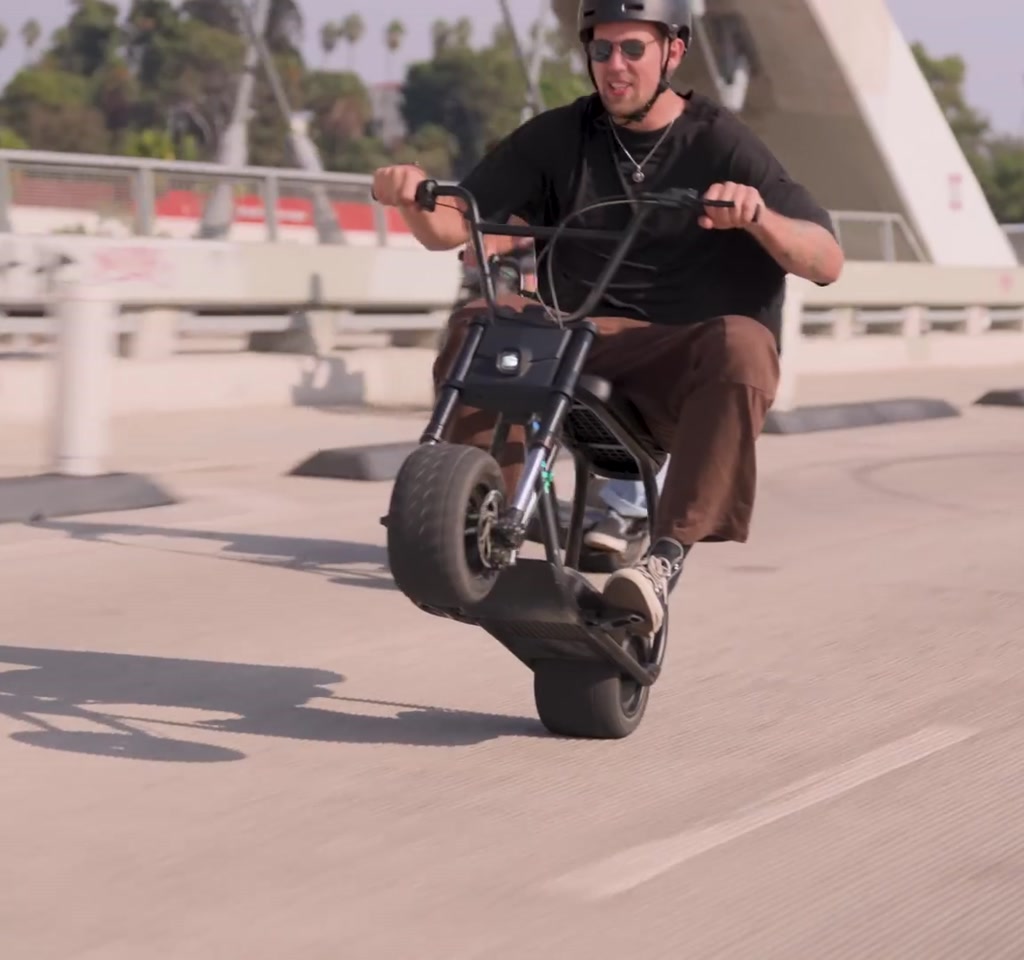
One distinct element borrowed from Onewheel culture is a self-balancing or locking behavior that lets riders pull the front end up and hold a wheelie with stability. Future Motion framed Antic as having a balance lock where the front end locks into a wheelie position, enabling controlled tricks and playful cruising.
The detail most people miss is how that feature changes the use case. A stable wheelie mode is not a performance trick for pros only. It reshapes where and how the vehicle is ridden. Urban rides that contain short stretches of open asphalt, waterfront promenades, and park paths become safer playgrounds. At the same time, regulators and insurers will view a vehicle with wheelie capability differently than a simple commuter e-bike, which could affect legal classification in some jurisdictions.
Benefits Of Antic Bikes
Antic delivers a clear emotional benefit: it turns short urban movement into a deliberately playful act. The design provides charm and instant appeal, reduced drivetrain maintenance because of the hub motor, and a premium finish that appeals to riders who value aesthetics and riding experience over pure utility.
Constraints, Tradeoffs, And Practical Limits
The Antic concept is rich in intention, and intention always implies constraints. Two clear tradeoffs stand out and shape every practical decision.
First, range and duty cycle. Compact batteries packaged into a floorboard and hub motor architecture typically deliver ranges in the tens of miles per charge under normal riding conditions. That places Antic in the short trip category. The device prioritizes frequent, joyful rides over long commutes or multi-stop courier duty. Battery capacity, charging time, and thermal limits mean that a full day of continuous high-power riding is unlikely without recharging, so owners should treat Antic as an urban recreational vehicle rather than a touring machine.
Second, cost and positioning. The design and materials point to a premium product. Aluminum frames, integrated electronics, and a polished finish suggest a price positioned between entry-level commuter e-bikes, which can be priced in the low hundreds to low thousands, and high-end electric motorcycles, which can reach several thousands. A reasonable expectation is that Antic will sit in the low thousands rather than the low hundreds, which frames buyer decisions. The tradeoff is clear: you get charm and build quality, but you will pay for it and you will accept limits in cargo capacity and long-range utility.
Both constraints are quantifiable in relative terms. Range commonly falls within a range of tens rather than hundreds of miles, and charging and recharging behavior tends to be measured in hours for practical overnight cycles. Those boundaries are where the Antic idea remains compelling and where it becomes fragile for certain buyers.
Maintenance, Reliability, And Everyday Use
Antic reduces some maintenance by avoiding chains and exposed drivetrains, but it concentrates complexity inside sealed electronics bays. That means repairs are more about electronics and modular replacements than routine mechanical tuning. Users trading a chain for an integrated system will find less day-to-day adjustment, but they face potentially higher parts costs and service cycles when components fail. Maintenance tends to surface after repeated use cycles, especially if the ride is used for repeated high-power outings.
Antic Versus Commuter E-Bikes And Electric Motorcycles
The decision between Antic, a commuter e-bike, or an electric motorcycle is a tradeoff among range, cargo capacity, cost, and intended use. Antic prioritizes play and short-range joy. Commuter e-bikes prioritize utility and payload. Electric motorcycles prioritize high-speed sustained performance and long-range. Each choice maps to a different rider need.
Antic Vs Commuter E-Bike
Compared with commuter e-bikes, Antic sacrifices cargo racks and long range for a lighter, more playful package. Commuter e-bikes are better for grocery runs, carrying passengers, or long daily commutes. Antic is better for short neighborhood trips where personality and ride feel matter more than utility.
Antic Vs Electric Motorcycle
Against electric motorcycles, Antic is neither engineered for high sustained speeds nor for long touring distances. It uses simpler hub-motor packaging and smaller battery capacity, trading peak continuous power for compactness and lower complexity. Riders seeking highway-capable performance will prefer motorcycles; riders chasing short bursts of grin-inducing movement will prefer Antic.
Broader Implications And Cultural Fit
Antic Bikes sits at an intersection of nostalgia, urban lifestyle design, and a broader shift in personal mobility toward experience-centered devices. The product highlights a cultural preference that has been emerging for several years: choosing devices that provide subjective joy rather than maximum utility. That trend appears in everything from tiny cars to micro-mobility scooters that emphasize personality over pure efficiency.
From an editorial standpoint, Antic is a reminder that design can be an argument. Future Motion is making a claim about what an electric two-wheeler can be: not a strict commuter appliance, not an off-road performance machine, but a compact object whose primary job is to create smiles. That claim changes how engineers package batteries, choice of motor, and frame materials, and it changes buyer expectations accordingly. It also opens predictable tensions with regulators, insurers, and service networks that will determine how widely the idea can spread.
Who This Is For And Who This Is Not For
Who This Is For: Urban riders who value short, frequent outings, live in dense neighborhoods, and prioritize ride experience and style over cargo and long-range practicality. People nostalgic for classic minibikes but who want modern electronics and lower maintenance will find Antic appealing.
Who This Is Not For: Those who need a workhorse for long daily commutes, heavy cargo, or extended touring. Riders who depend on fast, sustained high-speed performance or minimal downtime for continuous duty should consider commuter e-bikes or electric motorcycles instead.
Final Thoughts
Antic Bikes is interesting because it refuses to be neutral. Future Motion has deliberately traded range, cargo utility, and continuous high-speed performance for an experience-focused package that revives a particular childhood fantasy in an electric form. The result is a machine designed around short, happy moments rather than maximal metrics.
That makes Antic an invitation as much as a product. It invites riders to prioritize play and to accept the limits that follow from that choice. What becomes worth watching next is how the market responds to a vehicle that doubles as a lifestyle object and a commuter adjacent toy, and whether regulators, service networks, and real-world use will expand or contain that space.
Future Motion has translated ten years of balance-first thinking into a two-wheeled device that aims to capture a feeling as much as a market. The question left hanging is whether there are enough riders who want to buy back a small piece of uncomplicated joy, and how Antic will evolve if that answer is yes.
FAQ
What Is Antic Bikes?
Antic Bikes is Future Motion’s compact electric two-wheeler that channels 1970s minibike aesthetics into a modern hub-motor platform with electronics housed in a floorboard. It is designed for short, joy-focused urban rides rather than long-distance commuting.
How Does The Balance Lock Or Wheelie Feature Work?
Future Motion describes a balance lock that stabilizes the front end to hold a wheelie position. The feature is intended to enable controlled tricks and playful cruising, reshaping where and how riders use the vehicle rather than serving as a pro-only stunt system.
What Kind Of Range Should I Expect?
Based on the design and hub-motor architecture described, Antic’s range is characterized as being in the tens of miles per charge under normal riding conditions. It is not positioned for multi-hundred-mile touring.
Does Antic Require Much Mechanical Maintenance?
Antic avoids chains and exposed drivetrains, which reduces routine mechanical tuning. However, sealed electronics bays and integrated modules concentrate complexity, so repairs are more likely to involve electronics replacement and professional service when failures occur.
Is Antic A Good Commuter Bike?
Antic is best suited to short, frequent trips and riders who prioritize experience. For long commutes, heavy cargo, or continuous daily duty, traditional commuter e-bikes or electric motorcycles will typically be more appropriate.
How Does Antic Compare To A Commuter E-Bike Or Electric Motorcycle?
Antic trades cargo capacity and long range for a compact, playful package. Commuter e-bikes emphasize utility and payload. Electric motorcycles emphasize sustained high-speed performance. The right choice depends on whether you prioritize joy of ride, utility, or performance.
Will Regulators Treat Antic Differently?
Antic’s wheelie-capable features and its performance envelope could influence regulatory classification in some jurisdictions. The article notes that regulators and insurers may view a vehicle with those capabilities differently than a simple commuter e-bike, creating potential uncertainty.
Where Is The Uncertainty Around Antic?
Key uncertainties include regulatory responses, long-term service and parts availability, and whether enough buyers will accept the tradeoffs in range and cargo capacity for a play-first machine. Those factors will shape Antic’s real-world success.
COMMENTS