


The instant appeal is obvious. A skateboard that bounces on repelling magnets promises the cinematic thrill of a hoverboard without being trapped on a copper plate or a refrigerated superconducting track.
That is what made one viewer’s comment so irresistible to inventor and tinkerer Colin Furze. He borrowed hardware from his magnet bike project, stacked repelling disc magnets into housings on two decks, and then set out to keep the top deck floating while preserving the one thing a skateboard must have: steerability.
The real significance here is not merely that it floats. What actually determines whether this matters is how the build controls relative motion between the two decks. Left unconstrained, the magnetic freedom gives a lovely float but destroys steering. Properly guided, repulsion becomes suspension and the experience moves from novelty to usable mobility.
Colin’s journey is instructive because it surfaces the technical boundaries of magnetic suspension in a craftable, portable package. The project hits a sweet spot of sensation and usability, but it also makes explicit the tradeoffs any future magnetic skateboard will have to accept.
How The Magnetic Skateboard Idea Emerged
The origin is simple: a comment on a previous magnet bike video suggested applying magnetic suspension to skateboard trucks. The promise was a hoverboard-like sensation without the geographic limits of magnetic tracks or superconductors.
Colin turned that prompt into a rapid iteration loop. He reused large disc magnets, fabricated housings and guide elements, and ran a string of bench tests and ride tests until the sensation matched the idea. Along the way, he kept returning to two governing constraints: how to let the deck float with near-zero friction, and how to translate rider input into steerable motion.
What A Magnetic Skateboard Is And How It Works
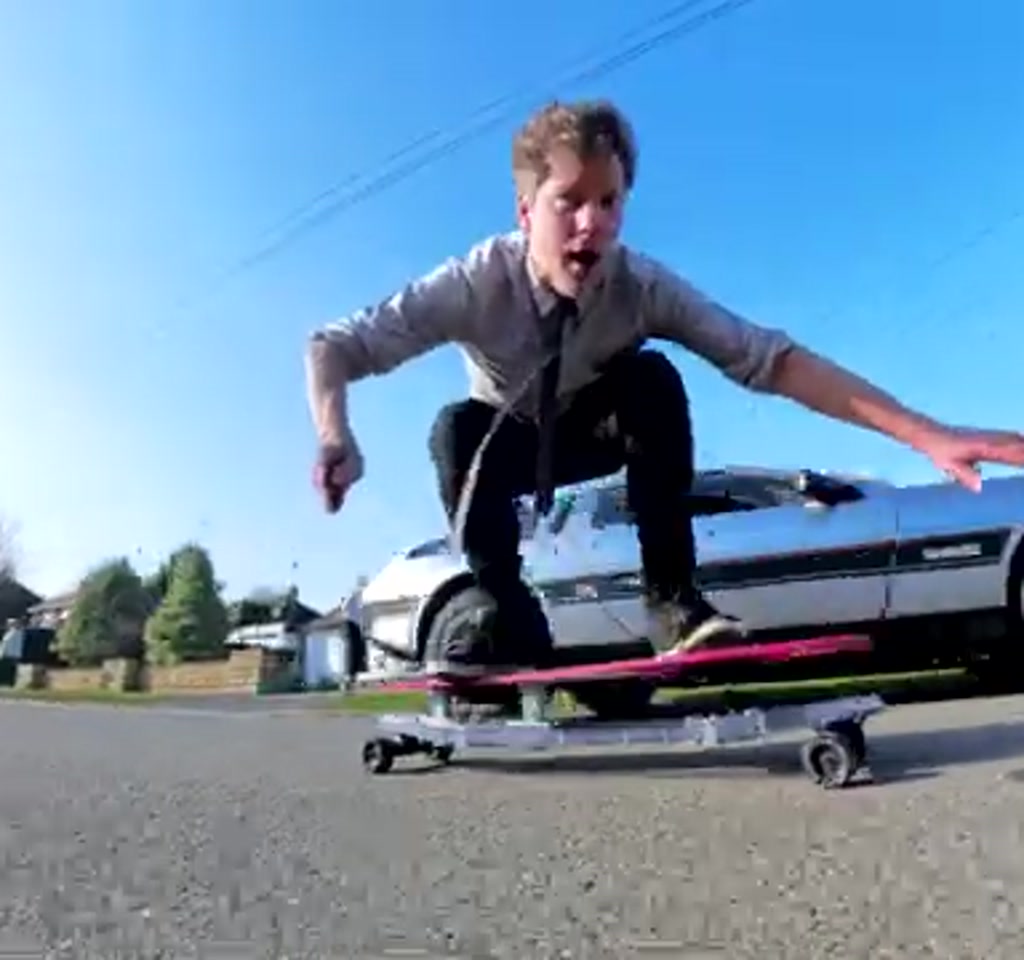
A magnetic skateboard uses stacked, repelling rare-earth disc magnets arranged between two decks so the top platform can levitate a short distance above a lower chassis. Housings, pins, sleeves, or cables guide relative motion so the magnetic repulsion provides a frictionless cushion while mechanical elements translate rider torque into steerable yaw.
Building The Floating Deck: Iterations And Breakthroughs
Early Two-Board Tests
The first rigs were literal double-deck setups. Magnets were housed in the lower chassis and a top deck carried counter magnets. Pins running through the decks prevented lateral escape while allowing vertical travel. Those first tests proved the magnets could carry human weight and give a lively bounce. It felt, in Colin’s words, “hoverboard-like”.
From Skateboard To Longboard And Back
The project moved from a small skateboard to a longboard format to improve cruising stability. A rear hinge became a key mechanical intervention: it allowed the front to float magnetically while a rigid connection at the rear preserved steering input. This was a turning point. The board steered like a normal skateboard and the front foot enjoyed a clear cushion-of-air sensation.
The Cable Experiments And The Return To Guided Pins
Visual minimalism mattered. The hinge was effective but visually large, so cable restraint systems were tested to preserve the open look. Straight cables slid under load. Diagonal, inward-facing cables improved stability but proved difficult to tune on a mobile, loaded deck. The project ultimately moved back toward refined pin guidance, with incremental improvements to sleeve geometry and bearing arrangements.
Why The Magnetic Feeling Is Different
Magnetic repulsion is noncontact and effectively frictionless within its allowed travel range. Unlike springs or elastomers, magnets provide vertical compliance without pivot joints that introduce scuff or binding. That produces a tactile sensation of floating rather than the mechanical give of traditional suspension.
In practice the top deck can bob and remain steady while the bottom deck negotiates rough pavement. Slow-motion footage in the build clearly shows the top deck riding out vibration while the bottom deck vibrates and bounces beneath it. The crucial caveat is that the guidance system defines whether that cushion becomes usable suspension or an unusable, floppy platform.
Constraints And Tradeoffs
Weight And Scale
The magnetic approach in these builds relies on large rare-earth disc magnets and a heavier, welded subchassis, pushing the completed board beyond the mass of a typical longboard. That extra mass shows up as harder uphill effort and slower acceleration, making the board better suited to cruising than steep climbs or quick sprints.
Surface Sensitivity
Magnetic suspension dampens vibration but does not erase terrain. It works best on reasonably smooth pavement; grooved concrete or cobbles still transmit sharp impacts through the bottom deck. For a serene ride you still need a smooth surface even though the top deck isolates much of the vibration.
Cost And Materials
The prototypes used sizable 100 by 30 disc magnets supplied by Magnet Store, which materially increased component mass and required beefed-up stainless mountings. Sourcing high-grade rare-earth magnets scales cost into the hundreds rather than the tens, and handling them raises fabrication complexity and safety considerations.
Steering Versus Float
There is an unavoidable design tension: more magnetic freedom increases float but reduces the transfer of rider torque into truck rotation. Colin’s hybrid solution used guided hinges or low-friction pin arrays to preserve yaw control while allowing vertical travel. That compromise is central to whether a build remains steerable or becomes a floppy novelty.
Maintenance And Durability
Long-term reliability depends on material choices and replaceable wear components. Strong magnets attract ferrous debris, and sleeve geometry must resist jamming. Repeated cycles reveal wear most in 3D-printed sleeves riding metal pins, so maintenance planning is a real-world requirement rather than a theoretical afterthought.
Magnetic Suspension Versus Spring Suspension
Magnetic Vs Spring Suspension
Magnetic suspension offers near-frictionless vertical compliance because repulsion acts without contact within a set travel range. Springs provide predictable linear stiffness but communicate friction through mounts and pivots. The tradeoff is that magnets need robust guidance to translate rider input, while springs can be simpler to integrate into existing truck geometries.
Magnetic Skateboard Versus Track-Based Hoverboards
Track-based hoverboards or superconducting levitation systems deliver levitation without onboard heavy magnets but require dedicated infrastructure. The magnetic skateboard shown here frees the rider from a track at the cost of onboard mass, higher component cost, and sensitivity to surface quality.
Who This Is For And Who This Is Not For
Best suited for builders, experimenters, and riders curious about a novel sensation who accept higher weight and maintenance for a unique ride. It is also useful as an educational prototype to explore magnetic suspension principles. It is not suited for commuters who need lightweight, low-maintenance transport, or for riders who must tackle frequent steep climbs.
Ideas Worth Testing Next
Potential next steps include lateral magnet locks that engage only when stationary, a single large rear pin to simplify steering translation, or modular magnet packs so riders can tune float versus weight. Each idea is solvable but introduces new tradeoffs of mass, cost, or complexity that will need fresh iteration.
FAQ: Frequently Asked Questions
What Is A Magnetic Skateboard?
A magnetic skateboard uses repelling magnets arranged between two decks so the top deck levitates a short distance above a lower chassis. Mechanical guides convert rider input into steering while magnets provide vertical compliance and a frictionless cushion.
How Does Magnetic Suspension Work On A Skateboard?
Pairs of stacked repelling magnets create an upward force on the top deck. Pins, sleeves, hinges, or cables constrain lateral and yaw motion so the repulsion becomes usable suspension rather than unrestricted float. The guidance elements determine steerability.
Is The Magnetic Skateboard A Road-Ready Product?
No. The project is an existence proof and prototype. It demonstrates a hoverboard-like sensation without a track, but weight, cost, and guidance robustness keep it from being a consumer-ready road product today.
Does Magnetic Suspension Work Better Than Springs?
Magnetic suspension delivers a different feel: near-frictionless vertical compliance and less binding than spring-based systems. Whether it is better depends on priorities like steerability, weight, simplicity, and cost.
How Much Do The Magnets Cost And How Big Are They?
The builds used sizable 100 by 30 disc magnets from Magnet Store. High-grade rare-earth magnets materially increase component cost and weight, and prices typically scale into the hundreds for large discs rather than tens for small magnets.
Can The Board Be Used On Rough Pavement?
While the top deck isolates much vibration, the system still performs best on smooth pavement. Grooved concrete and cobbles transmit sharp impacts to the bottom deck, so very rough surfaces will reduce ride serenity.
What Maintenance Issues Should Riders Expect?
Expect wear in sleeves and pins, sensitivity to ferrous debris, and the need for replaceable parts in 3D-printed components. Careful material selection and maintenance planning are important for reliable use.
Is This Design Scalable To Practical Mobility?
The prototype clarifies the engineering boundaries: weight, magnet cost, and robust guidance are the primary hurdles. Whether those constraints can be balanced for practical mobility remains an open question that future iterations must answer.
For the original build and ride footage, watch Colin Furze demonstrate the magnet board and its iterations in action.
COMMENTS