


The RePod Aluminum Alloy Case asks a simple, mischievous question: what if an Apple Watch refused to stay on the wrist and instead became a pocketable, tactile object you could hold? That premise is why the RePod matters now. It is not a protective bumper or a novelty shell. It is a design intervention that reimagines who the watch serves and how it feels when you interact with it.
What this article ultimately reveals is not just a clever accessory. The RePod Aluminum Alloy Case reframes the Apple Watch as a retro inspired handheld device that encourages repurposing, reduces smartphone friction, and foregrounds physical interaction. Most people assume a watch case only protects. The part that changes how this should be understood is the fully mechanical click wheel and the choice to use CNC aluminum. Those two decisions shift the object from passive protection into active experience design.
The aesthetic choice matters. A machined aluminum shell evokes mid 2000s gadgetry in a way that is at once nostalgic and strategic. It invites a different use pattern: remove the band, tuck the watch in your pocket, spin the wheel to scroll a playlist, answer a call, or glance at notifications. That interaction set is the point. The RePod does not try to replace the phone. It redirects attention.
From an editorial standpoint, the RePod is most interesting when viewed as a tool for intentional tech behavior. It encourages minimalism without disabling functionality. It is a statement about how physical interfaces can still alter digital habits in an age of glass and swipe only interactions.
What The RePod Aluminum Alloy Case Actually Does
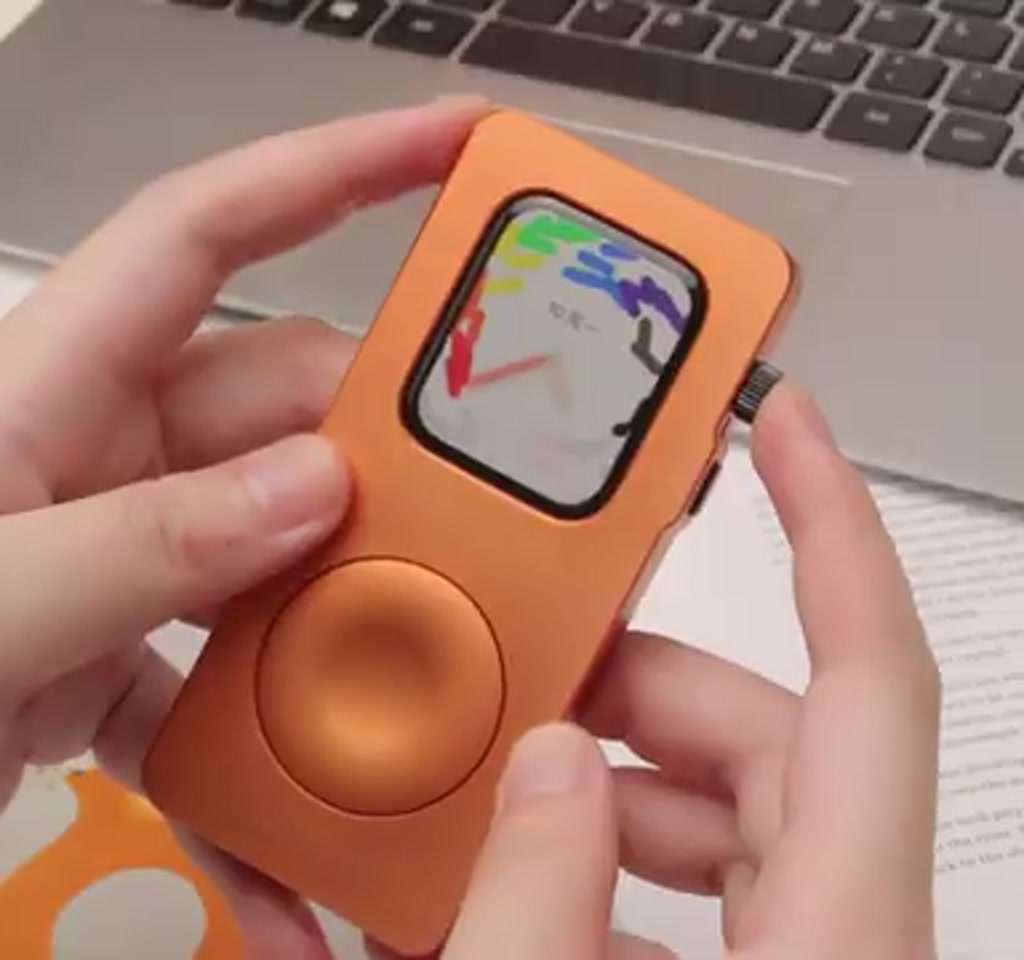
In short, the RePod converts an Apple Watch into a palm-friendly, tactile device by seating the watch inside a two-part CNC aluminum shell and adding a mechanical click wheel. It preserves touch, sensors, and charging while changing how you navigate content and media on the watch.
At first glance, the RePod reads like nostalgia currency. At the functional level, it is a CNC-machined aluminum case sized to hold an Apple Watch and present that watch as a palm-friendly device. The case measures 50 x 110 x 12 mm and weighs 73.9 grams. It protects the watch, preserves full access to controls and sensors, and introduces a mechanical click wheel for navigation that requires no batteries or electronics inside the case.
The conversion is literal. Remove the watch band, seat the watch into the two-part back cover, and the RePod becomes a compact handheld device. The clear display window keeps the watch screen visible and touch responsive while the Digital Crown, side button, speakers, microphones, and health sensors remain unobstructed. Magnetic quick charging also works through the case so power is unchanged at the user level.
Design And Engineering
The RePod’s design is purposefully material-first: CNC-machined aluminum gives it a weight and finish that signal craft and permanence in a market of molded plastic accessories.
Materials And Manufacturing
The body is CNC machined from aluminum alloy and finished with anodizing or polishing depending on color choice. That manufacturing route delivers micron-level tolerances and a jewelry-like feel that stands apart from molded plastic bumpers. CNC machining is also why early buyers describe the fit as satisfyingly solid in the hand, a detail that reads as both quality and intention.
Dimensions, Weight, And Fit
At 73.9 grams, the RePod adds noticeable but manageable mass when held, and only modest bulk to the original watch. The case dimensions are compact enough to function as a palm device while still leaving room for all watch sensors. The tradeoff appears when you consider wrist use. The RePod is designed to be used with the watch band detached for handheld operation, so wearing the watch in this configuration is not the intended mode.
How The Click Wheel Changes Interaction
The click wheel reintroduces a physical rhythm to navigation, turning swipe pressure into a cyclical, tactile browsing behavior that makes playlists and long lists easier to explore slowly and deliberately.
The click wheel is the headline feature. It is mechanical, produces tactile click feedback, and maps to scrolling and selection actions exposed by watchOS. The result is a different rhythm for navigating music, lists, and menus. What becomes obvious when you look closer is that the wheel is not a gimmick. It changes micro interactions from swipe and tap only, into a cyclical, exploratory gesture that encourages slow browsing rather than rapid, attention-hungry scrolling.
The mechanical nature of the wheel has consequences and boundaries. Because it contains no electronics, it cannot add new watchOS functions or remap controls beyond what the watch already supports. The wheel works by translating its rotation into an expected touch or scroll behavior on the exposed display, which means interaction is constrained by watchOS permissions and UI affordances. The detail most people miss is that this constraint is also a strength. It preserves system integrity while adding a tactile layer, rather than pretending to change the operating system itself.
Compatibility, Charging, And Functionality
The RePod supports a wide range of Apple Watch models and keeps all onboard features functional while the watch sits inside the case, including magnetic charging and health sensors.
Compatibility is broad. The RePod supports Apple Watch Series 4 through Series 10 plus all SE variants across sizes 40 mm, 41 mm, 42 mm, 44 mm, 45 mm, 46 mm, and 49 mm. There are specific S10 and S11 configurations for larger Ultra-style watches. It supports both GPS-only and cellular editions, and carries through native features including Apple Pay, NameDrop, notifications, calls, and health tracking such as heart rate, ECG, and blood oxygen.
Charging is handled by the watch itself through magnetic quick charge, which continues to work while the watch is in the case. The case does not contain a battery, nor does it require any charging. That decision simplifies reliability and long-term maintenance because there are no additional power-dependent parts to fail.
RePod Compared To Alternatives
Comparisons are practical: this is not a protective bumper, and it is not a dedicated music player. The RePod sits between traditional cases and standalone audio devices, trading full-time wearability for tactile control and a pocketable listening experience.
RePod Vs Traditional Apple Watch Cases
Traditional Apple Watch cases prioritize protection, water resistance, and constant wrist wear. The RePod prioritizes handheld interaction, material finish, and a tactile click wheel. If protection and full-time wearability are your primary needs, traditional bumpers remain the better fit.
RePod Versus Dedicated Portable Music Players
Compared to a dedicated portable music player, the RePod reuses existing hardware and services (streaming, cellular connectivity) but relies on the watch’s battery and watchOS app behavior. It is a repurposing strategy rather than a replacement for hi-fi dedicated players.
Constraints And Tradeoffs
Every creative accessory imposes limits; the RePod trades some environmental protection and battery autonomy for material quality and tactile navigation.
Every creative accessory imposes limits. The first clear tradeoff is water and environmental protection. The RePod is not formally IP rated. While its aluminum shell and sealed design offer resistance to minor splashes, sweat, and dust, it should not be relied on for full submersion or extended wet use. If your use case is heavy exposure to water, then this approach only holds up within a limited moisture envelope.
The second tradeoff is energy and autonomy when repurposing a watch as a music player. Streaming music from a watch, even on cellular models, shifts battery drain from multi day background use into hours of active playback. In practical terms that means a watch repurposed for streaming will require more frequent charging and behavior adjustments. Users repurposing older watches should consider battery health and the difference between intermittent notifications and continuous audio streaming.
Another constraint is cost and intentionality. Priced at approximately $79 with free worldwide shipping from official retailers, the RePod sits in a mid-premium price band. That price point makes sense for a CNC-machined metal accessory that aims to feel bespoke, but it also establishes a threshold for adoption. The accessory tends to appeal to people who value materiality and design enough to invest in a single premium object rather than multiple disposable cases.
Who This Is For And Who This Is Not For
Clear decision guidance helps: the RePod is best for people who want tactile controls and retro-inspired design, and not for those who need ruggedized, fully water-resistant wearables or extended independent battery life.
The RePod is not for everyone. It finds its strongest audience where retro aesthetics, tactile interaction, and device repurposing intersect. That includes vintage gadget collectors, audio-first commuters, and people looking to reduce smartphone dependency by turning a spare Apple Watch into a dedicated music or notification device.
For owners of cellular Apple Watch models the RePod can function as a true standalone pocket companion. For GPS-only watches, the case still works beautifully as a tactile remote for a paired iPhone. What determines whether this works is less the case and more the watch edition and the use pattern chosen by the owner.
The RePod also communicates a cultural position. It asks users to value single-purpose interactions and to consider physical controls as a form of digital hygiene. That stance is a design argument more than a technical one.
Final Thoughts And Forward-Looking Questions
The RePod Aluminum Alloy Case manages to be both a nostalgia play and a forward-thinking accessory. It repurposes existing hardware, respects the watchOS ecosystem, and adds a layer of physicality that few modern devices bother to revisit.
What will be interesting to watch next is whether other accessory makers adopt similar strategies. Will we see more premium conversion cases that trade full-time wearability for deliberate pocketable experiences? The RePod suggests that physical design still has room to change digital habits, and that the most meaningful innovations can sometimes look backward to move forward.
Note: The RePod is not affiliated with Apple. For purchasing details and official specifications, consult the manufacturer or authorized retailers.
FAQ
What Is The RePod Aluminum Alloy Case?
The RePod is a CNC-machined aluminum two-part case that holds an Apple Watch as a pocketable handheld device and adds a mechanical click wheel for tactile navigation while preserving touch, sensors, and magnetic charging.
How Does The Click Wheel Work On The RePod?
The click wheel is mechanical and battery-free. It translates rotation into expected touch or scroll behavior on the exposed watch display, relying on watchOS UI affordances rather than adding new software features.
Which Apple Watch Models Are Compatible With RePod?
The RePod supports Apple Watch Series 4 through Series 10 and all SE variants across sizes listed by the manufacturer. There are also specific S10 and S11 configurations for larger Ultra style watches.
Does The RePod Require Charging?
No. The case contains no battery and does not require charging. The Apple Watch continues to charge via its magnetic quick charger while inside the case.
Is The RePod Water Resistant?
The RePod is not formally IP rated. Its aluminum shell offers resistance to minor splashes and dust, but should not be relied on for submersion or extended wet use.
How Much Does The RePod Cost?
According to official listings, the RePod is priced at approximately $79 with free worldwide shipping from official retailers. Prices and availability may vary by seller.
Can The RePod Add New watchOS Features?
No. Because the case contains no electronics, it cannot extend watchOS functionality. It adds a tactile control layer while preserving the watchOS system as is.
Who Should Consider Buying The RePod?
Consider the RePod if you value material design, tactile interaction, and the idea of repurposing a spare Apple Watch into a pocketable music or notification device. Avoid it if you need rugged waterproofing or prolonged independent battery life.
Disclaimer: Some links in this article are affiliate links, meaning we may earn a commission if you make a purchase.
COMMENTS