


If you’ve ever been kept awake late at night by the persistent drip-drip-drip of a leaky tap, you understand how irritating a minor faucet leak can be. But it’s no minor issue. It’s a common problem many homeowners face, with far-reaching implications. Beyond just being a nuisance, a dripping tap can waste significant amounts of water over time, leading to higher bills and adverse environmental effects.
Ignoring a leaky tap can also damage your sink and create more serious plumbing problems – quite a domino effect for such a small issue. This further highlights the necessity of addressing a dripping tap immediately after spotting it.
In our everyday lives, we’ve grown accustomed to the conveniences of modern plumbing. Even so, it’s easy to forget about our household taps until they start causing problems. Overlooking a dripping tap quickly manifests into a more extensive issue, making immediate action all the more crucial.
In the realm of sustainable water management, every drop counts. The cumulative water loss from leaking taps in homes worldwide contributes significantly to the broader spectre of water scarcity. Beyond environmental sustainability, tackling water leaks promptly can help homeowners save money and reduces the need for cost-intensive future repairs.
Readers will discover comprehensive insights into the dynamics of dripping taps in this article, exploring various causes of faucet leaks and effective fixes. We’ve also included handy DIY tips for minor repairs and discussed when it might be best to call a professional plumber.
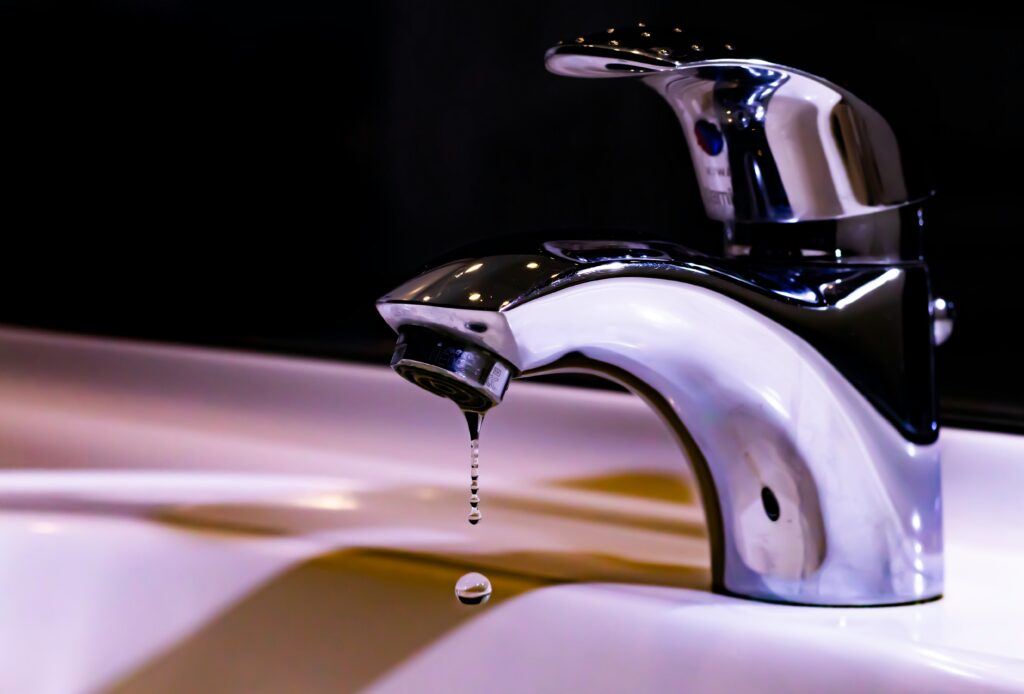
IMAGE: UNSPLASH
Identifying The Types Of Taps And Their Unique Challenges
The world of tap designs, each with its unique design and operational efficiency, can be a smorgasbord of variety. But it can also prove a labyrinth if you’re not familiar with the different types of taps available on the market. Understanding them can make the monumental task of tackling a persistent drip seem manageable.
The internal workings of each tap type are distinct, posing unique challenges but offering varying degrees of durability and longevity. By understanding the design of your tap, you can approach leak repairs more effectively.
Compression Taps: Adopting a vintage approach, compression taps are the most recognisable and favoured for their old-world charm. They operate using two separate handles to regulate hot and cold water flows. When the handles are turned, an internal screw-like mechanism compresses a washer against a valve seat, effectively controlling the water flow. However, this constant friction and exposure to water can cause the washers to deteriorate over time, leading to leaks.
Ball Taps: These are a more modern invention featuring a single handle that moves over a capped, slotted metal ball. The intricate interior of the tap houses ball bearings that, over time, experience wear and tear. Worn ball bearings can disrupt the seating of the tap, causing leaks and leading to imprecise control over water flow and temperature.
Cartridge Taps: Even more modern are cartridge taps, popular for their ease-of-use and sleek design. Available in both double and single-handled versions, they feature a stem cartridge that shifts up and down to control the water flow. Unfortunately, seals in the cartridge can wear thin with repeated use, leading to leaks.
Ceramic Disc Taps: These taps are the embodiment of modern tap engineering. Known for their durability and superior performance, they feature two ceramic discs that control water flow when properly aligned. But when the discs are damaged or sediment disrupts their alignment, leaks ensue.
Recognising the tap type you own can influence how you handle leaks and the kind of maintenance it needs. This knowledge is essential, as each type offers varying levels of durability and requires unique approaches to repair and maintenance. By understanding the fundamental design of each type, you can better maintain your taps and extend their service life.
Common Causes Of Tap Drips
The first step to tackling a leaking tap is understanding why it’s dripping in the first place. A handful of culprits cause most tap drips, regardless of the faucet design. Knowing these can help you prevent leaks and take the necessary action when they occur.
Worn-out Washers: Under constant stress from regular use and exposure to water, it’s inevitable for the washers in compression taps to wear down with time, resulting in leaks. The elasticity of these typically rubber or plastic components degrades over time, so they can no longer effectively seal against the valve seat, causing the tap to drip. If the washer erodes completely, it can even lead to continuous water flow.
Corroded Valve Seats: Over time, water, combined with air, produces a corrosive effect on the tap’s internal parts. The valve seat – the part of the tap directly in contact with stagnant water when the faucet is closed – is especially prone to this. Water-related corrosion and the accumulation of mineral deposits can degrade the valve seats. The resulting irregularities in the valve seat prevent the washer from forming a watertight seal, leading to leaks.
Loose or Damaged O-rings: These vital components play a key role in sealing connections in taps, preventing leaks. Installed around the valve stem inside the tap’s cartridge, the O-ring provides a ‘buffer’ between different parts, forming a seal that blocks water flow. Over time, these O-rings can loose their original form, loosen or become damaged. Any such issue can create gaps through which water can leak, leading to drips and reducing the handle’s stability.
High Water Pressure: Haphazard water pressure regulation is another common cause for dripping taps. While a strong, steady water flow is desirable, excessive pressure can strain the tap’s internal mechanisms to the point of failure. In particular, it can force water into the tap, leading to constant dripping even when the tap is turned off.
It’s essential to recognise these issues quickly to prevent unnecessary wastage and stress on the tap components, minimising the need for frequent part replacements.
DIY Fixes For Dripping Taps
Being handy around the house is a commendable quality. But it comes with the weighty responsibility of performing minor repairs and fixes. Thankfully, with a bit of guidance and the correct tools, many household repairs, including fixing a dripping tap, are manageable.
Before you embark on your DIY journey, ensure to assemble the required tools and materials. For basic tap repairs, you’ll need essentials such as a wrench, a multi-purpose screwdriver, replacement washers, O-rings, and plumber’s grease. Depending on the repairs you’ll be doing, an adjustable spanner and a seat wrench may also be required.
Replacing Washers and O-rings: Start by turning off the water supply to ensure a dry work area. Unfasten the tap handle to access the inner components. Remove the packing nut to reveal the stem, which houses the washer. If the washer is damaged or worn out, replace it with a new one of the same size. The precise fit of the washer is key to ensuring a proper seal and establishing optimum pressure balance within the tap.
In cartridge taps, look for a small, round component, which is the O-ring. Over time, it can deteriorate due to constant friction and eventually cause a leak. Check if the O-ring has deteriorated and replace it if necessary. Applying a sufficient layer of plumber’s grease to the new O-ring can prevent future leaks.
Cleaning Valve Seats: If your faucet leak is caused by corrosion of the valve seat, use a seat wrench to unscrew the seat and pull it out from the back of the tap. A simple way to clean mineral deposits off the valve seat is by using a cloth and a vinegar solution. This combo effectively dissolves most mineral deposits. If the valve seat is too severely corroded, you might have to replace it.
Safety should always be your priority when handling DIY repairs. Always don protective gloves and goggles, particularly when using cleaning agents to clean the valve seats or if you accidentally puncture a pressurised water pipe.
While anyone can attempt tap repairs, it’s crucial to be patient and methodical in assessing each component. This ensures you don’t miss any hidden leaks and prevents the recurrence of drips shortly after repair.
Preventative Maintenance Tips
Prevention is better than cure, they say, and it rings particularly true in the context of tap maintenance. By routinely keeping an eye on your taps and conducting minor maintenance work, you can extend their lifespan and keep them working smoothly for longer.
Carrying out regular checks on your taps is the first step towards preventative maintenance. Check for early signs of wear and tear – do the tap handles turn smoothly? Are there any minor leaks or drips after you turn the tap off? Small issues caught early often take less time and effort to fix.
Keeping water pressure within recommended levels is also an essential part of preventative maintenance. Excessive water pressure can harm your tap’s internal parts. If you notice unusually high water pressure, it could be worth investing in a pressure-reducing valve.
Cleaning your taps regularly with mild soap and water can help extend their lifespan. Avoid using harsh cleaning chemicals, which could potentially corrode the taps’ internal parts and trigger leaks.
Lastly, make a habit of periodically replacing parts known to wear out, such as O-rings and washers. Over time, even robust components can falter under constant use and pressure. Anticipating this by conducting routine replacements can prevent future drips.
Through consistent and preventive maintenance, homeowners can ensure the longevity and functional efficiency of their taps. Far from just delaying the day you’ll need to replace them, these measures can also improve your home’s overall water efficiency.
When To Call A Professional Plumber
While DIY fixes can solve many minor issues, it’s important to recognise when a problem requires the expertise of a professional plumber. Certain signs suggest that a plumbing problem is beyond the scope of DIY fixes.
Complex faucet leak issues that are challenging to diagnose or fix can require a professional’s touch. If the source of your leak remains elusive or if the drip continues despite your best efforts, calling in a professional will likely save you time, money, and frustration in the long run.
Stubborn leaks that have been ignored for a long time often indicate deeper plumbing problems. When tap drips persist, they can damage surrounding fixtures, or worse, compromise your home’s entire plumbing system.
There’s also a cost versus benefit ratio worth considering. The continuous expense on DIY fixes, not to mention the time and stress, often outweighs the cost of a single visit by a professional. Furthermore, more complex tap designs and newer technologies may need specialist knowledge during repair or replacement.
Choosing a professional plumber is another task that’s worth approaching meticulously. Consider factors like the experience, qualification, and reputation of the plumber. It’s also important to clarify cost estimates and service terms before approving any repair work.
Understanding when a tap issue requires professional help and when it doesn’t can save time, effort, and resources. So, remember—although DIY solutions offer a sense of achievement and often save money, there are certain plumbing issues that need a pro.
Stop The Drip: Simple Steps Toward A Safer, More Sustainable Home
Addressing a dripping tap promptly isn’t only crucial for immediate water conservation efforts or for savings on your next water bill. It plays an essential role in maintaining the efficient functionality of one’s home and ensuring its safety.
Being aware of the common causes of tap leaks equips homeowners to act decisively to address issues. By implementing effective fixes, either by themselves or via a professional plumber, homeowners can manage these common household issues more effectively and comfortably.
Remember, seemingly insignificant preventive measures, routine maintenance, and timely repairs play a large part in global water conservation efforts. They also greatly impact the continued functioning of your household taps. We hope to have equipped you with a fundamental resource to tackle tap issues confidently and make informed decisions when addressing common household plumbing challenges.
COMMENTS