


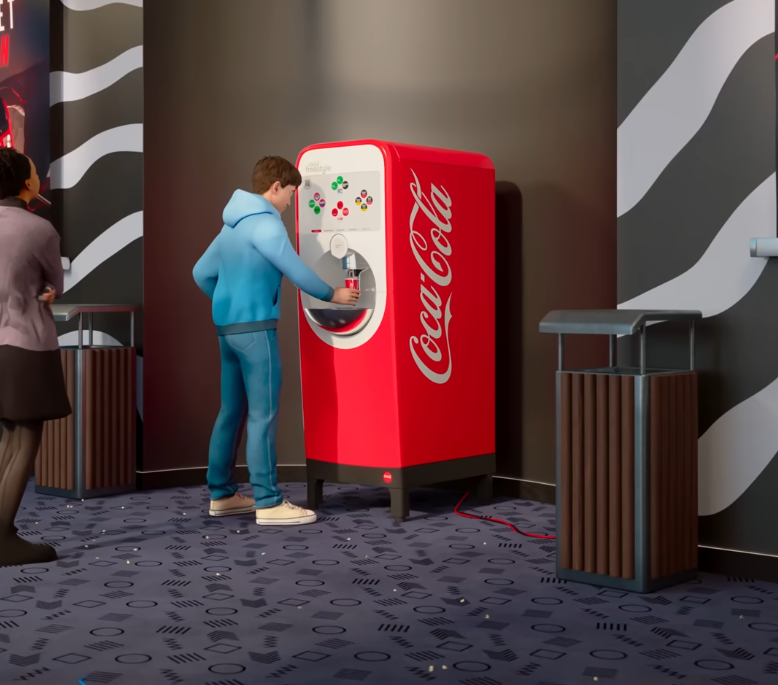
You walk into a cinema, queue at the counter, and the bright chrome of a Coca-Cola Freestyle machine catches your eye. It is fun, it is tactile, and it promises over one hundred flavors. But the Freestyle is not just a novelty dispenser. The moment you pick a bubble on that screen you are also participating in what the company has built as a continuous, real-world experiment.
The real significance here is not that Coca-Cola makes a cool soda gadget. What actually determines whether Freestyle matters is how it converts casual choices into structured data that accelerates product decisions, streamlines logistics, and refines marketing nudges. That combination changes the economics of selling drinks in fast food outlets, cinemas, and stadiums.
At face value the Freestyle offers play. You can mix Sprite and Fanta or discover Sprite Cherry. Those short, curious moments are experience marketing in action. The deeper effect is far less visible. Every interaction is instrumented, every pour reported back to Coca-Cola’s back end, and those streams of behavior shape what appears on supermarket shelves and what shipments arrive at each fountain.
What becomes obvious when you look closer is how this single device ties three normally separate things together: consumer testing at scale, predictive supply chain management, and dynamic in-place marketing. The rest of this piece breaks each of those threads down, explains the measurable tradeoffs, and shows where the Freestyle idea opens new possibilities and where it runs into clear limits.
A Design That Invites Play And Data
Launched in 2009, the Coca-Cola Freestyle was conceived to respond to a specific business challenge. By the mid 2000s carbonated beverage sales had flattened and consumers demanded more low-calorie and novel flavor options. Traditional fountain setups relied on large 19-liter syrup canisters and offered very limited choices. The Freestyle rewired that dynamic.
Its look is intentional. The styling, developed with the Italian design house Pininfarina, is glossy and futuristic. The touchscreen interface presents dozens of flavor bubbles and invites exploration. That interface is not decoration. It is a point of engagement that produces observable actions.
Under the hood the machine uses small cartridges that separate base flavors, sweeteners, and carbonated water. The cartridge idea borrows from medical dosing tech where precision matters. By combining elements on demand, the Freestyle can yield more than 100 unique pours while minimizing storage footprint at the location.
What Coca-Cola Freestyle Is And Why It Matters
Coca-Cola Freestyle is a touchscreen soda dispenser that combines modular cartridges and networked telemetry to offer consumers dozens of flavors while reporting every pour back to a centralized analytics system. That design turns each customer interaction into a quantifiable signal that feeds product, marketing, and logistics decisions.
From Pour To Product: How Freestyle Feeds New Flavors
Every tap on the Freestyle screen is a micro experiment. The company collects which bubbles are chosen, at what time of day, and in aggregate which combinations recur. Some of those combos are organic user inventions. When a particular mix repeats widely the signal strengthens and can move from a screen bubble to a mass market SKU.
This pipeline created flavors such as Coke Orange Vanilla and Sprite Cherry, both of which trace at least part of their origin back to Freestyle user behavior. That is not proof that those products would not have emerged otherwise, but Freestyle accelerates the discovery and provides real consumption evidence before committing to a full production run.
The Experimentation Pipeline
In practical terms the machine turns every pour into a data point. Those points are aggregated across tens of thousands of units and fed into Coca-Cola’s analytics systems. When a pattern looks strong the marketing and product teams can test a limited retail launch and measure results. This reduces the cost and time of traditional product development cycles.
Representativeness And The Sampling Tension
Freestyle users skew toward venues like cinemas and quick service restaurants, making the data a powerful lens on particular consumption moments rather than a universal sample of all beverage purchasers. That skew creates a tension when teams extrapolate machine trends into broad retail strategy, a tension considered again later when we discuss who benefits most.
The Supply Chain And The Savings Hidden Underneath
Freestyle is as much an operations play as it is a marketing one. Each machine reports inventory levels and pour counts back to centralized systems. Coca-Cola integrated these endpoints into its SAP-managed back end so the company can see consumption in near real time across locations.
That data feeds automated logistics. Algorithms calculate which cartridges must be delivered when, and distribution centers receive restock orders without manual inventory checks at the store. The result is reduced waste, fewer emergency deliveries, and better alignment of production with point of sale demand.
Automated Restocking And Predictive Logistics
One concrete example outside of Freestyle is the Hivery deployment with a bottler that operates roughly 19,000 vending machines. After applying data-driven optimization the operator reportedly saw a 6 percent sales increase and a 15 percent reduction in restocking trips. These numbers illustrate the scale of savings and revenue lift that predictive logistics can unlock.
Measured Gains And The Math Behind Them
Estimating financial return requires cautious framing. Public reporting on Freestyle-specific profit is limited. The article cites an estimated network of over 50,000 machines pouring roughly 4 billion drinks per year, and a reported investment north of $1 billion in the platform. Those figures make a plausible case that telemetry and cartridge logistics can move margins materially, but they do not constitute definitive accounting.
The Privacy Question And The Limits Of Observation
Instrumenting behavior at scale raises an obvious question. How far will observation go? Freestyle was specified with future capabilities for motion sensing and facial recognition. Coca-Cola has said camera tests took place in laboratory settings around 2018 to 2019. In early 2024 a company reportedly tied to a facial recognition project referenced images captured by machines, but that material was subsequently removed after inquiries.
The constraints are sharp and twofold. First, legal and regulatory frameworks vary. In Europe strong data protection rules such as the general data protection regulation create high barriers to capturing biometric data without explicit consent. Second, public tolerance and venue policies differ. Many locations that host Freestyle units are public or semi-public spaces where camera use would trigger scrutiny and potential backlash.
Why Privacy Limits Change Deployment Strategy
Privacy restrictions do more than shape data use; they change where and how advanced sensing can be deployed. Brands that fail to separate acceptable telemetry from what requires consent risk losing trust and access to venues. That risk is a structural constraint on turning every physical touchpoint into an unconstrained data source.
Coca-Cola Freestyle Versus Traditional Fountain Systems
Comparing Freestyle to legacy fountain systems highlights clear decision factors: SKU variety, space and inventory footprint, capital cost, and telemetry. Traditional systems use large syrup canisters, require less upfront capital, and offer limited flavors. Freestyle concentrates variety into cartridges, raises capital and device management needs, but delivers actionable consumption data and lower on-site inventory volume.
Decision Factors For Operators
Operators choose between equipment cost, menu flexibility, logistics complexity, and data value. The Freestyle model favors venues that value novelty and can leverage telemetry for promotions, while traditional fountains remain sensible where simplicity and low capex are priorities.
What Freestyle Means For Product Thinking And Brand Experience
Freestyle reframes a purchase moment as a data capture opportunity. That has three tightly coupled implications. First, experience matters. The touchscreen and the playfulness generate engagement that is itself part of the product. Second, companies can learn faster by measuring real choices on real people rather than relying only on focus groups. Third, the operational efficiencies unlocked by telemetry compress cost and speed barriers for rolling out new SKUs.
But none of that is free. The deployed technology requires substantial capital to manufacture and network machines at scale. It also requires a persistent backend, cartridge logistics, and device management for content delivery. Coca-Cola moved from heavy software updates to a device management system that can push small data packages and campaign content while keeping fountains operational. That change reduced downtime risk but added a layer of complexity that must be maintained.
Open Questions About Long-Term Value
The longer-term value depends on sustained deployment, the ability to translate signals into sales in different channels, and continued public acceptance. Public filings are silent on many specifics, and the company did not respond to requests for detailed returns. Those unknowns create a legitimate question about how repeatable Freestyle style programs will be across other consumer categories.
Who This Is For And Who This Is Not For
Who This Is For: Operators and brands that prioritize menu experimentation, venue-driven promotions, and data-enabled logistics. Cinemas, quick service restaurants, and stadiums often benefit most because novelty and impulse moments drive trials and data richness.
Who This Is Not For: Low margin outlets with constrained capital who prefer simple maintenance and minimal device management. Grocery retailers looking for perfectly representative household demand should treat Freestyle signals cautiously because venue skew can mislead product forecasts.
What Will Be Interesting To Watch Next
The pivotal variables are regulation, consumer expectations, and brand incentives. Will future fountains nudge more cleverly or will public resistance prefer softer, opt-in features? The answer will determine whether Freestyle stays a pioneering curiosity or becomes a repeatable template for how everyday objects influence markets.
FAQ
What Is Coca Cola Freestyle?
Coca-Cola Freestyle is a touchscreen beverage dispenser that uses modular cartridges to mix dozens of flavors on demand while reporting pour and inventory data back to Coca-Cola’s analytics systems.
How Does Freestyle Collect Data?
Freestyle records user selections and pour counts at the machine level. Those events are aggregated across the network and integrated into centralized systems for product, marketing, and logistics analysis.
Did Freestyle Create Any Retail Flavors?
Some retail SKUs such as Coke Orange Vanilla and Sprite Cherry trace at least part of their origin to user behavior observed on Freestyle machines, although those products may have had other development paths as well.
How Does Freestyle Save On Supply Chain Costs?
Machines report inventory and pour data in near real time, enabling automated restocking orders and predictive logistics that reduce emergency deliveries, lower waste, and better align production with point of sale demand.
What Privacy Concerns Exist With Freestyle?
Freestyle was tested with motion sensing and camera capabilities in lab settings, and reports exist of image material later removed. Legal frameworks like the general data protection regulation and venue policies limit the ability to capture biometric data without consent.
Can Freestyle Use Facial Recognition?
Camera tests reportedly occurred in laboratory settings around 2018 to 2019, and references to captured images were later removed. Public constraints and regulation make broad deployment of facial recognition unlikely without explicit consent and clear policies.
Is Freestyle Worth The Investment?
Public filings do not provide a definitive ROI. The network scale, reported investment above $1 billion, and estimated pours suggest a plausible path to recoupment when telemetry drives product and logistics gains, but detailed returns are not publicly available.
Where Does Freestyle Fall Short?
Freestyle excels at venue-specific experimentation and logistics, but its data is not a perfect mirror of all consumer behavior. Representativeness and privacy limits are the primary boundaries that companies must manage.
Standing in front of a Freestyle your instinct is to play. That is the point. The machine invites experimentation while quietly teaching its maker what people prefer and when. The longer view is that Freestyle is an early example of how consumer touchpoints can evolve into persistent, revenue-shaping feedback loops. The remaining question is how companies will balance insight with consent as those loops become common across other corners of daily life.
COMMENTS