


The IKKO MindOne phone insists on a different question about mobility. Instead of asking how big a screen can be, it asks how small a phone can get while still solving real problems. That shift matters because it reframes the smartphone from a consumption device into a pocket-sized, task-focused assistant.
The real significance here is not simply that the MindOne is smaller. What actually determines whether this matters is how the device changes interaction patterns. The MindOne privileges quick interactions, AI-driven microtasks, and portability over the prolonged media sessions that define flagship phones.
What becomes obvious when you look closer is that the MindOne is designed for people who want to reduce digital noise, not escape it. By pairing a credit card-like footprint with integrated artificial intelligence, the device nudges users toward succinct communication, on-the-fly translation, and immediate information retrieval.
The part that often gets misunderstood is that compact does not mean crippled. The MindOne runs a modern mobile OS, supports standard connectivity, and includes an AMOLED touchscreen. The tradeoff appears when performance-hungry activities or extended multimedia sessions are expected, and that boundary is what this guide will focus on.
Design And Dimensions
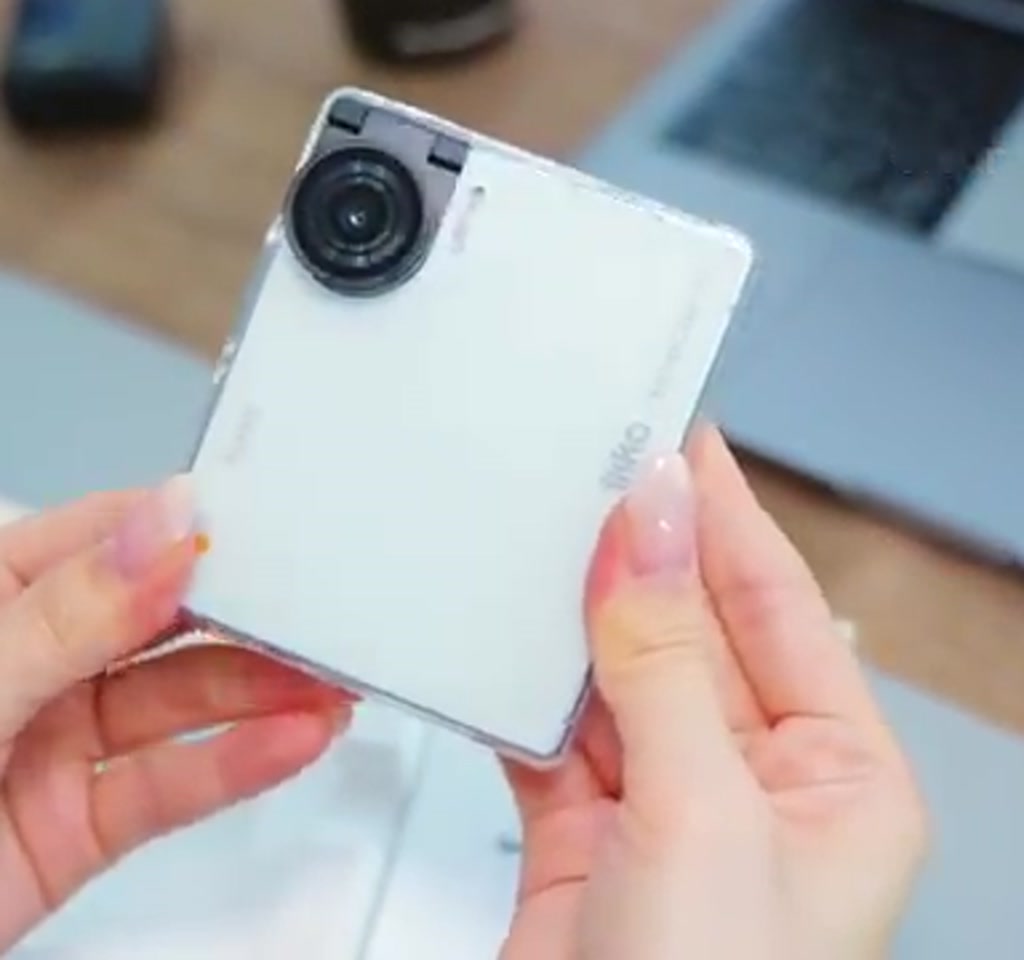
The MindOne shrinks the phone to a credit card-like profile while keeping key interaction points close to the thumb. That design choice shifts the device from a media canvas to a utility tool, favoring single-handed use, pocketability, and a lighter daily carry experience.
The MindOne adopts a square, credit card-like footprint that measures approximately 86 millimeters by 72 millimeters and sits around 8.9 millimeters thick. At roughly 130 grams, it is noticeably lighter than most contemporary phones. Those numbers explain the sensation when the device is carried: it disappears in a pocket and can comfortably be stashed in small bags or a wallet-sized pouch.
The square silhouette is both a visual decision and an ergonomic one. It shortens the distance between edge gestures and the center of the display, which helps single-handed use. However, it also compresses vertical space, so scrolling long web pages or composing lengthy messages happens differently than on taller screens.
Display And Interaction
The display is intentionally compact and dense so brief reads and glanceable interactions remain crisp. Designers lean on summary views and voice or gesture-driven workflows to make the small AMOLED panel feel efficient rather than cramped.
The MindOne uses a 4.02-inch AMOLED touchscreen with a resolution in the vicinity of 1240 by 1080 pixels. That density produces crisp text and vivid colors on a small surface. AMOLED technology also helps with energy efficiency because pixels can be turned off to render true black.
The compact display is optimized for short interactions. Applications designed for the device will typically emphasize summary views, condensed readouts, and gesture-driven workflows. Where this becomes interesting is in the UI philosophy. Interfaces that prioritize rapid glances, voice-assisted commands, and summarized content scale better on a small screen than traditional full-page layouts.
Typing And Haptics
Typing on a 4.02-inch surface requires acceptance of different ergonomics. Larger thumbs need more precise hit targets and software must compensate with predictive text, swipe input, or voice dictation. The team behind the MindOne appears to have prioritized such software aids to offset the physical constraint.
Readability And Media
Video and immersive media are possible, but the experience is intentionally limited by size. The device is best for short clips and quick reference, rather than long-form video. The display excels at text clarity and interface legibility, which aligns with the design intent to minimize distraction.
AI Features That Matter
Built-in AI acts as a task assistant rather than a standalone novelty, speeding up everyday interactions like summaries, translation, and messaging. These features compound into meaningful time savings when used for repeated microtasks during a day.
AI integration is the defining proposition. The MindOne layers intelligent tools directly into core flows such as messaging, translation, scheduling, and information summarization. Rather than surfacing an AI app, the system treats AI as an assistant that augments everyday tasks.
This only becomes compelling when you measure time saved in short interactions. If an AI can summarize a web page in a few sentences or translate a spoken exchange in near real time, those are gains that compound across commutes, meetings, and travel.
Translation And Communication
Translation features are highlighted for travelers. AI-enabled speech-to-speech or speech-to-text translation allows users to bridge language barriers without carrying a larger device. The benefit is immediate: conversations that would otherwise require a laptop or lengthy lookup become short exchanges handled on the spot.
Summaries And Writing Assistance
Writing assistance and automated summarization turn the MindOne into a micro productivity tool. Rather than composing long messages manually, users can request concise drafts or bullet point summaries. That reduces interaction time and supports the device’s minimal distraction ethos.
Performance, Memory, And Connectivity
The MindOne favors energy-efficient silicon and modest memory to keep thermal and battery behavior predictable, which suits apps focused on messaging, navigation, and AI-assisted microtasks rather than sustained heavy workloads.
The MindOne runs on a modern mobile processor tuned for energy efficiency. System memory is described as several gigabytes, while storage varies by configuration. Those choices point to a performance profile suited for messaging, navigation, AI-assisted interactions, and light multitasking.
High-intensity tasks such as gaming, heavy video editing, or prolonged camera work will reveal limits. The processor choice favors thermal and battery stability over peak benchmark results, which is consistent with a device designed for burst interactions rather than sustained load.
Connectivity covers Wi Fi, Bluetooth, and cellular functions so the device delivers the same network expectations as larger phones. Where antenna geometry and chassis size can matter, the MindOne trades maximal reception range for extreme portability. In practical terms, reception may be comparable to many compact devices, but the physics of antenna placement remains a boundary.
Constraints And Tradeoffs
No design is free from compromise. The MindOne intentionally narrows the use case to gain portability and immediacy, leaving unanswered questions about whether most users will accept those new interaction habits permanently.
Every radical fit is defined by its constraints. The MindOne explicitly trades screen real estate and battery capacity for portability and immediacy. Stating these tradeoffs clearly helps decide who this phone is for and under what conditions it excels.
Battery And Power
The small footprint constrains battery volume. While AMOLED efficiency helps, expect battery life to typically fall within a single day for moderate use and to be measured in hours rather than days under heavy use. In other words, short, frequent tasks are its strength while marathon video sessions will drain the battery noticeably faster than on larger flagships.
Performance And Multitasking
Memory in the low single-digit gigabyte range supports everyday apps, but complex workloads will run into limits sooner. Multitasking with many simultaneous apps or prolonged background processing will increase thermal load and reduce responsiveness. The tradeoff appears when deciding between raw horsepower and consistent, pocketable uptime.
Two concrete constraints to keep in mind are cost and adoption friction. Cost will sit in a window where premium materials and audio heritage matter, yet the device is not competing against flagship camera hardware.
Buyers should expect pricing to reflect specialist design rather than mass market commodity pricing. Adoption friction includes learning new interaction patterns such as voice augmented text entry and condensed UI layouts. Those shifts often require a short learning curve measured in days to weeks rather than instant familiarity.
IKKO MindOne Vs Larger Smartphones
Direct comparison clarifies decisions. The MindOne competes with larger phones on portability and focused productivity but concedes ground on screen real estate, battery endurance, and raw processing headroom.
Screen Size Vs Portability
Large phones win for media consumption, multitasking, and editing. The MindOne wins for pocket comfort and brief, focused tasks. If your day includes long streaming sessions or heavy multitasking, a larger device aligns better with that habit.
Battery Life Vs Portability
Larger chassis allow for bigger batteries and longer continuous use. The MindOne expects short, repeated interactions with more frequent charging. That tradeoff matters more if you spend long stretches away from power.
AI Assistant Versus Traditional App Workflows
MindOne integrates AI into core flows to reduce interaction time. Larger phones can offer the same AI tools but pair them with broader app experiences and richer UIs. The question is whether you value immediate, concise AI responses over feature-rich app interfaces.
Camera, Audio, And Durability
Cameras are sized for everyday snapshots and video calls rather than studio work, while IKKO’s audio tuning supports clear voice interactions and near field media playback. Build quality emphasizes scratch resistance and structural rigidity for daily carry.
Cameras on the MindOne are positioned for everyday photography and video calls rather than professional content creation. The rear camera handles snapshots and simple video while the front camera is tuned for video conferencing. The constraint is spatial. Sensor size and optical systems are limited by the chassis, which defines photographic ambition.
Audio is an area where IKKO’s heritage shows. The device includes tuned speakers and microphones optimized for clear voice interactions and media playback in close proximity. That audio focus supports the MindOne’s role as a communication tool and an AI assistant for spoken tasks.
Build materials prioritize scratch resistance and structural rigidity. Protective display glass and a reinforced chassis help the device survive daily carry in pockets or bags. Durability here is a design goal that reduces long-term maintenance and keeps the device viable as a dependable secondary or primary phone.
Use Cases And Cultural Fit
The MindOne targets people who want less screen time, travelers who need translation on the go, professionals who want quick AI answers, and users who want a lightweight second device. The device encourages shorter, more purposeful interactions.
The MindOne is aimed at a few converging audiences. Minimalists who want to reduce screen time, travelers who value translation and connectivity in tight pockets, professionals who need quick AI-supported answers, and anyone who wants a lightweight second device all fit the profile.
Functionally, it can serve as either a primary phone for users willing to accept the small screen or as a secondary device that handles calls, messages, navigation, and AI queries.
The social behavior this encourages is shorter interactions, more voice-driven commands, and a reduced habit of endless scrolling.
The cultural implication goes beyond a single product. Devices like the MindOne signal a broader shift where hardware design is used to shape behavior. Companies can now decide whether to maximize screen engagement or to steer users toward focused productivity. The MindOne clearly chooses the latter.
Practical Considerations For Buyers
Check your daily patterns before switching. If you stream, game, or edit for long stretches a larger phone will serve you better. If you travel light and value fast answers and translation, the MindOne is a compelling option.
Before choosing the MindOne, consider two practical boundaries. First, check how often you need prolonged screen time. If your average smartphone sessions include hours of streaming or long gaming sessions, a larger device will serve those habits better.
Second, assess daily battery expectations. If you routinely need more than a day of heavy use away from charging, the compact battery will create routine top-off cycles.
Accessory ecosystems matter as well. Because the phone is small, cases, mounts, and docks must be compatible with the form factor. Developers who want to target the device will also need to think differently about UI density and voice-centric experiences. These are adoption frictions that can be overcome, but they are part of the practical cost of switching.
Where This Fits In Mobile Evolution
The MindOne is part of a back-and-forth in mobile design where bigger screens expand possibilities and smaller devices force clarity. Its existence raises the question of whether consumers will embrace behavior-shaping hardware at scale, an open question that the market will answer over time.
The MindOne is a reminder that bigger is not always better. Smartphones expanded vertically and horizontally for decades to host media and immersive apps. The counter trend is to compress functionality into something that fits the pocket without demanding attention. That alternating push and pull is how hardware ecosystems evolve.
From an editorial standpoint, what matters is how design choices change behavior. The MindOne nudges toward efficient interactions. It is a practical experiment that tests whether consumers will trade screen size for instant access to intelligent microservices.
Who This Is For And Who This Is Not For
Best Suited For: Minimalists, frequent travelers, people who perform many short interactions, professionals who need quick AI summaries, and users seeking a light second device. The MindOne rewards concise workflows and voice or gesture-driven input.
Not Recommended For: Heavy media consumers, mobile gamers, photographers who need large sensors, and users who rely on extended battery life without frequent charging. If your daily habits include long streaming sessions or sustained editing, a larger phone remains more practical.
Final Thought
IKKO has created a device that is as much a behavioral prototype as it is hardware. The MindOne compresses familiar smartphone functionality into a pocketable assistant while exposing tradeoffs that anyone choosing it must accept.
Whether tiny AI phones become a mainstream category depends on how many people value immediacy, reduced distraction, and portability more than expansive screens.
The next iteration of mobile computing may include a spectrum of devices that work together, each optimized for distinct modes of attention.
The MindOne points to a future where a small device handles the instant, the conversational, and the on-the-go, while larger devices remain for deep work and immersive media. That is a conversation worth following as we see how design shapes daily habits.
Frequently Asked Questions (FAQ)
What Is The IKKO MindOne?
The IKKO MindOne is a compact, credit card-sized smartphone that emphasizes portability and integrated AI features for short, task-focused interactions rather than long-form media consumption.
How Does The AI Work On The MindOne?
The device integrates AI into core flows like messaging, translation, scheduling, and summarization to produce concise outputs and speed up microtasks. The transcript describes AI as an assistant embedded in everyday interactions rather than a separate app.
Is The MindOne Good For Travelers?
Yes. Translation and speech-to-text features are highlighted for travel use, enabling on-the-spot communication without a larger device. The small size and light weight also favor packing and mobility.
How Long Does The Battery Last?
Battery capacity is constrained by the small chassis. Expect typical single-day use for moderate activity and shorter runtime under heavy use. Exact hours depend on usage patterns and are not specified in the transcript.
Can The MindOne Replace A Primary Smartphone?
It can for users who accept the small screen and its tradeoffs. For heavy media consumers or power users who need long battery life and high performance, the MindOne is better positioned as a secondary or specialised primary device.
What Are The Camera Capabilities?
Cameras are tuned for everyday snapshots and video calls, not professional content creation. Sensor and optical size are limited by the chassis, so photographic ambition should be modest.
Does The MindOne Support Standard Connectivity?
Yes. The device supports Wi Fi, Bluetooth, and cellular connectivity. The transcript notes that antenna geometry and chassis size can affect reception compared to larger phones.
How Steep Is The Learning Curve For New Interaction Patterns?
Adoption friction exists because the device emphasizes voice input, condensed UI layouts, and brief interactions. The transcript suggests a short learning curve measured in days to weeks for most users, rather than instant familiarity.
COMMENTS