


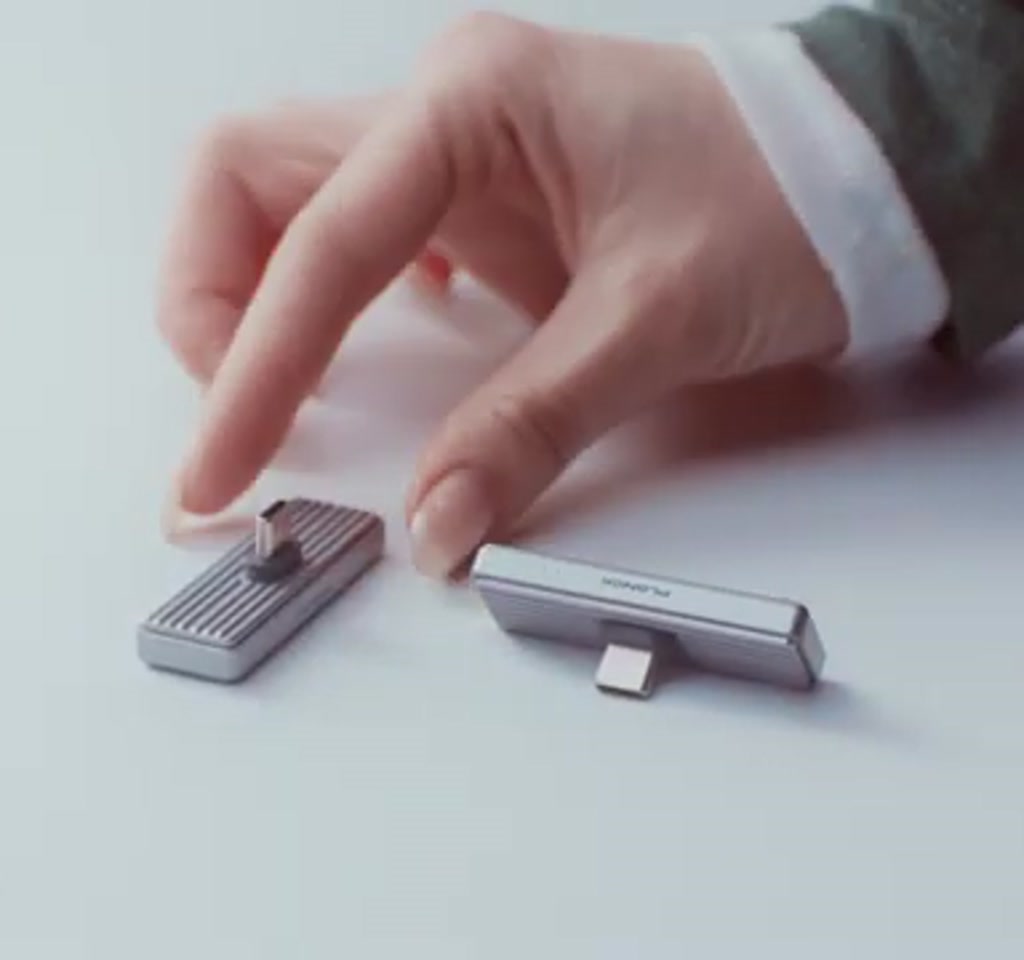
Imagine a removable drive that is meant first and foremost for your phone, small enough to disappear into your palm, and fast enough to accept pro camera streams without hesitation. That is the pitch behind Planck SSD, a palm-sized external storage device that wants to make bulky drives and tangled cables look like relics.
The real significance here is not merely the size. It is the idea that storage can be redesigned around the phone as the primary capture device, not an accessory afterthought. That shift changes workflows, gear choices, and expectations for mobile filmmaking, gaming snapshots, and on-device archiving.
What becomes obvious when you look closer is that the feature list is tightly interlocked: up to 2 terabytes of capacity, quoted peak speeds of 1,050 megabytes per second, rugged aluminum and shockproof PC construction, and a thermal design that promises sustained performance during long shoots. Those numbers are the headline, but how they meet real-world conditions is the story that determines usefulness.
The rest of this article teases apart the technical assumptions, the tradeoffs you will face, and the practical limits that will decide whether Planck SSD reshapes how creatives carry and capture content.
What Planck Brings To Phone Workflows
Planck is designed as a phone-first SSD. That ambition shows in two directions. First, the form factor and connector choices are built to plug into mobile devices and sit comfortably while recording. Second, the claim that you can record pro-level 4K120 Apple ProRes directly to the drive positions Planck as a capture destination, not just an offload target.
The implications are immediate for anyone shooting long takes or producing high-bit-rate footage on location. Recording directly to external storage can free the phone from internal storage limits, speed up turnaround, and reduce reliance on tethered laptops.
Planck SSD Explained
Planck SSD is a small external drive optimized for mobile capture, offering up to 2 TB of capacity and a quoted peak throughput of 1,050 MB per second. It is marketed to accept direct phone-based recording streams and to function as part of a larger accessory ecosystem for creators on the move.
Technical Boundaries And The Real Tradeoffs
Peak throughput numbers set expectations, but the deciding factor for recording is sustained write performance. Planck advertises 1,050 MB per second as a ceiling. In practice, sustained behavior will be governed by thermal management, phone USB host limits, and firmware buffering strategies.
Sustained Speed And Recording
Recording pro 4K at 120 frames per second typically requires sustained write bandwidth in the hundreds of megabytes per second. A 1,050 MB per second peak provides headroom, but whether that headroom stays usable depends on how the drive and host manage heat over tens of minutes to hours. Expect the real-world window of peak performance to vary by environment.
The moment this becomes fragile is during extended recording sessions. Expect sustained rates to be measured in tens of minutes to multiple hours depending on environmental temperature, device interconnect, and how the Planck firmware manages heat and buffers. That is a boundary you need to plan for when shooting long takes or long-form events.
Power And Connectivity Constraints
Another tradeoff revolves around power and host compatibility. Recording high-bit-rate video to an external SSD requires two things. The phone must present itself as a capable USB host and the camera or recording app must be able to write to an external volume. Not every smartphone or app supports that workflow natively.
Power draw is the other axis. Driving sustained writes at high speed draws both power from the host device and energy to manage heat. Practically, that means battery life on phones will erode over recording sessions and may shift workflows toward tethered power or use of a powered hub. The Planckbank accessory is offered to address these needs with multiple USB-C ports and pass-through charging up to 140 watts, which is a meaningful power envelope for powering a laptop or a phone and charging simultaneously. That capability reduces one constraint but adds another in cost and bulk.
Design, Durability, And Thermal Choices
Planck pairs premium aluminum with shockproof PC plastic and claims water resistance and drop protection. Those material choices are clearly aimed at a mobile creative who works outdoors and wants a rugged storage partner rather than a fragile lab device.
Thermal design matters because speed and durability intersect at heat. Aluminum helps spread heat, but sustained write speeds will still generate thermal load. The product claims an advanced thermal design to deliver peak performance during extra-long creative sessions. The practical question is how much performance is preserved after 30 minutes, one hour, or several hours of continuous writes. That is where labelled sustained throughput figures would be helpful for buyers and creators.
Planck Ecosystem And How It Fits Into A Creative Kit
Planck is not just a single drive. The ecosystem approach is explicit. The Planckbank accessory expands the drive into a hub with multiple USB-C ports, 4K HDMI output, and 140-watt pass-through charging. That moves Planck from a pocketable storage device into a portable workstation node.
The tradeoff here is cost and complexity. Carrying a Planck plus a Planckbank changes the definition of minimalism. It keeps the workflow compact relative to a laptop and a full media workflow rig, but it also means accepting an ecosystem expense that tends to scale into the hundreds of dollars rather than the tens.
Where It Makes The Most Sense
Planck will be most compelling when the following conditions are met. First, your phone supports high-speed external storage, and the apps you use can write directly to an attached volume. Second, you need more than short bursts of storage and are routinely working with files that benefit from external capture.
Third, you accept a small ecosystem investment for the convenience of phone-first capture and forgo the absolute lowest price per gigabyte in favor of portability and integration.
Compatibility And Ecosystem Friction
Compatibility is a practical constraint. Not all handheld consoles, cameras, or older laptops will present external storage in the same way. That creates an adoption friction that is often overlooked in spec pages.
The idea succeeds up to the point where host and software support align, and it becomes fragile when adapters, proprietary protocols, or app limitations enter the chain.
Planck Versus Alternatives
Comparing Planck to internal phone storage, traditional portable SSDs, and tethered laptop workflows highlights where the product stakes a claim. Compared to internal storage, Planck extends usable capture time.
Versus generic portable SSDs, it is phone-first in form and accessory design. Versus a laptop tether, it aims to reduce bulk and speed up setups, at the cost of ecosystem dependence.
Planck Versus Internal Phone Storage
Internal storage offers simplicity and guaranteed app compatibility but is fixed and often expensive at high capacities. Planck offers off-device expansion and a capture-first workflow if the phone supports it, but that advantage depends on host and app support.
Planck Versus Laptop-Tethered Capture
Tethered capture with a laptop gives sustained power, cooling, and familiar software tools. Planck compresses that into a smaller package, trading some of that sustained robustness for mobility and a lower footprint when the whole ecosystem aligns.
Practical Constraints To Keep In Mind
Two concrete constraints matter more than marketing text. First, sustained write performance is the operational limit, not peak numbers. The device quotes 1,050 MB per second but sustained rates depend on thermal behavior and the phone interface. Expect sustained recording behavior to be measured in minutes to hours, not indefinite peak rates.
Second, capacity and cost form a second constraint pair. Planck offers up to 2 terabytes, which is generous for high-resolution mobile capture. The tradeoff appears when you multiply devices across users.
If someone wants Planck drives at every station or for every device, costs will accumulate into the hundreds per unit rather than remaining in an impulse purchase range.
Quotable: “Redesigning storage around the phone rewrites workflow boundaries, but the real question is how sustained speed, host compatibility, and heat management perform in the wild.”
What To Expect If You Back It On Kickstarter
The product is currently positioned for crowdfunding. That pathway can accelerate innovation and early access, but it also introduces delivery uncertainty and variable timelines. Early backers usually trade immediate availability for potential delays in manufacturing and shipping.
Backing an ecosystem product also means evaluating the accessory roadmap. Planckbank extends functionality in clear ways, but it also changes the value proposition and the total spend for a full mobile studio.
You can explore the campaign directly on Kickstarter for availability and tier details.
Who This Is For And Who This Is Not For
Who This Is For: Creators who rely on a phone as their primary capture device, who need frequent high bit rate recording and want pocketable storage that can act as the recording destination, and who are prepared to invest in a small accessory ecosystem to keep workflows mobile.
Who This Is Not For: Users who require indefinite sustained writes without thermal tradeoffs, those whose phones cannot present as USB hosts or whose apps lack external volume support, and buyers seeking the lowest possible price per gigabyte rather than portability and integration.
FAQ
What Is Planck SSD?
Planck SSD is a palm-sized external storage device marketed for phone-first workflows, offering up to 2 TB of capacity and a quoted peak throughput of 1,050 MB per second, along with rugged construction and an accessory ecosystem.
Can Planck Record 4K120 Apple ProRes Directly?
Planck is positioned to accept pro 4K120 Apple ProRes streams, but real-world success depends on sustained write performance, phone USB host capability, and whether the recording app can write to an external volume.
How Long Can Planck Sustain Peak Speeds?
The precise sustained duration is not specified. Sustained throughput will vary with thermal conditions, phone interface limits, and firmware buffering. Expect peak-like behavior to fall off over tens of minutes to hours rather than remain indefinitely.
Does Planck Work With All Phones?
Not necessarily. The phone must act as a capable USB host and the recording app must support external volumes. Compatibility will vary by phone model, operating system, and app implementation.
What Is The Planckbank Accessory?
Planckbank is an accessory hub that expands the drive into a portable workstation node with multiple USB-C ports, 4K HDMI output, and up to 140 watts of pass-through charging, intended to reduce power and connectivity constraints.
What Capacities Does Planck Offer?
Planck is offered with capacities up to 2 terabytes, which suits high-resolution mobile capture but will cost more per unit than basic portable drives.
Is Backing On Kickstarter Recommended?
Backing offers early access and the chance to shape an ecosystem, but it also carries typical crowdfunding risks such as delays and uncertain delivery schedules. Evaluate tiers and timelines before committing.
Can Planck Replace Laptop-Based Workflows?
Planck can simplify or replace laptop tethering in many mobile scenarios, but full replacement depends on the scale of the workflow, the need for sustained power and cooling, and compatibility across phones and apps.
Disclaimer: Some links in this article are affiliate links, meaning we may earn a commission if you make a purchase.
COMMENTS