


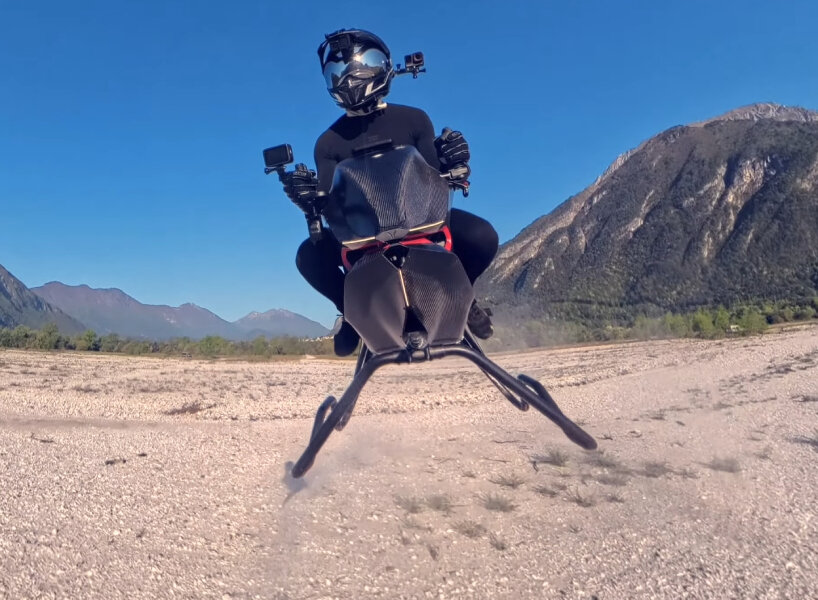
The instant reaction to the Volonaut Airbike footage is visceral: this looks like a speeder bike that slipped out of a movie and landed in our skies. That reaction matters because it reveals the product’s primary design goal. The real significance here is not the headline top speed, it is the obsessive pursuit of a visual and bodily experience that millions already store in their imagination.
That focus on feeling is what separates the Airbike from the steady parade of hoverbike prototypes that read like engineering exercises. Volonaut is selling a posture, a sightline, and the sensation of skimming above ground in an exposed riding position. This article shows why that emotional framing is the product’s strongest claim, and what practical constraints will determine whether the fantasy becomes a regular part of weekend recreation or remains a spectacular demonstration.
What most people misunderstand when they see the viral clips is that design and regulation are twin forces. The company has headline figures and a clear aesthetic, but the version you can legally own and fly will be shaped by rules that cap speed, training requirements, and the realities of propulsion and noise. Those boundaries are not footnotes, they are the conditions that will determine where and how the Airbike can exist.
The story that emerges early is simple. Volonaut has shown a single occupant, jet-propelled concept that intentionally hides lifting hardware and prioritizes rider immersion. Prototype claims headline speeds near 200 kilometers per hour. The company and several outlets have also stated a likely commercial cap around 102 kilometers per hour to align with ultralight-style classifications in some regions. That contrast, between a cinematic top speed and a regulated consumer envelope, is the narrative tension that defines the product.
Why The Volonaut Airbike Feels Like A Movie Prop
Design choices are the shortest route to emotion. The Volonaut Airbike achieves the speeder bike vibe by doing three specific things at once: narrowing the body into a central spine, placing the rider in a forward-leaning motorcyclist posture, and removing obvious external rotors from view. Those moves are cosmetic in one sense, but they are functional in another. A clean silhouette reads as speed and predation, which is what makes it feel cinematic even when it is parked.
Hiding the lift hardware is part psychology and part strategy. Concealed propulsion reduces the visible cues that usually make people inspect aircraft as machines. Volonaut’s choice produces attention and desire, which in turn creates the social momentum that can justify expensive certification and infrastructure work. That social momentum is a lever the company appears to be using deliberately.
The Tech They Have Shown And What They Have Not
Volonaut has released footage and high-level claims but stopped short of detailed engineering data. The company positions the Airbike as jet-propelled with a stabilization system and flight computer, yet it has not published propulsion schematics, thrust curves, or energy storage figures. Those omissions create practical questions about range, session length, and operating cost that remain open.
Propulsion And Stability
Volonaut describes the Airbike as jet-propelled with a proprietary stabilization system that automates hover and balance. That combination is consistent with a riding-first experience where software interprets rider inputs into stable flight commands. The result is smooth camera-ready behavior, but without technical specifics the vehicle’s real operational envelope is still uncertain.
Controls And Rider Experience
The company describes handlebar-style inputs augmented by computer stabilization to lower the learning curve. The most notable practical detail is an unobstructed forward and downward view, which is central to the emotional claim. Those small choices shape whether the Airbike reads as a vehicle people want to imagine themselves riding and how much training is required to achieve that sensation safely.
Regulation, Range, Noise And Training Constraints
The Airbike’s cinematic presence meets three hard constraints: classification and speed caps, energy and range limits, and acoustic impact. Each of these elements has measurable consequences for where the vehicle can operate, how it will be licensed, and whether it becomes a commuter tool or a recreational experience.
Speed Caps And Ultralight Classifications
Prototype claims approach 200 kilometers per hour while a likely commercial variant is expected to be electronically limited to around 102 kilometers per hour to fit ultralight style rules in some jurisdictions. That differential is not cosmetic; it alters certification paths, operational airspace, and the skill level required of pilots.
Range And Fuel Tradeoffs
A jet-based approach suggests tradeoffs distinct from battery-powered multicopters. Volonaut has not confirmed fuel type or range, but session lengths are more likely to be measured in tens of minutes to a few hours depending on configuration. That reality constrains distance from a launch point and undermines prospects for routine commuting without new infrastructure.
Noise Limits And Local Ordinances
Jet propulsion produces a noise profile that is likely louder than electric multicopters. Noise ordinances and community tolerance will determine acceptable deployment scenarios. A vehicle significantly louder than existing electric options will be pushed toward open recreational areas, designated corridors, or special events unless acoustic mitigation is developed.
Training Hours And Licensing
Even with an ultralight classification in some regions, practical operation will demand formal instruction. Volonaut’s design aims to lower the learning curve, but safe handling of high-speed, low-altitude flight suggests training measured in tens of flight hours plus ground school on airspace and emergency procedures. Those requirements shape adoption and cost.
Why Design Matters As Much As Performance
The Airbike sits at the intersection of two races: one for pure engineering metrics and another for cultural desirability. Volonaut is competing in the latter by prioritizing posture, sightlines, and the cinematic silhouette. Design that unlocks demand can become a strategic asset, turning attention into funding for certification and infrastructure.
Design choices also produce technical tradeoffs. Concealing lift hardware improves aesthetics but can complicate thermal management, maintenance access, and crashworthy structure. Those tradeoffs add weight, cost, and certification time. The Airbike’s future hinges on how those tensions are resolved, a question explored in the roadmap and decision sections below.
Quotable: The Airbike proves that the fastest route to making personal flight culturally mainstream is not simply by pushing performance numbers, but by building something people already want to imagine themselves riding.
Volonaut Airbike Vs Other Personal Air Vehicles
Comparisons matter because buyers and regulators will weigh alternative approaches against the Airbike’s specific compromises. This section contrasts how the Airbike stacks up against electric multicopters, ultralight gyrocopters, and other hoverbike concepts on noise, range, and regulatory fit.
Volonaut Airbike Versus Electric Multicopters
Electric multicopters tend to favor quieter operation and simpler vertical lift at the cost of shorter range and different silhouette. The Airbike trades quieter lift for a cinematic form and likely longer burst speed. The decision point for users will be whether they value the cinematic posture or a quieter, potentially more practical lift profile.
Volonaut Airbike Versus Ultralight Gyroplanes
Gyroplanes rely on autorotation and typically require runways or launch zones, but they are established within aviation regulation. The Airbike aims for low altitude recreational flight with an ultralight style regulatory approach. That path may avoid some traditional certification burdens but introduces new operational constraints tied to noise and airspace use.
Volonaut Airbike Versus Hoverbike Prototypes
Many hoverbike concepts prioritize visible rotors and multi-rotor lift, which produces a different risk profile and clearer maintenance access. Volonaut’s concealed propulsion prioritizes image and rider immersion, increasing complexity in serviceability and acoustics compared to exposed rotor designs.
How To Read The Roadmap
Volonaut has referenced a production timeline around 2026 for a consumer variant, but that date is a planning anchor rather than a delivery guarantee. The consumer model will likely be electronically limited and configured to meet local ultralight style rules, which will change the experience while preserving the core aesthetic.
Whether the Airbike becomes common depends on a bundle of measurable conditions: confirmed propulsion and range numbers, an effective noise mitigation strategy, a regulatory path that enables accessible training, and a price point aligned with early adopters. Each of these factors will push the product toward niche spectacle or broader recreational use.
Who This Is For And Who This Is Not For
Best Suited For: Enthusiasts and early adopters who prioritize experience and spectacle, wealthy hobbyists, operators planning controlled recreational offerings, and partners willing to fund certification and infrastructure. The Airbike’s appeal is experiential and social more than practical at launch.
Not Suited For: Commuters needing predictable multi-hour range, residents of dense urban neighborhoods sensitive to noise, buyers seeking mass market pricing, and operators who cannot meet training and regulatory requirements. Until key numeric constraints are resolved, the Airbike is unlikely to be a mass transit solution.
FAQ
What Is The Top Speed Of The Volonaut Airbike?
Volonaut has showed prototype claims near 200 kilometers per hour and indicated a probable commercial cap around 102 kilometers per hour to fit ultralight style classifications in some regions.
How Far Can The Volonaut Airbike Travel On A Single Charge Or Tank?
Volonaut has not published specific range figures. The public narrative suggests session lengths are more likely in the tens of minutes to a few hours depending on final propulsion and fuel or battery choices, not multi-hour endurance.
Is The Volonaut Airbike Loud?
Public descriptions indicate a jet-style propulsion approach, which implies a louder acoustic profile than current electric multicopters. Exact decibel levels have not been published and will matter for operations near residential areas.
When Will The Volonaut Airbike Be Available To Consumers?
Volonaut has referenced a production timeline around 2026 for a consumer variant. That date should be treated as a planning target rather than a guaranteed delivery schedule.
Will The Volonaut Airbike Be Legal To Fly In Cities?
Legal operation will depend on local aviation rules, noise ordinances, and classification. In many regions the Airbike is more likely to be limited to open recreational zones or regulated corridors rather than unrestricted urban flight.
How Much Will The Volonaut Airbike Cost?
Final pricing has not been published. Early production units are likely to fall in a band from tens of thousands to low hundreds of thousands of dollars, placing the Airbike in experiential and enthusiast markets at launch.
Do You Need A Pilot License To Fly The Volonaut Airbike?
That depends on local classification. Even if an ultralight style classification reduces formal licensing in some areas, practical operation will require formal instruction and likely tens of flight hours plus ground school for safe handling.
Can The Volonaut Airbike Replace Existing Hoverbike Concepts?
The Airbike is a different approach focused on cinematic experience rather than the visible utility of rotor-based hoverbikes. It may complement or shift the market toward experience-first designs, but technical and regulatory tradeoffs will determine whether it displaces other concepts.
The Volonaut Airbike is a design statement and a technology roadmap in one. It shows how style, posture, and perception can create demand that engineering and regulation must then satisfy. The unanswered technical and regulatory questions are where this story will be decided in the next few years.
COMMENTS