


Smartphones have long been half computer and half camera. The Xiaomi 17 Ultra flips that expectation and makes capture the primary act. The design, accessories, sensors, physical controls, and software all point toward one thesis: this is a camera that happens to fold a phone into the grip.
The real significance here is not the Leica logo repeated across the box and case. The significance is that the Leica partnership is implemented as a system, not a sticker. It ties hardware, tactile controls, and image processing into a single shooting experience that is intentionally different from the usual point-and-shoot phone.
What most people will misunderstand at first glance is mistaking branding for substance. That assumption misses the deeper tradeoff Xiaomi has chosen. This device prioritizes expressive capture, creative constraints, and feel over offering the longest periscope zoom or clinical benchmarking supremacy.
That idea becomes obvious in the first minutes with the phone in hand. From the unboxing accessories that echo camera culture to the camera plateau and the rotating metal ring, Xiaomi has designed a phone that asks you to behave like a photographer. The payoff is a more playful, more physical way to shoot, and the cost is a series of conditional tradeoffs that shape where the device truly excels.
Design And Accessories That Read Camera First
At a glance the 17 Ultra frames itself as a pocketable camera rather than a generic multipurpose slab. The accessory kit and case design borrow rituals from compact camera ownership, signaling an intended behavior: carry the handset for deliberate shooting sessions, not just impulsive snaps.
The 17 Ultra does not hide that Leica is the coauthor of its identity. The packaging and accessory kit lean into camera rituals. Included items like a MagSafe-compatible case with a Leica-branded aluminum lens cap, a soft microfiber cleaning cloth, and a wrist strap suggest carrying and handling like a compact camera, not a pocket multipurpose slab.
Visually the handset departs from the Xiaomi 17 Pro lineage. The cream colorway and two-tone finish separate a textured lower two-thirds from a smooth top third. Buttons are tactile and circular with clear plus and minus markings, invoking older camera ergonomics. Branding is oriented horizontally to reinforce the device as a camera-first object.
Accessories That Signal Intent
Those extras are not incidental. The case, cap, strap, and cloth together create a small ecosystem that encourages deliberate handling. That accessory package alone carries perceived value, and it is part of the product proposition: buying a photography experience, not only a spec sheet.
The Cameras: Sensors, Lenses, And What They Deliver
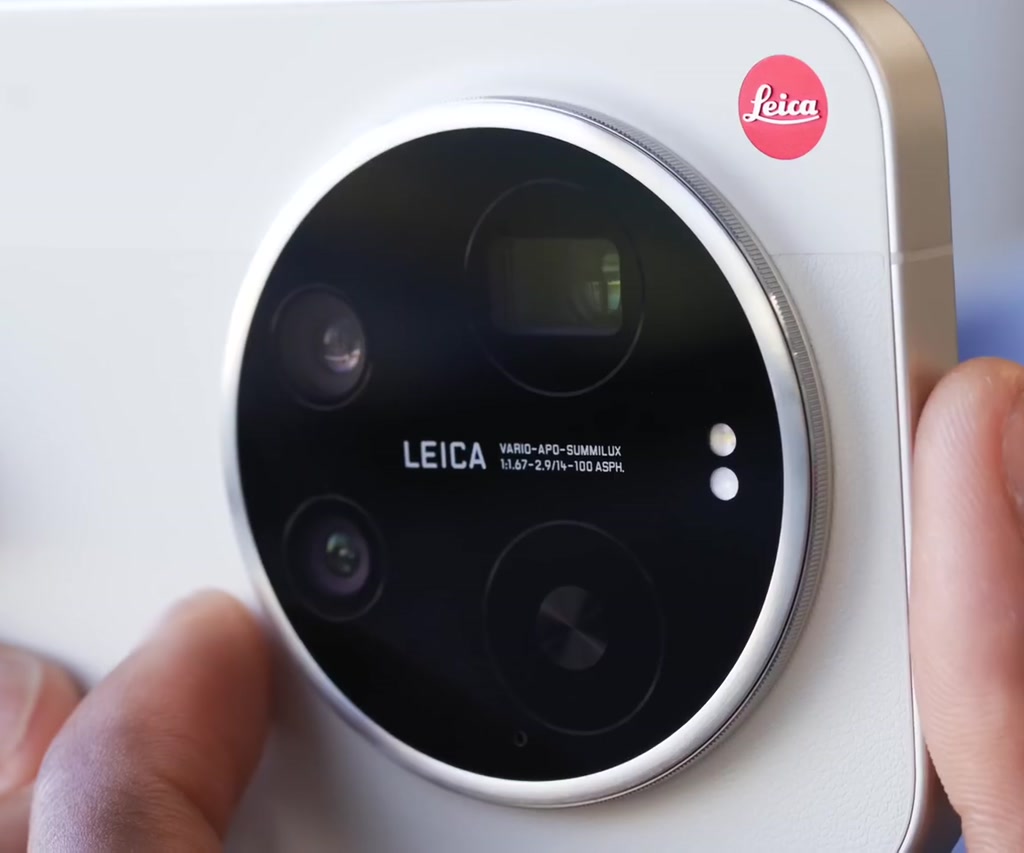
The Xiaomi 17 Ultra uses a triple rear system built around large sensors and a mechanical telephoto design. This configuration favors image quality, shallow depth of field, and a filmlike render rather than chasing extreme zoom numbers.
The phone uses a triple rear system. The main sensor is a 1-inch, 50 megapixel module at f1.67. The ultrawide is a 50 megapixel 14 millimeter equivalent at f2.2. The telephoto is built around a 200 megapixel sensor with a real variable focal length design that moves between a 75 millimeter and a 100 millimeter equivalent, with apertures roughly from f2.39 to f2.96.
Main, Ultrawide, And Telephoto
The 1-inch main sensor delivers high detail and attractive shallow depth of field when the optics permit. The ultrawide is unusually wide at 14 millimeters and is usable rather than a toy, which helps compositions that rely on environmental context. The high-resolution 200 megapixel telephoto enables heavy cropping while retaining detail, but the phone’s practical zoom window is modest compared to long periscopes.
Another practical constraint is storage and default capture behavior. The camera defaults to 12 megapixel binned captures to save space. Selecting full resolution 50 megapixel captures is possible, but the app will revert to 12 megapixels after the camera is closed and reopened. That means consistent high-resolution shooting requires workflow attention, since opting into 50 megapixels multiplies data per image by a noticeable factor compared with 12 megapixel binned files.
The Camera Ring: Physical Control With Practical Limits
The rotating metal ring that circles the camera plateau is the clearest single design gesture that separates the 17 Ultra from typical phones. It provides a tactile way to change zoom, exposure, or other parameters without relying on on-screen sliders.
The rotating metal ring that circles the camera plateau is the most literal expression of Xiaomi’s camera-first thesis. It rotates fluidly and produces haptic feedback that simulates notches. That control maps to different functions depending on the mode: zoom in the default photo mode, exposure adjustment in video, and fully customizable assignments in Pro mode such as manual focus, shutter speed, or color temperature.
Customization
Mapping a physical control to Kelvin white balance or to manual focus is a rare degree of camera-level granular control on a phone. For photographers who crave tactile knobs and who want to make micro adjustments without digging into touch menus, this is a meaningful departure.
Practical Frictions
The ring is clever, and yet it introduces its own constraints. When used to zoom, there is a very high chance that your fingers will intrude into the frame if you move to the ultrawide end, especially when holding the phone in portrait orientation and attempting quick composition changes. The ring is also easy to accidentally brush, which can lead to unintentional camera launches or unplanned exposure shifts. Those are the kinds of ergonomics that matter in fast-moving scenarios.
Software, Leica Modes, And The Shooting Experience
Xiaomi layered Leica processing deeply into capture so that rendering and camera behavior feel like part of the hardware. These choices create a committed shooting workflow rather than an infinitely reversible one.
Xiaomi layered Leica processing deeply into capture. Leica Vibrant and Leica Authentic profiles change the default rendering, while dedicated modes emulate classic Leica cameras and film. For example, the device offers an M9-inspired profile with locked daylight white balance and punchier contrast, and an M3-influenced monochrome mode that reproduces a filmlike grain and reduced dynamic range.
These are not simple post-process filters. The Leica modes are baked into capture so you cannot undo them after the fact. That is both a creative constraint and a feature. It forces commitment in the moment, which some photographers will love and others will find limiting.
The phone also supports high-end video capture including 8K recording and a remarkably high frame rate option, which expands creative possibilities. Microphone quality is adequate, and for serious production workflows an external mic remains advisable.
Flagship Hardware Underneath
Physically focused design choices sit on top of high-end internal components so that capture and post-processing are not bottlenecked by performance or storage throughput.
Under the camera-first skin sits flagship-class hardware. The phone ships with a Snapdragon 8 Elite Gen 5 platform, LPDDR5X memory, and UFS 4.1 storage. The display is a large 6.9-inch flat 120 hertz panel that peaks at up to 3500 nits. The battery is sizeable at 6800 milliamp hours and supports 90-watt wired charging and 50-watt wireless charging. Xiaomi also retains a full IP69 dust and water resistance rating despite the moving ring, a notable engineering achievement.
Those specs matter because the 17 Ultra is not a camera that compromises on processing power or endurance. Heavy resolution capture, 8K video, and fast computational photography demand both thermal headroom and bandwidth to transport large sensor data to storage and processing pipelines.
Tradeoffs And Where This Becomes Most Useful
Buying the 17 Ultra is a decision about priorities. It privileges tactile control, curated color science, and large sensors over extreme distance zoom and frictionless snapshot workflows.
There are at least two concrete tradeoffs that define the Xiaomi 17 Ultra’s real-world value.
- Reach Versus Quality The variable telephoto provides smooth mechanical zoom between 75 and 100 millimeters, a practical 3.2x to 4.3x equivalent. That gives pleasing optical results and excellent cropability with the 200 megapixel sensor, but it is not a solution for long-distance shooting. If shooting subjects at soccer field distance is common for you, a specialist phone with 10x or higher periscope optics will be more practical.
- Resolution Versus Workflow The camera favors high fidelity capture, but the app defaults to 12 megapixel binned images to conserve storage. Choosing 50 megapixel captures increases per-image data by roughly a factor of four or more, so storage consumption and backup workflows become significant considerations for heavy shooters. The app’s habit of reverting to 12 megapixels after being closed means consistent high-resolution shooting requires deliberate workflow choices and monitoring.
There are other tradeoffs that surface in everyday use. The camera ring increases creative immediacy, but it also produces accidental activations and finger intrusions with a nontrivial frequency. The Leica modes deliver filmlike character baked into capture, but the inability to undo those profiles means creative decisions are less reversible than typical phone filters.
Xiaomi 17 Ultra Vs Other Camera Phones
Comparing the 17 Ultra to phones that emphasize extreme zoom or raw benchmark scores clarifies the different design aims. This is a photo-first instrument where tactile interaction and filmlike rendering are the primary features, not long reach.
3x-4x Optical Versus 10x Periscope Zoom
The variable telephoto on the 17 Ultra offers true optical movement in a compact package and excels at portrait focal lengths. Phones with 10x or higher periscopes beat it for distant subjects, but often at the cost of size, complexity, and sometimes optical character.
Leica-Baked Color Versus Generic Computational Profiles
Leica modes are embedded at capture, forcing commitment to a particular aesthetic. That contrasts with phones that apply neutral raw capture and let users add profiles later. The Leica approach yields character but reduces post-capture flexibility.
Accessory Ecosystem Versus Minimalist Shipping
Xiaomi ships a small set of photography-focused accessories that change the ownership story. That contrasts with many flagships that trim extras in the box and leave third party add ons to the buyer.
Who This Is For And Who This Is Not For
Choice clarity helps avoid regret. Below is a practical breakdown of which users will most likely benefit and who should consider alternatives.
Who This Is For
- Photographers who value tactile controls, curated color rendering, and a camera-like shooting rhythm.
- Creators who prioritize image quality at portrait and environmental focal lengths rather than extreme distance reach.
- Users who are willing to manage storage and workflow to keep high-resolution captures consistent.
Who This Is Not For
- People who need long-range zoom for sports or wildlife and prefer 10x or higher periscopes.
- Casual users who want zero-friction snapshot behavior and fully reversible filters.
- Buyers unwilling to accept the ergonomics compromise introduced by the camera ring or the baked-in Leica modes.
Where This Fits In The Bigger Picture
What becomes obvious when you look beyond the marketing is that Xiaomi is testing a thesis about smartphone identity. Rather than continue the quiet arms race of megapixels and distant zoom numbers, the 17 Ultra asks whether a phone can be valued chiefly as a creative tool, with hardware and software designed around the rhythms of photography.
That editorial stance connects to a broader pattern in consumer tech: specialization inside general platforms. Just as people buy dedicated earbuds instead of relying on phone speakers for serious listening, some buyers will prefer a phone that treats capture as the primary experience. This is not a universal play, but it is a compelling one for creators who enjoy hands-on control and expressive rendering.
From an editorial standpoint, the Xiaomi 17 Ultra succeeds where the idea matters most. It creates an accessible Leica-adjacent experience that fits in a pocket, ships with thoughtful accessories, and layers tactile control on top of flagship silicon. That matters because it offers a different relationship with the device: deliberate making rather than passive recording.
Looking forward, this device suggests a future where camera partnerships mean more than color science licensing. If physical controls, curated capture modes, and accessory ecosystems prove appealing to a meaningful segment, expect other manufacturers to experiment with similar camera-first identities and with the tradeoffs those identities imply.
Related reading on Bit Rebels explores how sensor size and computational pipelines changed smartphone photography, and why ergonomics now shape creative workflows as much as raw numbers.
The question that remains interesting is how many users will adopt a phone that asks them to choose a photographic mindset. That choice could reshape what a flagship phone prioritizes next.
FAQ: Frequently Asked Questions
What Is The Xiaomi 17 Ultra?
The Xiaomi 17 Ultra is a flagship smartphone designed around a camera-first philosophy, featuring a 1-inch 50 megapixel main sensor, a 50 megapixel ultrawide, and a 200 megapixel variable telephoto module with mechanical focal length change.
How Does The Camera Ring Work?
The rotating metal ring provides tactile control and haptic feedback. It defaults to zoom in photo mode, adjusts exposure in video, and can be customized in Pro mode to control parameters such as manual focus, shutter speed, or color temperature.
Is The Leica Branding Just Cosmetic?
No. According to Xiaomi’s implementation, Leica influence is baked into a system that includes hardware choices, tactile controls, and image processing profiles rather than only logo placement.
Is The Xiaomi 17 Ultra Good For Long Range Zoom Photography?
Not primarily. The telephoto covers roughly a 75 to 100 millimeter equivalent, about 3.2x to 4.3x. It prioritizes optical quality and cropability, but does not replace phones built around 10x or higher periscope optics for long-distance subjects.
Can You Shoot Full-Resolution Images Consistently?
The camera supports 50 megapixel captures, but the app defaults to 12 megapixel binned images and will revert after being closed. Maintaining consistent high-resolution capture requires deliberate workflow choices and attention to settings.
Does The Xiaomi 17 Ultra Include High End Video Features?
Yes. The device supports 8K recording and high frame rate options. For serious production work an external microphone is recommended, as onboard audio is adequate but not premium studio quality.
Is The Phone Durable With The Moving Ring?
Xiaomi retains an IP69 dust and water resistance rating despite the moving ring, indicating a significant engineering effort to preserve durability while adding mechanical controls.
Should I Choose The 17 Ultra Over A Long Zoom Phone?
That depends on priorities. Choose the 17 Ultra if you value tactile controls, Leica-styled color, and large sensors. Choose a long zoom phone if you frequently need 10x or more reach for sports or wildlife photography.
COMMENTS