


Ashay Shah is a dedicated healthcare professional and researcher whose career bridges clinical expertise, business strategy, and cutting-edge innovation. With a background in Bachelor of Dental Surgery and an MBA in Healthcare, he is currently pursuing a Ph.D. in Business with a focus on healthcare, expected to be completed by August 2025.
His journey—from dentistry in India to clinical research roles in the U.S.—reflects a deep commitment to advancing patient care through both evidence-based practice and entrepreneurial thinking.
Over the years, Ashay has managed complex clinical trials, collaborated with pharmaceutical leaders like Pfizer and Merck, and contributed to pioneering studies across various therapeutic areas. His passion for the intersection of science, ethics, and innovation led him to author a book on the use of artificial intelligence in wound healing and management, positioning technology not as a replacement for clinicians, but as a tool to enhance care.
Through his blog and thought leadership, Ashay shares insights, research, and real-world experiences to inspire the next generation of healthcare professionals. In this interview, he opens up about his path from clinical care to global research, the power of emerging technologies, and his vision for a smarter, more collaborative future in medicine.
We thank Ashay for generously sharing his insights and experiences with our readers.
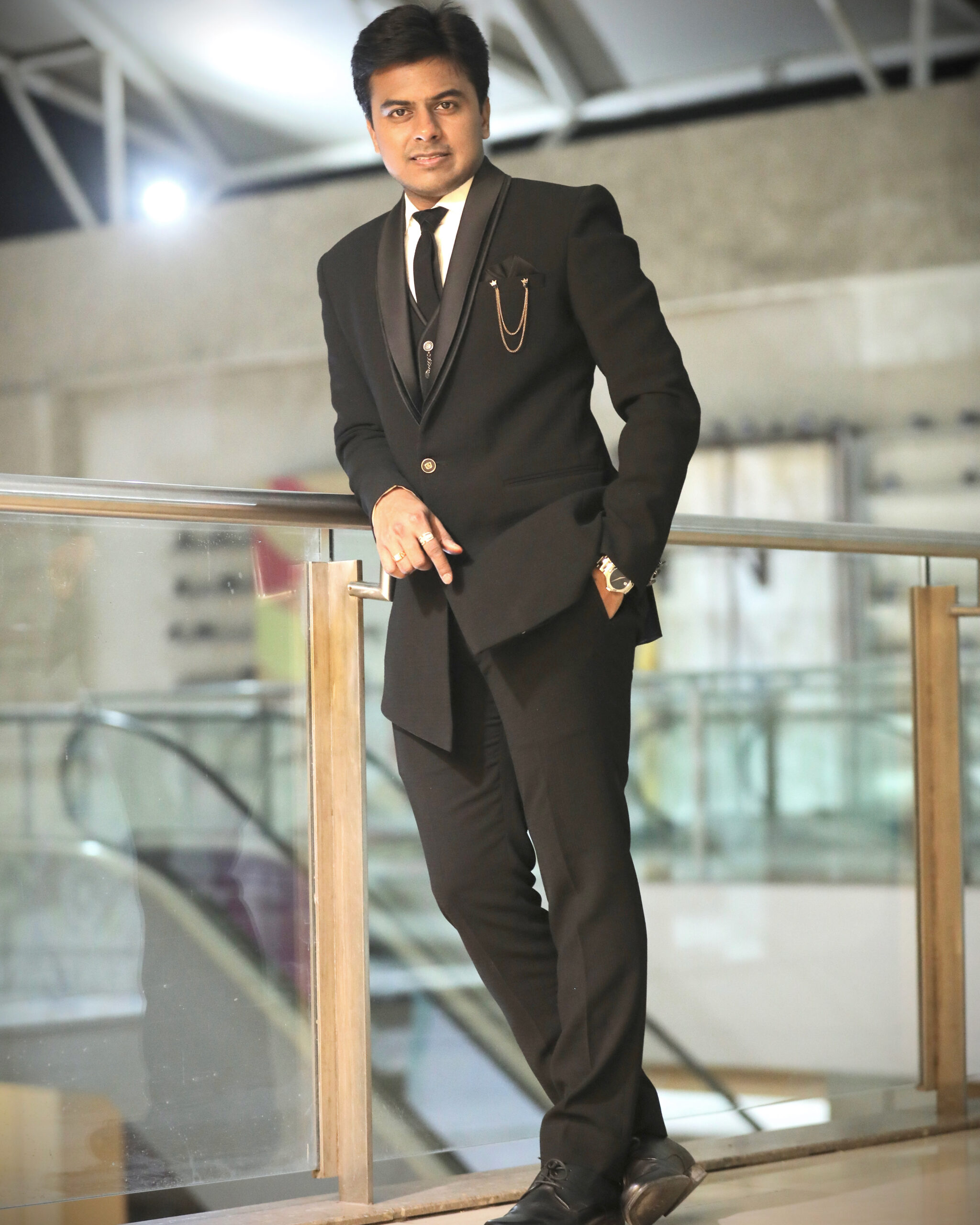
IMAGE: ASHAY SHAH
Can you walk us through your professional journey—from dentistry to business to pursuing a Ph.D. in healthcare research?
My journey began with a Bachelor of Dental Surgery (BDS) in India, where I developed a strong foundation in clinical care and patient-centered care. After moving to the U.S., I pursued an MBA in Healthcare at Concordia University in River Forest, IL, to bridge the gap between clinical science and business strategy.
This transition opened doors for me in clinical research, where I’ve held roles ranging from Clinical Research Coordinator to Site Manager. I’m now pursuing a Ph.D. in Business, specializing in healthcare, which is expected to be completed by August 2025.
Each phase of my journey has been a stepping stone—dentistry taught me compassion and precision, the MBA gave me strategic vision, and the Ph.D. is helping me merge innovation with impact.
What drives your passion for clinical trials and how have they shaped your perspective on modern medicine?
Clinical trials sit at the intersection of science, ethics, and hope. My passion for this field stems from witnessing how rigorous, well-designed trials can truly change lives. From investigational treatments for anxiety to groundbreaking vaccine and cardiovascular research, I’ve seen firsthand how clinical trials bring innovation from theory to therapy.
They’ve shaped my belief that modern medicine isn’t just about curing—it’s about continuously evolving through evidence-based practice and global collaboration.
How has your experience working with global pharmaceutical companies influenced your approach to innovation in healthcare?
Working with global pharmaceutical companies such as Pfizer, Merck, and AbbVie has taught me the importance of scalability, regulatory rigor, and patient safety. These experiences reinforced the idea that innovation must be both scientifically sound and operationally feasible.
They also helped me appreciate the role of technology in streamlining trials—from remote monitoring to real-time data collection—which now guides my approach to healthcare innovation across both clinical and business settings.
What inspired you to write a book on AI in wound healing and management, and what key insights do you share in it?
My clinical background and exposure to advanced research sparked an interest in how emerging technologies like AI can enhance patient outcomes. Wound healing is a critical area where delays or inadequate care can result in serious complications.
In my book, I explore how AI can improve wound assessment, predict healing trajectories, and personalize treatment plans. One key insight is that AI is not meant to replace clinicians, but to augment their capabilities—enhancing the speed, precision, and accessibility of care.
How do you integrate your interests in science, business, and entrepreneurship into your daily work and long-term vision?
In my current role managing clinical trial sites and launching ventures—including a self-storage business and several product startups—I constantly blend these disciplines. My day-to-day involves applying scientific knowledge to ensure trial integrity, using business strategies to optimize operations, and thinking entrepreneurially to identify new opportunities.
My long-term vision is to build a healthcare ecosystem that leverages innovation, business acumen, and evidence-based practices to improve patient care on a global scale.
What emerging technologies or ideas in medical science are you most excited about right now?
I’m particularly excited about AI-driven diagnostics, decentralized clinical trials (DCTs), and wearable biosensors. These technologies are democratizing healthcare access and enabling real-time, personalized medicine. I’m also closely following advancements in regenerative medicine and the integration of blockchain for secure patient data sharing—both of which hold transformative potential for the future of healthcare.
Through your blog and research, what impact do you hope to make on the healthcare community and future professionals?
My goal is to make complex ideas more approachable and inspire healthcare professionals to embrace innovation. Through my writing, I aim to build a bridge between academia, clinical practice, and real-world application. I want future professionals to not just follow protocols, but to think critically, lead ethically, and innovate responsibly—because the future of healthcare depends on those who can do all three.
COMMENTS