


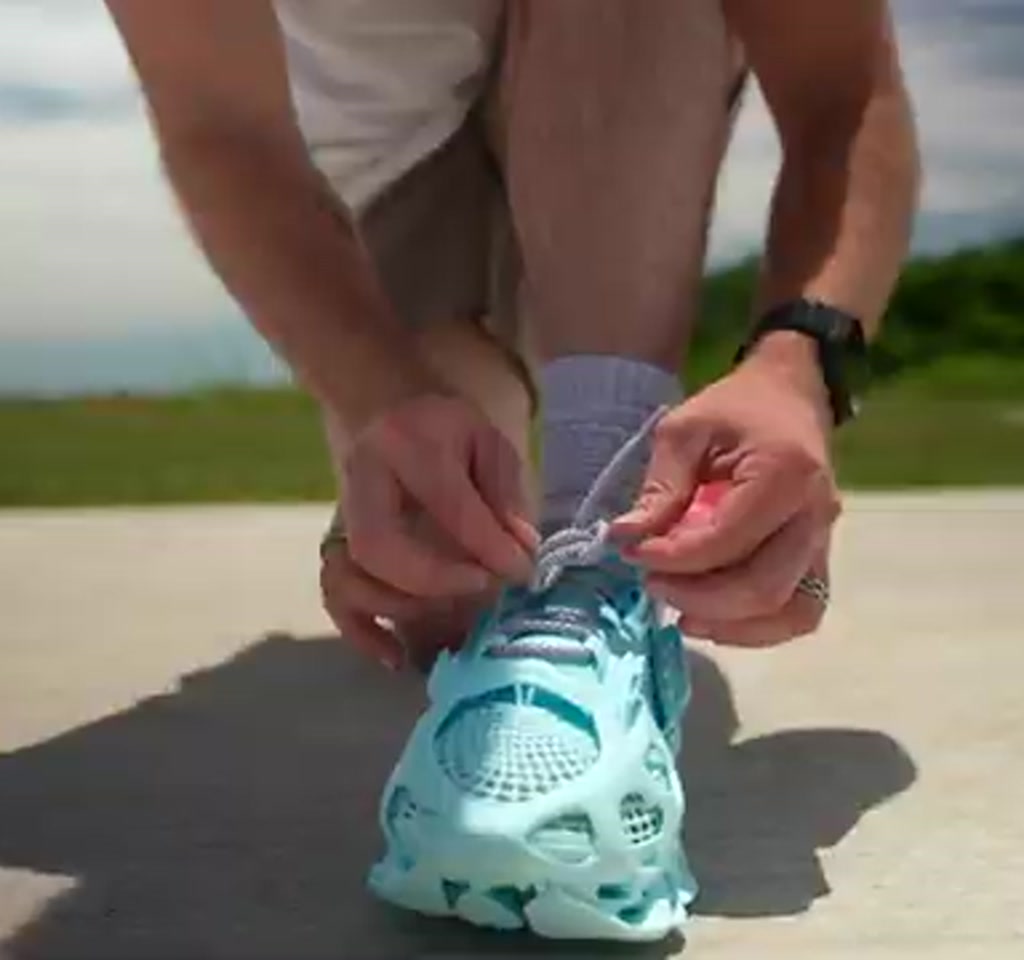
3D Printed Shoes are an image of the future made literal: objects built layer by layer, tailored to a foot, delivered on demand. The first surprise from a practical run is not that they fall apart. It is that they do not. A fully printed TPU shoe can survive repeated miles without catastrophic failure, and that fact alone reframes what this technology is actually promising.
The primary insight here is explicit. What most people assume 3D printed footwear must prove is longevity. What actually determines whether this matters is comfort. In the trial run described by the experiment, structural survival happens before user protection. The shoe lives, the runner pays the cost.
That inversion is where the story gains shape. Material choreography, geometry, and process control make a printed shoe possible. Those same things also reveal the real constraints that will decide whether printed footwear is novelty or viable manufacturing. This article unpacks those constraints and shows the practical thresholds that must be crossed for those two outcomes to converge.
What becomes obvious when you look closer is that 3D printed footwear is not a single technical problem. It is an intersection of at least three: material behavior under dynamic load, the economics of long print cycles and failures, and the tiny but decisive details of human anatomy and environment. Each of those carries measurable tradeoffs.
When the parts are combined into a wearable object the consequences are immediate and measurable. This piece traces the path from filament spool to foot, explains where the gains are already real, and where long odds or simple injuries will limit adoption unless design and process strategies change.
How Material Choice Shapes Everything
Choosing the right filament dictates what a printed shoe can do and what it cannot. In the experiment, TPU emerged as the only readily available filament family capable of compressing and recovering under load, while PLA behaved like brittle plastic and offered no shock absorption. That distinction is foundational to both capability and constraint.
TPU Mechanics And Practical Limits
TPU behaves like a soft elastomer when printed but printing it is a competence test. The filament is hygroscopic, so drying the spool at roughly 65 degrees Celsius before printing and running the nozzle around 215 degrees Celsius were essential to avoid bubbling and delamination. Those parameters define a narrow processing window where prints succeed.
TPU Vs PLA
PLA offers dimensional stability and easier printing, yet it lacks meaningful deformation and shock absorption. TPU supplies compliance and recovery but demands careful feeding, slower extrusion, and environmental control. The tradeoff is clear: material choice trades printability for wearable performance.
Printing For Real Use: Process, Failures, And Durability
Producing a wearable pair is more than running a slicer and let it go. The trial showed that failing to control moisture, routing, and print speed turns long prints into writeoffs. Successful production required drying routines and manual filament routing to prevent bubbling and poor layer adhesion that cannot be fixed after a failed print.
Print Time, Environmental Control, And Scale
Print durations in the experiment commonly stretched from 24 to 72 hours for a full pair, which limits iteration speed and raises per-unit cost. Environmental control such as filament drying and humidity management becomes an operational necessity. Without it, yield drops and small batch unit cost climbs dramatically.
Durability Under Cyclic Load
Structurally, finished TPU shoes did not crack, tear, or delaminate during multi-mile sessions. They kept shape and integrity under repetitive impact, proving that a printed object can be mechanically robust under real-world cyclic loads even when other user-facing systems are absent.
Fit, Comfort, And The Biomechanics That Matter
The experiment made clear that human factors are not a finishing touch. Fit precision, sole geometry, and internal compliance determine whether a printed shoe is merely intact or actually wearable for running. When the fit is slightly oversized the foot slides, increasing hotspots, blisters, and longer recovery times.
Sole Geometry And Impact Transmission
A uniformly thick TPU midsole provided minimal cushioning and transmitted impact to the runner. A thin cork insert reduced discomfort slightly but did not meaningfully change impact transmission. The result was aching, pressure points, and knee strain after runs, which exposes a biomechanical boundary that printing alone did not solve.
Environmental Interactions And Small Details
Design choices intended to save material, such as ventilation gaps and internal cavities, became debris traps in practice. Small stones lodged under the foot forced stops during runs. Footwear must solve simple environmental interactions as much as it must address complex materials engineering.
3D Printed Shoes Compared To Conventional Footwear
Comparing printed shoes to traditional running shoes highlights where printing is already competitive and where it falls short. Printed footwear wins on customization, on-demand production, and structural survivability in single objects. It loses on multi-density cushioning, integrated soft liners, and predictable comfort that conventional manufacturing achieves today.
Printed Lattice Vs Foam Midsoles
A printed lattice can be tuned for stiffness and recovery, but it does not yet replace the proven energy return and graded cushioning of multi-density foam midsoles. Hybrid solutions that pair printed lattices with foam inserts can marry structural durability with familiar cushioning behavior.
Where This Approach Wins And Where It Needs Allies
There are clear near-term applications where 3D printed footwear already has a practical fit. Casual footwear, sandals, and custom orthopedic supports require less high-impact cushioning and value personalization. Medical uses such as tailored insoles or prosthetic interfaces align well with printing strengths like customization, reduced waste, and rapid on-demand production.
Hybrid Strategies As The Practical Next Step
The most realistic short-term path is hybridization. Combining a printed lattice midsole with a conventional foam insert or using variable density printing to create softer zones under heel and forefoot will address the current comfort gap while preserving what printing does well.
What Determines Whether This Scales
Two operational constraints will decide scaling potential: the cost of iteration when each prototype takes days to print, and the need for industrial environmental control to manage TPU. Until those thresholds are lowered, printed footwear will be niche rather than mass market.
Quotable Takeaway: The technology excels at preserving the printed object; the human must be protected first for footwear to be useful.
Successful printing is only the first test. The real product is the experience of wearing the shoe over time in varied environments. Durability without comfort is a design victory with no consumer market, and that tension directs where investment should flow next.
Who This Is For And Who This Is Not For
Who This Is For: Designers and small manufacturers exploring customized casual footwear, medical professionals seeking tailored insoles or prosthetic interfaces, and anyone prioritizing personalization over high-impact cushioning. These users benefit from reduced waste, on-demand production, and the ability to tune structure precisely.
Who This Is Not For: Competitive runners or high mileage athletes who need consistent multi-density cushioning, users expecting foam-like internal liners from a fully printed build, and low margin mass producers who cannot absorb long print cycles and environmental control costs.
Looking Forward: What To Watch
The future hinge points are clear. Improved TPU formulations, printers designed for elastomeric filaments, and faster reliable printing will shift the balance from object resilience toward wearer protection. Until those changes arrive, hybrid approaches and medical use cases represent the most immediate value.
FAQ
What Are 3D Printed Shoes?
3D printed shoes are footwear where key components such as midsoles or full uppers are produced layer by layer from filament or resin. The experiment discussed used TPU filament to produce a full printed shoe that survived multi-mile wear without structural failure.
How Do 3D Printed Shoes Compare To Traditional Running Shoes?
Printed shoes can offer customization and structural durability, but they currently lag behind conventional running shoes in integrated cushioning, internal liners, and predictable comfort. Hybrid designs can bridge some of these gaps.
Can 3D Printed Shoes Be Used For Running?
They can be used for running in limited contexts. The trial showed structural resilience in multi-mile sessions, but users reported impact-related discomfort and longer recovery times, which limits suitability for high-mileage running.
How Long Do 3D Printed TPU Shoes Last?
The experiment demonstrated mechanical survival across repeated miles without cracking or delamination, but long-term lifespan under prolonged use was not established. Durability appears promising structurally, while comfort and biomechanical effects remain the limiting factors.
Is TPU Suitable For Shoe Soles?
TPU is suitable in the sense that it compresses and recovers and can handle cyclic loads. However, it requires careful processing, environmental control, and may need to be combined with other materials to provide adequate cushioning and liner comfort.
What Are The Main Production Challenges?
Key challenges include TPU hygroscopicity that requires drying at roughly 65 degrees Celsius, nozzle temperature management around 215 degrees Celsius, long print times of 24 to 72 hours for a pair, and sensitivity to moisture that causes bubbling and poor layer adhesion.
Are 3D Printed Shoes Comfortable?
Not yet at the level of conventional running shoes. The printed shoes in the trial transmitted impact, produced hotspots, and led to soreness. Comfort improvements will require multi-density materials, better fit scanning, and hybrid cushioning strategies.
Who Should Consider 3D Printed Footwear?
Consider printed footwear if you need customization, rapid on-demand production, or tailored medical devices such as insoles or prosthetic interfaces. Avoid it for high-impact athletic use until cushioning and liner integrations improve.
COMMENTS