


Dinosaur skeletons displayed in museums often appear authoritative and complete, shaping how the public understands prehistoric life. Visitors trust these reconstructions to represent scientific truth, yet few realize how much interpretation, analysis, and decision-making are involved in assembling a skeleton that reflects reality rather than speculation.
The accuracy of dinosaur skeletons matters more than ever as museums, educational institutions, and exhibitions play a growing role in science communication. An accurate reconstruction influences how people perceive evolution, anatomy, and extinction.
Understanding the science behind how dinosaur skeletons are reconstructed helps audiences appreciate the balance between fossil evidence, comparative anatomy, and responsible interpretation that defines credible paleontology today.
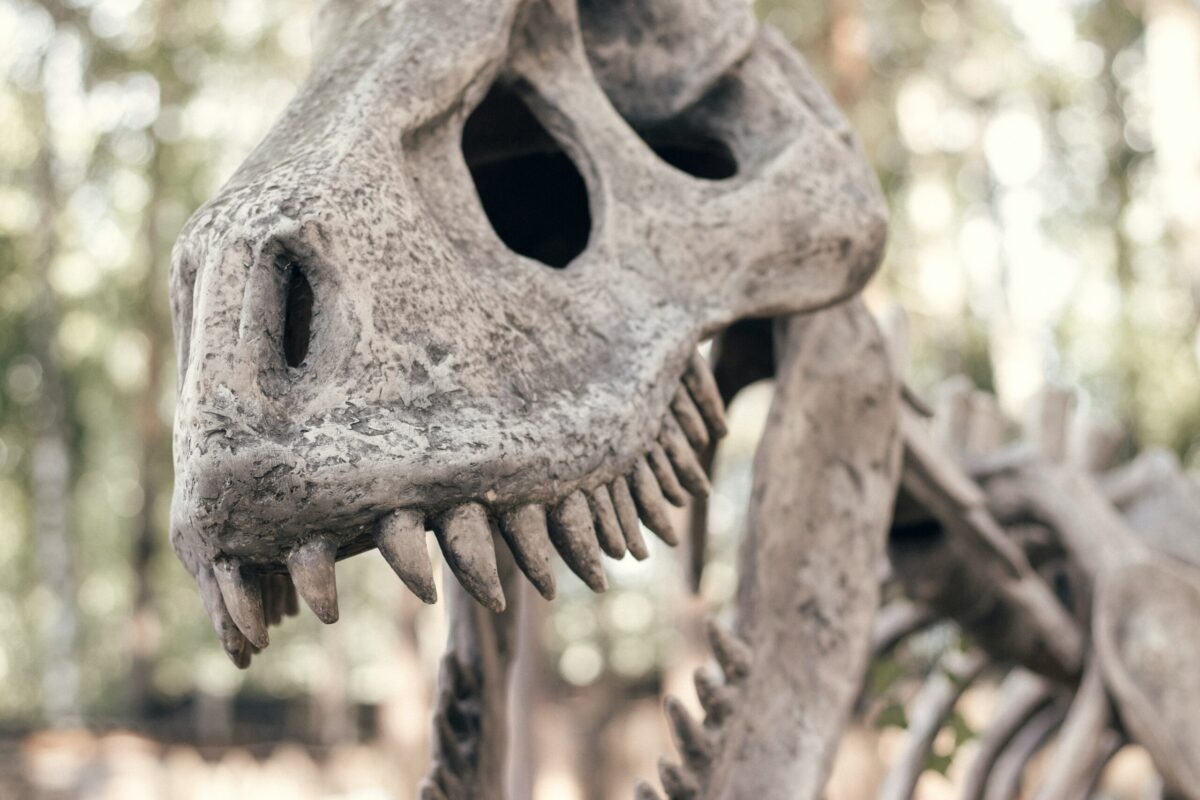
IMAGE: UNSPLASH
Common Misconceptions About Dinosaur Skeletons
Before examining the reconstruction process, it is helpful to address common misunderstandings:
- Assumption of completeness: Many visitors believe skeletons are discovered intact, when most are highly fragmented.
- Confusion between fact and interpretation: Artistic decisions are often mistaken for confirmed science.
- Unclear differences between originals and reconstructions: Replicated bones may not be clearly identified.
Accurate reconstruction aims to clarify these issues rather than contribute to confusion.
The Foundation Of Accuracy: Fossil Evidence
What Fossils Actually Provide
Fossils are the primary source of information for reconstructing dinosaur skeletons, but they rarely tell a complete story on their own. Most discoveries include partial bones, isolated fragments, or compressed remains altered by geological pressure.
Fossil evidence provides:
- Bone shape and surface texture
- Joint structure and articulation clues
- Muscle attachment points
These elements establish the framework for reconstruction but require further scientific interpretation.
Limits Of The Fossil Record
Because fossilization is rare, paleontologists must work with incomplete data. Accuracy depends on how responsibly these gaps are filled using comparative methods rather than assumption.
Comparative Anatomy And Modern Analogs
Learning From Living Species
To reconstruct missing or damaged bones, scientists rely on comparative anatomy. Dinosaurs are compared to modern animals with shared evolutionary traits, such as birds and reptiles.
Comparative analysis helps determine:
- Bone proportions
- Joint mobility
- Likely posture and stance
This method allows researchers to infer structure without inventing details unsupported by evidence.
Avoiding Overinterpretation
Accurate reconstructions avoid exaggeration. If evidence is limited, conservative estimates are preferred over dramatic interpretations that could mislead viewers.
Digital Technology In Skeleton Reconstruction
3D Scanning And Modeling
Modern reconstruction increasingly relies on digital tools. Fossils are scanned in high resolution to create precise three-dimensional models. These models allow scientists to test alignment, articulation, and posture before physical assembly begins.
Digital tools help ensure:
- Correct joint positioning
- Balanced weight distribution
- Anatomical consistency
Testing Accuracy Before Display
Digital modeling allows researchers to simulate movement and stress, reducing errors that could result in unrealistic poses or structural instability.
Reconstructing Missing Bones Responsibly
Scientific Reconstruction Techniques
When original bones are missing, reconstructions are based on verified specimens from related species. Every reconstructed element is informed by peer-reviewed research and existing fossil data.
Responsible reconstruction includes:
- Clearly documented reference sources
- Conservative shape estimates
- Avoidance of speculative ornamentation
Transparency In Museums
Accurate dinosaur skeletons include clear labeling that distinguishes original fossils from reconstructed elements. Transparency builds trust and supports scientific literacy among visitors.
Mounting And Pose Accuracy
Why Pose Matters
The way a dinosaur skeleton is posed strongly influences how visitors interpret behavior and biology. An aggressive stance suggests predation, while a neutral pose emphasizes anatomy and structure.
Scientific considerations for pose include:
- Center of gravity
- Joint range of motion
- Musculoskeletal constraints
An accurate pose reflects biological possibility rather than theatrical appeal.
Structural Engineering And Science
Internal support structures must hold the skeleton securely without distorting bone placement. Engineering decisions must support accuracy rather than override it.
Display Accuracy vs Educational Clarity
| Aspect | Scientific Accuracy | Visitor Understanding |
| Bone placement | Precise | Clearly explained |
| Missing elements | Conservatively reconstructed | Transparently labeled |
| Posing | Evidence-based | Visually readable |
| Interpretation | Cautious | Accessible language |
Effective dinosaur skeletons balance precision with clarity so visitors learn without being overwhelmed.
Role Of Accurate Dinosaur Skeletons In Education
Supporting Scientific Literacy
Accurate dinosaur skeletons help audiences understand how science works. They demonstrate that knowledge is built from evidence, comparison, and revision rather than guesswork.
Educational outcomes include:
- Better understanding of evolution
- Awareness of scientific uncertainty
- Respect for evidence-based conclusions
Inspiring Critical Thinking
When museums explain reconstruction choices, visitors are encouraged to think critically about how knowledge is formed rather than accepting displays as unquestionable fact.
Ethical Responsibility In Reconstruction
Accuracy Over Spectacle
While visually impressive skeletons attract attention, accuracy must always come first. Misrepresenting anatomy for dramatic effect undermines trust and educational value.
Long-Term Scientific Impact
Once displayed, a reconstruction may influence textbooks, media, and public understanding for decades. Accuracy ensures that information shared today remains reliable tomorrow.
Practical Considerations For Institutions
Institutions working with dinosaur skeletons should prioritize:
- Evidence-based reconstruction methods
- Clear documentation and labeling
- Regular review as new research emerges
- Collaboration between scientists and exhibit designers
These practices ensure skeletons remain accurate, relevant, and educational over time.
Conclusion
Accurate dinosaur skeletons are the result of careful scientific investigation, not artistic imagination. From fossil evidence and comparative anatomy to digital modeling and transparent interpretation, every step of reconstruction contributes to how prehistoric life is understood by the public.
As museums and educational institutions continue to serve as trusted sources of scientific knowledge, the accuracy of dinosaur skeletons remains essential. When reconstructed responsibly, these displays do more than showcase ancient bones. They teach audiences how science works, inspire curiosity, and foster a deeper appreciation for the evidence-based study of Earth’s distant past.
COMMENTS