


Bringing a dog home for the first time is one of the most exciting things you can do as a pet owner. But excitement aside, the days before your new dog arrives are just as important as the day itself. A well-prepared home means fewer hazards, fewer accidents, and a much smoother transition for both you and your dog.
Whether you are adopting a puppy or rehoming an older dog, the principles are the same: your house needs to be safe, clean, and set up in a way that supports your dog’s needs from day one. This guide walks you through everything you need to do to get your home ready – so that when your dog walks through the door, you can focus on the welcome rather than the chaos.
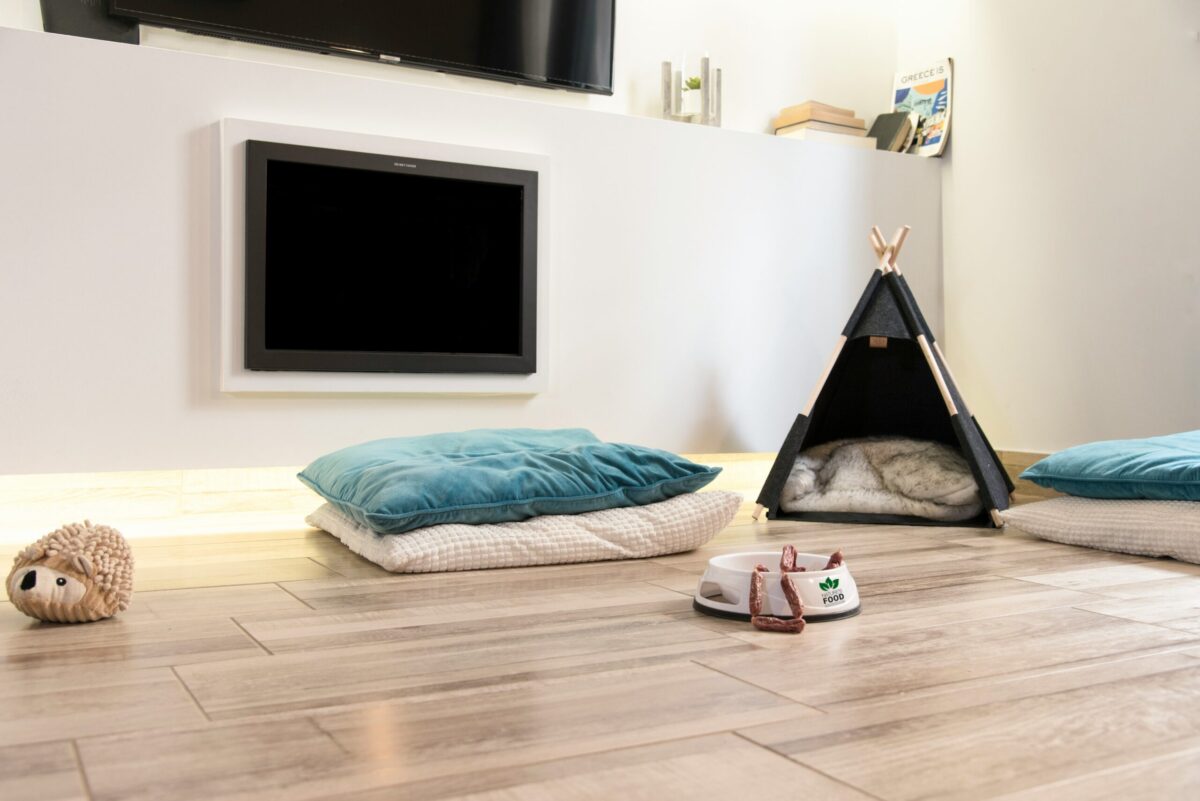
IMAGE: UNSPLASH
1. Puppy-Proof Every Room
The first thing to understand about a new puppy is that they experience the world at floor level – and they explore everything with their mouths. What looks completely harmless from your perspective can be dangerous, or even fatal, for a young dog. Before your puppy arrives, it is worth walking through every room in your home and looking at it from their point of view.
Here are the key hazards to address in each area of the house:
- Electrical cables and cords – puppies love to chew, and exposed wires are one of the most common causes of injury in young dogs. Secure cables behind furniture, use cable tidies, or block access to areas where wires cannot be hidden.
- Toxic houseplants – many common indoor plants are poisonous to dogs, including lilies, pothos, peace lilies, and aloe vera. Move these out of reach or remove them from the home entirely.
- Small objects – coins, hair ties, children’s toys, and anything small enough to be swallowed should be kept off the floor and out of reach.
- Unsecured cabinets – cleaning products, medications, and food items stored in low cabinets should be secured with childproof locks.
- Restricted areas – use baby gates to block off stairs, utility rooms, or any rooms you do not want your puppy to access unsupervised.
Puppy-proofing is not a one-time job. As your puppy grows, becomes more agile, and starts exploring new areas, you will need to reassess and adjust. Treat it as an ongoing process rather than a single task.
2. Prepare For Potty Accidents – Because They Will Happen
Here is something every new puppy owner needs to hear before their dog arrives: your puppy will pee everywhere. On the carpet, on the kitchen floor, on your favourite rug – accidents are an unavoidable part of the early weeks, and the best thing you can do is prepare for them rather than be caught off guard.
Puppies have very limited bladder control in the first few months of life. They typically need to urinate every one to two hours, and they often have little warning before it happens. This is not a behaviour problem – it is simply a physical reality of their age. With consistency, patience, and the right setup, most puppies become reliably house-trained within a few months.
Setting Up A Designated Toilet Area
One of the most effective ways to manage potty training is to give your puppy a clear, consistent place to go. Puppy pads are the go-to solution for this – they define a specific spot, absorb urine effectively, and help your puppy learn where they are supposed to go.
However, not all puppy pads are created equal. Disposable pads need constant replacing, are expensive over time, and generate a significant amount of waste. Reusable puppy pads – like those from Potty Buddy – offer a far more practical and sustainable alternative. Potty Buddy pads are made with ultra-absorbent, multi-layer materials that lock in moisture and neutralize odors, making them more effective than standard disposables. They can be washed and reused hundreds of times, saving you money in the long run and keeping thousands of single-use pads out of landfill.
Place your puppy pad in a consistent spot – ideally near a door to the outside, so the transition to outdoor toileting later is a natural progression. Take your puppy to their pad regularly throughout the day: first thing in the morning, after every meal, after naps, and before bed. When they use it correctly, reward them with praise and a treat immediately.
A prepared potty setup before your puppy arrives is not just about cleanliness – it is one of the most important things you can do to make house training faster and less stressful for everyone.
3. Stock Up On The Right Cleaning Supplies
Even with the best potty training setup in place, accidents will happen away from the pad – especially in the early weeks. Having the right cleaning supplies ready before your dog arrives is essential, because the wrong products can actually make the problem worse.
Standard household cleaners are not effective on pet urine. They may remove the visible stain, but they do not break down the organic compounds responsible for the smell. If any trace of odor remains, your puppy’s nose – which is far more sensitive than yours – will detect it, and they are likely to return to the same spot to go again. This is one of the most common reasons potty training stalls.
What to have ready:
- Enzymatic cleaner – this is the most important product to have in your home before your puppy arrives. Enzymatic cleaners contain biological enzymes that break down the proteins in urine, feces, and vomit at a molecular level, eliminating both the stain and the odor completely. Products like Nature’s Miracle or Rocco & Roxie are widely trusted by pet owners and vets alike.
- Odor neutralizing spray – useful for a quick refresh between deeper cleans, particularly on soft furnishings or in your dog’s sleeping area.
- Paper towels and microfiber cloths – keep a good stock on hand for blotting up accidents quickly. Always blot rather than rub, as rubbing spreads the stain further into carpet fibers.
- Rubber gloves – for handling soiled puppy pads or cleaning up solid waste.
It is also worth noting that several common household cleaners are toxic to dogs. Bleach, products containing phenols, and many multi-surface sprays can be harmful if your puppy walks through a recently cleaned area and then licks their paws. Always check that any product you use around your dog is pet-safe, and allow surfaces to dry fully before letting your puppy back into the area.
4. Secure Your Garden And Outdoor Space
Your garden or outdoor space can be just as full of hazards as the inside of your home – and for a curious puppy, it can be even more tempting to explore. Before your dog arrives, spend time outside looking at the space through your puppy’s eyes.
Fencing And Boundaries
The most important thing to check is whether your garden is fully secure. Walk the perimeter of your fence and look for gaps, loose panels, or areas where a small puppy could squeeze through or under. Even a seemingly small gap can be an escape route for a determined dog. If you have a gate, make sure it closes securely and cannot be nudged open.
Plants And Garden Chemicals
Many common garden plants are toxic to dogs, including daffodils, foxglove, rhubarb leaves, and yew. Check what is growing in your garden and remove or fence off anything that could be harmful. Equally important are garden chemicals – weed killers, fertilizers, and slug pellets in particular can be extremely dangerous if ingested. Store these securely and avoid using them in areas your dog has access to.
Setting Up An Outdoor Toilet Area
If you plan to transition your puppy to going outside over time, it helps to designate a specific area of the garden as their toilet spot from the start. Consistently bringing them to the same area after meals and naps helps them associate that spot with going to the toilet. Gravel or bark chip areas tend to work well as they are easy to clean and signal a different texture underfoot.
Sheds And Garages
Keep sheds and garages closed or blocked off. These spaces often contain power tools, sharp objects, antifreeze – which is highly toxic to dogs – and other hazards that are not appropriate for a curious puppy to access unsupervised.
5. Set Up Your Dog’S Essential Zones
Dogs – and puppies especially – thrive on routine and consistency. One of the best things you can do before your dog arrives is to decide where everything will live and set it up in advance. Having clear, dedicated zones for sleeping, eating, and play helps your dog understand their environment and settle in faster.
The Sleeping Area
Whether you choose a crate or an open dog bed, your puppy’s sleeping area should be set up and ready before they arrive. Place it in a quiet corner away from heavy foot traffic, but close enough to the main living area that your puppy does not feel isolated. If you are crate training – which many vets and trainers recommend – introduce the crate positively from the start with treats and encouragement, never as a punishment.
Line the sleeping area with a soft blanket. If possible, ask the breeder or rescue for a piece of bedding that smells of your puppy’s mother or littermates – this familiar scent can be enormously comforting in the first few nights.
The Feeding Station
Choose a consistent spot for your dog’s food and water bowls and keep them there. Stainless steel or ceramic bowls are easiest to keep clean. Make sure fresh water is always available, and keep the feeding area easy to mop – spills and splashes around the bowl are a daily reality with most dogs.
The Play And Storage Zone
Designate a spot for your dog’s toys, and resist the temptation to scatter them all around the house. Keeping toys in one place – a basket or box works well – teaches your dog where to find them and keeps your home more organized. Store leads, harnesses, grooming tools, and puppy pads nearby so everything you need for your dog’s daily routine is in one accessible place.
Having these zones established before your dog arrives means you can focus on helping them settle in – rather than figuring out the logistics on the fly.
Frequently Asked Questions
How Do I Stop My Puppy From Peeing Everywhere In The House?
The most effective approach is to combine a consistent routine with a designated toilet area. Take your puppy to their puppy pad or outside spot first thing in the morning, after every meal, after naps, and before bed. Reward them immediately when they go in the right place. Use an enzymatic cleaner on any accidents to fully eliminate the odor and discourage repeat visits to the same spot.
What Should I Put On The Floor For A New Puppy?
A reusable puppy pad placed in a consistent, easy-to-reach spot is the most practical option for a new puppy. Reusable pads – like those from Potty Buddy – are more absorbent than disposables, better at controlling odor, and far more cost-effective over time. Place the pad near a door to the outside to make the eventual transition to outdoor toileting easier.
How Long Does It Take For A Puppy To Stop Having Accidents Indoors?
Most puppies develop reliable bladder control and become consistently house-trained between four and six months of age, though some may take up to a year. The speed of progress depends largely on consistency – the more regular your routine and the more promptly you reward correct behavior, the faster your puppy will learn.
What Cleaning Products Are Safe To Use Around Dogs?
Always use pet-safe, enzymatic cleaners for accidents rather than standard household products. Avoid bleach, ammonia-based cleaners, and products containing phenols, as these can be harmful to dogs. Allow any cleaned surfaces to dry fully before allowing your puppy back into the area. When in doubt, check the product label for a pet-safe certification.
Should I Let My Puppy Roam Freely In The House?
Not immediately. In the early weeks, it is better to limit your puppy’s access to one or two rooms and gradually expand their freedom as they become more reliably house-trained and better at following basic rules. Use baby gates to manage access and supervise closely whenever your puppy is in a new area. Too much freedom too soon is one of the most common reasons potty training takes longer than it should.
How Do I Introduce A Dog To A New Home?
Keep the first arrival calm and low-key. Let your dog explore at their own pace without too much fuss or noise. Show them their sleeping area, feeding station, and toilet spot early on. If you have other pets, introduce them gradually and in a controlled way. Avoid inviting lots of people over in the first few days – your dog needs time to adjust to their new environment before meeting a crowd.
Conclusion
Preparing your home before your dog arrives is one of the kindest and most practical things you can do as a new pet owner. A safe, organized, and well-thought-out environment means less stress for your dog, fewer accidents, and a much more enjoyable first few weeks for everyone in the household.
From puppy-proofing every room and securing the garden to stocking up on the right cleaning supplies and setting up clear daily zones, each step you take in advance pays dividends once your dog is home. And when it comes to the inevitable potty training stage – because every puppy goes through it – having the right tools makes all the difference. Potty Buddy reusable potty pads are designed to make that stage easier, cleaner, and more sustainable, so you can spend less time cleaning up and more time enjoying your new companion.
COMMENTS