


For most of its short commercial history, battery energy storage has been treated as an add-on, a nifty complement to solar and wind projects, a hedge against volatility, and a technology worth watching. That framing is changing, and quickly.
Brooks Sherman, a strategy and business development professional focused on the clean energy transition, offers that the shift has less to do with any single technological breakthrough than with a fundamental rethinking of what batteries actually do.
“When a system can keep the lights on during a heat wave, help you avoid a massive transmission upgrade, or keep a hospital microgrid running through a hurricane,” Sherman says, “it stops being an add-on. At that point, it’s doing the work of infrastructure.”
Getting that reclassification right in policy, finance, and how communities plan for the future is, in his view, one of the more consequential decisions the energy sector faces right now.
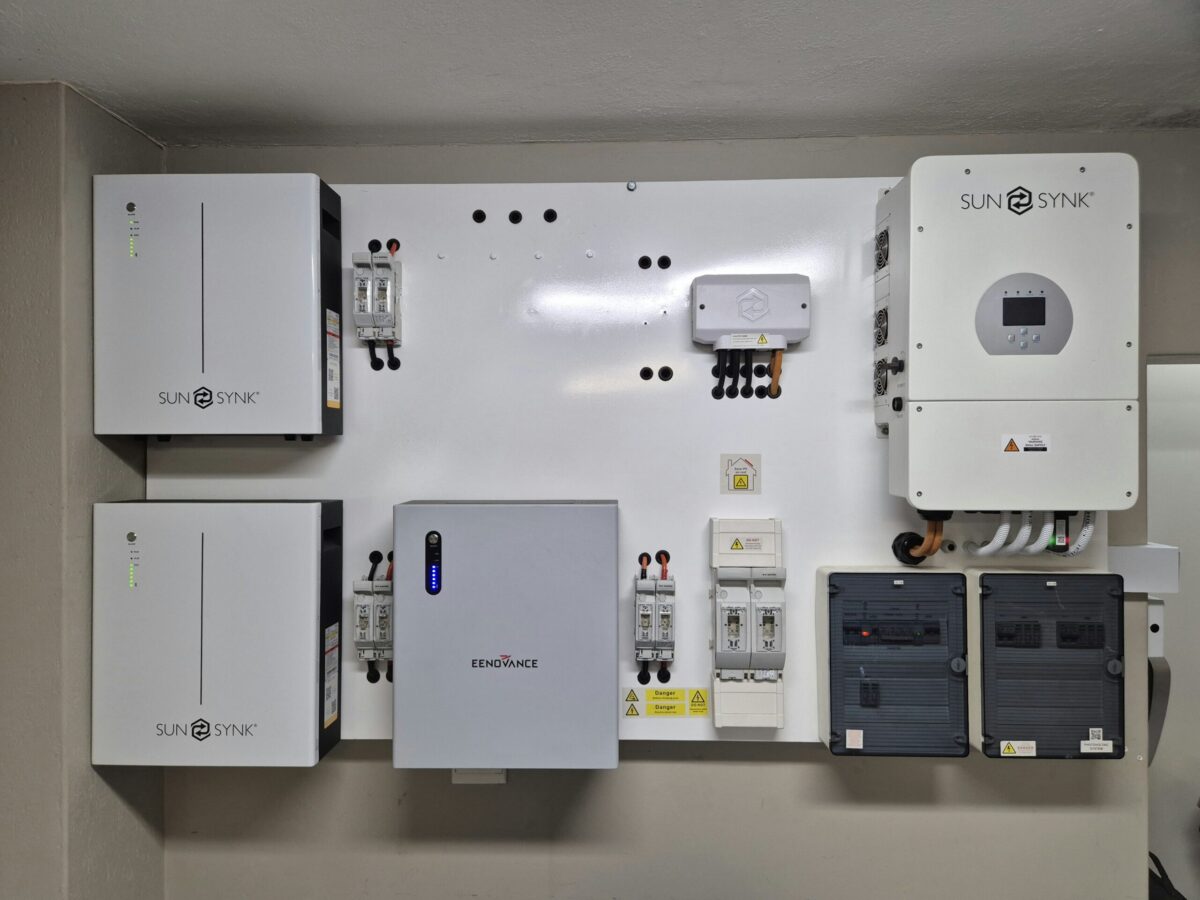
IMAGE: UNSPLASH
From Add-On To Backbone
The numbers tell part of the story. According to the U.S. Energy Information Administration, more than 15 gigawatts of battery storage were added to the U.S. grid in 2025 alone, and the pace shows no sign of slowing. Industry forecasts project that the U.S. could install upward of 90 GW of additional storage capacity between 2025 and 2030, driven by load growth, renewable penetration, and grid reliability demands.
Global energy storage capacity nearly doubled in 2024, a milestone that major institutional investors such as Brookfield now cite as evidence that batteries have crossed the threshold into essential infrastructure.
What changed isn’t just volume but function. Batteries are no longer deployed primarily to smooth out the intermittency of a single solar farm. They’re being sited at substations to relieve transmission congestion, integrated into community microgrids to provide backup power, and dispatched into ancillary service markets to stabilize frequency in real time.
During a freezing cold snap in Texas in January 2024, battery energy storage systems contributed to an estimated $750 million in market savings while providing the ancillary services that kept the grid operational.
Sherman draws on his work as an MBA consultant with Encore Renewable Energy, where he assessed solar and energy storage operations, as well as his capstone research on next-generation battery technologies, to make the case that this isn’t hype. “The use cases at this point are real and pretty well documented,” he says. “What we’re waiting on is for policy and financing to catch up to what these systems can already do.”
The Cost Curve Has Already Moved
Globally, the fully installed cost of battery storage projects fell by 93% between 2010 and 2024, dropping from roughly $2,571 per kilowatt-hour to $192 per kilowatt-hour, according to the International Renewable Energy Agency. In 2024 alone, costs for a two-hour system fell 38% compared to the prior year.
Lazard’s 2025 levelized cost analysis found that cost declines for utility-scale standalone storage were sharp enough to fully offset the pandemic-era cost increases of 2021 through 2024, effectively resetting prices to 2020 levels.
That trajectory matters for the infrastructure argument. Roads, bridges, and water systems aren’t typically reassessed every few years to see if they’re still economically viable. They’re built, maintained, and planned around. Sherman’s view is that storage deserves similar treatment.
To achieve net-zero targets, an estimated $193 billion must be invested in energy storage each year between now and 2030, according to BloombergNEF. That’s a figure that implies infrastructure-scale commitment, not project-by-project decision-making.
“At this point, the cost conversation has shifted,” Sherman notes. “The question isn’t whether storage pencils out. In a lot of markets, storage already makes economic sense. The real question now is whether we’re planning for it at the scale and on the timelines that the grid is going to demand.”
What Regulatory Frameworks Are And Aren’t Doing
Policy has been moving, if unevenly. Approximately 17 states have adopted some form of energy storage policy, spanning procurement targets, financial incentives, regulatory adaptation, and consumer protection.
New York has doubled its 2030 storage goal to 6 GW. Illinois enacted legislation in January 2026 directing utilities to install 3 GW of utility-scale storage by 2030. California, which has gone three years without issuing a grid stress alert thanks to its large-scale storage buildout, is now being studied as a model for other states.
But Sherman is candid about the gaps. Permitting remains slow and inconsistent. The 2026 edition of NFPA 855 introduced significant updates to the codes governing utility-scale battery systems.
Safety standards, however, while improving, still vary considerably by jurisdiction. The regulatory classification of storage itself can still be murky, with systems sometimes treated as generation, sometimes as transmission assets, and sometimes as neither, depending on the market. “You can’t plan or invest efficiently in a resource if its category shifts depending on who’s regulating it,” he says.
The non-wires alternative framework offers one promising path forward. Utilities are beginning to deploy battery systems at substations and other strategic grid locations to address localized reliability constraints and defer infrastructure upgrades, a shift that, if codified in planning processes, would treat storage the way regulators treat a new substation or transmission line.
Sherman believes that’s the ideal direction. “If a battery enables you to avoid a $200 million transmission upgrade, it should be evaluated and financed on the same terms,” he says. “Right now, it often isn’t.”
Community Scale Is Where It Gets Real
For Sherman, the infrastructure argument isn’t just about utility balance sheets and regulatory dockets. It’s about what reliable power means at the neighborhood level. His interest in sustainable entrepreneurship and community development shapes how he thinks about storage deployment: not as a commodity to be traded but as a service that should reach the people who need it most.
Community microgrids, which are localized systems combining renewable generation with battery storage that can operate independently during grid outages, offer a concrete example. When Hurricane Maria devastated Puerto Rico in 2017, creating what became the second-longest blackout in world history, the communities that maintained power were those with local microgrid systems. The lesson wasn’t lost on planners: resilience can’t be delivered from the top down if the top-down system is what’s failing.
Sherman points out that the communities most exposed to grid failure, usually those in areas with aging infrastructure, in disaster-prone regions, or in lower-income neighborhoods served by utilities with thin capital budgets, are also the least likely to benefit from storage investments that flow primarily to high-revenue grid markets.
Getting the infrastructure framing right, he states, means building it into planning from the start by identifying which communities need resilience assets, and designing policy and finance tools that put those assets within reach.
States can accelerate this by creating grant and technical assistance programs that incentivize microgrid development in environmental justice and socially vulnerable communities, a policy lever that a growing number of advocates are pushing hard.
Next-Generation Technologies And What They Change
Sherman’s MBA capstone analyzed the competitive landscape for next-generation battery chemistries, with sodium-ion, iron-air, and flow batteries among them, and he’s careful not to overstate where those technologies stand today. Lithium-ion, particularly in lithium iron phosphate chemistry, now accounts for an estimated 85% of utility-scale deployments, up from 48% in 2021, and it’s still getting cheaper and more capable.
But the longer-duration storage challenge on how to store energy not for two to four hours but for twelve, twenty-four, or even one hundred, is where next-generation chemistries become relevant to the infrastructure conversation.
A U.S. Department of Energy report issued in July 2025 warned that substantial load growth combined with the retirement of firm power capacity could increase the risk of power outages by 100 times by 2030. Long-duration storage is one of the few tools that can address that risk at scale, but it needs the same kind of regulatory and financial infrastructure that short-duration storage is only beginning to receive.
“The technologies are moving faster than the frameworks,” Sherman says. “That’s not unusual in energy, but the risk is that we lock in rules built around today’s four-hour batteries and then struggle to integrate 100-hour systems a few years down the line. Treating storage as infrastructure now gives us more room to adapt as those longer-duration technologies mature.”
The Investment Case, Plainly Stated
If the grid is infrastructure, and if storage is now a core component of grid reliability, then the investment case follows from first principles. Since 2018, energy storage deployment in the U.S. has grown 25-fold, and the industry has committed to supplying 100 percent of U.S. energy storage projects with American-made batteries by 2030.
That’s a $100 billion investment expected to support 350,000 jobs. BloombergNEF projects that the U.S. will add 204 GW of battery storage over the next decade, a figure that is 25 percent higher than estimates made immediately after recent federal clean energy policy changes.
For Sherman, these numbers are a signal worth taking seriously, not as hype, but as evidence that markets are already pricing storage as infrastructure even when policy hasn’t quite caught up.
His perspective, informed by his work with tech companies and his consulting with Encore Renewable Energy, is grounded in the practical: which frameworks attract durable capital, which deployment models reach communities that need them, and which regulatory structures allow utilities and developers to plan at the time horizons that infrastructure actually requires.
“The technology is ready,” he says. “The economics are increasingly compelling. What we’re working through now is whether we have the institutional imagination to treat storage the way we treat a bridge or a water main — not as another product to buy and sell, but as something we build and maintain together because the alternative is worse.”

COMMENTS