


A framer clips into an anchor point on a fifth-floor deck, glances at a small unit clipped to his belt, and gets back to work. He won’t think about it again – but the sensor will.
It’s reading his gait, his posture, and the angle of his torso dozens of times a second, waiting for the specific signature that says something has gone wrong before he knows it himself. A hundred feet away, a camera mounted on a light tower watches the same crew for missing guardrails and unclipped harnesses.
None of this looks like the safety gear the industry grew up with. No new hard hats. No thicker lanyards. The change is in the data layer sitting on top of the existing PPE, and it’s already reshaping how falls get prevented, documented, and litigated.
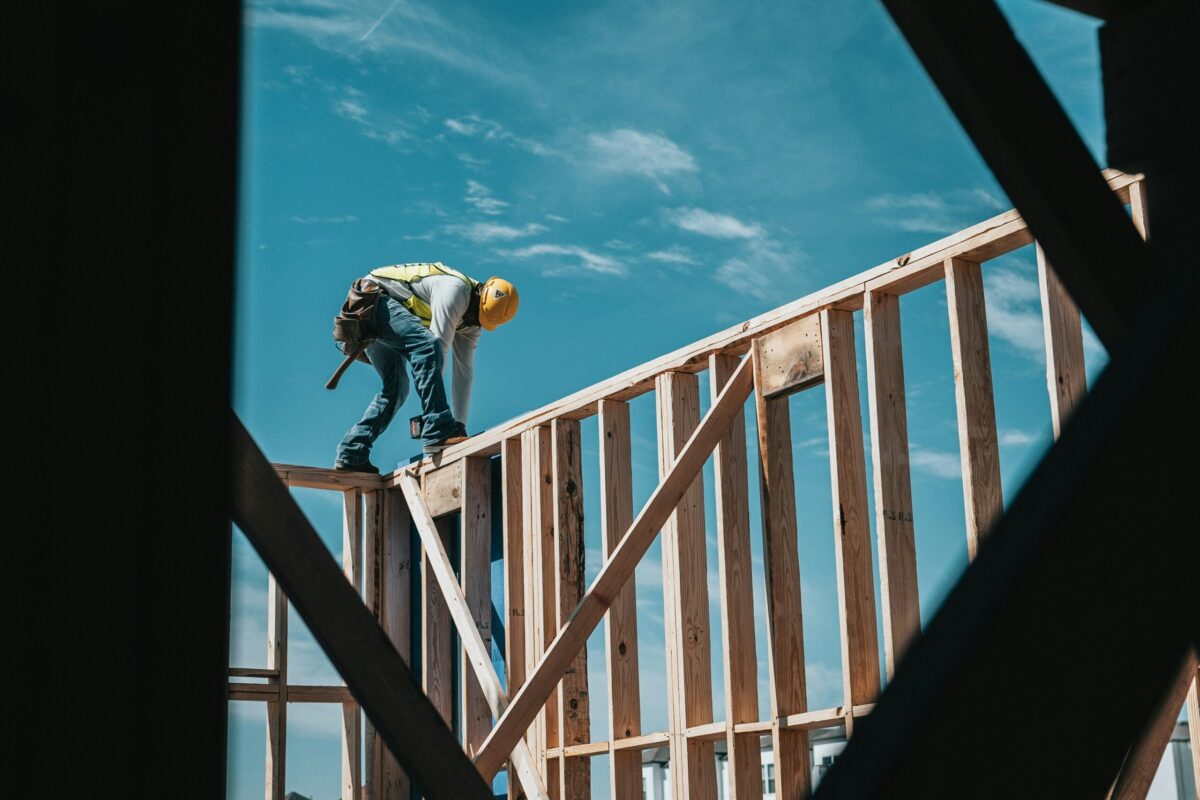
IMAGE: UNSPLASH
The Pre-Impact Moment On A Scaffold
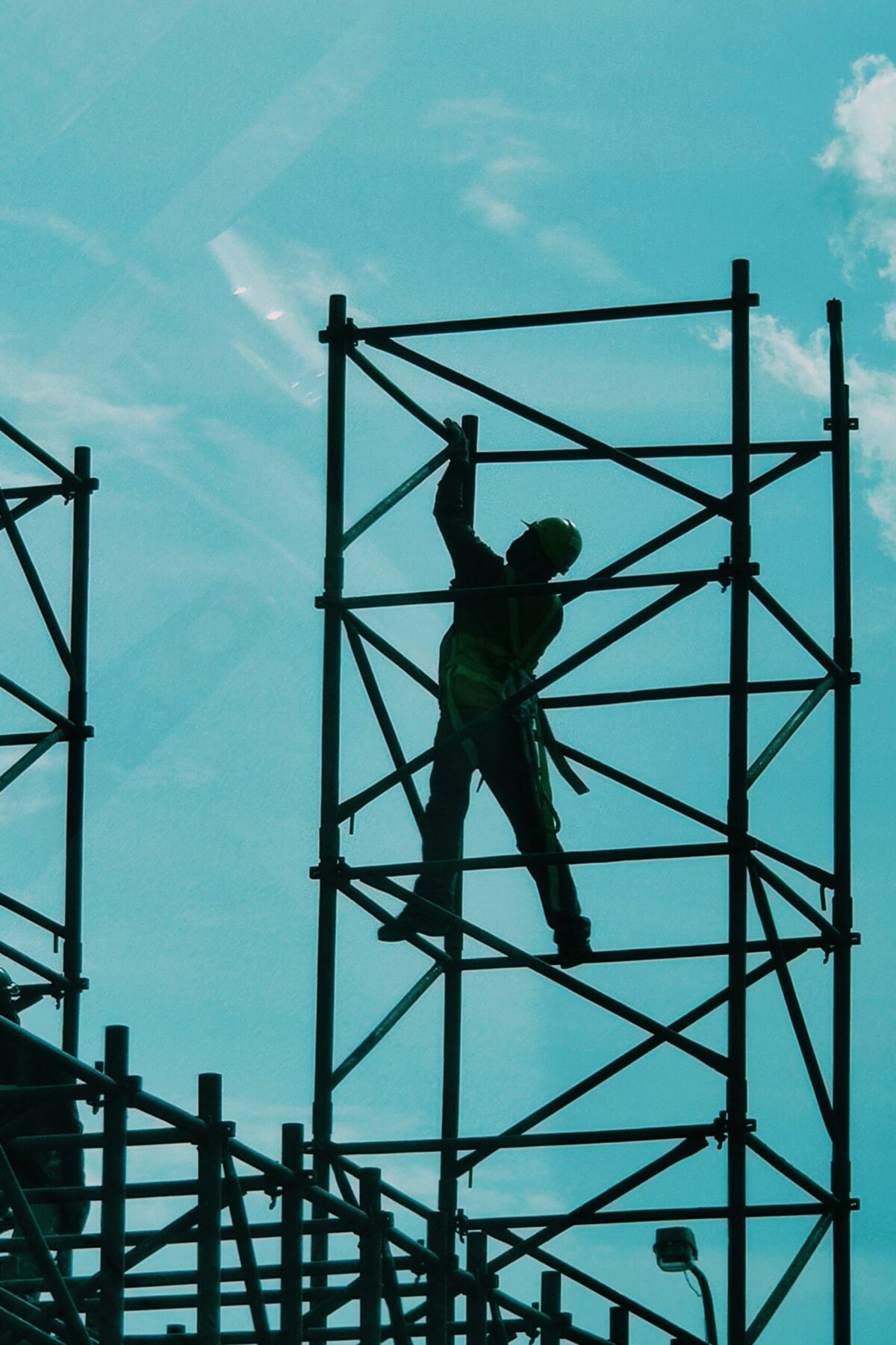
Start with the scenario that gets the most research attention: a worker loses balance on a scaffold plank. The stumble-to-floor window can be under a second of usable time. That’s where wearable inertial measurement units earn their keep.
A recent machine learning framework using a single waist-mounted IMU reported average lead times of 402 ms for same-level falls and 640 ms for falls from height, well past the 130 ms an airbag vest needs to inflate. That’s the whole engineering argument for pre-impact detection in one sentence. If the algorithm can separate a real fall from a jump, a squat, or a hard step in that fraction of a second, a wearable can fire before the hip or head reaches the deck.
For a general contractor, the practical payoff isn’t the airbag itself. It’s that the same sensor stream, logged and timestamped, becomes a permanent record of what happened in the seconds around an incident.
The Unclipped Worker A Camera Sees First
The second scenario is the one supervisors dread: a worker steps past a guardrail gap or moves along a leading edge without tying off. A foreman can’t be everywhere. A camera can.
Vision systems trained on construction footage now flag missing guardrails, unclipped harnesses, and unsafe ladder positioning in real time, using ordinary PTZ or 360-degree cameras already mounted for security. Enforcement shifts from post-incident paperwork to a nudge that lands before anyone falls.
The friction, in practice, is trust. Workers assume any camera pointed at them is a productivity tool in disguise. Sites that get adoption right tend to be explicit about what the model is watching for and what it isn’t.
The Legal Layer Runs On Millisecond Data
Fall protection has been a persistent problem for the industry, and it sits at the top of the OSHA enforcement list year after year. When a case goes to litigation, the questions are narrow and factual. Was a system in place? Was it in use? Did it fail, or was it bypassed?
Sensor logs and camera timestamps answer those questions in a way witness statements can’t. That cuts both ways. The same data that helps an injured worker’s scaffolding accident attorneys reconstruct the seconds before impact can also protect a contractor who did everything right. Either way, the record is no longer built from memory.
Integration Is The Next Ceiling
The near-term ceiling on this tech isn’t accuracy. It’s integration. A site with three vendors, two apps, and a dashboard nobody checks is not safer than a site with a clipboard. The value shows up when the wearable, the camera feed, and the daily hazard log talk to each other and reach the person who can stop work.
For crews already using digital time-tracking and BIM tools, that integration isn’t a stretch. It’s the same data plumbing, pointed at a problem the industry has been losing on for a long time.
COMMENTS