


The company behind Mira casts it as the next step in wearable computing: not another app, but a companion that sits beside you and remembers. That positioning changes the question from “what can an intelligent assistant do right now” to “what happens when a personal memory keeps a continuous record of how you live”.
The real significance is not the hardware alone. What actually determines whether Mira matters is its memory model. Mira proposes to treat memory as the primary interface: every conversation, document, and preference is indexed and brought forward as context for your next interaction.
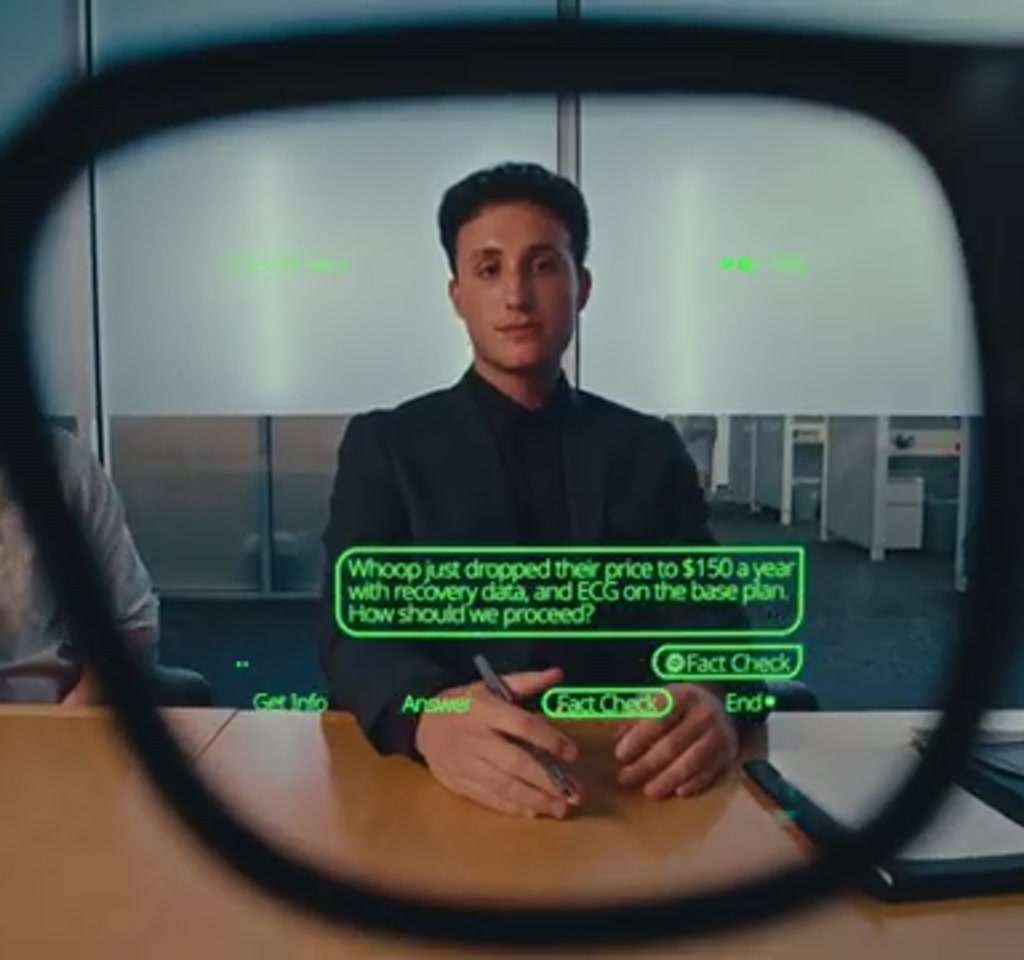
Most people assume smart glasses are about heads-up notifications. Mira reframes the category as persistent, personal context plus active agency. It translates speech, executes multi-step tasks, and surfaces past conversations as searchable transcripts. That makes privacy, power, and data economics the practical constraints that will decide its reach.
Read closely and two things become clear early. First, Mira bundles several measurable hardware claims: 39 grams weight, 10 plus hours of battery life on a single charge, 40 minutes to full recharge, a 60Hz display, translation across 60 languages within roughly 900 milliseconds, and a companion ring that can last up to a week per charge.
Second, the company deliberately trades off visual sensing for privacy by not including a camera and by deleting raw audio while saving only text for memory recall. Those two choices are the fault lines that will determine how Mira integrates into real workflows.
What Mira Promises
Mira is presented as an always-present wearable assistant that listens, indexes, and acts on context from your life. It aims to turn conversations into private, searchable transcripts, provide near real-time translation, carry forward document context, and perform multi-step task execution through permissioned app integrations.
The pitch is straightforward and ambitious. Mira is built to be an always-present assistant that listens, indexes, and acts. Conversations become private searchable transcripts in the app, complete with instant summaries. The device can pull context from email, Slack, Notion and other documents so it can respond without repeatedly asking for the same details.
Functionally, it aims to do four things at once: remember your past, translate speech in real time, execute tasks on your behalf, and surface contextual information in the moment. Examples in the product narrative include booking dinner, shifting meeting times, sending follow-up emails, updating shopping lists, and even issuing payment reminders.
Design And Hardware
Weight, Battery, And Display
The company positions Mira as feeling like normal glasses. The quoted weight of 39 grams is a concrete claim that places it noticeably lighter than many existing smart glasses on the market. Battery life is quoted as 10 plus hours per charge for the glasses, with a 40-minute recharge time to 100 percent. The ring accessory is said to last up to a week per charge.
Display parameters are specific: a crisp, readable resolution with a 60Hz refresh rate, tuned to be visible indoors and outdoors, and usable as real-time captions for people who are hard of hearing. Those numbers matter because display brightness and refresh demand power; the tradeoff is always between visibility and battery endurance.
Prescription Compatibility And Materials
Mira is described as fully prescription compatible using high index lenses so the frames stay thin and balanced. The company also highlights precision manufacturing to reduce excess and 100 percent recyclable packaging as part of a materials story that aims to minimize waste.
Privacy Promises And Tradeoffs
Mira’s privacy posture is explicit: the device omits a camera, raw audio is permanently deleted on capture, and only text transcripts are saved for memory. The company commits not to sell, share, or use user conversations for training. Those are strong policy choices with clear functional consequences.
Not having a camera reduces certain contextual capabilities. Visual cues like gestures, fine object detail, or a whiteboard snapshot are not captured by the device itself. That limits features that depend on visual context, such as object recognition, scene-driven reminders, or augmented overlays tied to what you are looking at.
Deleting audio but retaining text has a different set of tradeoffs. Text transcripts are lighter to store and easier to index, and they sidestep many voice fingerprint privacy issues. The tradeoff is that tone, nuance, and nonverbal vocal cues are lost. For tasks that rely on how something was said rather than what was said, only keeping text is a boundary you must accept.
Quantifying the cost of persistent text memory makes the limits tangible. Speech transcripts typically add up to kilobytes per minute, which means megabytes per day and tens to hundreds of megabytes over months of heavy everyday use. Those numbers are small compared to audio or video, but index and search costs, encryption overhead, and cross-device sync still add up. The promise of “infinite memory” is therefore a design direction rather than a literal, cost-free guarantee.
How Language And Agency Work
Mira claims translation across 60 languages, with translation appearing in roughly 900 milliseconds after speech detection. That latency is fast enough for conversational exchanges, but not instantaneous. In multi-person conversations, the product suggests real fluency only when everyone is wearing Mira, because each participant sees the translation in their own view.
When only one person has Mira, translations can appear on that person’s phone and the app can show responses in other languages. That is a useful fallback, but it is a clearly stated boundary: universal fluency requires a network effect of device adoption. The product is therefore most powerful in groups where adoption is high, or in one-on-one interactions mediated by the ring or an app connection.
Beyond translation, Mira positions itself as an active agent. It listens for commands, reasons through tasks, and executes multi-step processes like booking a restaurant or sending follow-up emails.
That capability depends on integrations with third-party services and on permissioned access to your email and calendars. In practice, the reliability of those task executions will be determined by API access, latency, and how comfortable users are granting persistent permissions.
Customization And Third-Party Agents
The transcript mentions the ability to bring an “openclaw agent” into Mira, and to upload documents like study guides or research reports so the assistant can use that material as context. The company also provides a desktop app so transcripts and memories live beyond your phone, and invites developers or power users to create custom workflows.
Customization is a classic tradeoff between flexibility and complexity. Powerful integrations let Mira act on your behalf, but they require careful permissioning and a willingness to trade some manual control for convenience.
Where This Becomes Interesting And Where It Is Conditional
Mira becomes compelling when a person actually wants persistent memory that stitches together meetings, messages, and errands. For knowledge workers who juggle recurring contexts across email, Slack, and documents, the idea of instantly searchable conversational memory is a real productivity multiplier.
But the approach is conditional on at least two measured realities. First, the product requires an adoption threshold to unlock its most powerful social features, like multi-person translation. If only a small subset of your daily contacts use Mira, the shared translation benefit evaporates and the system reverts to single device fallbacks.
Second, the always listening posture strains battery and permission economies. Continuous passive listening at high sensitivity is what enables unprompted recall and seamless task execution, but it also increases energy demand. The quoted 10-plus-hour battery life suggests a full workday is possible, but real-world endurance will vary by how often the device is actively translating, rendering display content, or executing background research.
Quotable Insight: The important shift here is that Mira treats memory as the interface, not the screen. That reframes privacy, power, and interoperability as the core product problems rather than miniaturization alone.
There are additional practical constraints that will shape adoption. Integration with enterprise tools or payment rails is necessary for trustworthy task execution, and that integration often requires weeks to months of engineering and legal negotiation. Also, the promise to never train on user conversations is a policy commitment that will need technical proof points over time, such as transparent audit logs and verifiable on-device processing.
Mira Vs Other Smart Glasses
Placed against camera-enabled glasses, Mira trades visual capability for stronger audio and text privacy. Against smartphone-based assistants, Mira trades broader sensor input for persistent contextual memory that follows your day. Those are practical tradeoffs, not value judgments: the right choice depends on what you prioritize.
Mira vs Camera-Enabled Glasses
Camera-enabled glasses capture visual context that enables object recognition, scene annotations, and image-based recall. Mira avoids that route to limit visual sensing and to simplify privacy promises. The result is fewer visual features and clearer boundaries for stored data.
Mira Vs Smartphone Assistants
Smartphone assistants operate in discrete sessions tied to an app or a wake phrase. Mira aims to provide continuous context and persistent memory that spans those sessions. The tradeoff is device adoption and battery life: continuous presence requires both hardware commitment and energy budget.
Who This Is For And Who This Is Not For
Who This Is For: Knowledge workers, multilingual teams, accessibility use cases that benefit from real-time captions, and users who value searchable conversational memory will find Mira compelling. Those who routinely need shared translation across groups will see the most value.
Who This Is Not For: People who need camera-based recognition, users unwilling to grant persistent app permissions, or anyone who prefers short-lived, session-based assistants over continuous memory may prefer other solutions. Also, those who cannot rely on a daily recharge may find the battery tradeoffs limiting.
What To Watch Next
Mira sits at an intersection of several trends: wearable displays, always available assistants, and contextual memory systems. It is a test of whether people prefer a persistent, gently proactive companion that remembers their life, or whether they will continue to confine personal intelligence to discrete sessions on phones and computers.
Two adoption levers will matter more than marketing. The first is developer and service integration, because the assistant only becomes agentive when it can securely act across the apps people already use. The second is social adoption for features that depend on shared presence, such as real-time translated conversations when everyone wears the device.
The product narrative in the transcript frames Mira as intentionally privacy-forward and lightweight. Those are strategic choices that favor certain users and use cases, while making other possibilities conditional. Expect the company to iterate on permissioning, local indexing, and enterprise connectors as the product meets real-life patterns.
For readers tracking this shift, this is not just another hardware debut. It is a question about where the locus of personal intelligence should live: inside a transient app or inside a persistent, personal memory. Mira leans into the latter, and that means its value will be revealed in long-term behaviors, not feature demos.
Looking forward, the unresolved idea is how privacy-forward design and persistent memory will be balanced at scale, and whether the tradeoffs Mira chose will become a common template for wearable intelligence.
Related reading on Bit Rebels explores the social dynamics of wearable tech and the costs of continuous sensing, which are useful context for understanding the practical choices that Mira is making.
FAQ
What Is Mira Smart Glasses?
Mira Smart Glasses are a wearable assistant designed to provide persistent conversational memory, near real-time translation across 60 languages, and task execution by indexing conversations and documents into searchable transcripts.
How Long Does Mira Battery Last?
The company quotes 10 plus hours of battery life for the glasses on a single charge, about 40 minutes to full recharge, and up to a week of charge for the companion ring under typical use scenarios described in the transcript.
Does Mira Include A Camera?
No. The company deliberately omits a camera to limit visual sensing and to simplify privacy commitments. That choice removes visual context features but narrows the scope of captured data.
What Data Does Mira Store?
Mira deletes raw audio and retains only text transcripts for memory recall. The company states it will not sell, share, or use user conversations for training, though the transcript notes this policy will require ongoing technical proof points to verify.
How Fast Is The Translation?
Translation is quoted at roughly 900 milliseconds after speech detection across 60 languages. That latency supports conversational exchanges but is not fully instantaneous, and group fluency improves with broader device adoption.
Can Mira Act On My Behalf?
Yes. Mira is described as capable of executing multi-step tasks like booking restaurants or sending follow-up emails, but that capability depends on permissioned integrations with third-party services and reliable API access.
Is Mira Right For Accessibility Use Cases?
Potentially. The display and real-time captions are positioned as useful for people who are hard of hearing, though effectiveness will depend on display visibility and the accuracy of live transcripts in noisy environments.
What Are The Main Limits To Watch?
Main limits include the lack of visual sensing, the battery tradeoffs of continuous listening, the need for enterprise and developer integrations, and the social adoption threshold required for some multi-person features.
COMMENTS