


This is not a routine handset update. The Oppo Find N6 surfaces at the point where engineering endurance meets product refinement, and the story it tells is about more than specs. What becomes clear when you look closer is that the Find N6 is both a technical milestone and a political product. It advances what a phone can be while remaining geographically restricted in the markets it serves.
The reviewer who tested the N6 reports carrying it as the only device for weeks, replacing a flagship phone and a large tablet. That anecdote, repeated in the transcript, signals the claim being made: the N6 is trying to be a two-device solution in one chassis, not merely a slab with a hinge.
The real significance here is not only the crease, the battery, or even the camera. What actually determines whether this matters for most people is availability and ecosystem compatibility. You can build the best foldable on the planet, but if most buyers cannot buy it, the technical lead stays a regional achievement rather than a global shift.
Early in the foldable era the lesson was painfully literal. In 2019 Samsung shipped the original Galaxy Fold at about $1,980 and reviewers saw internal displays fail within days. That public failure established two truths: folding hardware would require iteration, and iteration would demand time, precision, and patience.
Why The Oppo Find N6 Feels Like A Leap
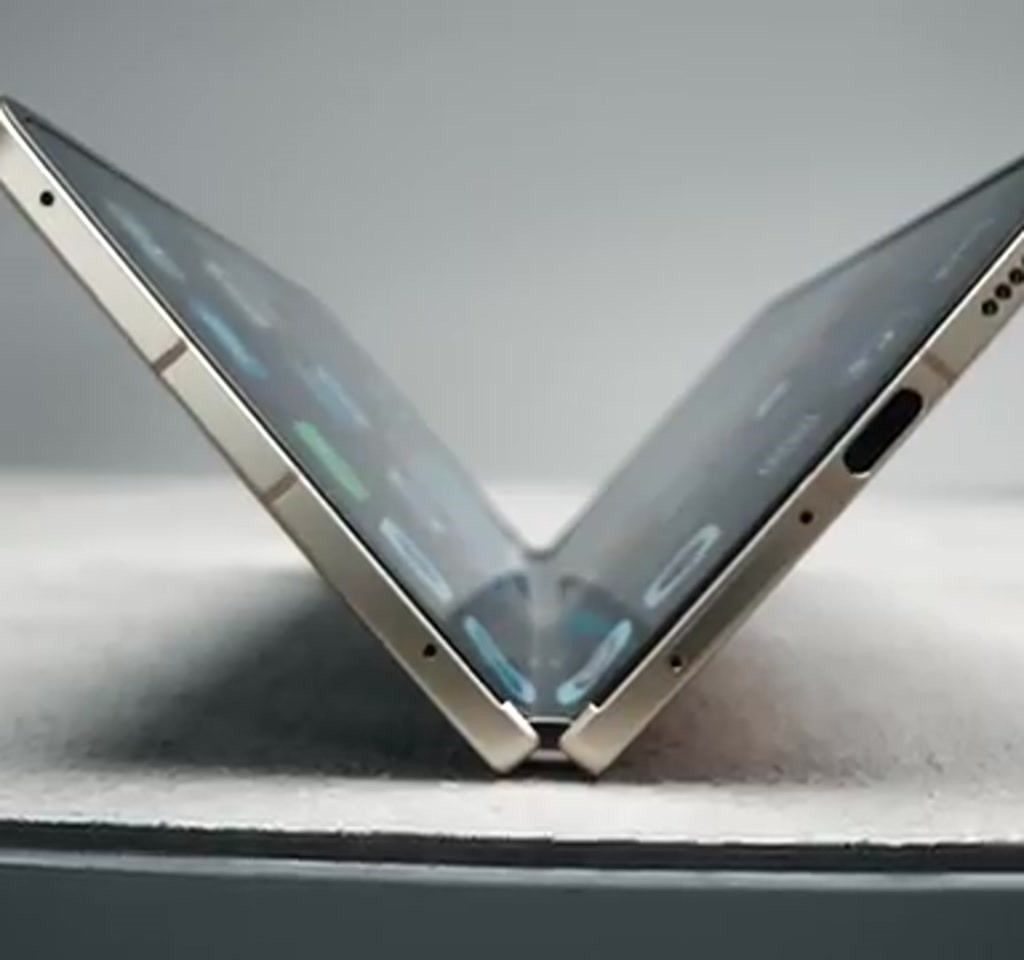
The Oppo Find N6 arrives with a handful of headline numbers that matter. Closed thickness is 8.9 millimeters, open thickness measures about 4.2 millimeters at its thinnest plane, and the device is described with comparisons so visceral you can picture them: a pencil roughly 6 to 7 millimeters thick, and the unfolded display thinner than a pencil folded in half.
What the transcript makes explicit is how Oppo reduced the visible crease. They call it the zero fill crease and attribute it to two linked engineering changes. One is a second-generation titanium hinge created with a process sold as 3D Liquid Printing that reduces hinge surface variance from 0.2 mm to about 0.05 mm. The other is auto-smoothing flex glass, roughly 50 percent thicker than conventional ultra-thin glass and engineered to act like a spring that flattens the panel when unfolded.
TUV Rheinland testing cited in the transcript claims an 82 percent reduction in long-term crease depth compared to Oppo’s previous model, and a certification to 600,000 folds. Those sorts of numbers are the sort of engineering metric that move a design from fragile prototype toward a durable consumer device.
What The Find N6 Is
The Find N6 is a high-end foldable phone that combines an ultra-thin folded profile, a near-invisible crease, and a large 6000 mAh silicon-carbon battery inside an 8.9 millimeter closed chassis. It is positioned as a potential single-device replacement for people who previously carried both a phone and a tablet.
How The Foldable Design Works
Oppo paired a refined titanium hinge with thicker flex glass to flatten the display and minimize crease visibility. The hinge manufacturing tolerances were tightened through a process described as 3D Liquid Printing, reducing surface variance enough to materially affect how the unfolded panel settles.
Zero Fill Crease Explained
Zero fill crease comes from two things working together: a more precise hinge and glass engineered to spring flat. The combined effect, if the test numbers are representative, reduces visible crease depth significantly versus earlier generations.
Durability Claims And What They Mean
Certification to 600,000 folds suggests a mechanical lifetime that exceeds casual-use expectations, but real-world longevity will still depend on dust ingress, accidental impact and software updates that preserve hardware utility over years.
Battery And Real World Endurance
Battery capacity is another measurable boundary condition where the N6 stands out. Oppo packs a 6000 mAh silicon-carbon battery into a notably thin chassis. By comparison, the Samsung Z Fold 7 is said to have a 4400 mAh pack. That is roughly a 36 percent capacity difference, and it translates into a practical claim made in the transcript: a device that more easily lasts two days of typical use, supported by 80W wired charging and 50W wireless charging.
Translation: power chemistry and thermal design become primary constraints for foldables. To fit 6000 mAh inside an ultra-thin hinge phone requires both denser cell tech and careful thermal management. Those factors are what differentiate headline specs from real-world endurance.
Benefits And Practical Advantages
The practical upside is simple: more usable screen area without carrying a separate tablet, longer between-charge endurance for heavy days and a device thin enough to pocket. For certain workflows the Find N6 aims to remove the need for two devices while sustaining acceptable battery life.
Productivity Gains
Included pen support with 4096 levels of pressure and rapid wireless charging for the stylus favors creatives and note takers who want a tablet-like canvas in a pocketable device, reducing the friction of carrying multiple gadgets.
Engineering Tradeoffs And Competing Philosophies
What really distinguishes the latest generation of foldables is how different teams chose to reach the same dimensional targets. Samsung and Oppo both achieved a closed thickness of 8.9 millimeters, but they made opposing tradeoffs to get there.
Feature Tradeoffs With Quantified Consequences
Samsung removed S Pen support and downgraded the display digitizer to shave thickness. They explicitly accepted a feature subtraction to hit their engineering envelope. Oppo did the reverse, adding pen support to both screens and accepting the associated design tradeoffs.
These are not philosophical debates without consequence. When a manufacturer removes a stylus, the device saves millimeters and weight. When another retains stylus support, they place a premium on workflow capability at the expense of other possible gains. Which tradeoff makes sense depends on the user’s priorities.
The transcript also raises a practical software tradeoff. The Files app on the N6, as presented, cannot natively connect to NAS or cloud storage in the way a laptop can. On a device positioned as a laptop replacement for some workflows, that omission is a genuine constraint and a friction point that matters at scale.
Oppo Find N6 Vs Samsung Z Fold 7
This is a comparison grounded in different priorities: Oppo emphasizes crease reduction, larger battery and pen support; Samsung has historically prioritized platform polish and certain feature sets such as S Pen integration in past models, though tradeoffs occur generation to generation.
Decision Factors In A Comparison
Key comparisons to consider are battery capacity, crease visibility, stylus support, closed thickness and ecosystem compatibility. If battery life and a minimal crease are primary, the Find N6’s 6000 mAh and zero fill crease are strong arguments. If software ecosystem and local availability matter more, the picture shifts.
The Availability Barrier And Its Consequences
Now for the civic, market-level constraint. The transcript is blunt: the Oppo Find N6 and a number of the best current foldables are not available in most Western markets. The presenter says the N6 is not available in the United States, nor in Europe, Asia, Australia, or New Zealand, which frames availability as extremely limited by geography.
That lack of distribution creates two clear tradeoffs for consumers and for the industry. First, it slows adoption in large markets that shape supply chains and accessory ecosystems. Second, it narrows competition in those markets, meaning the foldable race people in the US and Europe see is smaller and slower than the global race.
Market Growth And The Apple Effect
Industry trackers in the transcript place foldable growth at double digits last year, with forecasts ranging broadly. Apple is named as a variable that could rapidly validate and scale the category if it enters at mass production, a factor that leaves projections highly sensitive to platform-level decisions.
That prospect raises a tension: hardware can lead, but without platform validation and availability the category may remain regional. This unresolved question of who will mainstream foldables is addressed later when we consider who should buy one now.
Why The Race Still Matters Even If You Never Buy A Foldable
One of the most useful editorial calls here is this. The race matters beyond sales of the devices themselves. Hinge engineering, thinner and tougher glass, and denser battery chemistry all cross-pollinate into slabs, laptops, and tablets. Innovations developed to make a foldable durable and pocketable eventually benefit every portable screen you touch.
The presenter makes the point plainly: foldables pull the rest of the industry forward. Even if you do not plan to purchase a foldable tomorrow, the technology developed in this sprint will make ordinary phones better in measurable ways, from battery life to display toughness.
Constraints And Limitations You Should Watch
Two constraints define the current moment. Geographic availability limits who can buy and service these devices. Software and ecosystem parity creates workflow ceilings that hardware advances alone cannot fix. Both must be resolved for foldables to move from niche to mainstream.
Putting numbers beside those constraints helps. Durability claims such as 600,000 folds and battery figures like 6000 mAh versus 4400 mAh move the conversation from vague promises to measurable patterns, but they do not answer software compatibility or platform lock-in questions.
Who This Is For And Who This Is Not For
Who this is for: early adopters and power users who value large screen real estate, longer between-charge endurance and pen-based workflows; creatives and travellers who benefit from a single-device setup. The Find N6 is also for people who can access the device where it is sold and accept some software tradeoffs.
Who this is not for: users who need seamless NAS or laptop-grade file integration, people who rely on region-locked services like iMessage for daily communication, and buyers in markets where the device is not officially available or supported. If local availability, accessories and carrier support are key, consider waiting for broader distribution or a platform-backed entrant.
Forward Looking Implications
There are open questions about which business models and platforms will determine the pace of mainstream adoption. If a major western player validates the form factor, accessory ecosystems and repair infrastructure will likely accelerate, addressing many of today’s availability and service gaps.
Until then, the Find N6 reads as a technical statement that highlights how close foldables are to mainstream readiness while reminding us that distribution and software still govern who benefits first.
FAQ
What Is The Oppo Find N6?
The Find N6 is a high-end foldable phone that combines a near-invisible crease, a 6000 mAh battery, and stylus support in a closed thickness of about 8.9 millimeters, positioned as a potential single-device phone and tablet alternative.
How Does The Zero Fill Crease Work?
According to the transcript, it pairs a second-generation titanium hinge made with a 3D Liquid Printing process and thicker auto-smoothing flex glass; together they reduce hinge variance and help the panel lie flatter when unfolded.
Is The Battery Life Better Than Other Foldables?
The transcript reports a 6000 mAh battery in the Find N6 versus about 4400 mAh in the Samsung Z Fold 7, suggesting longer endurance under comparable use, supported by 80W wired and 50W wireless charging, though real-world results vary with usage and software optimization.
Can The Find N6 Replace A Laptop?
The device can replace a laptop for some workflows due to its large display and pen support, but the transcript notes software limitations such as the Files app lacking native NAS integration, which may limit laptop replacement for power users.
Where Is The Find N6 Available?
The transcript states the N6 is not available in the United States, Europe, Asia, Australia, or New Zealand, framing its availability as extremely limited; this restricts who can buy, service and integrate the device locally.
How Durable Is The Hinge And Display?
TUV Rheinland testing cited in the transcript claims certification to 600,000 folds and an 82 percent reduction in crease depth versus Oppo’s previous model, indicating improved mechanical durability, though long-term consumer experience will further validate those claims.
Does The Find N6 Include Stylus Support?
Yes. The transcript describes pen support with 4096 levels of pressure; the stylus wirelessly charges from the phone through a case and is said to deliver roughly an hour of use after about three minutes of charging.
Is It Worth Waiting For Wider Availability?
That depends on your priorities. If you need local service, carrier support and seamless platform integration, waiting for broader distribution or a platform-backed foldable may be prudent. If you can access the device now and accept software tradeoffs, it represents a strong technical offering.
Over and up.
COMMENTS