


The Tiiny AI Pocket Lab arrives with a simple, provocative claim: move advanced artificial intelligence out of the cloud and into a device you can carry. That promise matters because most modern AI workflows still assume continuous internet connectivity, ongoing billing, and remote compute. For professionals who handle sensitive documents, require low latency, or want to avoid subscription economics, local inference is not a luxury, it is a redesign of where intelligence lives.
The real significance here is not merely that a small box can execute large models. It is that the Pocket Lab makes a clear tradeoff choice between ownership and scale, and that decision changes who controls data, latency, and cost. What most people misunderstand is that running very large models locally is not a single binary capability. It is a spectrum of engineering decisions that trade raw speed for privacy, and scale for energy efficiency.
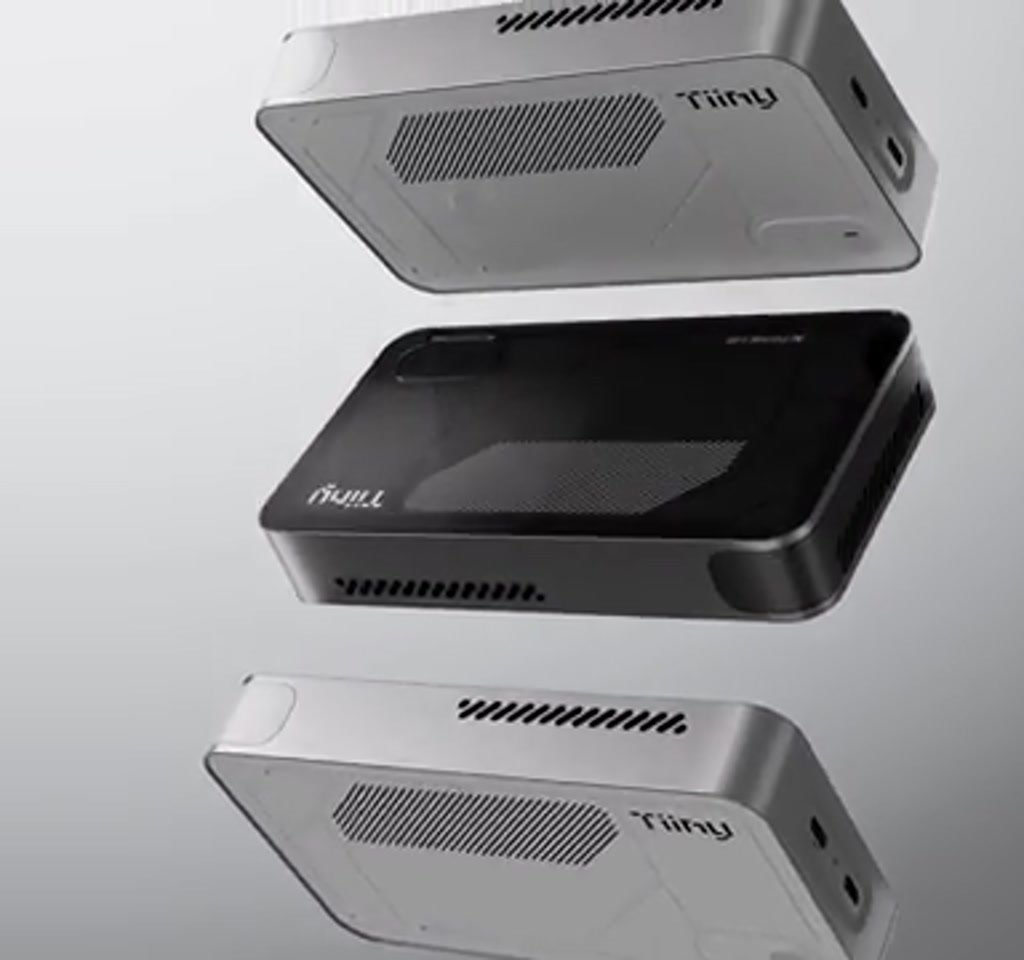
Those choices show up early: the Pocket Lab is roughly the size of a smartphone, weighs about 300 grams, and packs 80 GB of LPDDR5X memory alongside a 1 TB SSD.
Those are headline numbers because they directly shape what models can fit, how fast they respond, and what workloads are practical without the cloud. But the device also depends on algorithmic tactics, such as sparse activation and selective distribution of compute, to make those physical limits usable in real workflows.
From an editorial standpoint, the device is most interesting when judged as the start of a category rather than a solitary miracle. The point is not whether it matches a workstation in every metric. The point is that a portable, energy-conscious piece of hardware can host serious models, and that this approach forces fresh questions about latency, cost structure, and privacy boundaries.
What Tiiny AI Pocket Lab Is And What It Claims
At its core the Tiiny AI Pocket Lab is a portable personal AI computer focused on local model inference. Company material and press coverage claim the system can execute large language models with up to 120 billion parameters entirely offline, oriented toward agent orchestration, document analysis, and generative tasks rather than general-purpose desktop computing.
Key specifications reported include a 12-core ARMv9.2 processor, a custom neural processing subsystem with about 190 TOPS of theoretical AI compute, 80 GB of LPDDR5X memory, and a 1 TB SSD. The device measures roughly 142 mm by 80 mm by 25.3 mm and is quoted at around 300 grams.
How It Works: Memory, Quantization, And Sparse Activation
Local hosting of large models depends on three technical levers: memory capacity, model packing through quantization, and dynamic sparsity. These factors together define whether a given model can run, how accurate its outputs remain, and how responsive it feels for interactive tasks.
Processor And Neural Engine
The architecture centers on energy-efficient ARM cores combined with a heterogeneous neural processing system. The 12-core ARMv9.2 chip supplies general-purpose computing while the neural processor handles dense matrix math and specialized operators. This pairing favors parallel tensor operations rather than single-thread peak CPU performance.
Reporting places the neural engine at approximately 190 TOPS, which is a useful upper bound for theoretical operations per second. That capacity does not map directly to user-visible latency or tokens per second because memory bandwidth, quantization efficiency, and software scheduling mediate real throughput.
Memory And Storage Constraints
Memory is a deterministic limiter for local model hosting. The Pocket Lab’s 80 GB of LPDDR5X is a deliberate capacity play, with public materials indicating roughly 48 GB of that pool allocated for neural processing tasks. Models and activations need fast RAM to avoid catastrophic slowdowns.
Storage complements RAM by housing model files, caches, and datasets on a 1 TB SSD. Fast disk reduces model load times and makes switching models practical, but disk cannot substitute for the speed advantages of RAM during live inference.
Constraint one: models larger than what fast memory can hold require quantization, sharding, or offloading to slower storage, each bringing latency or accuracy tradeoffs. In practice, models in the tens of billions to low hundreds of billions of parameters are plausible under heavy quantization and sparse activation, while raw unquantized models at that scale remain the domain of server racks.
Software Tricks That Turn Specs Into Performance
The Pocket Lab’s software stack aims to convert theoretical TOPS into usable throughput through sparsity and smart scheduling. Optimizations reduce wasted work and align operations with the most efficient execution units, so that token throughput improves without linear increases in power draw.
TurboSparse And PowerInfer
TurboSparse focuses on sparse activation, activating only the network regions needed for a specific task. This reduces computation and energy for tasks with predictable attention patterns. PowerInfer acts as a scheduler, moving parts of the pipeline between CPU and neural engine based on cost and latency considerations.
Constraint two: the device operates within a roughly 65-watt system envelope, with references to a 30-watt thermal target for core operations. Compared to desktop AI workstations that draw hundreds of watts, the Pocket Lab is optimized for efficiency. That energy ceiling limits peak token throughput and can turn some workloads from seconds into minutes.
Model Compatibility And Deployment Workflow
The device emphasizes compatibility with popular open source model families such as Llama, Qwen, Mistral, and Phi, offering one-click installations and preconfigured runtime environments. That reduces friction for local deployment but shifts the decision toward choosing the right model and quantization for a task.
A 120 billion parameter model can be run in constrained fashion, but the decision matrix includes quantization scheme, acceptable latency, and memory allocation. Ease of deployment does not erase the need for tradeoffs; it simply lowers the barrier to experimenting with them.
Practical Use Cases And Where The Tradeoffs Matter
The Pocket Lab naturally appeals to privacy-sensitive professionals, field researchers, remote workers with spotty connectivity, and developers prototyping agent systems. Use cases include offline document analysis, long context reasoning, coding assistance, and private chat systems where data should not leave local hardware.
Where the device becomes interesting is in how those tradeoffs reshape workflows. A lawyer wanting a confidential contract review gains clear benefits, whereas a user needing high-throughput generative image batches will likely feel the impact of the 65-watt envelope and available memory.
Tiiny AI Pocket Lab Vs Cloud GPUs: A Practical Comparison
Comparing the Pocket Lab to cloud GPUs highlights three decision axes: latency, cost model, and data control. Cloud GPUs offer raw throughput and low per-job latency for many tasks, while the Pocket Lab trades peak speed for offline privacy, predictable ownership costs, and portability.
In many cases the choice is contextual. If you need subsecond responses at scale, cloud or local GPU farms remain preferable. If you prioritize privacy, one-time hardware cost, or the ability to work fully offline, the Pocket Lab becomes compelling despite slower completion times for large jobs.
Latency, Responsiveness, And Perceived Performance
Perception of speed is workload dependent. Optimized text generation with modest context windows will feel snappy. Long context operations, multi-agent orchestration, or unquantized models will show slower throughput. The critical question is whether those delays matter for the intended workflow.
Real-time chat assistants needing subsecond responses will still favor cloud or dedicated local GPUs for latency. Research tasks, document parsing, and exploratory prompt engineering commonly tolerate seconds to minutes of delay in exchange for stronger privacy and local control.
Portability, Energy Cost, And Economics
The Pocket Lab’s small size and low weight unlock use cases that are awkward for conventional workstations: field research, on-premises data processing in constrained networks, and travel. Energy efficiency also reframes long-term economics, turning subscription fees into a hardware ownership decision for some users.
Early access pricing discussed around 1399 USD places the device in a premium niche. For intermittent private use, the device might pay for itself over a long timeline, while heavy throughput users may still find cloud GPUs more cost-effective on a per token basis. The optimal choice depends on usage patterns and model types.
Where Skepticism Is Productive
Skepticism about the Pocket Lab is not a verdict on its engineering but a set of testable boundaries. Important questions include how quantization affects model fidelity for your tasks, real token per second figures under typical loads, and how thermal throttling will alter performance over extended runs.
Independent testing tends to show a spectrum: some models run surprisingly well after careful optimization, while others require compromises that narrow their usefulness. That tension between possibility and practicality is a theme that recurs as new quantization and sparsity techniques arrive.
How This Fits Into The Larger Shift Toward Edge AI
The Pocket Lab signals a broader shift: as model architectures, quantization standards, and specialized neural processors evolve, more compute will migrate to edge devices. This migration impacts privacy, resilience, and market structure by offering an ownership alternative to subscription-dominated cloud AI.
Decentralized AI will coexist with centralized compute. High-throughput training, recommendation systems, and global real-time services will remain in data centers, while edge devices handle privacy-sensitive and latency-tolerant tasks locally.
Who This Is For And Who This Is Not For
Who This Is For: professionals needing offline inference for confidential documents, field researchers, developers prototyping local agents, and users valuing hardware ownership over continuous API costs. The device is suitable when privacy, portability, or predictable local control outweigh peak throughput needs.
Who This Is Not For: users whose primary need is maximum token throughput, subsecond latency at scale, or heavy batch generative workloads. If your workflows rely on unquantized models with massive memory demands or on-minute billing for brief bursts of extreme compute, cloud GPUs remain the practical choice.
Final Thoughts And Where To Watch Next
The Tiiny AI Pocket Lab reframes intelligence as something that can be owned and run locally rather than rented. Usefulness will be determined by the interplay of memory capacity, energy envelope, and software optimization, all of which are quantifiable tradeoffs that shape which workflows migrate to local hardware.
Watch developments in quantization standards, sparse activation algorithms, and deployment tooling. Each of those advances will shift the boundary of what is practical on devices like the Pocket Lab and accelerate the broader conversation about where intelligence should live.
FAQ
What Is The Tiiny AI Pocket Lab?
The Tiiny AI Pocket Lab is a portable personal AI computer designed for local model inference. Public specifications indicate a 12-core ARMv9.2 processor, a neural engine rated around 190 TOPS, 80 GB of LPDDR5X, and a 1 TB SSD, aimed at offline document analysis, agent orchestration, and generative tasks.
Can The Pocket Lab Run 120B Models Offline?
The device is reported to be able to execute models up to 120 billion parameters in constrained fashion using quantization, sparse activation, and other optimizations. Running raw, unquantized models at that scale without tradeoffs is unlikely given the stated memory limits.
How Fast Is The Pocket Lab Compared To Cloud GPUs?
Raw peak throughput will be lower than many cloud GPUs because of the 65-watt system envelope and memory constraints. Typical jobs that finish in seconds on cloud GPUs may take tens of seconds to minutes on the Pocket Lab depending on quantization and model choice.
What Are The Main Tradeoffs To Consider?
The primary tradeoffs are memory capacity versus model size, energy envelope versus peak throughput, and quantization versus model fidelity. These tradeoffs affect latency, accuracy, and the range of feasible workloads.
Is The Pocket Lab Good For Real-Time Chat Assistants?
For subsecond conversational latency, dedicated cloud or local GPUs optimized for low latency are generally preferable. The Pocket Lab can support interactive assistants where seconds of response time are acceptable and privacy is a priority.
What Use Cases Benefit Most From Local Inference?
Privacy-sensitive document review, field research with limited connectivity, prototype agent development, and scenarios where ownership of data and compute is important are strong fits for local inference on the Pocket Lab.
How Much Does The Device Cost And When Will It Pay Back?
Early access pricing discussed around 1399 USD places the device in a premium niche. Payback depends on usage: occasional private use may never fully amortize the purchase versus occasional cloud usage, whereas frequent offline or private inference needs could justify the hardware over months or years.
Where Is Information Uncertain Or Likely To Change?
Real-world token per second figures, the practical fidelity impact of specific quantization schemes on particular tasks, and long-term pricing availability are areas where independent testing and future updates may change conclusions. The article relies on reported specifications and observed engineering tradeoffs rather than exhaustive third-party benchmarks.
COMMENTS