


Dan Herbatschek has watched the pace of professional life accelerate in ways that would have seemed implausible a generation ago. The tools that were supposed to create more time have, in most cases, created more demands. Email gave way to messaging platforms that expect responses in minutes as meetings migrated to video calls that now fill calendars across time zones.
Today, artificial intelligence generates in seconds what once required hours of focused effort. Each technological advance has been welcomed, reasonably enough, as a productivity gain. What has gone largely unexamined is what the cumulative acceleration has cost specifically, what it has done to the quality of thought that underlies the work being produced faster than ever before. The speed itself is not the problem.
Some decisions genuinely benefit from rapid execution, as some work is better done quickly and iterated on than labored over in search of a perfection that never arrives. Still, speed becomes destructive when it stops being a choice and starts being a condition, and the pace of the environment simply overwhelms the capacity for deliberate thought, and the people inside it begin optimizing for response time. That shift is quiet and rarely announces itself as a change in values, presenting itself as efficiency.

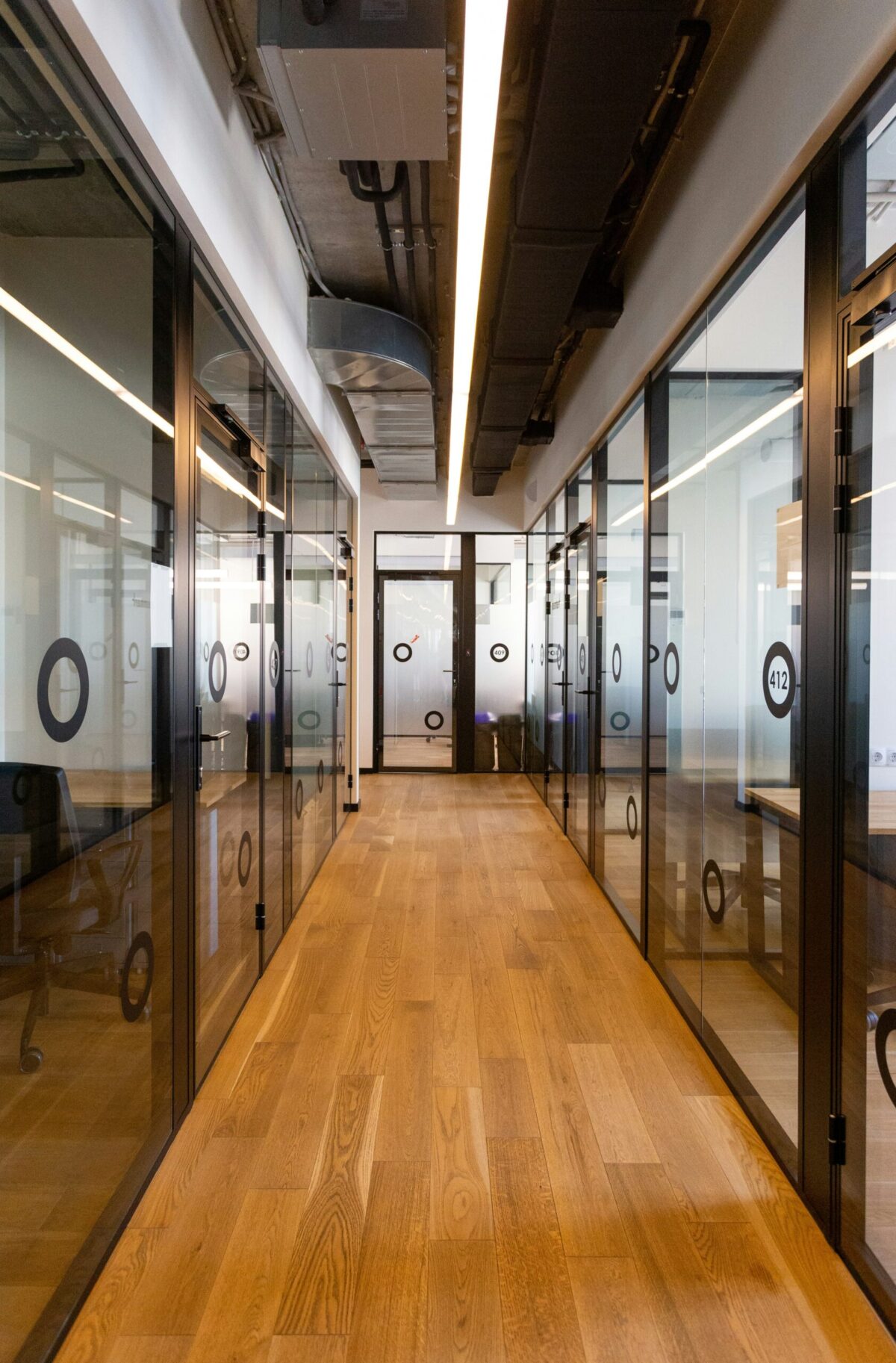
IMAGE: UNSPLASH
What Technology Does To Attention
The relationship between technology and attention is one of the most consequential and least examined dynamics in the modern workplace. Attention serves as the precondition for every form of higher-order thinking. Without sustained attention, problems cannot be understood at the depth they require. Without it, connections between ideas go unnoticed, assumptions go unexamined, and the kind of slow, generative thinking that produces genuine insight becomes functionally inaccessible.
Technology, in its current form, is systematically hostile to the conditions attention requires. Notification-driven environments train the mind to expect interruption, which means the mind begins anticipating it even when it does not arrive. Research on attention fragmentation has consistently pointed out that the cost of context-switching is far higher than intuition suggests. A workplace structured around constant connectivity is, by design, a workplace structured around shallow cognition. The tools are powerful, but the thinking they enable typically is not.
“Every system reflects the incentives built into it,” Herbatschek says. “If your communication tools reward immediacy and your calendar rewards availability, then the system is optimizing for responsiveness. That’s a fine optimization for some kinds of work. It’s a terrible one for the kind of thinking that actually moves organizations forward.”
The Illusion Of Productivity In A High-Speed Environment
One of the more disorienting features of a fast-paced workplace is how productive it feels even when genuine productivity is low. Messages are sent. Meetings are attended. Dashboards fill with data, so the ambient sensation is one of forward motion, but in many organizations, the frenetic activity coexists with a persistent sense that nothing important is actually getting resolved.
Technology has dramatically increased the ease of generating activity. What it has not done is increase the capacity for deliberate thinking that transforms activity into something worth having done. That capacity is still human, slow, and dependent on conditions the accelerated workplace erodes.
Thoughtfulness As A Deliberate Practice
Staying thoughtful in a fast-moving environment is a matter of practice. The people who manage it are not uniformly slower or more cautious than their peers but people who have made explicit choices about where they will and will not allow speed to govern their behavior.
The most foundational of those choices is the protection of uninterrupted time, regular, defended intervals in which the mind is allowed to engage with a problem without the expectation of immediate output.
The research on deep work is unambiguous that meaningful cognitive engagement requires a minimum threshold of uninterrupted focus that most modern workplaces never provide. Protecting it is an act of deliberate resistance against an environment that will, if left unmanaged, fill every available moment with something urgent and shallow.
“The people I’ve seen do their best thinking in fast environments are the ones who treat their attention like a resource,” Herbatschek notes. “They’re intentional about where it goes and disciplined about protecting it. They understand that once it’s fragmented, recovering it takes real time and that the work produced in a fragmented state rarely reflects what they’re actually capable of.”
Technology As A Tool
A more constructive relationship with technology begins with a reframing to treat it as a tool. Tools are picked up when they serve the task and set down when they don’t. Most professionals have slipped from the former to the latter, and the cumulative effect is a working life in which the tool has become the tempo.
Reclaiming the former relationship requires explicit decisions regarding when technology serves thought and when it interrupts it. Asynchronous communication, used deliberately, can protect the depth of focus that synchronous responsiveness destroys. Notification management, practiced consistently, can restore a degree of attentional sovereignty that most professionals have surrendered without realizing it. These are the kind of small, structural adjustments that compound over time into meaningfully different cognitive conditions.
“You can protect your own attention,” Herbatschek observes, “but if the organization’s implicit expectation is that you’re always available and always responsive, you’re swimming against a current that most people eventually stop fighting.”
Thoughtfulness at scale requires individual practice as well as organizational permission in an explicit acknowledgment that depth of thinking is valued alongside speed of response.
The Competitive Case For Slowing Down
The problems that most consequentially determine an organization’s trajectory cannot be solved well at speed. They require sustained engagement that fast environments systematically prevent. The competitive advantage of thoughtfulness doesn’t appear in weekly dashboards but accumulates in decisions that stay decided and work that holds up under scrutiny.
Staying thoughtful in a tech-driven workplace is a form of strategic patience. It requires refusing to let the available tools determine the quality of the thinking behind them.
Dan Herbatschek is Founder and CEO of Ramsey Theory Group, a firm dedicated to transforming complex organizational systems into scalable software. A Columbia University graduate (Summa Cum Laude, Phi Beta Kappa) with expertise in Python, machine learning, and data visualization, he previously worked in New York as an Investment Consultant and Data Management Consultant.
The information presented in this article is intended for educational and informational purposes only and does not constitute professional advice. Readers are encouraged to consult a qualified professional before making any decisions based on the content herein.
COMMENTS