


The JMGO PicoFlix arrives in a moment when screens no longer need to be fixtures. People are streaming everywhere, living in smaller spaces, and asking for entertainment that moves with them. The PicoFlix does not just shrink a projector into a carry case. It stitches together three things that used to be separate: smart streaming, automated setup, and battery-powered mobility.
The real significance here is not portability alone. What changes how the device should be understood is the combination of usability and system integration. Autofocus and automatic keystone correction remove the fiddly, technical barrier that kept projectors in the hobbyist domain, and built-in streaming reduces dependency on external dongles. When those pieces line up, a projector becomes a viable everyday display instead of an occasional novelty.
Most people still assume portable projectors are dim, noisy, and limited to terrible image quality. That perception was earned by older lamp-based units and low-resolution pico projectors. Modern LED-based systems, which JMGO employs in the PicoFlix, shift that balance.
By accepting specific tradeoffs such as limited lumen output in brighter rooms and shorter battery runtimes than wall-powered setups, these devices trade permanence for flexibility in ways that are meaningful for many users.
This article explains where the PicoFlix pushes the category forward, what practical limits define its usefulness, and why those limits matter. It will also unpack the design choices JMGO appears to have prioritized, and how those choices change the everyday experience of a big screen. What becomes obvious when you look closer is that the question is not whether a projector can replace a television. The question is where a projector buys you something a television cannot.
What It Is: Definition And Key Features
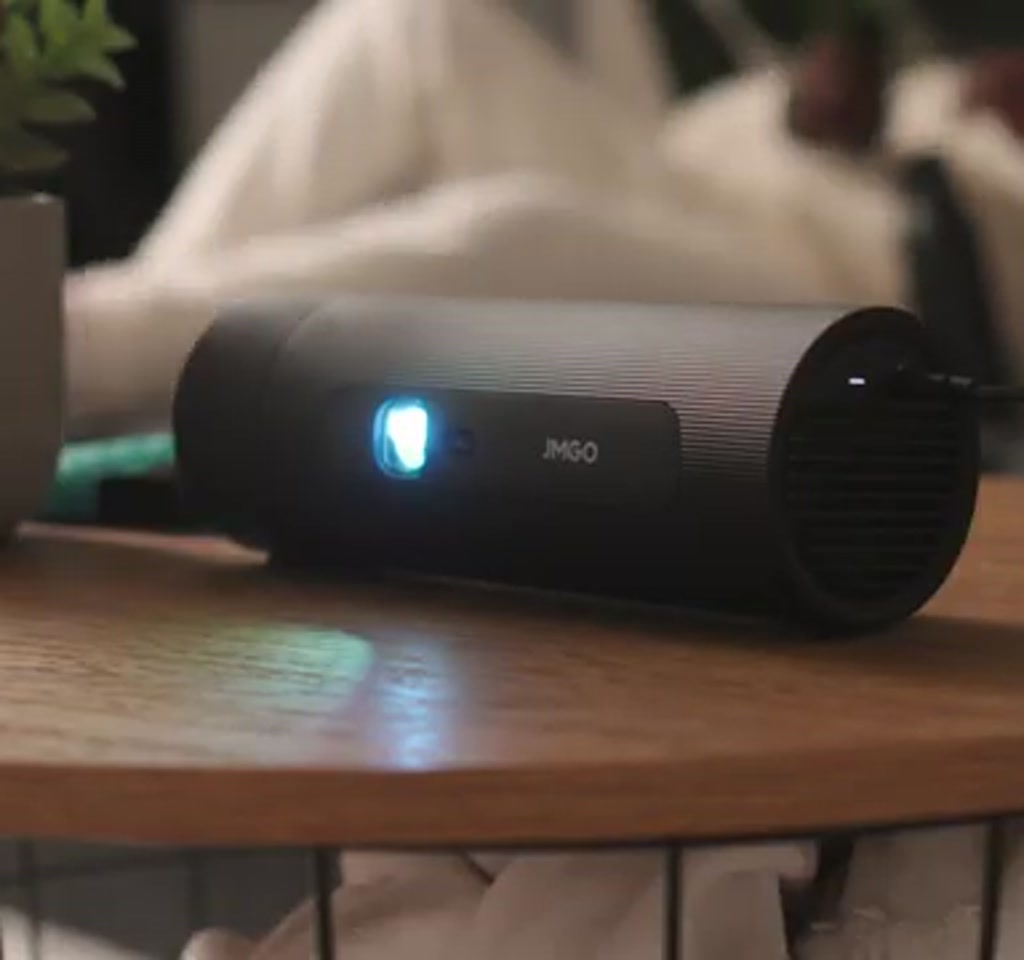
The JMGO PicoFlix is a compact LED projector that combines an internal battery, built-in streaming software, autofocus, and automatic keystone correction. In practice that means it is designed to create temporary big screens quickly without needing a separate streaming stick, manual focus adjustments, or constant power tethering.
Why The PicoFlix Matters Now
The timing of the PicoFlix is not accidental. Streaming platforms and mobile ecosystems have made content access almost universal, so the remaining friction for a large screen is physical setup and audio. JMGO positions the PicoFlix as a way to remove that friction. By integrating streaming features directly into the projector, the device eliminates the need for a separate media player in many scenarios.
From a cultural standpoint, the PicoFlix taps into several ongoing shifts. People are holding onto fewer single-purpose devices. Living spaces are smaller on average, and social gatherings now mix indoor and outdoor moments. A battery-powered LED projector promises to create a temporary theater in places a television cannot reach. That is the compelling use case: the projector as a portable stage, not a stationary competitor to a living room TV.
From a technical perspective, the PicoFlix demonstrates how LED projection has matured. LED light sources produce less heat, consume less energy, and last far longer than traditional high-intensity discharge bulbs. The transcript notes operating lifespans that can amount to tens of thousands of hours, which changes maintenance calculus and total cost of ownership for users who prioritize longevity.
How It Works: LEDs, Autofocus, And Keystone
At its core the PicoFlix uses LED illumination, optics, and image processing to translate a digital stream into a projected picture. These systems work together so that placement and setup become the primary user interactions, not manual calibration or swapping bulbs.
LED Advantages
LED illumination matters for three practical reasons. First, LEDs maintain a steadier color profile over long life spans, which helps with color consistency across thousands of hours of use. Second, LEDs are more energy efficient than older lamp systems, which improves battery runtime for portable usage. Third, the reduced heat load simplifies cooling, allowing quieter operation and smaller chassis designs.
Those benefits do come with tradeoffs. LED-based portable projectors typically operate at a lower maximum lumen output than larger lamp projectors designed for bright conference rooms. That means performance is optimized for low to moderately dark environments, not sunlit living rooms or daytime conference halls.
Smart Correction And Autofocus
Auto keystone correction and autofocus are the convenience features that change user behavior. Automatic systems detect projection angle and correct the image into a rectangle using software and optical feedback. Autofocus refines sharpness automatically following placement, which removes the need to hunt for a crisp ring position.
What becomes clear when you examine these systems is that they are not perfect. They are designed to work within a certain angular and distance range. If the projector is placed at extreme angles or very far from the screen surface, the software has less data to work with and correction can be imperfect. In everyday use, though, the result is usually fast enough to make the setup feel instantaneous.
Where The Tradeoffs Live
The PicoFlix is persuasive when conditions align. It is important to map those conditions clearly because they define the thresholds of useful performance and reveal the compromises inherent to portable LED projectors.
Brightness Versus Ambient Light
Brightness is the single most visible constraint for portable projectors. LED projectors in this class typically fall within a range of roughly 100 to 1000 lumens. In practice, that means you will get crisp and colorful images in dimly lit rooms or at night outdoors, but the picture will lose punch under strong ambient light. The tradeoff is simple and quantifiable.
Battery Life And Audio Power
Portability requires power and that introduces a second constraint: runtime. Built-in batteries for devices like the PicoFlix typically produce playback measured in hours rather than days. A realistic range for similar portable LED projectors is approximately 1.5 to 3 hours of continuous video playback at moderate brightness settings. Running at maximum brightness to combat ambient light will shorten that time noticeably.
Audio is the other element where size imposes limits. Integrated speakers on compact projectors usually produce clear dialogue and decent mid-range presence, but they cannot match the bass and SPL of a dedicated soundbar or portable PA. The practical choice JMGO seems to embrace is to prioritize a good enough built-in soundstage for casual viewing while providing Bluetooth and wired audio outputs so users can pair external speakers for full-scale gatherings.
Those constraints leave an open tension: convenience and mobility versus sustained brightness and full audio power. The sections that follow show how that tension shapes everyday scenarios and design choices.
Connectivity, Streaming, And Regional Limits
The PicoFlix intends to be an independent entertainment node, not a passive projector that requires constant tethering to a laptop. To achieve that, manufacturers embed streaming platforms or app stores into the device software. That reduces setup friction but introduces a dependency on software licensing and regional availability.
Depending on region and configuration, the projector may support a different set of streaming services. Those differences are outcomes of licensing agreements that govern which apps are preinstalled or available for download in a given market. If a particular streaming service is essential, verifying regional software compatibility before purchase becomes a practical requirement.
Wireless connectivity like WiFi and Bluetooth makes screen casting from phones and tablets straightforward. Wired options including HDMI and USB retain the predictable flexibility of connecting gaming consoles, streaming sticks, or laptops. The presence of both wireless and wired paths is important because it means the PicoFlix can be used as a hub for a variety of devices.
Design Choices And The Experience They Enable
Design matters for portable devices beyond aesthetics. The PicoFlix emphasizes minimalist styling and premium materials, a decision that signals a positioning away from disposable novelty gadgets toward durable consumer electronics. The advantage is both visual and functional. A well-executed industrial design communicates reliability and fits more naturally into contemporary interiors.
From an editorial standpoint, the most significant detail is the focus on ease of use. Autofocus and automatic keystone reduce setup time into seconds. The inclusion of an internal battery and built-in streaming means users can create a theater experience without additional pieces.
Those decisions put convenience ahead of raw brightness, and that priority aligns with the product narrative JMGO appears to be selling: mobility and simplicity over one-dimensional performance metrics.
There is also an ecological angle. LED illumination, combined with long operating life, tends to reduce replacement waste compared to traditional bulb-based projectors. The energy efficiency benefits become more tangible over the long term, particularly for users who adopt the projector as a semi-permanent fixture for seasonal outdoor use or mobile presentations.
JMGO PicoFlix Vs Televisions And Lamp Projectors
Compared to a living room television, the PicoFlix (just like its predecessor, the PicoPlay)trades constant peak brightness and integrated full-scale audio for portability, screen size flexibility, and lower maintenance. Versus traditional lamp projectors it sacrifices raw lumen output but gains quieter operation, longer light source life, and simplified setup thanks to autofocus and automatic keystone correction.
Those differences matter when you choose a display. If daytime viewing or sustained high ambient light tolerance is required, a television or high-lumen lamp projector remains the better technical match. If you want a large screen that can move around, or occasional outdoor cinema with minimal setup, the PicoFlix delivers a distinct advantage.
Use Cases That Make Sense
Where a portable projector genuinely outperforms a television is in contexts that prize size without permanence. Outdoor evenings are an obvious fit: sunsets and nighttime screenings match the projector brightness profile while external speakers can be added to boost audio. Travel and temporary setups benefit from internal streaming and battery power. Casual gaming and multi-purpose living spaces also align with what the PicoFlix prioritizes.
Not every scenario resolves cleanly. Competitive esports, daytime conference rooms, and multi-hour events without power are examples where the projector’s limits become decision factors rather than mere inconveniences.
The Near Future For Portable Projection
Projection technology continues to evolve along a few predictable axes: brighter LEDs, more efficient optics, smarter onboard software, and richer audio integration. Each improvement shifts the boundary where a portable projector could become the primary living room display for more people.
Two variables will determine how quickly that happens. First, brightness needs to improve enough that daytime or high ambient light use becomes practical without massive power draws. Second, battery energy density must continue to increase, or designers will need to adopt swappable battery solutions if they intend to sustain long-duration events without external power.
For now, devices like the PicoFlix occupy a practical middle ground. They bring big-screen experiences into places a television cannot reach, and they do so while minimizing the technical burden on the user. That tradeoff leaves an open question about timing: how fast will component advances make this middle ground the default? The industry trajectory suggests steady gains, but the timeline remains uncertain.
Who This Is For And Who This Is Not For
Who This Is For: People who want a flexible, easy-to-use large screen for evening outdoor movies, travel, rentals, or small group viewing. Anyone prioritizing mobility, fast setup, and reduced maintenance will find the tradeoffs acceptable.
Who This Is Not For: Users who need bright daytime viewing, long continuous runtime without external power, deep bass audio without external speakers, or competitive gaming performance tied to high refresh rates and ultra-low latency.
FAQ
What Is The JMGO PicoFlix? The JMGO PicoFlix is a compact LED projector that combines an internal battery, autofocus, automatic keystone correction, and built-in streaming capabilities to enable mobile big screen viewing.
How Bright Is The PicoFlix? Exact lumen ratings vary by model, but portable LED projectors in this class typically range from roughly 100 to 1000 lumens, which favors dim to moderately dark environments over bright daytime viewing.
How Long Does The Battery Last? Similar portable LED projectors commonly provide around 1.5 to 3 hours of continuous video playback at moderate brightness. Expect shorter runtimes when running at maximum brightness to combat ambient light.
Does The PicoFlix Support Major Streaming Apps? Streaming support depends on the device firmware and regional licensing. Some apps may be preinstalled or available through an onboard store, but availability can vary by market, so verify compatibility before purchase if a specific service is essential.
Can I Use External Speakers With The PicoFlix? Yes. The projector typically offers Bluetooth and wired audio outputs so external speakers or soundbars can be paired to improve bass and overall SPL for larger gatherings.
Is The PicoFlix Good For Gaming? It suits casual and couch co op gaming, where large image size matters more than ultra-low latency or high refresh rates. Competitive gamers who require 120 hertz panels and sub-10 millisecond latency should prefer specialized displays.
Are LED Projectors More Durable Than Lamp Projectors? Yes. LED light sources generally offer longer operating lifespans measured in tens of thousands of hours and require less maintenance than traditional bulb-based projectors.
COMMENTS