


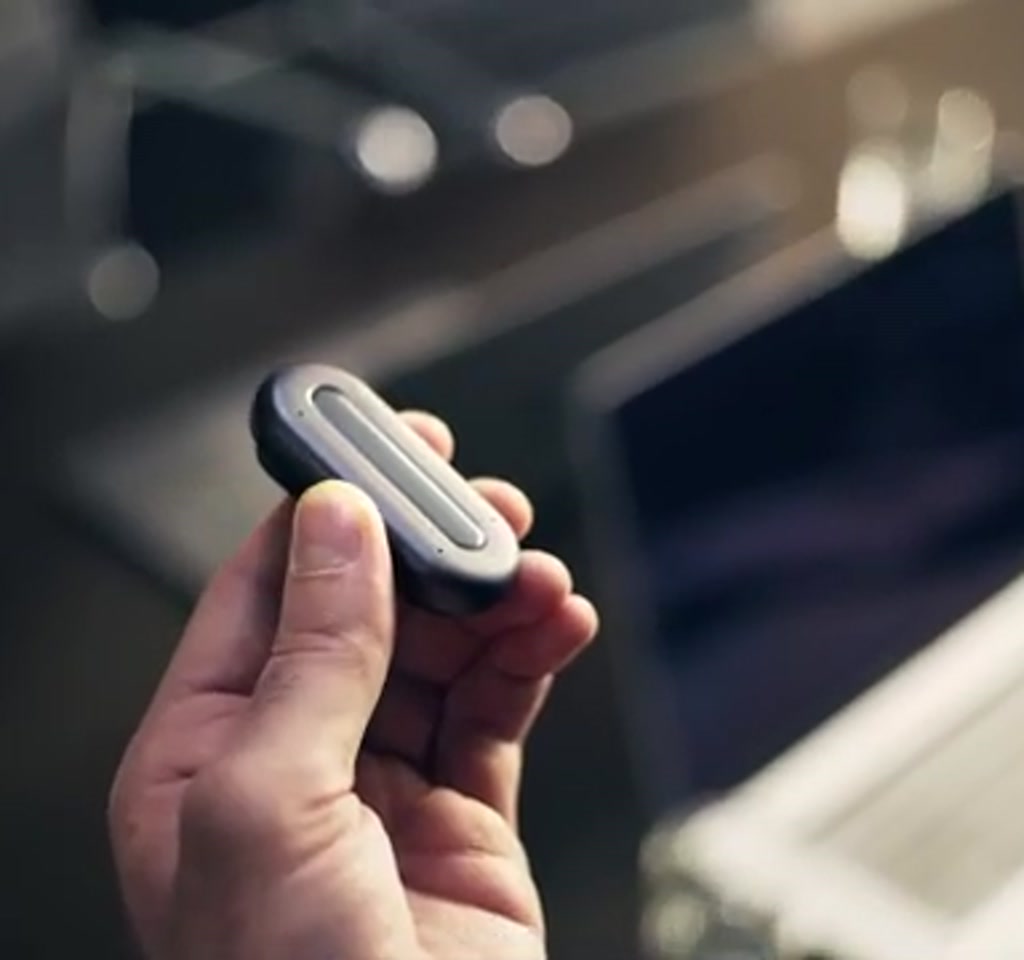
The conversation about what comes after the smartphone has a new face. ANYPIN is a compact, magnetically attachable wearable that folds microphones, a wide-angle camera, a palm projector, and a conversational AI into a square unit meant to sit near the chest. It is not pitched as a better phone in the conventional sense. Instead, it tests a different premise: can computing become ambient, glanceable, and largely voice-driven so people stop being pulled toward a glowing rectangle.
The real significance here is not that ANYPIN will instantly replace phones. What actually determines whether this matters is whether people accept less screen time in exchange for a device that is more context aware but also more dependent on cloud services, batteries, and social norms. That tradeoff is the thesis the product forces the market to confront.
What becomes obvious when you look closer is how multilayered the experiment is. The hardware is intentionally minimalistic: a touch surface behind reinforced glass, a palm projector for quick visuals, a 13MP ultra-wide camera, depth and ambient sensors, and a microphone array for voice-first interaction. But the design choices are honest about limits. The device leans on cloud models for heavy lifting, and it uses external magnetic batteries to stretch usable time.
The detail most people miss is that ANYPIN is as much a software idea as a piece of metal. Its operating environment treats AI as the primary interface. Instead of navigating apps, the user speaks and the device routes intent to appropriate services. That shift is small to describe and large in consequence, because it reframes what a personal computer is allowed to be.
How ANYPIN Works
ANYPIN sits near the chest with sensors oriented toward the face and hands so voice, gesture, and short visual cues become the core inputs. The system blends a microphone array, depth sensing, a 13MP ultra-wide camera, and a palm projector that produces roughly a 720p monochrome image for quick confirmations and glanceable information.
ANYPIN clips to clothing with a magnetic mount so its sensors sit near the chest and face. The focal inputs are voice, gesture, and modest visual output via a palm projection system. According to the specifications discussed around the device, the projector produces an approximately 720p monochrome image for quick confirmations and short-form content.
Hardware highlights include a 13MP ultra-wide camera with about a 120-degree field of view, depth sensing for gesture and scene understanding, and directional speakers intended to create a personal sound field. Connectivity is built around eSIM cellular support, Wi-Fi 5, Bluetooth 5.1, and GPS so the unit can function independently from a smartphone.
The Interface And Interaction Philosophy
The central idea is conversational intent replacing app-first navigation. Users speak and the platform routes requests to backend services, while the projected UI stays intentionally spare for glanceability. That design prioritizes eyes-up interactions, quick confirmations, and short readouts rather than prolonged browsing or video consumption.
The interaction model is intentionally conversational and contextual. Users ask questions out loud, and the system interprets intent rather than relying on explicit app launches. The projected UI is intentionally spare and designed for glanceability. It offers quick reads like caller ID, navigation prompts, timers, and message summaries, not long-form browsing or video consumption.
Gesture controls complement voice. The projector plus depth sensors enable simple gestures such as tilting the hand to advance, pinching fingers to select, or swiping to dismiss. Touch is available on a small capacitive face for tactile control, but the experience is built around eyes up, ears in interaction.
Technical Highlights And Key Specifications
ANYPIN bundles a compact sensor suite and connectivity in a lightweight package. Notable points are a 13MP ultra-wide camera with roughly 120 degree field of view, depth and ambient sensors for gesture detection, a palm projector for brief monochrome visuals, and support for eSIM, Wi-Fi 5, Bluetooth 5.1, and GPS.
Camera And Sensors
The imaging system is focused on context rather than high-resolution photography. The 13MP ultra-wide camera and depth sensing are tuned to identify scenes, aid hands-free framing, and feed visual context to cloud services for analysis and translation tasks.
Palm Projection And Output
The projector generates an approximately 720p monochrome image designed for short confirmations and glanceable UI. It is not intended as a replacement for extended media consumption, but as a quick visual channel for identity, directions, and brief content snippets.
Power And Modularity
Power is deliberately modular: a rechargeable internal battery combined with hot-swappable magnetic booster packs. This reduces weight for day-to-day wear but means heavy conversational or visual workloads are often limited to hours rather than a full smartphone day without swapping boosters.
Constraints And Tradeoffs
No design exists in a vacuum. The choices behind ANYPIN illuminate clear thresholds that will determine real-world usefulness. Two constraints stand out: power density and cloud dependence. Both shape when and where the device can be genuinely helpful.
Battery And Power
Battery life is the most immediate hardware constraint. The unit uses a rechargeable internal battery and supports hot swappable magnetic booster packs for extended runtime. In practice, continuous heavy AI usage is measured in hours rather than a full smartphone day, requiring occasional swaps or recharges for long outings.
Cloud Dependency And Latency
ANYPIN relies on cloud-based language models and image analysis to deliver advanced conversational features. That dependency boosts capability but introduces sensitivity to network quality: interactions feel near instantaneous on strong Wi-Fi or 5G and noticeably slower on weak or congested links.
This is an important boundary because the experience shifts from compelling to fragile when connectivity drops. Data usage becomes a practical cost consideration, since many higher-level AI tasks and visual analyses require cloud bandwidth that can push mobile data into higher tiers depending on frequency of use.
Privacy, Trust, And Social Acceptance
Wearables that listen and look raise social questions. ANYPIN includes visible trust lights and status indicators to show when cameras or microphones are active, a transparency measure that aims to reduce covert recording. Still, a visible device can change social dynamics and invite questions in many contexts.
The tradeoff here is visibility versus utility. Visible indicators aim to discourage covert recording, but they also make the device an obvious presence. Acceptance will vary by culture, setting, and the norms users build. In many public spaces the device may be unobtrusive. In others, it will invite questions and require explanation.
Where ANYPIN Fits In A Bigger Shift
To understand ANYPIN is to see it as a probe into a larger transformation away from app-centric operating systems and toward AI-adapted workflows. Companies building these wearables are betting that conversational intent can replace many routine interactions people now perform with touch.
That shift touches ambient computing, multimodal sensing, and changing attention economics. The tension is whether users will accept narrower screen experiences in exchange for ambient, context-aware assistance, or whether phones will remain the default for typing-intensive and media-heavy tasks.
Practical Use Cases And Limits
Clip-on wearables are most useful for short, conversational workflows: live translation during travel, hands-free photos, on-the-fly reminders, and simple navigation nudges. For sustained typing, complex productivity, or media, smartphones remain more capable for now.
ANYPIN Vs Smartphones And Smart Glasses
Comparing ANYPIN to smartphones and smart glasses reveals different tradeoffs. ANYPIN prioritizes glanceable, voice-first interactions and mobility with lower visual fidelity, whereas phones provide broad app ecosystems and sustained battery life. Smart glasses emphasize hands-free display but face their own social and optical constraints.
Decision Factors
When deciding between these options, weigh display fidelity, typing and productivity needs, battery longevity, offline capability, and social acceptability. ANYPIN excels in quick conversational tasks and contextual sensing, but it depends more on cloud services and modular power than a typical smartphone.
What This Means For Designers And Makers
Designers building toward this future face three linked constraints: energy, network, and social friction. Solutions must reduce per-task energy cost, degrade gracefully when networks falter, and surface cultural trust signals that go beyond a single LED. That is where interaction design matters most.
From an editorial standpoint, the engineering challenge is not adding sensors. It is building a resilient interaction model that feels reliable across pockets of varying connectivity and battery availability. That is where the promise becomes fragile or robust depending on execution.
Who This Is For And Who This Is Not For
Who This Is For: Travelers who value hands-free translation, people seeking to cut habitual screen checks, creators who want quick hands-free capture, and early adopters curious about ambient computing. The device is best when quick, conversational workflows outweigh long-form typing and media consumption.
Who This Is Not For: Users who rely on long battery life for full-day heavy use, people who need sustained typing or complex multitasking, and those who prefer low dependency on cloud services. Anyone uncomfortable with visible sensors or with strict privacy needs may want alternatives.
FAQ
What Is ANYPIN?
ANYPIN is a clip-on wearable that combines voice-driven interaction, a palm projector, a 13MP ultra-wide camera with depth sensing, and cloud-based conversational AI to provide glanceable, contextual assistance.
How Does ANYPIN Work?
It sits on clothing with a magnetic mount and uses voice, gesture, and short projected visuals to interpret intent. Heavy processing is routed to cloud models while local sensors capture context for those requests.
How Long Does ANYPIN Last On A Charge?
The device uses an internal rechargeable battery plus hot-swappable magnetic booster packs. Continuous heavy AI use is typically measured in hours rather than a full smartphone day, so users may need to swap or recharge boosters for long outings.
Does ANYPIN Require A Smartphone?
ANYPIN supports eSIM cellular, Wi-Fi 5, Bluetooth 5.1, and GPS, allowing it to function independently. It can operate without being tethered to a smartphone for many core features.
Can ANYPIN Replace A Smartphone?
Not entirely. For typing heavy tasks, long-form media, and complex workflows, smartphones remain superior. ANYPIN aims to reduce how often a phone is needed by handling quick conversational and contextual tasks.
How Does ANYPIN Handle Privacy?
The device includes visible trust lights and status indicators to show when cameras or microphones are active. That transparency mitigates covert recording, but social acceptance will still vary by setting and culture.
What Connectivity Does ANYPIN Use?
ANYPIN uses eSIM cellular support, Wi-Fi 5, Bluetooth 5.1, and GPS. Many advanced features rely on cloud connectivity, so network quality affects latency and performance.
Who Should Consider Using ANYPIN?
People who value hands-free, glanceable interactions and are willing to accept tradeoffs in battery and cloud dependency for contextual assistance are the primary audience. Those needing full smartphone functionality should consider it a complementary device rather than a replacement.
COMMENTS