


Before you get behind the wheel there is a small, quiet decision that determines everything. EthyloKey promises to turn that decision into a single, unambiguous action: a touch, a color, and an immediate cue about whether to drive.
That promise – convenience at the point of choice – drives the product’s value proposition. As an EthyloKey alcohol detection keychain, it aims to be discreet, portable, and easy to use, lowering the barrier to checking without requiring a mouthpiece breath test.
What Is EthyloKey?
Direct Answer: EthyloKey is a French-made smart keychain that uses skin–contact sensors to detect ethanol on the fingertip and gives a simple color result – green, orange, or red – to indicate relative sobriety. It is designed as a personal screening tool, not a legal-grade breath or blood test.
How EthyloKey Works At A Glance
Direct Answer: The device measures ethanol that reaches the surface of the skin after drinking. You touch the sensor, wait a few seconds, and a color cue reports a threshold-based interpretation that correlates with common legal BAC ranges rather than providing a numeric blood or breath value.
Touch And Color Interface Explained
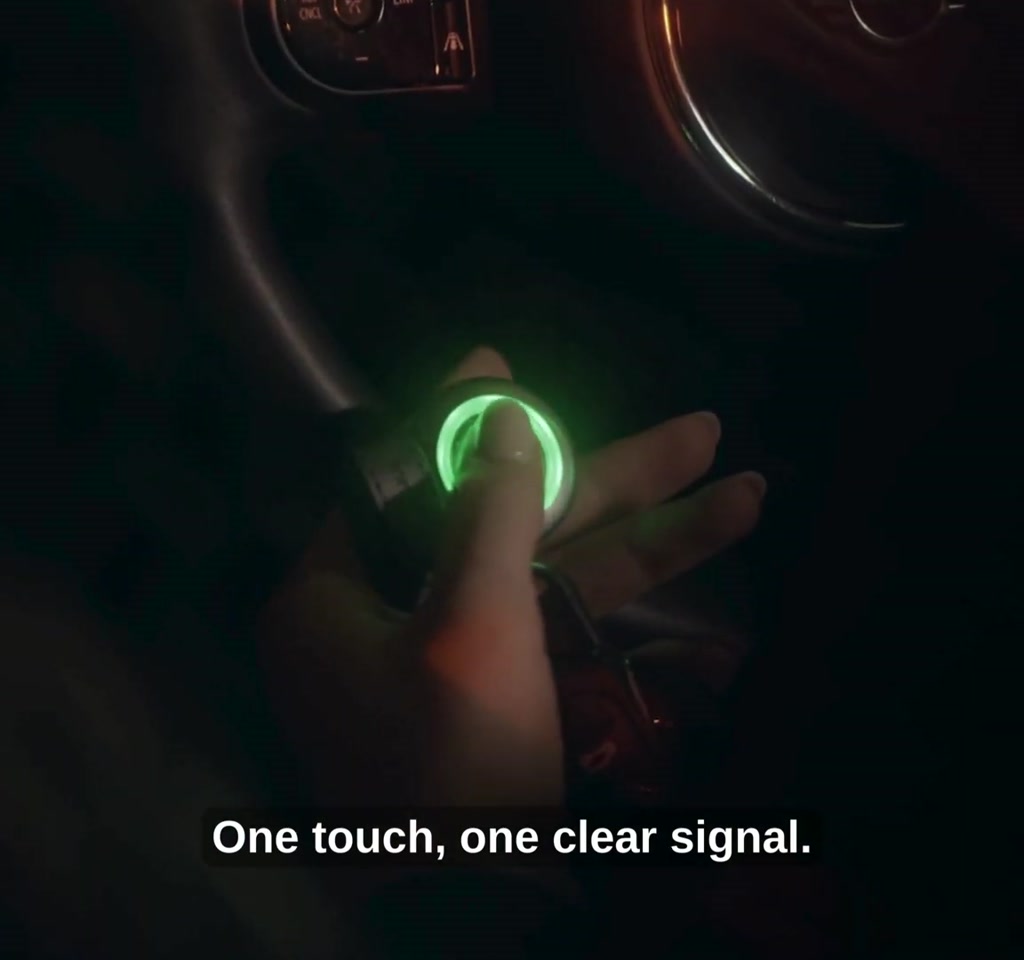
The interface revolves around a one-touch interaction and an immediate color code: green for low risk, orange for caution, red for high risk. That simplicity removes social friction and encourages private, fast checks at the moment someone is deciding whether to drive.
Skin Contact Detection Versus Breath Tests
Skin sensors detect ethanol diffused to the skin surface; breathalyzers measure ethanol in exhaled air, which aligns more directly with blood alcohol concentration. The two methods correlate but are not identical – skin readings are subject to environmental and physiological factors that affect precision.
Definition And Key Features
Definition: A portable alcohol screening device that uses skin-contact sensing and a color-coded display to indicate whether recent drinking likely places a person below, near, or above common legal limits. Key features described in the transcript include compact form, discrete carry, and instant color feedback.
Primary Components And Maintenance
The product includes a sensor surface for a finger touch, a rechargeable battery with a charging dock, and a minimal display. Regular charging and occasional sensor maintenance are practical considerations because battery life and sensor cleanliness affect reliability.
Benefits And Value Of A Keychain Alcohol Sensor
Direct Answer: The main benefits are reduced social friction, higher likelihood of on-the-spot checks, and a private, fast signal that can interrupt a decision to drive. Convenience increases usage probability, which could lower risk in clear low-or-high cases.
Behavioral Impact And Adoption
Because the device is easy and discreet, people are more likely to carry and use it. The timing – testing right before departure – targets the decision point, where a clear color cue can change plans immediately (call a ride, wait, or hand over keys).
Limits And Tradeoffs You Need To Know
Direct Answer: Tradeoffs include sensor variability (sweat, lotions, humidity, finger placement), borderline ambiguity near legal limits, and maintenance friction from charging. The device is most useful for obvious low or high readings rather than fine-grained legal determinations.
Environmental And Physiological Sensitivity
Skin-contact measurements vary with sweating, cosmetics, ambient humidity, and how the finger is placed. Those factors introduce noise that can shift readings by margins meaningful near legal BAC thresholds.
Power, Battery Life, And Upkeep
Battery life is likely to range from days to weeks per charge depending on sampling and idle power. Frequent charging becomes a friction point; weekly or monthly charging is preferable for sustained adoption. Real-world reliability issues often appear after repeated cycles.
Accuracy Versus Convenience
The core tradeoff is clear: mouthpiece-based breathalyzers maintain an established legal link to blood alcohol concentration but are less convenient. A skin contact approach reduces social and practical friction but sacrifices direct legal equivalence and some precision.
When EthyloKey Helps Versus When It Falls Short
EthyloKey is most helpful when results are clearly low or clearly high. It is less decisive for borderline cases near common legal limits, and it should not be used as proof in legal or court contexts.
Skin Contact Sensors Vs Breathalyzers
Explicit Comparison: Skin Contact Sensors Vs Breathalyzers highlights real-world decision factors: convenience, hygiene, social friction, measurement correlation to blood alcohol concentration, and admissibility as evidence. Choose based on whether you need quick guidance (skin sensor) or an evidentiary numeric reading (breathalyzer).
Practical Decision Factors In The Comparison
- Convenience: Skin contact sensors are more discreet and faster.
- Accuracy: Breathalyzers tie more directly to legal BAC metrics.
- Use Case: Personal screening vs. legal or occupational testing.
Design Choices And Privacy Implications
Design – clean lines, premium finishes, discrete form – signals intent to be socially acceptable to carry. If paired with an app, the device could offer trend tracking and reminders, but that raises data sharing and privacy tradeoffs. The creators emphasize discretion; implementation details will determine adoption.
Mid-Article Note: As an EthyloKey alcohol detection keychain the privacy model – local-only results versus app-linked storage – will materially affect user trust and adoption rates.
Where EthyloKey Fits In The Safety Ecosystem
EthyloKey is a supplement to, not a replacement for, court-ordered ignition interlocks or law-enforcement breath testing. Its realistic role is personal screening to reduce individual risk and nudge safer choices in everyday scenarios where a quick check can alter decisions.
Practical Scenarios And Use Cases
Common use moments include after-work drinks, dinner with wine, and nights out. The device reduces social awkwardness when testing and provides private confirmation for single drivers without external accountability.
Edge Cases And User Guidance Needs
Repeated checks may show oscillation due to skin alcohol dynamics; clear user guidance on wait times, recommended repeat intervals, and interpretation is important to avoid confusion.
Editorial Takeaway And Next Steps
Direct Answer: EthyloKey is a behavioral product as much as hardware: convenience increases the chance someone checks, which can reduce harm in obvious cases, but sensor physics limits its ability to replace validated testing. Empirical studies on usage and outcomes are the next critical step.
Closing Summary: The EthyloKey alcohol detection keychain lowers friction for pre-drive checks and may change behavior quickly, but convenience cannot erase the need for accurate boundaries. Practical adoption will depend on sensor refinement, battery life, user guidance, and empirical evidence of impact.
Who This Is For / Who This Is Not For
Who This Is For: Drivers who want a low-friction, private pre-drive check; people who value convenience and are looking for a behavioral nudge rather than legal proof; early adopters focused on safety rituals.
Who This Is Not For: Situations requiring legal proof of impairment, court-ordered monitoring, occupational screening, or anyone who needs precise BAC numbers for compliance or evidence.
Frequently Asked Questions
What Is EthyloKey ?
EthyloKey is a French-made, skin-contact alcohol sensor housed as a keychain that gives a color-coded screening result to indicate relative sobriety. It is intended as a personal screening tool, not a legal measurement device.
How Does EthyloKey Work?
The device measures ethanol present on the skin surface after drinking. A finger touch triggers a few seconds of sensing and then a color cue (green, orange, red) that correlates to threshold ranges approximating common legal BAC limits.
Is EthyloKey As Accurate As A Breathalyzer?
No. Skin-contact sensors correlate with breath and blood alcohol but are more sensitive to environmental and physiological factors. Breathalyzers have a stronger, validated relationship to blood alcohol concentration used in legal contexts.
Can EthyloKey Replace Legal Breath Tests?
No. The product is described as a personal screening and nudge tool. It should not be used as legal proof or a substitute for court-ordered interlocks or law-enforcement testing.
How Long Does The Battery Last?
Battery life is likely to range from days to weeks per charge depending on how often the sensor samples and how the device is used. Real-world duty cycles determine whether charging becomes a friction point for users.
When Should I Use EthyloKey?
Use it at the decision point – right before leaving a bar, restaurant, or social gathering – to insert a quick, private check into the departure routine. It is most useful when results are clearly low or high.
Does EthyloKey Store Or Share My Data?
The transcript notes a potential app link for trend tracking but emphasizes discretion. Whether readings are stored or shared depends on implementation; the product team’s choices will determine privacy risks and benefits.
Expect to see iterations that refine sensor algorithms, lengthen battery life, and clarify user guidance. Whether those changes close the gap between convenience and reliability will determine if a compact touch becomes a standard step before every drive.
COMMENTS